


كان مدير مشروع في مستشفى ماليزي يقوم بتقييم عرضين لشراء محول كهربائي بقدرة 1,000 kVA: المحول الأول الأقل تكلفة، وهو محول مغمور بالزيت، بسعر $16,000 والمحول الثاني الأكثر تكلفة، وهو محول راتنج مصبوب، بسعر $26,000. البديل الأقل تكلفة سيوفر $10,000. ومع ذلك، نظرًا لأن المستشفى يقع في طابقين فوق المكان الذي تم تركيب المعدات الكهربائية فيه، فقد فرضت لوائح الحريق ضرورة وجود حفرة للاحتفاظ بأي زيت في حالة حدوث تسرب. علاوة على ذلك، قد سألت شركة التأمين بالفعل عما إذا كان المستشفى ينوي استخدام زيت معدني لأنه لا يمكن استخدامه في الأماكن المغلقة. وبالتالي، في هذه الحالة، فإن نوع المحول الجاف ليس بالضرورة متفوقًا، بل يعود ذلك إلى صعوبات بناء المستشفى. الأسئلة المطروحة أعلاه تساعد في فهم المزيد عن جوهر القضية المتعلقة بالمقارنة بين المحولات الجافة والمحولات المغمورة بالزيت: في هذا الصدد، يجب أن يُذكر أن القضية لا تتعلق بالتفوق بحد ذاته؛ بل تتعلق فقط بالظروف المحددة للمشروع فيما يتعلق بموقعه، ومخاطر الحريق، ومتطلبات التحميل، وقيود الميزانية.
الإجابة السريعة على هذا السؤال هي أنه يجب اختيار المحولات الجافة عندما يتم استخدام المعدات في الأماكن المغلقة، وتكون سلامة الحريق في غاية الأهمية، أو عندما يكون المساحة المتاحة محدودة؛ مثل حالة المباني، المستشفيات، الأنفاق، مراكز البيانات، إلخ. إذا كان يجب وضع المعدات في الخارج، فإن المحول المغمور بالزيت سيكون خيارًا أكثر ملاءمة عندما تكون سعة التحميل الزائدة هي متطلب رئيسي أو عندما تدخل قيود الميزانية في الاعتبار؛ على سبيل المثال، يُرى عادةً في محطات الطاقة، والمرافق الصناعية، ومزارع الطاقة الشمسية.
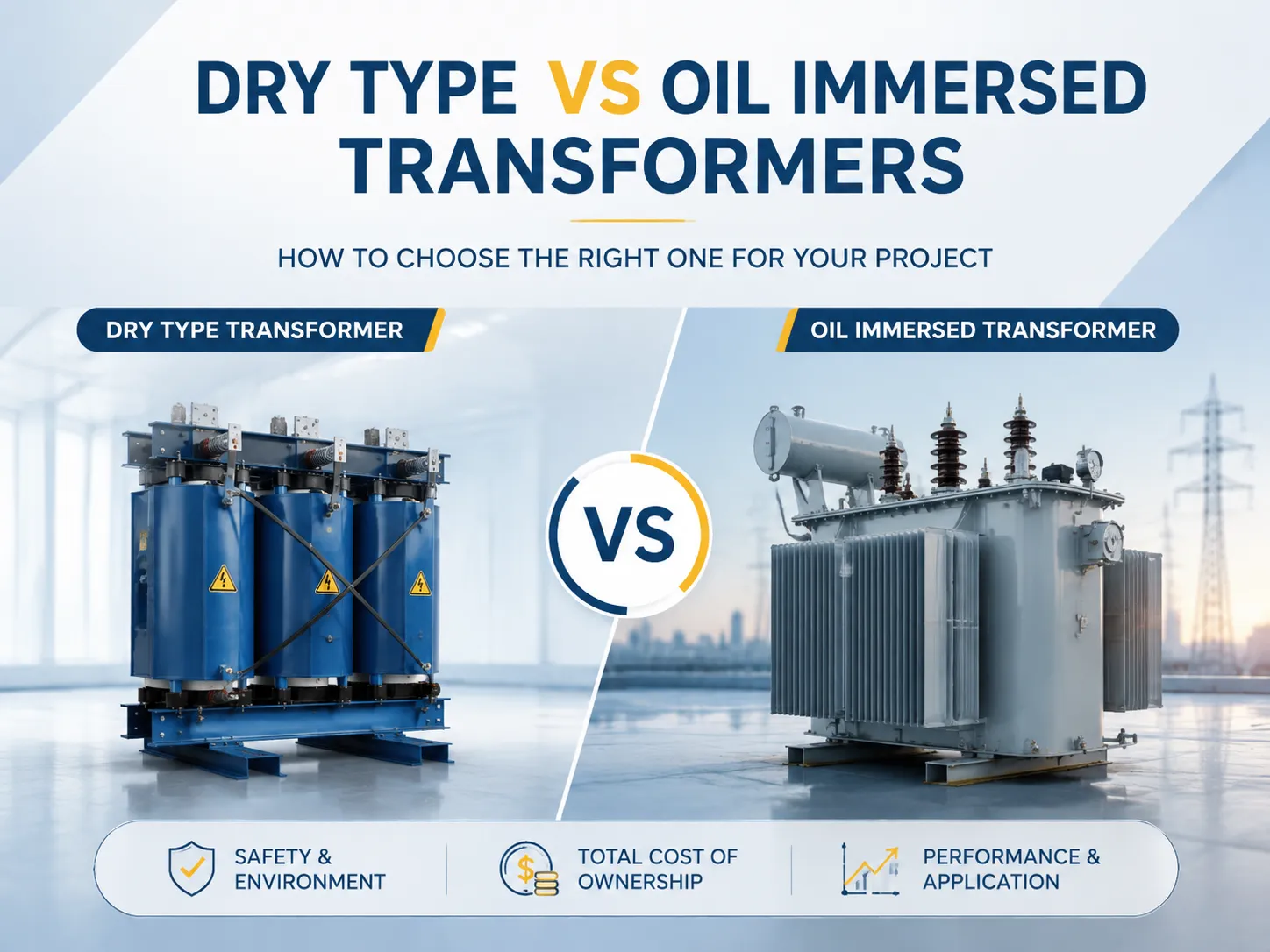
الفرق الأساسي بين التقنيتين
تشير الأسماء إلى مواد التبريد والعزل. تستخدم المحولات المغمورة بالزيت زيت معدني (أو سائل استر) للعزل وكذلك لإزالة الحرارة من خلال جدران الخزان. يستخدم المحول الجاف الهواء للتشغيل في لفات مهواة أو لفات محاطة براتنج إبوكسي مصبوب. هذه النقطة تجعل كل شيء آخر ممكنًا: كيف تفشل، كيف تبرد، إلخ.
الزيت هو أفضل عازل ومبرد، ولهذا السبب استحوذت تقنيات المغمورة بالزيت على قطاع المرافق والصناعة الخارجية حيث تكون التكلفة لكل kVA وميزة التحميل الزائد مهمة. لكن الزيت قابل للاشتعال بدرجة عالية ويعاني من مشاكل التسرب، ولهذا السبب تُستخدم تقنيات المحولات الجافة في المباني والمناطق الحساسة للحريق على الرغم من أن أسعارها مرتفعة.
السلامة وسلوك الحريق
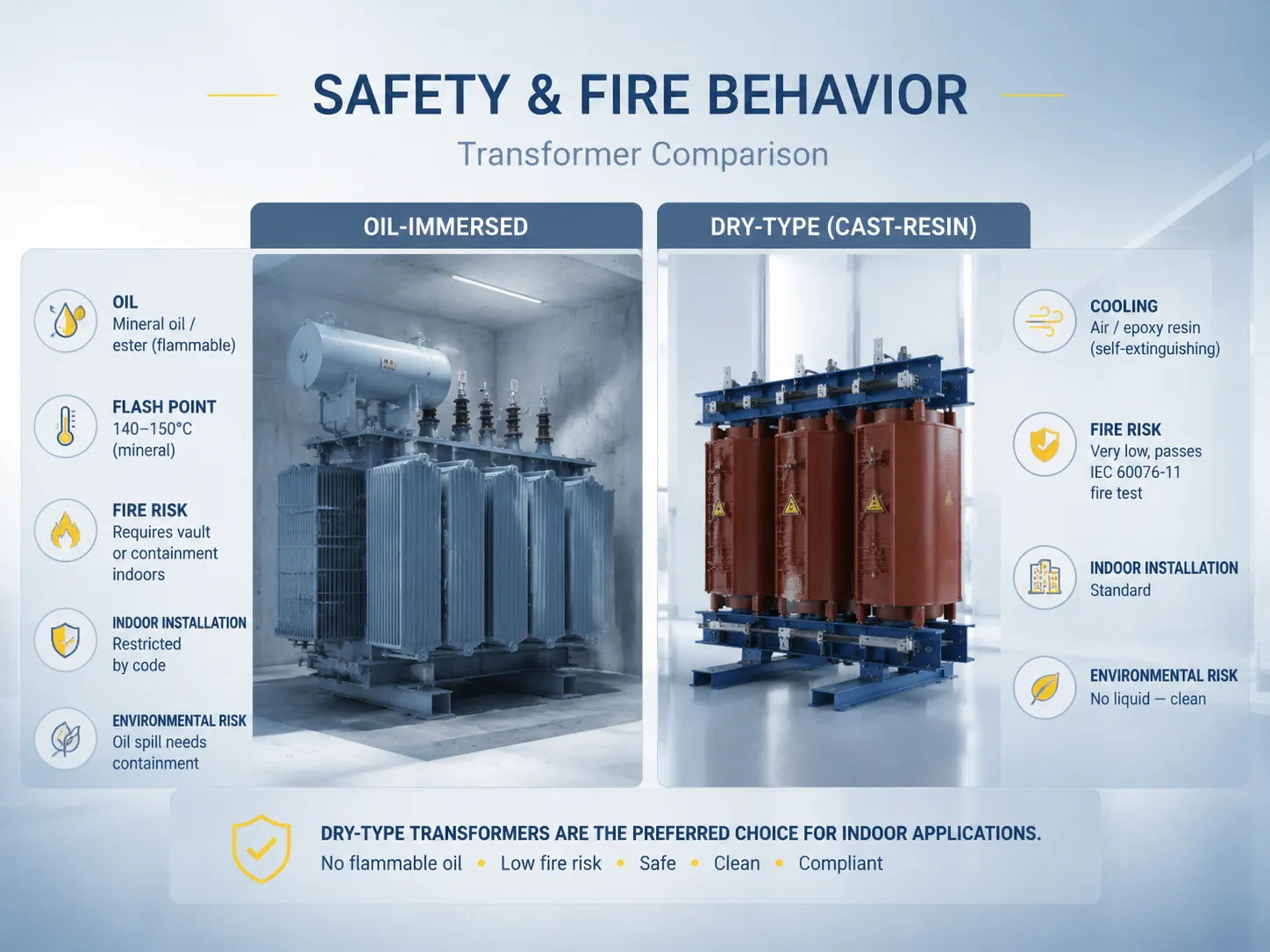
القرار الأول المتخذ فيما يتعلق بمخاطر الحريق هو أن كل من الزيت المعدني والزيت العازل لهما نقطة وميض تبلغ حوالي 140-150 درجة مئوية ونقطة حريق تبلغ حوالي 160 درجة مئوية. يمكن لجهاز يعتمد على الزيت أن يتسرب ويشتعل في حالة حدوث أعطال؛ ولهذا السبب تحظر تقريبًا جميع قوانين البناء والكهرباء الأجهزة المغمورة بالزيت في الأماكن المغلقة ما لم يكن لديها إما حاوية مقاومة للحريق مع تصريف إضافي أو حوائط مقاومة للحريق تسمح باحتواء الزيت.
المحولات الجافة لا تشكل أي خطر من الحرائق لأنها لا تحترق تحت اختبارات الحريق IEC 60076-11، ولا تطلق أي زيوت قابلة للاشتعال؛ لذلك، تعتبر المحولات الجافة الخيار المفضل للاستخدام الداخلي.
| جانب السلامة | النوع المغمور بالزيت | النوع الجاف (راتنج مصبوب) |
|---|---|---|
| وسط تبريد | زيت معدني / استر (قابل للاشتعال) | هواء / راتنج إيبوكسي (يطفئ نفسه) |
| نقطة وميض الزيت | 140–150°C (معدني) | غير متاح |
| خطر الحريق | يتطلب خزنة أو احتواء داخلي | منخفض جداً، يجتاز اختبار الحريق IEC 60076-11 |
| تركيب داخلي | مقيد بواسطة القوانين | معيار |
| خطر بيئي | تسرب الزيت يحتاج إلى احتواء | لا سائل — نظيف |
مقارنة التكلفة عند كل تصنيف
المحولات الجافة أغلى من المحولات المغمورة بالزيت بنسبة 40-80% لنفس سعة الكيلوفولت أمبير. من بين العوامل التي تسهم في ارتفاع سعر المحولات الجافة هي استخدام لفائف النحاس (تستخدم المحولات الجافة النحاس دائماً بسبب كفاءة التبريد الهوائي الأقل مقارنة بتبريد الزيت)، وتغليف الراتنج وصب الراتنج بالإضافة إلى التصميم الحراري الأفضل الذي يكون ضرورياً عند التشغيل بارتفاع درجة حرارة 100 ك.
| التصنيف | مغمورة بالزيت (FOB الصين) | جافة / راتنج مصبوب | متميز |
|---|---|---|---|
| 100 كيلوفولت أمبير | $2,500–$6,000 | $4,000–$9,000 | +40–60% |
| 250 ك.ف.أ | $4,500–$11,000 | $7,000–$16,000 | +45–55% |
| 500 ك.ف.أ | $8,000–$16,000 | $12,000–$24,000 | +50% |
| 1,000 كيلوفولت أمبير | $15,000–$32,000 | $22,000–$46,000 | +45–60% |
| 2,500 كيلوفولت أمبير | $38,000–$75,000 | $58,000–$110,000 | +50–70% |
الأسعار تقديرية وتعتمد على المواصفات، الشركات المصنعة، والمواقع الجغرافية. مع زيادة القدرة، تتقلص الفروقات بين وحدات الزيت، على عكس عندما تستخدم سائل استر مقاوم للحريق. في حالة المستشفى، كانت الرسوم الإضافية البالغة $10,000 المدرجة أصلاً في سعر الوحدة الجافة مضللة، حيث عند تضمين الخزنة، حفرة الاحتواء، ونظام مكافحة الحرائق لنظام الطاقة بالزيت، تبين أنه كان أكثر تكلفة لتركيب “الحل الرخيص”.
الأداء: الحمل الزائد، الكفاءة، والعمر
تبرز المحولات المغمورة بالزيت عندما يتعلق الأمر بأداء الحمل الزائد. يسخن الزيت أثناء استخدام المحول، مما يسمح له، وفقاً لمعايير IEC 60076-7، بالعمل أثناء حمل 1.3 إلى 1.5 من الحمل الموصى به لعدة ساعات بعد الاستخدام السابق. أما بالنسبة للمحولات الجافة، فهي قادرة فقط على تحمل أكثر بقليل من سعتها المقدرة (عادة 1.1) لأنها تملك سعة حرارية قليلة.
عند الحديث عن الكفاءة، فإن المحولات الحديثة لديها أداء مشابه، على الرغم من أنه يجب ملاحظة أن المحولات المغمورة بالزيت ذات النواة غير المتبلورة لديها أقل مستوى من خسائر عدم الحمل — فهي تعمل بشكل جيد حيث تعمل المحولات على مدار الساعة. من حيث العمر، تم تصميم كلا النوعين لمدة 20 إلى 30 عاماً، لكن الأعمار ستعتمد على درجة حرارة العزل. الرطوبة في الزيت، وتكوين الطين، والغازات المذابة في الزيت هي مصادر لصيانة الوحدات القائمة على الزيت؛ بينما المحولات الجافة لديها مشكلاتها الخاصة حيث لا تتأثر بمشاكل الزيت ولكنها تحت تهديد تراكم الغبار على اللفائف وبدء التفريغ الجزئي في الظروف الرطبة.
| مقياس الأداء | النوع المغمور بالزيت | النوع الجاف |
|---|---|---|
| الحمل الزائد قصير الأمد (IEC 60076-7) | 3–1.5× لساعات | ~1.1× لفترة قصيرة |
| ارتفاع درجة الحرارة (التصنيف) | 55–65 ك | 100 ك |
| الكفاءة النموذجية (500 كيلوفولت أمبير) | 98.2–98.8% | 98.0–98.6% |
| هدف عمر العزل | 20–30 سنة | 20–30 سنة |
| وضع الفشل الرئيسي | تدهور الزيت، الرطوبة، أحداث تحليل الغاز المذاب | تفريغ جزئي، تتبع الغبار |
متطلبات التركيب والمساحة
عادة ما يتم اختيار المساحة والأعمال المدنية قبل التسعير. بالنسبة لمحول زيت داخل مبنى، سيكون من الضروري وجود خزنة مقاومة للحريق (على الأقل، مع جدران مقاومة لمدة ساعتين)؛ كما سيكون من الضروري وجود حفرة احتواء الزيت التي ستكون قادرة على احتواء الحجم الكامل للزيت بالإضافة إلى 10% من مياه إطفاء الحريق، بالإضافة إلى توفير التهوية وفقًا للوائح مع تدفق أدنى مطلوب.
ومع ذلك، في الخارج، تتغير الحالة – بينما تعتبر المحولات الزيتية طبيعية نظرًا لأن قاعدة مبطنة بسيطة مطلوبة لها، لا يمكنك أن تتوقع العثور على محول جاف في الخارج دون التأثير على سعره وتحمل خطر ارتفاع درجة الحرارة. هناك أيضًا ضوضاء: بينما تكون المحولات الزيتية هادئة لأن الخزان يمتص اهتزاز القلب، فإن المحولات الجافة تكون أكثر ضوضاءً بما لا يقل عن 5-10 ديسيبل (A) بسبب نفس تصنيف الطاقة (وفقًا لمعايير قياس مستوى الصوت IEC 60076-10).
| جانب التركيب | النوع المغمور بالزيت | النوع الجاف |
|---|---|---|
| المسافة الداخلية | القبو + حفرة الزيت + تصنيف الحريق | 300–600 مم مسافة هوائية |
| مقاومة الطقس الخارجية | متكامل (خزان محكم) | يحتاج إلى غلاف (IP54+) |
| الأساس | بطانة احتواء، قاعدة أثقل | قاعدة مسطحة، أخف |
| الضوضاء عند 1 م (500 kVA) | ~55–62 ديسيبل(A) | ~60–70 ديسيبل(A) |
| تحميل الأرضية | أعلى (خزان + زيت) | أقل |
الصيانة وإجمالي تكلفة الملكية
عندما يتعلق الأمر بالمحولات التي تتضمن الزيت، فإن الصيانة هي بلا شك متطلب حقيقي ومستمر، والذي يتكون من الفحوصات السنوية، أخذ عينات من الزيت (كل 1 إلى 3 سنوات وفقًا لمدى أهمية المحول)، فحص مستوى الزيت ودرجة الحرارة، إكمال استبدال هلام السيليكا في جهاز التنفس، وفي النهاية تصفية الزيت. تحتاج المحولات الجافة إلى صيانة شبه معدومة عند استخدامها في الداخل ولديها فقط تنظيف بسيط من الغبار وفحوصات حرارية. ومع ذلك، بسبب التكلفة الأولية الأعلى، تميل المحولات من النوع الجاف إلى أن تكون أكثر إشكالية حيث قد تؤدي بك إلى الحصول على سعة أعلى مما تحتاج.
من حيث إجمالي تكاليف الملكية على مدى عشرين عامًا، قد تكون المحولات الزيتية أقل تكلفة في البداية، لكنها ستتطلب تكاليف مستمرة مرتبطة بصيانة الزيت (حوالي $150-600 سنويًا) على عكس المحولات الجافة التي لديها تكلفة أولية عالية (حوالي 40-80% أعلى) وتكاليف تشغيل شبه معدومة. هذا يعني أنه مع وجود جهاز مثبت، ستقترب الحلول من بعضها البعض من حيث التكاليف، مع عدم تجاوز الفرق 10-20%. وبالتالي، يجب اتخاذ القرارات وفقًا لظروف مستحيلة (حيث سيتم وضعه، كود الحريق، خصائص التحميل الزائد، إلخ) بدلاً من التكلفة.
جدول المقارنة جنبًا إلى جنب
| النموذج المدفوع بالابتكار | النوع المغمور بالزيت | النوع الجاف |
|---|---|---|
| أفضل موقع | خارجي، محطات فرعية، صناعي | داخلي، مباني، أنفاق |
| سلامة من الحرائق | يحتاج إلى قبو/احتواء | ذاتية الإطفاء |
| السعر (500 kVA) | $8,000–$16,000 | $12,000–$24,000 |
| تحمل التحميل الزائد | 3–1.5× لساعات | ~1.1× لفترة قصيرة |
| الصيانة | زيت، DGA، فحوصات | الحد الأدنى |
| الضوضاء | أقل (55–62 ديسيبل) | أعلى (60–70 ديسيبل) |
| خطر بيئي | احتواء تسرب الزيت | لا شيء |
| الامتثال لكود البناء الداخلي | مقيد | معيار |
للبدء، يرجى الرجوع إلى هذا الجدول: إذا كانت الصفوف تظهر “مبنى داخلي” يمكنك المتابعة إلى النوع الجاف؛ إذا ذكرت “محطة فرعية خارجية” فستحتاج إلى الزيت. بعد ذلك، يتم تأكيد اتجاه معظم المشاريع من كود الحريق وملف التحميل الزائد.
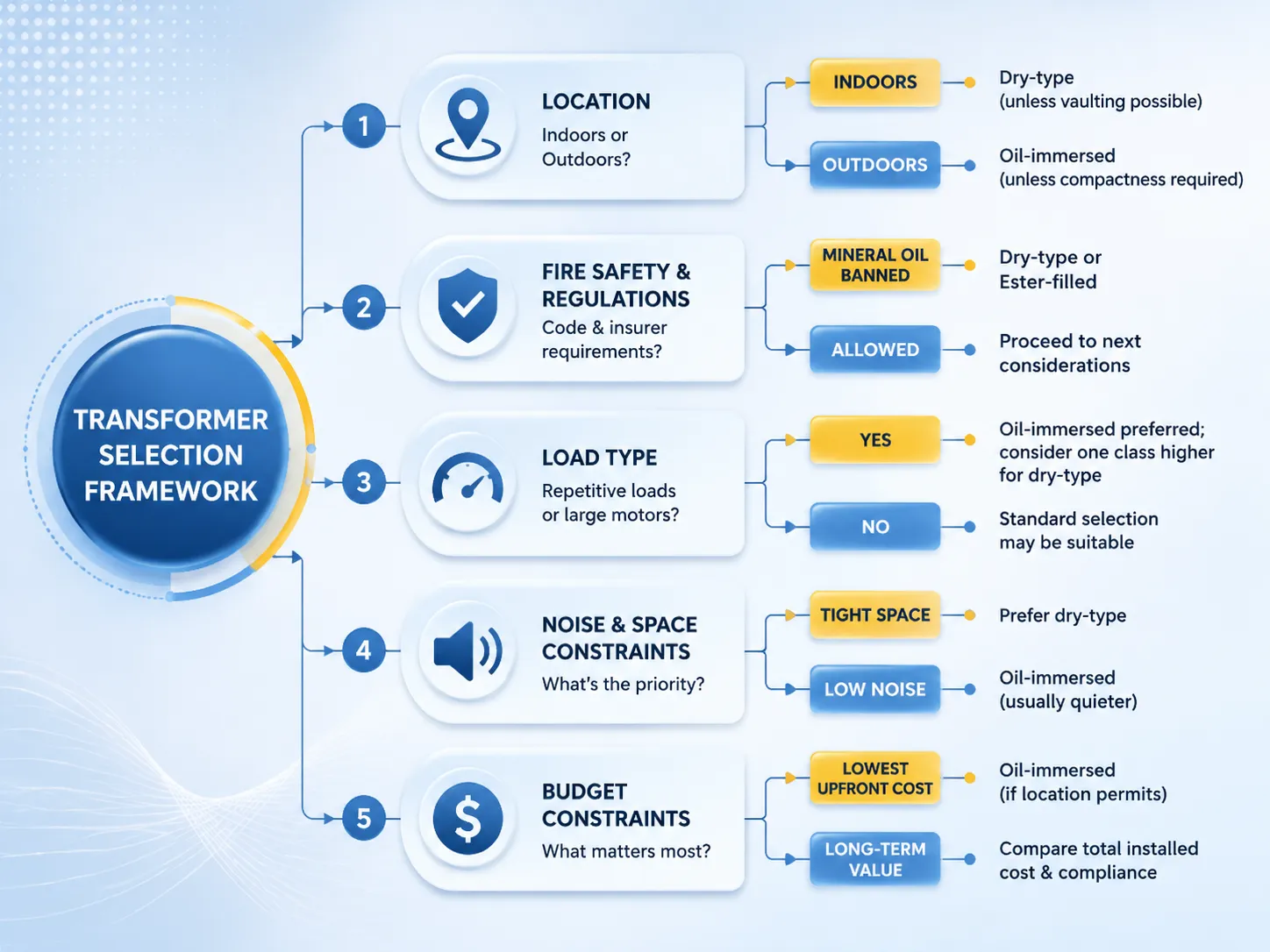
إطار قرار لمشروعك
اتبع هذه الأسئلة الخمسة بالترتيب - السؤال الأول الذي يحدد الردود على ما يلي:
- أين يقع؟ داخلي → نوع جاف، ما لم يكن من الممكن استخدام القبو. خارجي → مغمور بالزيت، ما لم تكن الحاجة إلى التCompactness.
- ماذا تقول أكواد السلامة من الحرائق وشركة التأمين؟ إذا كان الزيت المعدني محظورًا في كود البناء، اختر معدات من النوع الجاف أو المملوءة بالإستر.
- ما نوع الأحمال التي يتعامل معها؟ كما هو الحال مع النمو، الأحمال المتكررة أو استخدام المحركات الكبيرة → يجب أخذ فوائد التحميل الزائد المغمور بالزيت في الاعتبار؛ اعتبر فئة واحدة أعلى للنوع الجاف.
- ما هي القيود المفروضة على الضوضاء والمساحة؟ إذا كانت هناك قيود صارمة على المساحة والضوضاء → يُفضل استخدام النوع الجاف على المعدات الزيتية من حيث المساحة، والعكس صحيح عندما يتعلق الأمر بالضوضاء.
- ما هي قيود الميزانية؟ إذا كانت المعدات الأكثر فعالية من حيث التكلفة مفضلة → استخدم المعدات المغمورة بالزيت (طالما أن الموقع يسمح بذلك). إذا كانت التكاليف طويلة الأجل والقضايا التنظيمية تمثل أولوية → قدم مقارنة لتكلفة المعدات بعد التركيب.
اختار مستشفى النوع الجاف لأن السؤال 2 قد حسم كل شيء في هذه الحالة. اختار مزرعة شمسية المعدات المغمورة بالزيت لأن الأسئلة 1 و 3 تبدو أنها تسود. قد يختار مستشفى يقع في الطابق السفلي استخدام زيت مملوء بالإستر من أجل توفير المال.
العلامات التجارية ومعايير الأسعار
كلا التقنيتين تنتميان إلى نفس طيف العلامات التجارية ولديهما نفس نسب الأسعار بين العلامات التجارية المختلفة. تتولى العلامات التجارية الدولية مسؤولية توفير النوع الجاف الحرج للمهمة، بينما تتنافس الشركات المعتمدة من IEC من الصين بنجاح في كلا الفئتين على مستويات أقل.
| العلامة التجارية | القوة | زيت 500 kVA | نوع جاف 500 kVA |
|---|---|---|---|
| ABB | مجموعة كاملة، خدمة عالمية | $18,000–$30,000 | $26,000–$44,000 |
| سيمنز | الكفاءة، المراقبة الرقمية | $18,000–$32,000 | $27,000–$46,000 |
| شنايدر إلكتريك | القيادة من النوع الجاف | $15,000–$28,000 | $24,000–$40,000 |
| هيتاشي للطاقة | الشبكة والصناعية | $17,000–$30,000 | $25,000–$42,000 |
| إيتون | الامتثال لأمريكا الشمالية | $14,000–$26,000 | $20,000–$36,000 |
| شركة جيانغسو سوبين للطاقة الكهربائية | IEC 60076، كلا النوعين، تقارير الاختبار | $8,000–$16,000 | $12,000–$24,000 |
يتم تقديم الأسعار كـ FOB الصين أو من المصنع وتعتمد على عدة معايير، بما في ذلك المواصفات، الاسم، والموقع. الأسماء الدولية المذكورة أعلاه تعمل كمعايير للموثوقية من حيث التقنيات. تشارك شركة جيانغسو سوبين للطاقة الكهربائية في أي مشروع لاختيار التكنولوجيا ولكن تسعى للحصول على السعر الأكثر موثوقية لأن الشركة تنتج محولات مغمورة بالزيت ومحولات من النوع الجاف بقوة تتراوح من 10 kVA إلى 100 MVA مع الامتثال المباشر لـ IEC 60076 (مما يعني IEC 60076-11 للأنواع الجافة). تقدم الشركة لعملائها تقرير الاختبار لكل طلب وتستخدم وحدات ملفوفة بالنحاس كمعيار. إذا كنت قد اخترت النوع الجاف لضمان عمل المستشفى أو النوع المغمور بالزيت لمحطة الطاقة الشمسية، فسيتم تقديم نفس الشهادات، قياسات الفقد، وتقرير الاختبار، حيث أن اختيار التكنولوجيا يحدد ما تشتريه، والوثائق تحدد ما إذا كنت قد استلمته.
الأسئلة المتكررة
أيهما أفضل: المحول من النوع الجاف أم المغمور بالزيت؟
المحولات المغمورة بالزيت والمحولات من النوع الجاف لها مزايا وعيوب لكلا النوعين. النسخة المغمورة بالزيت أرخص (40-80% أرخص من النوع الجاف بنفس تصنيف kVA)، تتعامل مع الأحمال الزائدة من 1.3-1.5× لساعات، ومناسبة لمحطات التحويل الخارجية، المصانع، ومزارع الطاقة الشمسية. النوع الجاف آمن من الحرائق، لا يتطلب وجود زيت، ويمكن أن يعمل داخل المباني، المستشفيات، ومراكز البيانات.
هل المحولات من النوع الجاف أغلى من المغمورة بالزيت؟
نعم، بشكل عام 40–80% أعلى عند مقارنة kVA: يكلف محول جاف بقدرة 500 kVA $12,000–$24,000 ونوع مغمور بالزيت $8,000–$16,000. ومع ذلك، عند النظر في قبو النوع المغمور بالزيت، وحفرة الاحتواء، وأنظمة إطفاء الحرائق، قد تكون التكاليف المثبتة متشابهة.
هل يمكن تركيب المحولات المغمورة بالزيت في الداخل؟
نعم، وفقًا للقانون: يجب أن يكون بناء القبو المقاوم للحريق ضروريًا في معظم المناطق؛ يجب أيضًا أن تكون هناك حفرة لجمع كامل حجم الزيت، ويجب تركيب أنظمة إطفاء الحرائق. بدلاً من ذلك، من الممكن النظر في استخدام وحدة مملوءة بالإستر.
كم من الوقت تدوم المحولات من النوع الجاف والمغمور بالزيت؟
كلاهما مصنوع بمدة تتراوح من 20-30 عامًا. تتأثر العمر الافتراضي لوحدات الزيت سلبًا بالرطوبة أو ارتفاع درجة الحرارة التي يمكن اكتشافها من خلال أخذ عينات DGA بانتظام. في حالة المحولات من النوع الجاف، يمكن استخدامها لأطول فترة في ظروف نظيفة وجافة تمامًا، ومع ذلك، يمكن أن تسبب الغبار والرطوبة تفريغًا جزئيًا مما يؤدي إلى تقصير العمر الافتراضي.
أي نوع من المحولات هو الأكثر هدوءًا؟
المحولات المملوءة بالزيت تُحدث ضوضاء أقل حيث أن وزن الخزان يمتص اهتزازات القلب، مما يُسجل ك مستوى ضوضاء أقل بمقدار 5-10 ديسيبل (A) مقارنةً بمحولات التبريد بالهواء من نفس النوع (حوالي 55-62 ديسيبل (A) مقارنةً بـ 60-70 ديسيبل (A) لمحول بتصنيف 500 كيلوفولت أمبير). وفقًا لـ IEC 60076-10، قبل اتخاذ قرارك بشأن المواقع السكنية والمستشفيات، من الضروري تأكيد قوة الصوت لمحولك.
المراجع
- IEC 60076-1: المحولات الكهربائية — عام — المعيار الأساسي للتصنيفات، وزيادة درجة الحرارة، والاختبار.
- IEC 60076-11: المحولات الكهربائية الجافة — المعيار المحدد لتصميم النوع الجاف، واختبار الحريق، والتصنيفات.
- IEC 60076-7: دليل التحميل لمحولات الطاقة المغمورة بالزيت — إرشادات التحميل الزائد والتحميل الدوري للوحدات الزيتية.
- IEEE C57.12.00: المتطلبات العامة لمحولات السائل المغمورة — الإطار المعادل في أمريكا الشمالية.
- NFPA 70: الكود الكهربائي الوطني — متطلبات التركيب والخزائن للمحولات المغمورة بالزيت في الأماكن المغلقة.
- Electrical4U — أنواع المحولات — خلفية عن التصميم الجاف، والراتنج المصبوب، والبناء المغمور بالزيت.
- Wikipedia - أنواع المحولات — مرجع حول التصنيفات الرئيسية للمحولات.
الخاتمة
الاختيار بين محول من النوع الجاف وآخر مغمور بالزيت لا يتعلق كثيرًا بأي منهما أفضل، بل أي حل يناسب جميع القيود. يمكنك العثور على قيود مثل أكواد الحريق والموقع التي ستحدد ما إذا كان يجب اختيار الوحدات الزيتية، التي تكون أكثر فعالية مع الأحمال الزائدة وفي الظروف الخارجية، أو الأنواع الجافة، التي تتفوق على منافسيها من حيث سلامة الحريق في الأماكن المغلقة — وفرق السعر 40–80% يتلاشى بشكل كبير بمجرد حساب تكلفة التركيب.
- قم بإجراء تحليل لموقعك وكود الحريق أولاً؛ ستتبع التكنولوجيا.
- قم بتقييم السعر المثبت، بما في ذلك الخزائن ومواد الاحتواء، بدلاً من مجرد سعر الجهاز.
- اختر نموذجًا مناسبًا للأحمال الزائدة، أي اختر الأنواع الجافة وفقًا لمتطلبات الحمل الزائد المحددة.
- أكد اختيارك بنتائج اختبار IEC 60076 والخسائر الموثقة.