


اعتبر عندما قمت بشحن هاتفك المحمول، أو تشغيل الغسالة، أو رؤية جهاز MRI يتم استخدامه في منشأة طبية. كل هذه الإجراءات تم تمكينها بواسطة المحولات، بينما الحقيقة هي أن العديد من الناس لم يروا حتى محولًا واحدًا. محطة توليد الطاقة الواقعة على بعد مئات الكيلومترات تحول الطاقة الكهربائية إلى طاقة مرة أو مرتين؛ لذلك، إذا كانت هذه الطاقة الناتجة عن محطة كهربائية هي 20 كيلوفولت، فإن الجهاز المتصل بالقرب يحصل عليها بجهد 230 فولت. يجب أن يكون هناك شيء يوفر مثل هذه الانتقالات، و“هذا الشيء” المذكور موجود حوالي عشرة مرات بين المولد والجهاز. المحول هو الذي يدير هذه المهمة بشكل جيد جدًا حيث إنه آلة مستخدمة على نطاق واسع في صناعة الهندسة الكهربائية.
يهدف هذا الدليل التفصيلي إلى تقديم إجابات على السؤال الأول للطلاب الجدد الذين يدخلون مجال الهندسة الكهربائية: ما هو الغرض من المحول؟ هنا، ستجد معلومات حول ما هو المحول وكيف يعمل بالإضافة إلى أنواعه الرئيسية مع أمثلة وأشكال تنتمي إلى كل فئة. سواء كنت طالبًا، أو كهربائيًا، أو مدير مشتريات، ستساعدك هذه المقالة على فهم أساسيات المحولات.
ما هو المحول؟
المحول هو جهاز كهربائي يتكون من لفين أو أكثر تؤدي وظائف مرتبطة مغناطيسيًا لغرض تحويل الجهد للتيار المتردد. إنه خالٍ تمامًا من أي جزء متحرك - ينقل الطاقة عبر المجال المغناطيسي، وليس الموصل، وبالتالي يمكن أن يعمل لعقود مع القليل من الصيانة. تستوعب المحولات في الجهد من أصغر محولات الأدوات المصنفة فقط بعدة فولت أمبير إلى قوة الميجا فولت أمبير المستخدمة بواسطة المحولات عالية الجهد المصنفة بـ 1,500 م ف أ.
تعمل المحولات فقط مع التيار المتردد، وهو ما سمح للتيار المتردد بالفوز في ‘حرب التيارات’ في نهاية القرن التاسع عشر. يمكن رفع التيار المتردد إلى مئات الكيلوفولت لأغراض النقل ثم خفضه مرة أخرى للاستهلاك - لم يكن من الممكن القيام بذلك مع أنظمة التيار المستمر.
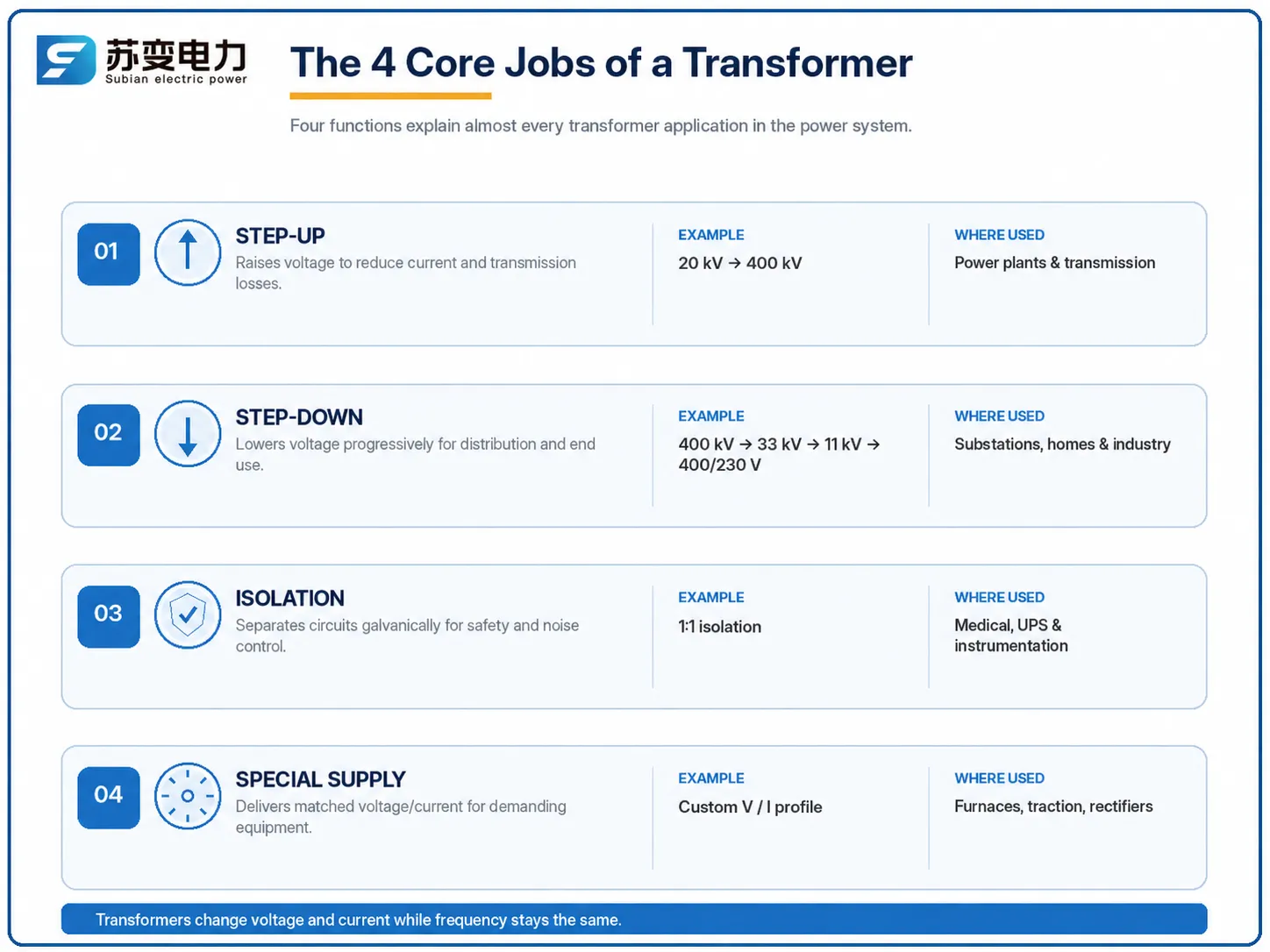
الوظائف الأربعة الأساسية للمحول
| الوظيفة | ما الذي تفعله | مثال |
|---|---|---|
| رفع الجهد | يزيد الجهد للنقل لمسافات طويلة، مما يقلل من خسائر الخط | 20 كيلوفولت → 400 كيلوفولت في محطة توليد الطاقة |
| خفض الجهد | يخفض الجهد للتوزيع والاستخدام النهائي | 400 كيلوفولت → 33 كيلوفولت → 11 كيلوفولت → 400/230 فولت |
| العزل | يفصل الدوائر كهربائيًا من أجل السلامة والتحكم في الضوضاء | المعدات الطبية، الأدوات، UPS |
| إمداد خاص | يوفر جهد/تيار متطابق للأحمال المحددة | محولات الأفران، محولات التقويم، وحدات K-factor |
تعمل عمليات رفع وخفض الجهد من حيث الكمية. في معظم السيناريوهات، في خطوط الطاقة، تخضع الطاقة الكهربائية لتغيير جهدها عدة مرات: مرة في المولد، مرة في كل مستوى من مستويات النقل الفرعي، مرة في المحول التوزيعي بالقرب من المنزل، وفي بعض الحالات داخل المبنى.
كيف يعمل المحول
تعتمد مبدأ عمل الجهاز على الحث الكهرومغناطيسي, ، أي قانون فاراداي. عندما يمر التيار المتردد عبر الملف الأولي، فإنه ينتج تدفقًا مغناطيسيًا متناوبًا في القلب المصنوع من الصلب المصفح. يرتبط التدفق المغناطيسي الناتج عن الملف الأولي بالملف الثانوي، مما يحفز جهدًا في الملف الثانوي يتناسب مع عدد اللفات فيه. المعادلة بسيطة: هي Vprimary / Vsecondary = Nprimary / Nsecondary، بينما الطاقة الداخلة تساوي الطاقة الخارجة ناقص الخسائر، مما يعني أن التيار يتغير عكسيًا بالنسبة لنسبة الجهد.
الكفاءة عالية جدًا في الواقع. تعمل المحولات التوزيعية بكفاءة تتراوح بين 97–99.%، بينما تحقق المحولات الكبيرة كفاءة تتراوح بين 99.5–99.7TP3T. بعد ذلك، يتم تحويل الخسائر إلى حرارة، بما في ذلك خسائر القلب (بدون تحميل)، التي تحدث أثناء تشغيل الجهاز وخسائر النحاس (التحميل) التي تتناسب مع مربع التيار.
شرح المكونات الرئيسية
| المكون | المواد | الوظيفة |
|---|---|---|
| القلب | فولاذ سيليكون موجه أو معدن غير متبلور | ينقل التدفق المغناطيسي بين الملفات؛ الجودة تحدد خسارة عدم التحميل |
| اللفائف | نحاس أو ألومنيوم، معزول بورق/أراميد | يحمل التيار ويخلق/يحرض الجهد؛ النسبة تحدد التحويل |
| العزل ووسيط التبريد | زيت المحولات، راتنج الإيبوكسي، أو طلاء من الفئة-H | يعزل كهربائيًا ويزيل الحرارة من الجزء النشط |
| محول التغيير | جهات اتصال نحاسية، يدوية أو OLTC | يضبط نسبة اللفات للحفاظ على جهد الخرج تحت تغيرات النظام |
| خزان / غلاف | فولاذ، مع خزان، منفذ، حوامل | يحمي الجزء النشط، يحتفظ بالزيت، يوفر أطراف وسطح تبريد |
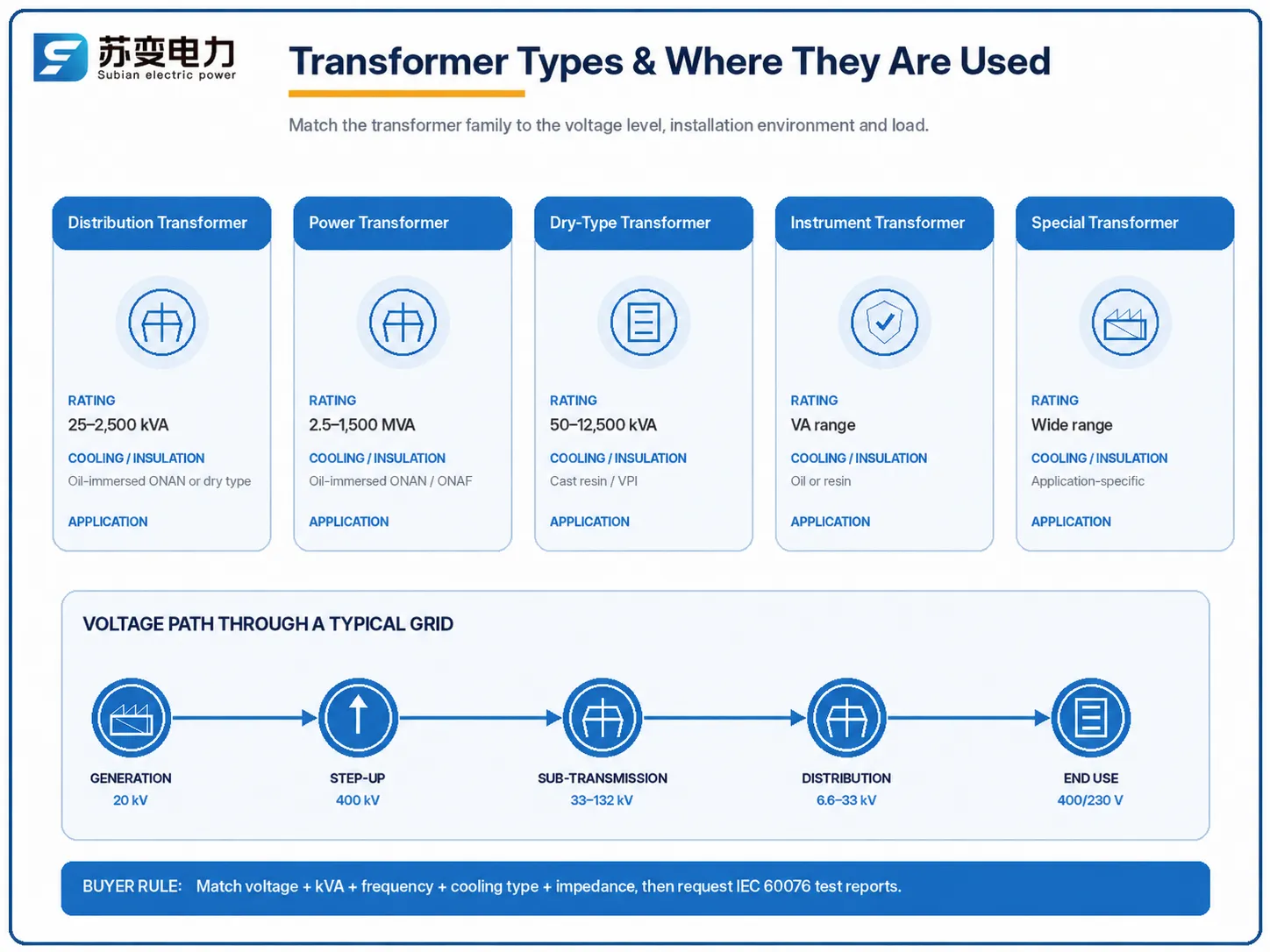
أنواع المحولات
| النوع | التبريد / العزل | نطاق التصنيف | حيث يتم الاستخدام |
|---|---|---|---|
| محول توزيع | نوع مغمور بالزيت ONAN، أو نوع جاف | ٢٥–٢,٥٠٠ كيلو فولت أمبير | الأعمدة، الوسائد، المحطات الفرعية التي تغذي المنازل والشركات |
| محول طاقة | مغمور بالزيت ONAN/ONAF | 5–1,500 MVA | المحطات الفرعية للشبكة، رفع جهد المولد |
| محول نوع جاف | راتنج مصبوب / VPI | 50–12,500 ك.ف.أ | داخلي، مراكز بيانات، بحري، ناطحات سحاب |
| محول القياس (CT/VT) | زيت أو راتنج | نطاق VA | القياس والحماية |
| المحولات الخاصة | حسب الحاجة | واسع | الأفران، الجر، الطاقة الشمسية، الرياح، المحولات |
مستويات الجهد وأين تستخدم
| مستوى الجهد | الفئة | دور المحول |
|---|---|---|
| 110–800 كيلوفولت | جهد عالي/فائق | النقل بالجملة بين المناطق |
| 33–132 كيلوفولت | جهد عالي / نقل فرعي | الإمداد الإقليمي إلى المحطات الفرعية |
| 6–33 كيلوفولت | جهد متوسط | خطوط توزيع، إمدادات صناعية |
| 380/415 فولت، 208/120 فولت | جهد منخفض | لوحات توزيع المستخدم النهائي |
| <50 فولت | جهد منخفض جداً | التحكم، الإشارة، العزل الأمني |
التطبيقات العملية حسب القطاع
- في توليد الطاقة، تعمل المحولات الرافعة في محطات الطاقة الحرارية، الكهرومائية، النووية، الرياح، والطاقة الشمسية على رفع جهد المولد إلى مستوى مناسب للناقلات.
في النقل والتوزيع، يتكون نظام الشبكة بالكامل من 400 كيلو فولت إلى 11 كيلو فولت و0.4 كيلو فولت من المحولات.
في الصناعة، تقوم المحطات الفرعية بتحويل جهد 11 كيلو فولت–33 كيلو فولت إلى 400 فولت قابل للاستخدام للمحركات والمحركات الكهربائية وأيضاً في الأفران.
في المنشآت التجارية، توفر المحولات المعزولة الموجودة في غرفة الكهرباء كهرباء بجهد 400/230 فولت للتوزيع والإضاءة في الطوابق.
في حالة النقل بالسكك الحديدية، تقوم المحولات الموجودة إما على القاطرات أو في النقاط الثابتة للسكك الحديدية بتنظيم الجهد من الشبكة إما إلى 25 كيلو فولت أو 15 كيلو فولت أو تمنعها من تجاوز 750 فولت (نظام تيار مستمر).
في حالة مصادر الطاقة المتجددة، تحتوي كل محطة توربينات رياح ومحطة عاكس شمسية على محول خاص بها يستخدم لتغذية الشبكات.
في المنازل، سواء على الأعمدة أو المثبتة على القواعد، يقوم المحول بالفعل بتحويل الجهد المتوسط إلى 230 فولت قابل للاستخدام بواسطة محولات الكتل.
لماذا لن تعمل الكهرباء بدونها
يسمح النقل بجهد عالي بتقليل الخسائر الناتجة عن المقاومة بمقدار مربع قيمة التيار المعروف بخسارة الطاقة I²R. إذا تم مضاعفة الجهد، فإن التيار سينخفض بمقدار 4 مرات، وستنخفض الخسارة في الخط بمقدار 75%. غياب المحولات الرافعة يعني فقدان 10-20% من الطاقة الكهربائية المولدة أثناء النقل بسبب انبعاثات الحرارة. وجودها يؤدي إلى خسائر تبلغ فقط 2-5%. تساعد المحولات في عزل الكهرباء وتحسين سلامة عملياتها من خلال تحويل الجهود بين أنظمة مختلفة. هذه الآلة غالباً ما تكون مميزة بين الآلات الأخرى.
العلامات التجارية والأسعار النموذجية
| العلامة التجارية | الدولة | توزيع 100 كيلوفولت أمبير | توزيع 630 كيلوفولت أمبير | ملاحظات |
|---|---|---|---|---|
| هيتاشي للطاقة | سويسرا/اليابان | $2,800–$5,000 | $9,000–$15,000 | جودة شبكة، شبكة عالمية واسعة |
| سيمنز | ألمانيا | $2,700–$4,800 | $8,500–$14,500 | قوية في أوروبا والصناعة |
| ABB | سويسرا | $2,700–$4,800 | $8,500–$14,000 | محفظة توزيع واسعة |
| شنايدر إلكتريك | فرنسا | $2,600–$4,600 | $8,000–$13,500 | خط توزيع بتصميم بيئي |
| إيتون | أيرلندا/الولايات المتحدة | $2,200–$4,000 | $7,000–$12,000 | وجود قوي في أمريكا الشمالية |
| شركة جيانغسو سوبين للطاقة الكهربائية | الصين | $1,300–$3,200 | $4,800–$9,500 | مختبر IEC 60076، مصنع مباشر، OEM/ODM |
تتصدر العلامات التجارية الدولية مثل Hitachi Energy و Siemens و ABB في مجالات الخدمة والمستندات الهندسية، مع تكاليف متCorresponding. ومع ذلك، فإن التصميم لفئة التوزيع القياسية هو تصميم قديم وموحد للغاية، حيث يتبع جميع الشركات المصنعة الصينية ذات السمعة الطيبة تقريبًا نفس معايير IEC 60076 و IEEE C57.12. تعتبر Jiangsu Subian Electric Power من بين الشركات المصنعة الصينية للمحولات التي تشارك في إنتاج مجموعة واسعة من محولات التوزيع والطاقة حتى 110kV. تقدم الشركة تقارير اختبار متنوعة، وخيار الفحص من طرف ثالث، ودعم لشركات OEM بأسعار مباشرة من المصنع تكون عمومًا أقل بمقدار 25-40% من الأسعار الأوروبية.
كيفية اختيار الأنسب
- تحديد جهد النظام وتردد التشغيل (مثل 11/0.4 kV، 50 Hz) وترتيب التأريض.
- حساب الحمل الأقصى لديك بالكيلو فولت أمبير؛ حجم الوحدة عند 65–80% من الاسم التجاري لتحقيق أفضل كفاءة.
- اختر نوع التبريد: مغمور بالزيت للاستخدام الخارجي، نوع جاف للاستخدام الداخلي أو المواقع الحساسة للنيران.
- اختر فئة الفقدان والكفاءة بناءً على التشغيل المستمر 24/7 واللوائح المحلية (مثل DOE 10 CFR 431، NEMA TP-1).
- تحديد المقاومة (عادة 4–6% للتوزيع) لمطابقة إعدادات الحماية.
- اتخاذ قرار بشأن الملحقات: محول التوصيل، تصنيف IP للحاوية، أجهزة المراقبة والحماية.
- طلب عروض أسعار مع شهادات اختبار روتينية من ثلاثة موردين على الأقل ومقارنة التكلفة النهائية.
الأسئلة المتكررة
ما هو أبسط تفسير لما يفعله المحول؟
يقوم المحول بتغيير جهد التيار المتردد. يرفع الجهد لنقل فعال عبر مسافات طويلة ويخفضه مرة أخرى للاستخدام الآمن في المنازل والمكاتب والمصانع، باستخدام ملفين متصلين مغناطيسيًا من خلال نواة فولاذية. ليس له أجزاء متحركة ولا يحتاج إلى مصدر طاقة خاص به.
لماذا يتطلب المحول تيار متردد للعمل؟
تعتمد المحولات على تدفق مغناطيسي متغير لتحفيز الجهد في الملف الثانوي، ولا ينتج عن ذلك سوى التيار المتردد الذي ينتج هذا التدفق المتغير. التيار المباشر ينتج تدفقًا ثابتًا لا يحفز شيئًا—وهذا هو بالضبط السبب في فوز التيار المتردد في المنافسة التاريخية ضد التيار المباشر لنقل الشبكة.
ما هي الكفاءة النموذجية للمحول؟
تعمل المحولات التوزيعية بكفاءة 97–99%؛ تصل المحولات الكبيرة إلى 99.5–99.7%. حتى التحسينات الصغيرة تهم لأن المحولات التوزيعية تعمل بالطاقة بشكل مستمر، لذا فإن معايير الكفاءة مثل NEMA TP-1 وU.S. DOE 10 CFR 431 تفرض مستويات فقدان دنيا للوحدات المباعة في أمريكا الشمالية.
كم يكلف المحول الأساسي؟
يكلف محول عمود أحادي الطور بقدرة 25–50 kVA ما بين $600–$1,500؛ وحدة ثلاثية الطور بقدرة 100 kVA تكلف ما بين $1,500–$4,000؛ محول توزيع بقدرة 630 kVA يكلف ما بين $6,000–$12,000؛ ومحول طاقة بقدرة 10 MVA يكلف ما بين $80,000–$160,000. أضف 10–20% للشحن والتركيب والملحقات. تختلف الأسعار حسب العلامة التجارية والخسائر والمنطقة.
كم تدوم مدة المحول؟
تدوم المحولات التوزيعية المغمورة بالزيت عادةً من 25 إلى 35 عامًا والمحولات الكبيرة من 40 إلى 50 عامًا مع الصيانة المناسبة. تعتمد مدة عزل المحول على درجة الحرارة: التشغيل المستمر عند 8–10°C فوق نقطة الحرارة المحددة يقلل من العمر المتبقي للنصف، لذا فإن الانضباط في التحميل هو أقوى عامل في طول العمر.
المراجع
- موسوعة بريتانيكا: المحول — تفسير سهل لفيزياء الحث الكهرومغناطيسي وعمل المحول.
- IEC 60076-1: المحولات الكهربائية – المتطلبات العامة — المعيار العالمي الذي يحدد التصنيفات والتسامحات والاختبارات.
- U.S. DOE: كفاءة المحولات التوزيعية — يشرح لماذا تهم الكفاءة والحد الأدنى من اللوائح السارية.
- NEMA TP-1 — المعيار الصناعي لكفاءة المحولات التوزيعية في أمريكا الشمالية.
- IEEE C57.12.00 — المعيار الأمريكي لتحويلات السائل المغمور.
- آفاق الطاقة العالمية للوكالة الدولية للطاقة — سياق حول الطلب على بنية الشبكة وتوزيع المحولات.
- شركة جيانغسو سوبين للطاقة الكهربائية — مصنع المحولات الذي يوفر وحدات متوافقة مع IEC 60076 من التوزيع إلى فئة 110 كيلو فولت.
الخاتمة
المحولات حيوية في أي شبكة كهربائية. فهي ترفع مستوى الجهد، وتخفضه، وتقيسه، وتعزل دوائر معينة، وتزود كل نظام بالأحمال الكهربائية المطلوبة - كل ذلك دون أي أجزاء متحركة ولعدة سنوات.
لفهم المحولات، نحتاج إلى استكشاف الوظائف الأربعة الرئيسية للمحولات، والعلم وراء المبدأ الكهرومغناطيسي، وأنواعها.
تستخدم المحولات الحث الكهرومغناطيسي لتغيير مستويات الجهد. يمكن أن تكون الفعالية عالية تصل إلى 97-99.7%.
تشمل جميع المسارات الكهربائية من 4 إلى 6 مراحل من المحولات.
تحقق من المخرجات المثلى عند اختيار المحول وتأكد من طلب تقديم تقرير اختبار IEC 60076.
لذلك، عندما تأتي لاختيار المورد الخاص بك، قارن بين التكلفة الإجمالية للملكية لكل من الشركات العالمية، مثل Hitachi وSiemens، أو الموردين المحليين، مثل Jiangsu Subian Electric Power.