


اختارت منشأة معالجة الطعام في تايلاند تصنيف IP23 لمحوّلاتها الجديدة من النوع الجاف لأنها كانت ستُركب داخل غرفة كهربائية مكيفة الهواء. ما لم يُكشف للمشتري هو أن نظام التكييف في هذه الغرفة سيتوقف ليلاً للحفاظ على الطاقة بالإضافة إلى أن فريق التنظيف الليلي سيغسل الأرضية على بعد مترين من الحاوية. كانت النتيجة تتبع الرطوبة المركبة التي أدت إلى تدهور عزل المحول الأول في غضون ثمانية أشهر. كانت الخطأ الرئيسي فيما يتعلق بالمواصفات ليس بشأن جهد التحويل حيث تم الوفاء بذلك؛ بل الخطأ الرئيسي حدث فيما يتعلق بتصنيف IP حيث يعتبر IP23 غير كافٍ عندما تكون هناك مياه في المكان.
تعتبر تصنيفات IP الخيار الأفضل للحصول على مواصفات عزل موثوقة. يوفر هذا تعريفات كل رقم في الرمز المرتبط بمستويات IP بالإضافة إلى كيفية تحديد مستوى IP المطلوب لكل بيئة.
ببساطة، يتكون تصنيف IP من رقمين: الرقم الأول (0 إلى 6) يدل على مستوى الحماية من الأجسام الصلبة، حيث يشير 4 إلى أن الجهاز محمي من الغبار، و6 يعني أنه محمي تمامًا من الغبار؛ الرقم الثاني (0–8) يظهر مستوى الحماية من الماء: 3 يشير إلى أن الجهاز محمي من الماء المتساقط، 5 – من الرذاذ، 6 – من نفاثات الماء القوية؛ و7 – من الغمر في الماء لفترة قصيرة. عند اختيار المحولات، بينما يعتبر IP21-IP23 مناسبًا لغرف الكهرباء الداخلية، فإن IP44 جيد للمناطق المغبرة، وIP54 يُستخدم للتطبيقات الصناعية الخارجية.
ماذا يعني رمز IP فعليًا
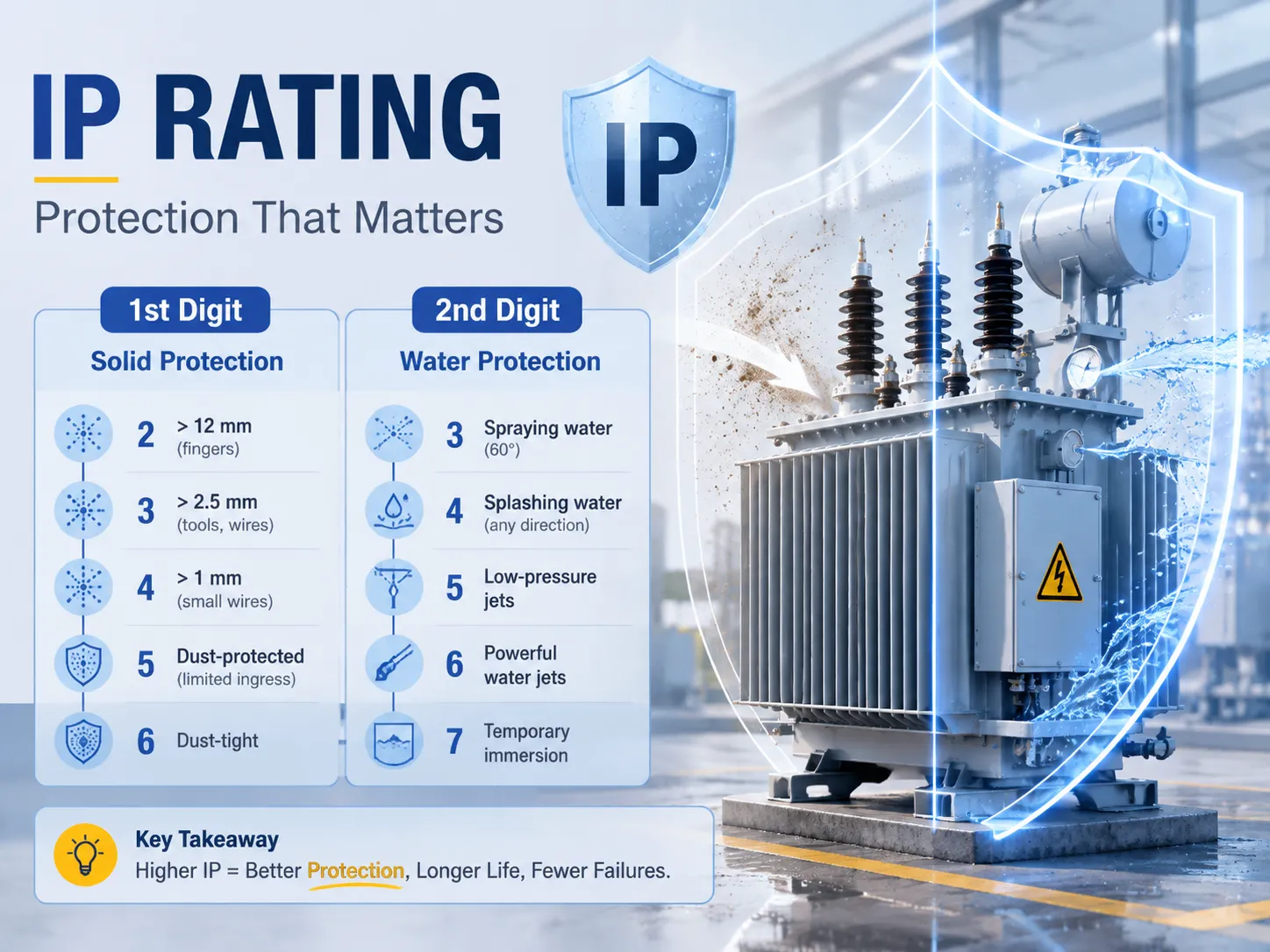
يتكون تصنيف IP للحاوية من IP متبوعًا برقمين مثل IP54، IP56، وIP65. يشير الرقم الأول إلى مقدار الحماية من الأجسام الصلبة (الغبار، الأصابع، إلخ) يتراوح من 0 (بدون حماية) إلى 6 (محكم ضد الغبار). يشير الرقم الثاني إلى الحماية من الماء، بنفس مقياس القيم من 0 (بدون مقاومة) إلى 8 (غمر كامل). يتم تحديد هذا التصنيف والتحقق منه وفقًا لمعيار IEC 60529 مما يعني أن تصنيف IP هو شهادة صالحة.
يحدد تصنيف المحولات نوع الحاوية التي تحمي الأجزاء الحية في الهيكل، وهي الخزان وأجزاؤه للمحولات الزيتية والخزانة مع لفائف المحولات الجافة. يجب اختيار تصنيف IP المناسب فيما يتعلق بتوفير أفضل مستوى من الحماية دون دفع مبالغ زائدة لذلك.
الرقم الأول: حماية من الجسيمات الصلبة
نطاق الرقم الأول لممارسة المحولات هو من 2 إلى 6:
| الرقم الأول | الحماية ضد | استخدام المحولات |
|---|---|---|
| 0 | لا حماية | غير مستخدم للمحولات |
| 1 | الأجسام > 50 مم (الأيدي) | مناطق البوشين العارية |
| 2 | الأجسام > 12 مم (الأصابع) | حماية داخلية أساسية |
| 3 | الأجسام > 2.5 مم (الأدوات، الأسلاك) | حاويات جافة داخلية |
| 4 | الأجسام > 1 مم (أسلاك صغيرة) | محمي من الغبار — قاعات داخلية مغبرة |
| 5 | محمي من الغبار (دخول محدود) | افتراضي صناعي خارجي (مع IP5x) |
| 6 | محكم ضد الغبار | غبار شديد (مناجم، أسمنت، حبوب) |
من الجدير بالذكر التمييز بين المستويين 5 و 6: IP5x هو “محمي من الغبار”، حيث يمكن أن يدخل بعض الغبار لكنه لا يتداخل مع الوظيفة؛ بينما IP6x يعني أن هذا النوع محكم ضد الغبار. استخدم المستوى 5 لمعظم العمليات الصناعية في الهواء الطلق ولكن لمعالجة المعادن، والتعامل مع الحبوب، وعلم المعادن، استخدم المستوى 6.
الرقم الثاني: حماية من الماء
الرقم الثاني هو المكان الذي تحدث فيه معظم أخطاء المواصفات، لأن الفرق بين 3 و 5 و 7 هو فرق مادي:
| الرقم الثاني | الحماية ضد | الاستخدام الشائع |
|---|---|---|
| 0 | لا شيء | — |
| 1 | تساقط الماء عمودياً | — |
| 2 | تساقط عند ميل 15° | — |
| 3 | رش الماء (60° من العمودي) | نوع جاف داخلي، حماية أساسية من الغسيل |
| 4 | رش الماء من أي اتجاه | IP44 للصالات الداخلية المتربة/الرطبة |
| 5 | نفاثات ماء منخفضة الضغط | IP54 الافتراضي الصناعي في الهواء الطلق |
| 6 | نفاثات ماء قوية | IP56 غسيل، غذائي، ساحلي |
| 7 | غمر مؤقت (1 م، 30 دقيقة) | محطات تحويل معرضة للفيضانات |
| 8 | غمر مستمر | معدات غاطسة |
كانت الأعطال في مصنع الطعام سابقًا خطأً نموذجيًا لـ IP23 مقابل IP44/54: إذا تم رش الماء من مسافات قريبة فوق (5—6)، فهي نفاثة (5—6)، وليست رذاذًا (3). عندما تكون هناك فرق تنظيف تستخدم الخراطيم في الجوار، يجب أن يكون الرقم الثاني إما 5 أو 6 بغض النظر عن كيفية ظهور الغرفة عندما تكون الأضواء مطفأة.
مطابقة تصنيفات IP مع البيئات
مصفوفة الاختيار العملية للمحولات، بناءً على البيئة الفيزيائية:
| البيئة | IP الموصى به | المبرر |
|---|---|---|
| غرفة كهربائية داخلية نظيفة | IP21–IP23 | لا مصادر للغبار أو الماء؛ التهوية مهمة |
| قاعة داخلية متربة (تصنيع) | IP44 | دخول الجسيمات الصغيرة محجوب؛ الرش مقبول |
| صناعي عام في الهواء الطلق | IP54 | محمي من الغبار + ماء نفاث؛ الافتراضي الصناعي |
| تعرض ساحلي / بحري | IP56 | رذاذ الملح والمطر المدفوع |
| معالجة الطعام / غسل | IP56 | التنظيف عالي الضغط هو نفاث، وليس رذاذ |
| التعدين / الأسمنت / الحبوب | IP65–IP66 | محكم ضد الغبار بالإضافة إلى ماء نفاث |
| مناطق معرضة للفيضانات | IP67 (خزان) | غمر مؤقت لفترة محددة |
من الممارسات القيمة زيارة موقع العمل في أسوأ أوقاتك - وليس في منتصف النهار يوم الثلاثاء المشمس. يمكن أن تصل المياه والغبار إلى الموقع من الخراطيم، والعواصف، وأعضاء الطاقم الذين ينظفون الموقع، ومن تسربات العمليات. يجب أن تضمن ظروف الموقع أن الغلاف يجب أن يعمل بشكل جيد في الوقت الذي تتساقط فيه الأمطار بغزارة بدلاً من يوم جاف كما هو موضح في رسم المعماري.
متطلبات IP للزيت المغمور مقابل النوع الجاف
نوع البناء يحدد ما الذي تحميه تصنيف IP بالضبط. خزان المحول المغمور بالزيت محكم الإغلاق، وبما أن الملفات مغمورة في الزيت، فإن الغلاف يحمي المعدات فقط: البوشينغ، والمقاييس، والمحافظ، وخزان تغيير الجهد. تعتمد ملفات المحول من النوع الجاف على الهواء للتبريد وليست محمية تمامًا من البيئة - وبالتالي، يعمل الغلاف كخط الدفاع الأول.
| الجانب | النوع المغمور بالزيت | النوع الجاف |
|---|---|---|
| ما يحميه IP | البوشينغ، المقاييس، الملحقات | الملفات نفسها |
| IP داخلي نموذجي | IP23–IP44 | IP21–IP44 |
| IP خارجي نموذجي | IP54–IP56 | IP54 (مع الغلاف) |
| الملفات معرضة للهواء | لا | نعم - حاجة إلى IP أعلى في الغبار |
| خطر الفيضانات | هل floats الخزان؟ - ثبته | خزانة محكمة أو قاعدة مرتفعة |
النتيجة العملية هي أنه في قاعة متربة، تتطلب المعدات من النوع الجاف تصنيف IP44 على الأقل لأن الغبار يتجمع على الملفات الحية. في حين أن آلة مملوءة بالزيت يمكن أن تعمل بمستوى حماية أقل لأن الملفات مغمورة في الزيت. وبالتالي، فإن العملاء الذين يستخدمون مستوى حماية IP للأنظمة المملوءة بالزيت للمعدات الجافة سيعرضون أنفسهم لخطر الحماية غير الكافية.
أخطاء شائعة في مواصفات IP
- IP21/IP23 فقط يوضح أن الجهاز يمكن تشغيله في المناطق التي يوجد فيها خطر رش الماء. في الواقع، يظهر ضغط الماء حدود IP23.
- عدم التكيف مع أي من الظروف الداخلية مثل درجة الحرارة والرطوبة مع أنظمة الأتمتة. مشاكل HVAC، وإغلاق أبواب الغرف، ومهام التنظيف تخلق ظروفًا لا يتم مناقشتها باستخدام مصطلح “غرفة نظيفة”.
- ارتكاب خطأ التفكير بأن IP54 يعني مقاوم للماء. IP54 يعني فقط مقاومة الماء ولكنه لا يعطي أي ضمان إذا كان يمكن غمر شيء ما في الماء.
- أخذ تصنيف IP للمعدات في المناطق ذات الرطوبة العالية في الاعتبار. الرطوبة ليست مساوية لضغط الماء ولكن الرطوبة يمكن أن تكون، في الواقع، ضارة لأي معدات.
- الخلط بين IP65 كأفضل خيار موجود. الإغلاق التام سيخلق مشاكل حرارية للمحولات الجافة.
ما وراء IP: ميزات إضافية للغلاف تستحق التحديد
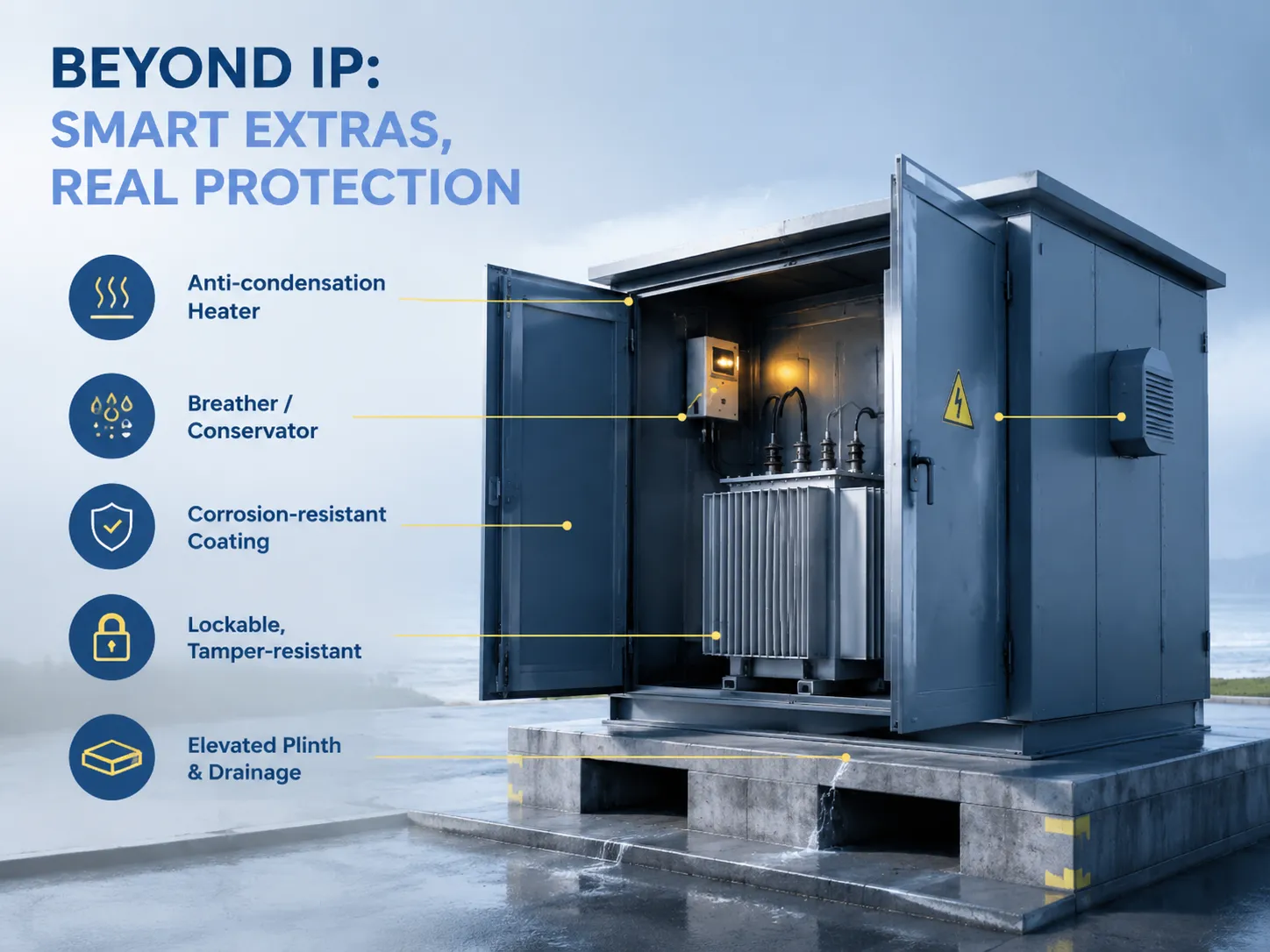
تصنيف حماية الدخول يتعامل بشكل رئيسي مع الدخول، ومع ذلك فإن الميزات التكميلية الأخرى حاسمة في الظروف القاسية. تشمل هذه الميزات ما يلي:
- يتم تركيب سخانات التكثف لضمان عدم تجاوز الرطوبة مستوى الندى في المناطق الاستوائية والساحلية - فهي غير مكلفة وتتطلب من 100 واط إلى 500 واط حسب حجم الحاوية.
- لا تسمح أجهزة تنفس السيليكا أو الحافظات الغازية في الوحدات المغمورة بالزيت بسحب الرطوبة إلى الخزان مع زيت التبريد.
- الطلاء المقاوم للتآكل (إما الجلفنة بالغمر الساخن أو الطلاء البحري في حالة التركيبات الساحلية) يزيد من سعر الحاوية بمقدار 2-5%.
- الأبواب القابلة للقفل والمضادة للتلاعب إلزامية للأجهزة المثبتة على القواعد في الأماكن العامة؛ فهي ضرورية ليس فقط لتأمينها ولكن أيضًا لأغراض السلامة.
- رفع القاعدة ونظام الصرف هو أرخص طريقة لتجنب الفيضانات (ارتفاع 300 مم والانحدار اللازم للصرف سيكلف تقريبًا لا شيء).
جدول تكلفة ترقية IP
الحماية تكلف المال، لكن الزيادات متواضعة مقارنة بالتحويلة نفسها - وتعتبر تافهة مقابل الفشل:
| ترقية IP | تأثير السعر | مثال (500 kVA) |
|---|---|---|
| IP21 → IP23 | +1–2% | +$100–$300 |
| IP23 → IP44 | +2–4% | +$200–$600 |
| IP44 → IP54 | +3–6% | +$300–$900 |
| IP54 → IP56 | +2–4% | +$200–$700 |
| إضافة سخان مضاد للتكثف | +$150–$400 (ثابت) | +$150–$400 |
| طلاء مقاوم للبحرية | +2–5% | +$200–$800 |
وحدة 500 kVA المعززة بالكامل - كما في IP56، سخانات، طلاء بحري - تكلف حوالي $9,500 إلى $19,000، والتي تختلف حسب الشركة المصنعة والسوق. قارن ذلك بفشل واحد بسبب الرطوبة يكلف $8,000-$30,000 بالإضافة إلى وقت التوقف الإضافي. الحاوية هي أرخص شكل من أشكال الحماية وفقًا للمواصفات.
العلامات التجارية والأسعار حسب مستوى IP
اعتمادًا على السعر، تتوفر تصنيفات IP. تبيع الشركات المصنعة الدولية الحاويات بأسعارها العالية المعتادة، بينما تبيع الشركات الصينية المعتمدة من IEC نفس المنتجات بأسعار أقل بكثير وتحصل على نفس نتائج الاختبار كما هو محدد في IEC 60529.
| العلامة التجارية | الموقع | 500 kVA IP54 | 500 kVA IP56 |
|---|---|---|---|
| ABB | دعم عالمي، مجموعة كاملة | $18,000–$30,000 | $19,000–$33,000 |
| سيمنز | الكفاءة، خيارات رقمية | $18,000–$32,000 | $19,000–$35,000 |
| شنايدر إلكتريك | قوة النوع الجاف | $15,000–$28,000 | $16,000–$30,000 |
| هيتاشي للطاقة | الشبكة والصناعية | $17,000–$30,000 | $18,000–$32,000 |
| إيتون | الامتثال لأمريكا الشمالية | $14,000–$26,000 | $15,000–$28,000 |
| شركة جيانغسو سوبين للطاقة الكهربائية | IEC 60076، نحاس، تقارير الاختبار | $8,000–$16,000 | $9,000–$17,000 |
الأسعار المعروضة هي على أساس شروط FOB الصين وتتأثر بالمواصفات والعلامة التجارية المختارة. العلامات التجارية الدولية المذكورة أعلاه هي معيار الجودة والخدمة للحاويات. تتمتع شركة جيانغسو سوبين للطاقة الكهربائية بميزة مفيدة تتمثل في أخذ تصنيفات IP على محمل الجد بدلاً من مجرد طلاءها على المحولات - أي أن الشركة تصنع محولات متوافقة مع IEC 60076 مزودة بحاويات IP54/IP56، سخانات مضادة للتكثف، وطلاءات مقاومة للبحرية كخيارات قياسية بينما يتم اختبار وتصديق تصنيف IP وفقًا لـ IEC 60529. عند شراء وحدة معززة، يمكن للمرء أن يرى الفرق بين IP56 المقاس وIP56 المزعوم في مصنع غذائي تعرض لهطول أمطار غزيرة لمدة عام واحد. من خلال إجراء اختبارات موثقة، يضمن المورد أن المواصفات ستُقدم بشكل مؤكد.
الأسئلة المتكررة
ما هو تصنيف IP الذي يجب أن تمتلكه المحولات في الهواء الطلق؟
IP54 هو المعيار للمحولات المناسبة للتثبيت في الهواء الطلق حيث توفر الحماية ضد الغبار وخرطوم المياه منخفض الضغط، لا تتردد في استخدام تصنيف IP56 إذا كانت المحول مثبتًا في مناطق قريبة من البحر، يتم غسله أو يتعرض لأمطار غزيرة. الرقم الثاني هو الأكثر أهمية: 4 هو الماء المتناثر، 5 هو الرش و6 هو الرش القوي، لذا تحقق من ضغط المياه الذي سيكون موجودًا في الموقع.
هل IP65 أفضل من IP54 لمحولات؟
يجب ملاحظة أن تصنيف IP65 ليس مرادفًا للحماية التلقائية. على الرغم من أنه يضمن مقاومة لكل من الغبار والماء، فإن وجود غلاف محكم يعني احتجاز الحرارة الداخلية. نتيجة لذلك، في فصل الصيف، قد يعمل جهاز غير مهوي بتصنيف IP65 عند مستوى حرارة أعلى من جهاز مهوي بتصنيف IP44، مما يؤدي إلى تقليل عمر العزل. لذا، تأكد من أن تصنيف IP لجهاز ما يتناسب مع الظروف التي سيتم تطبيقه فيها، مع اتخاذ - إذا أمكن - جميع التدابير للتخلص من توليد الحرارة الزائدة داخل الغلاف.
هل ينطبق تصنيف IP بنفس الطريقة على المحولات المغمورة بالزيت والمحولات الجافة؟
لا. في المحولات المغمورة بالزيت، يتم الاحتفاظ بالملفات في الزيت، مما يضمن أن تصنيف IP يساهم في حماية المعدات. في حالة المحولات الجافة، تكون الملفات على اتصال بالهواء، مما يجعل الغلاف هو خط الدفاع الأول. في البيئة المغبرة، ستحتاج المحولات الجافة إلى حماية أكبر.
ما هو الفرق في التكلفة بين المحولات IP23 و IP56؟
حوالي 5-12% من سعر التكلفة. بالنسبة لمحولات 500 kVA الأكبر، سيتراوح تصنيف IP23 إلى IP56 من $500 إلى $1,800 بينما سيكلف IP56 بالإضافة إلى السخانات والدهان البحري $1,000 إلى $2,800 إضافية. عند النظر في أن الأضرار المتعلقة بالرطوبة تكلف anywhere from $8,000 إلى $30,000 وتؤدي إلى توقف العمل، يصبح الترقية سياسة تأمين ميسورة التكلفة.
هل يمكن ترقية تصنيف IP لمحولة بعد التسليم؟
من غير المعتاد جدًا، وليس بسيطًا أبدًا. تتراوح تكلفة إعادة بناء الغلاف، وتوريد أنظمة التدفئة، أو إعادة الطلاء بعد الشحن من 15 إلى 40 في المئة من تكلفة الوحدة وتلغي الشهادة الأصلية. يجب تحديد تصنيف IP قبل تقديم الطلب حيث أن مطابقة البيئة في البداية هي الخيار الوحيد القابل للتطبيق ماليًا.
المراجع
- IEC 60529: درجات الحماية المقدمة بواسطة الحاويات (رمز IP) — المعيار الحاكم لتصنيفات IP وطرق الاختبار.
- IEC 60076-1: المحولات الكهربائية — عام — التصنيفات، الافتراضات البيئية، ومتطلبات الغلاف لمحولات الطاقة.
- IEEE C57.12.00: المتطلبات العامة لمحولات السائل المغمورة — متطلبات الغلاف والاختبار في أمريكا الشمالية.
- Electrical4U — دليل تصنيف IP — مرجع واضح لتعريفات وأمثلة على رمز IP.
- NFPA 70: الكود الكهربائي الوطني — قواعد التركيب في أمريكا الشمالية لمواقع المحولات ومتطلبات الغلاف.
- Wikipedia — رمز IP — تعريف وتاريخ رمز الحماية من الدخول.
الخاتمة
تتضمن العملية المتعلقة باختيار تصنيف IP (حماية الدخول) للمحولات ربط الغلاف بالظروف المحيطة التي ستعمل فيها. تشمل الظروف دخول الماء والغبار، وتنظيف المناطق الرطبة، والفيضانات - وليس الظروف مثل الأيام المشمسة. يتكون الرمز الرقمي من رقمين: الأول يشير إلى مستوى الحماية من دخول المواد الصلبة بينما يوفر الثاني المعلومات حول دخول الماء وفقًا لمعيار IEC 60529.
- استخدم IP21 إلى IP23 في المناطق الداخلية النظيفة والمهوّاة، وIP44 في الأماكن المتربة، وIP54 حيث تُجرى العمليات الصناعية في الهواء الطلق، وIP56 في الأماكن التي تتكرر فيها إجراءات الغسيل، موسميًا، أو في المناطق الساحلية.
- يجب أن يؤخذ في الاعتبار أنه على عكس المحولات الزيتية، فإن المحولات الجافة تعرض لفاتها وبالتالي يجب أن يكون تصنيف IP للأولى عادةً أعلى من الثانية.
- ضع في اعتبارك استخدام سخانات إضافية لمنع التكثف المضاد في الأنظمة HVAC الاستوائية أو الساحلية أو الدورية.
- من الضروري أيضًا فهم أهمية المراحل السابقة من عملية الإنتاج في أعمال الأسلاك وممارسات المراقبة لإجراءات اختبار تصنيف IP.