


Un responsabile degli acquisti di un'utility elettrica dell'Africa occidentale è alla sua scrivania a Lagos a guardare un foglio di calcolo con undici righe vuote. L'azienda è stata certificata per l'elettrificazione di quattro nuovi parchi industriali nel 2023, e il bando stabilisce che deve trattarsi di un contratto chiavi in mano, inclusi lavori civili, baie per trasformatori, apparecchiature di manovra, pannelli di protezione e apparecchiature di misurazione da un unico appaltatore. Le uniche soluzioni che trova sono o un trasformatore vuoto che non può essere messo in servizio dall'operatore, o una sottostazione completamente attrezzata di un'azienda con sede in Europa quotata 60% sopra il budget.
Esattamente quel foglio di calcolo rappresenta l'oggetto di questo articolo. Di seguito troverai dieci soluzioni complete per sottostazioni per gli acquirenti globali — da una sottostazione a scatola compatta a una sottostazione chiavi in mano completamente attrezzata 110/35kV — con i loro numeri reali, prezzi realistici, standard a cui si conformano e le insidie quando si acquista da un fornitore di sottostazioni cinese.
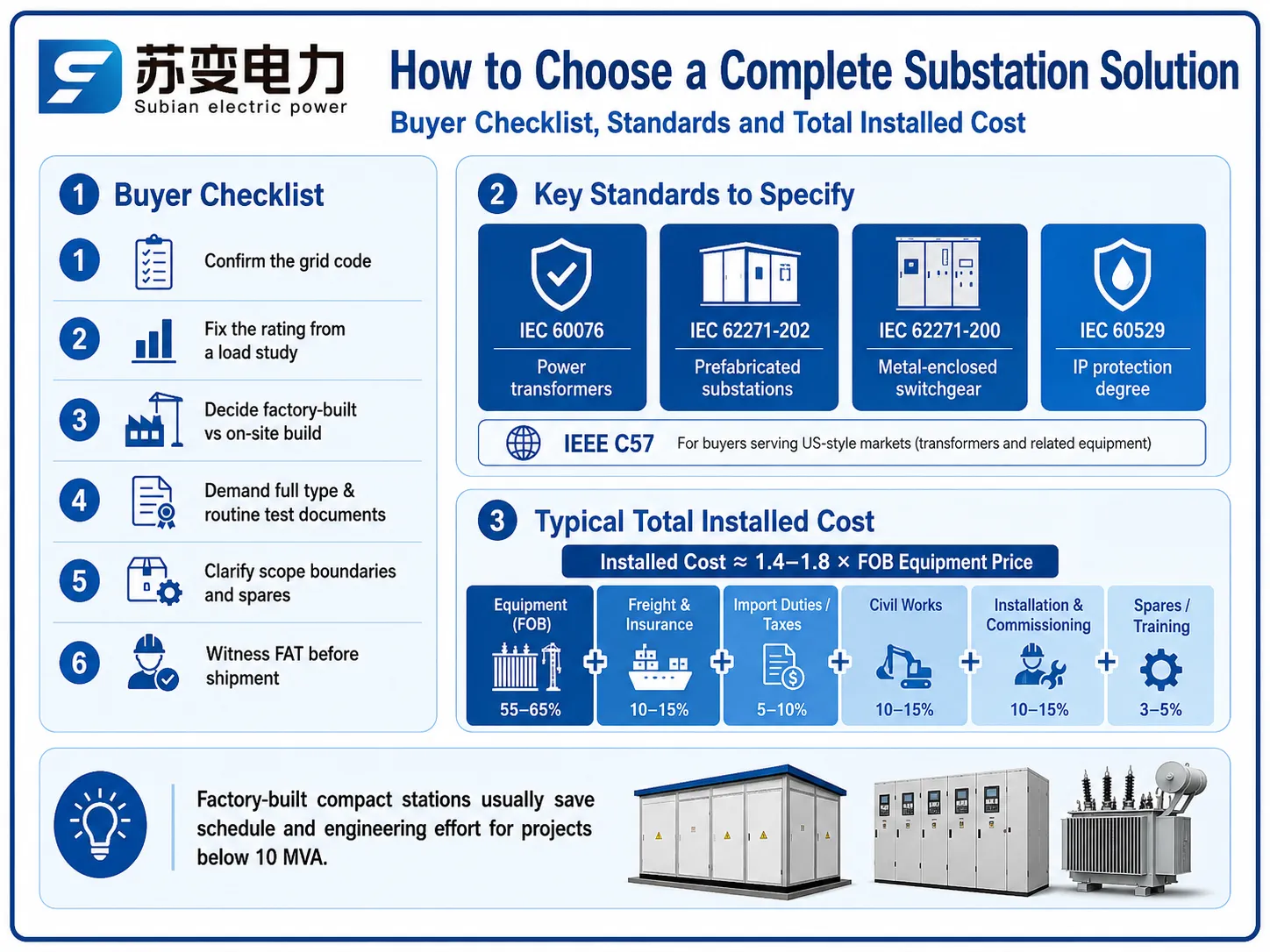
Che cos'è una soluzione completa per sottostazioni?
Il termine soluzione completa per sottostazioni si riferisce a più di un semplice trasformatore con un involucro — è un contratto unico che richiede ai produttori o agli appaltatori EPC di essere unici responsabili per tutto ciò che questo sistema comprende. In questo tipo di prodotto, i produttori realizzano il trasformatore, l'apparecchiatura di manovra ad alta tensione, l'apparecchiatura di manovra a bassa tensione, così come l'alimentazione ausiliaria, il pannello di protezione e controllo, la misurazione e, nel caso delle fabbriche, la struttura stessa. Pertanto, acquistando l'unità, un cliente ottiene un sistema completamente testato che è pronto per operare una volta collegato alla rete elettrica, invece di un numero di elementi separati da collegare e installare in loco.
Questa soluzione di imballaggio è diventata così popolare negli ultimi 10 anni a causa della mancanza di ingegneri qualificati nel settore. L'Agenzia Internazionale dell'Energia ha riportato nel 2023 che è necessario aumentare gli investimenti totali nella rete a oltre $600 miliardi all'anno fino al 2030 per soddisfare gli obiettivi di elettrificazione e energia verde, con le aziende di servizi e gli sviluppatori che investono una quantità significativa senza avere le competenze e le capacità rispettive per assemblare sottostazioni secondo ogni componente.
Inoltre, l'uso di sottostazioni prodotte in fabbrica accelera il processo di produzione. Una sottostazione standard all'aperto di 35 kV è normalmente costruita in loco in 12-18 mesi dall'idea all'energizzazione, mentre una simile sottostazione a scatola compatta può essere prodotta e consegnata in 45-90 giorni e diventare operativa in una settimana dopo la consegna.
Perché gli Acquirenti Globali Preferiscono le Stazioni di Trasformazione Prefabbricate
Ci sono quattro solidi vantaggi che spingono verso soluzioni imballate:
– Responsabilità a punto unico. Un'azienda è responsabile per progettazione, produzione, collaudo e messa in servizio. Se un relè funziona con la protezione differenziale del trasformatore, il proprietario deve solo contattare un'azienda e non combattere con quattro subappaltatori.
– Controllo qualità in fabbrica. La qualità di produzione e il test di tipo vengono effettuati secondo IEC 62271-202, IEC 60076, in determinate condizioni e i rapporti di prova arrivano con l'attrezzatura.
– Tempi di realizzazione del progetto più brevi. La produzione parallela significa trasformatore in un laboratorio e apparecchiature di manovra in un secondo laboratorio, e involucro in un terzo laboratorio, portando infine a tempi di esecuzione drasticamente ridotti.
– Prevedibilità dei costi. Il preventivo fisso copre l'intero pacchetto e consente al cliente di garantire il finanziamento, altrimenti il cliente dovrà affrontare un appaltatore civile, un appaltatore elettrico, un costruttore di quadri e un produttore di trasformatori, con tutti loro che aggiungono i propri margini.
Secondo la ricerca di mercato del 2022 condotta da Global Market Insights, il mercato delle sottostazioni compatte/prefabbricate è stato valutato a $18 miliardi e crescerà a un CAGR di 7% entro il 2030, a causa dell'integrazione delle energie rinnovabili, degli aggiornamenti delle reti di distribuzione urbana e dei progetti infrastrutturali in Africa, Asia sud-orientale e Medio Oriente.
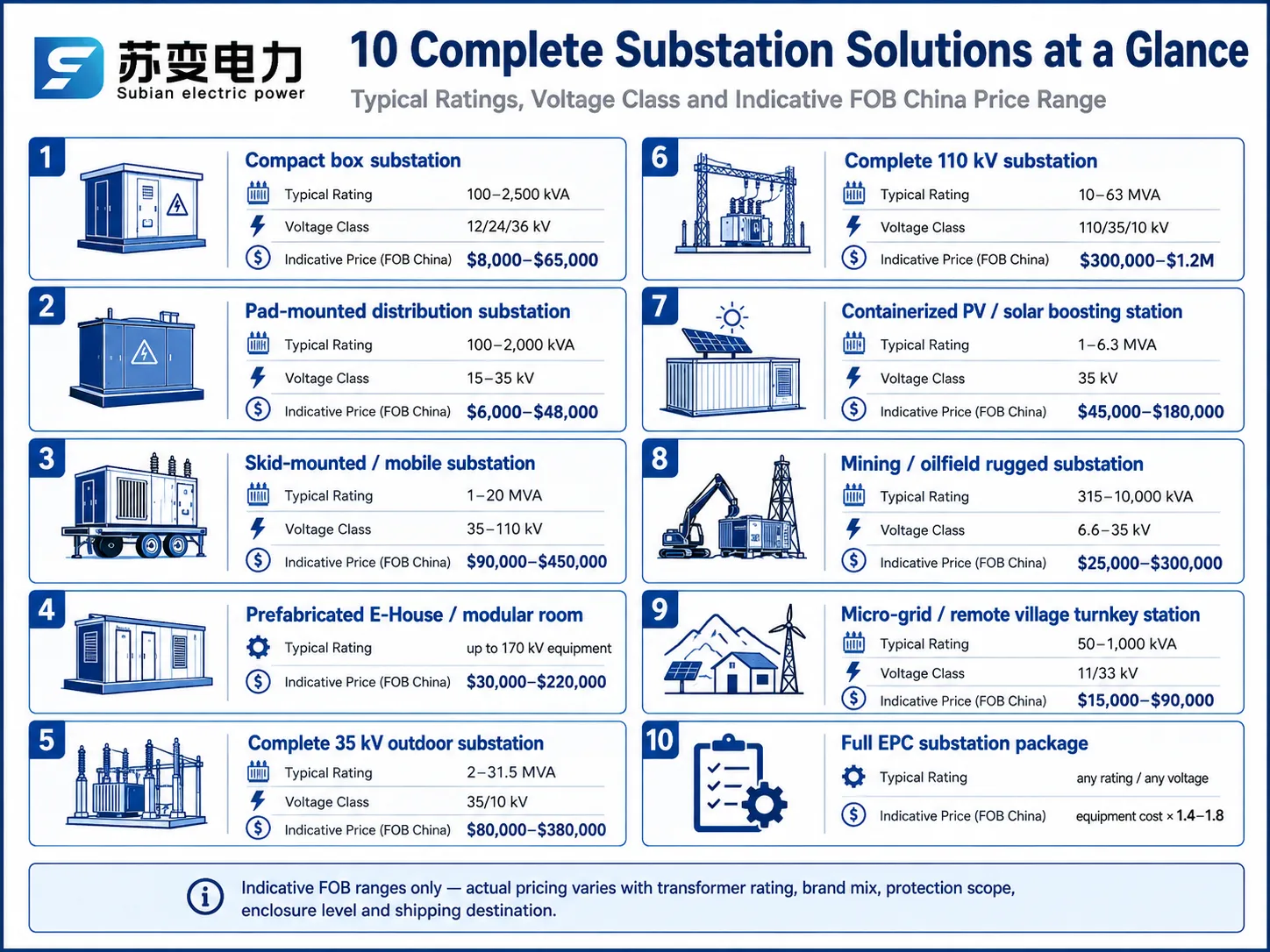
Le 10 Soluzioni Complete per Sottostazioni a Colpo d'Occhio
La frase “sottostazione completa” include molte dimensioni e configurazioni. La tabella sottostante elenca i dieci tipi più popolari, insieme ai loro intervalli di prezzo dai produttori in Cina. Va notato che tutti i prezzi mostrati sono illustrativi e dipendono dal marchio, dai parametri, dal livello di protezione e dalla posizione della consegna.
| # | Tipo di soluzione | Valutazione tipica | Classe di tensione | Prezzo tipico (FOB Cina) |
|---|---|---|---|---|
| 1 | Sottostazione compatta a scatola (stile americano/europeo) | 100–2.500 kVA | 12/24/36 kV | $8.000–$65.000 |
| 2 | Sottostazione di distribuzione montata su basamento | 100–2.000 kVA | 15–35 kV | $6.000–$48.000 |
| 3 | Sottostazione montata su skid / mobile | 1–20 MVA | 35–110 kV | $90.000–$450.000 |
| 4 | E-House prefabbricato / stanza modulare | — | Attrezzatura fino a 170 kV | $30.000–$220.000 |
| 5 | Sottostazione esterna completa 35kV | 2–31,5 MVA | 35/10 kV | $80.000–$380.000 |
| 6 | Sottostazione completa 110kV | 10–63 MVA | 110/35/10 kV | $300.000–$1.200.000 |
| 7 | Stazione di potenziamento PV / solare containerizzata | 1–6,3 MVA | 35 kV | $45.000–$180.000 |
| 8 | Sottostazione robusta per miniere / campi petroliferi | 315–10.000 kVA | 6–35 kV | $25.000–$300.000 |
| 9 | Stazione chiavi in mano per micro-rete / villaggio remoto | 50–1.000 kVA | 11/33 kV | $15.000–$90.000 |
| 10 | Pacchetto completo EPC per sottostazione (progettazione + civile + installazione) | Qualsiasi | Qualsiasi | Costo dell'attrezzatura × 1.4–1.8 |
Le prime sette forme sono prodotte in fabbrica e pronte per i test prima della spedizione. I prodotti 8-10 sono preferibilmente ordinati separatamente e hanno tempi di attesa più lunghi ma si adattano a vincoli più rigidi per il cliente. I clienti possono scegliere se desiderano un dispositivo completamente mobile, una stazione all'aperto che rimane in un luogo, o un modulo che può essere spostato ovunque vada un impianto solare o una miniera.
Sottostazione Compattta a Scatola vs Sottostazione Convenzionale
La decisione di approvvigionamento solitamente presa dai responsabili acquisti per grandi operazioni di distribuzione è se la scelta debba essere fatta tra una sottostazione compatta (generalmente chiamata unità di generazione e situata in superficie) e una stazione convenzionale che deve essere costruita nei locali. Di seguito è riportato un confronto di dati indicativi semplificati raccolti in vari recenti bandi.
| Criteri | Sottostazione compatta a scatola | Sottostazione convenzionale all'aperto |
|---|---|---|
| Impronta | 6–30 m² | 150–1.000 m² |
| Tempo di progettazione per l'energizzazione | 45–90 giorni in fabbrica + 1–2 settimane di installazione | 12–18 mesi |
| Lavori civili in loco | Minimo (solo base in cemento) | Fondazione completa, recinzione, edifici |
| Sforzo ingegneristico da parte dell'acquirente | Basso — il fornitore si occupa di tutto | Alto — necessari consulenti separati |
| Relocabilità | Sì (montato su skid/contenitore) | No |
| Costo totale installato (35kV/10kV, 5 MVA) | ≈ $180.000–$280.000 | ≈ $320.000–$520.000 |
| Accesso per manutenzione | Buono per unità piccole; più stretto per baie HV | Eccellente |
Le sottostazioni a scatola non sono comunemente utilizzate quando il livello di potenza supera i 20 MVA a causa della necessità di costruzioni speciali dovute ai requisiti di raffreddamento e distanza tra le barre collettrici e gli interruttori. Ma per livelli di potenza tra 100 kVA e 10 MVA, si sa che riducono i costi totali di assemblaggio dal 30 al 50 percento e il tempo di installazione del 60 percento e oltre.
Normative e conformità da specificare
Qualunque formato tu scelga, l'attrezzatura interna deve soddisfare standard internazionali riconosciuti. I documenti più importanti da fare riferimento nella tua offerta sono elencati di seguito, con le clausole esatte che contano.
| Standard | Ambito | Perché è importante per gli acquirenti |
|---|---|---|
| IEC 60076 (parti 1–17) | Trasformatori di potenza | Definisce le classifiche, le perdite, la resistenza agli impulsi, le gamme di derivazione |
| IEC 62271-200 / -202 | Sottostazioni compatte prefabbricate | Norma di riferimento per le stazioni trasformatori di tipo scatola |
| IEC 62271-1 / -100 | Apparecchiature di manovra MV e interruttori | Verifica della capacità di interruzione e delle classifiche di guasto |
| IEC 60529 | Protezione contro l'ingresso dell'involucro | Classificazioni IP54/IP65 per impermeabilizzazione all'aperto |
| IEEE C57.12.20 | Trasformatori montati su base | Comunemente richiesti per i montaggi su base del mercato statunitense |
| IEC 60255 | Relè di protezione | Garantisce che il comportamento di coordinamento del relè sia testabile |
Per progetti destinati agli Stati Uniti, i livelli di efficienza ANSI/IEEE C57.12 e NEMA TP-1 sono spesso richiesti insieme o invece di IEC. Specifica chiaramente un regime nell'offerta; mescolarli crea dispute sui test e sull'accettazione in seguito.
Specifiche e Valutazioni Chiave
Una specifica correttamente redatta per un'intera sottostazione contiene i seguenti pezzi di informazione. Se uno dei pezzi di informazione viene perso, porterà a confusione e modifiche necessarie nel progetto.
Potenza nominale: è misurata in kVA con la tensione nominale e se il trasformatore stesso è progettato per carico base continuo o per sovraccarico (raffreddamento ONAN/ONAF).
Tensione primaria e secondaria: per esempio, 35/10.5 kV o 33/0.4 kV, con intervalli di tappo (generalmente circa ±2×2.5% o con OLTC sotto carico).
Gruppo vettoriale: Dyn 11, YNd11, o Yyn0 a seconda della filosofia di messa a terra.
Impedenza di cortocircuito: è pari a 6-10% alla potenza nominale indicata.
Schema di protezione: schemi di differenziale del trasformatore (87T) e di sovracorrente (50/51) e guasto a terra ristretto (64) e guasto a terra di riserva.
Condizioni ambientali: intervallo di temperatura in loco, altezza sul livello del mare (riduzione della capacità a un'altezza superiore a 1000 m), livello di umidità e classe di inquinamento.
Classe di involucro: grado di protezione IP, materiali utilizzati, livello sonoro e tipi di ingresso dei cavi.
Misurazione e telemetria: mostra se c'è bisogno di misurazione dei ricavi, interfacce SCADA e monitoraggio remoto.
Ad esempio, se c'è una stazione compatta con potenza nominale di 35/10.5 kV con un trasformatore da 5 MVA, la specifica più probabile contiene un trasformatore con un isolamento da impulso di 170 kV (classe LI secondo IEC 60076-3), un interruttore a vuoto con una capacità di 31.5 kA/4 s e un involucro IP54 con protezione relè in conformità con lo standard IEC 60255.
Selezione della Sottostazione Guidata dall'Applicazione
La soluzione corretta dipende fortemente dall'applicazione. La tabella sottostante mappa i tipi di progetto comuni al formato di sottostazione preferito.
| Applicazione | Formato raccomandato | Valutazione tipica | Considerazione chiave |
|---|---|---|---|
| Rete urbana a bassa tensione (400V) | Sottostazione compatta a scatola | 315–1.000 kVA | Basso rumore, ingombro ridotto, IP54 |
| Elettrificazione rurale fornitura villaggio | Montato su basamento / montato su palo + chiosco | 50–315 kVA | Costo iniziale più basso per famiglia |
| Raccolta impianto solare PV o eolico | Stazione di potenziamento containerizzata | 1–6,3 MVA | Compatibilità inverter, dovere armonico |
| Sito minerario / campo remoto | Sottostazione mobile montata su skid | 1–10 MVA | Riconfigurabilità, telaio di trasporto robusto |
| Distribuzione utility (35kV) | Sottostazione completa all'aperto 35kV | 3,15–20 MVA | Affidabilità, ridondanza, SCADA |
| Impianto industriale con fornitura propria | Montato su basamento + sala controllo E-House | 500–5.000 kVA | Coordinamento arco elettrico, capacità di riserva |
I clienti tendono a commettere un errore quando prendono una decisione basata sul formato del fattore prezzo e poi si rendono conto che è necessario ottenere un'interruttore a isolamento d'aria esterno secondo il codice di rete locale o costruire una stanza di misurazione separata prima di firmare il contratto. Assicurati di consultare sia il tuo codice di rete che la politica dell'ente elettrico locale sull'interconnessione.
Migliori marchi di sottostazioni e fasce di prezzo
Il mercato globale delle sottostazioni è composto da alcune grandi aziende europee e americane e da un numero sempre crescente di produttori cinesi e indiani. I prezzi qui sotto si riferiscono a sottostazioni compatte equivalenti di fabbrica di classe 1 MVA/12 kV, su base FOB, solo per riferimento.
| Marca | Paese | Prezzo tipico (1 MVA, 12 kV) | Note |
|---|---|---|---|
| ABB | Svizzera | $48.000–$85.000 | Completa esperienza in e-house e GIS |
| Siemens | Germania | $50.000–$90.000 | Forte portafoglio di sottostazioni digitali |
| Schneider Electric | Francia | $45.000–$80.000 | Eccellente integrazione LV/MV |
| Hitachi Energy | Svizzera/Giappone | $52.000–$92.000 | Eredità di trasformatori premium e HVDC |
| Eaton | Irlanda/USA | $40.000–$75.000 | Forte nei montaggi su basamento e nei mercati statunitensi |
| Toshiba / Hyundai | Giappone / Corea del Sud | $38.000–$70.000 | Stabilito in Asia e Medio Oriente |
| TBEA / China XD | Cina | $18.000–$35.000 | Grandi produttori SOE cinesi |
| Jiangsu Subian Energia Elettrica | Cina | $14.000–$30.000 | Soluzioni focalizzate sull'esportazione, testate IEC |
Aziende internazionali di spicco, come ABB, Siemens, Schneider Electric e Hitachi Energy, forniscono agli sviluppatori un design eccezionale, un'ampia esperienza e reti di supporto locali. Data questa situazione, pagare prezzi premium (superiori a 1.5-2.5 volte il prezzo equivalente di fabbrica dei produttori cinesi) ha senso solo per progetti importanti, dove la certificazione del marchio, così come il supporto locale, diventano più importanti del costo iniziale dell'attrezzatura.
Nel caso in cui gli sviluppatori stiano cercando produttori di trasformatori conformi a IEC 60076 e rapporti di prova completi, Jiangsu Subian Electric Power è sicuramente da prendere in considerazione. L'azienda è impegnata nella progettazione e produzione di trasformatori, apparecchiature elettriche e pacchetti di stazione completi che vengono spediti in oltre 40 paesi in Africa e America Latina. Pertanto, Subian offre anche supporto OEM/ODM in modo che gli sviluppatori di progetti possano scegliere tra vari marchi di relè, tipi di bushing e gruppi vettoriali, godendo dei vantaggi dell'approccio del fornitore unico.
Come scegliere una soluzione completa per la sottostazione
Questa lista di controllo dovrebbe aiutarti a selezionare i fornitori giusti e a finalizzare le tue specifiche prima di effettuare un ordine.
Prima di tutto, conferma il codice di rete e assicurati di avere i requisiti di interconnessione dell'ente, la filosofia di protezione e i requisiti di messa a terra per iscritto.
Scopri la tua valutazione basata su uno studio di carico.
Fai una scelta tra attrezzature prefabbricate e fabbricazione in loco, poiché le attrezzature prefabbricate sono quasi sempre preferite nei casi in cui la capacità richiesta è inferiore a 10 MVA e c'è poco tempo disponibile.
Richiedi una documentazione completa dei test al fornitore.
Assicurati che le definizioni dell'ambito siano chiare.
Richiedi un invito per il test di accettazione in fabbrica, poiché con il tuo ingegnere presente, la maggior parte dei problemi di messa in servizio viene risolta prima della spedizione dell'attrezzatura.
Fai un piano per ricambi e materiali di consumo.
Negozia i danni per violazione del contratto.
Costi nascosti e costo totale di proprietà
Il prezzo FOB dell'attrezzatura è di solito meno della metà della storia. Gli acquirenti esperti pianificano il costo totale sbarcato e installato:
| Componente di costo | Quota tipica del prezzo FOB | Note |
|---|---|---|
| Attrezzatura (FOB) | 100% (baseline) | Include test in fabbrica |
| Trasporto marittimo + assicurazione | 8–15% | Contenitore da 20 piedi/40 piedi o breakbulk per unità da 110kV |
| Dazi e tasse di importazione | 5–30% | Dipendente dal paese; verifica i codici HS e le esenzioni |
| Opere civili e fondazione | 10–25% | Anche le stazioni compatte necessitano di una base e trincee per cavi |
| Installazione e messa in servizio | 8–20% | Maggiore dove la manodopera qualificata locale è scarsa |
| Ricambi, attrezzature, formazione | 3–8% | Prevedi ricambi critici per 2 anni al momento dell'ordine |
Come regola generale, moltiplica il prezzo FOB per 1.4–1.8 per stimare il costo totale installato, e aggiungi un ulteriore 5–10% di contingenza per siti remoti o logisticamente difficili. Una sottostazione compatta da $20,000 può realisticamente costare $30,000–$38,000 installata, quindi l'offerta che sembra economica non è spesso la soluzione più economica nel complesso.
Domande frequenti
Qual è la soluzione di sottostazione completa più economica?
Quando si tratta di requisiti di dimensioni per la distribuzione, la sottostazione compatta in scatola che rientra nella categoria 100-630 kVa è la soluzione complessiva più conveniente nell'intervallo di $8,000-$25,000 basata sulla spedizione dalla Cina. Per requisiti inferiori a 100 kVA, i trasformatori montati su palo o su basamento con un chiosco relativamente piccolo saranno più economici ($3,000-$8,000), anche se non possono sempre essere considerati come una sottostazione completa. Per requisiti di potenza che superano i 2.5 MVA, il design più conveniente sarebbe l'uso di stazioni standard all'aperto o attrezzature montate su skid.
Quanto tempo ci vuole per ottenere una sottostazione completa da un produttore cinese?
Una comune sottostazione compatta in scatola viene consegnata in 45-90 giorni dalla conferma dei disegni. Le grandi sottostazioni da 110 kV richiedono da 6 a 14 mesi a causa delle modifiche al design e della preparazione del sito. I test di accettazione in fabbrica vengono solitamente aggiunti a questo e si raccomanda vivamente di eseguirli prima di prenotare il trasporto marittimo.
Quali test dovrei richiedere prima della spedizione?
Al minimo, si dovrebbero effettuare misurazioni della resistenza dell'avvolgimento, del rapporto di trasformazione, della resistenza di isolamento, della resistenza dielettrica e del test di aumento della temperatura secondo IEC 60076.
Per quanto riguarda l'apparecchiatura di manovra da ispezionare, sono necessarie misurazioni del tempo di intervento dell'interruttore, della resistenza di contatto e dei test di isolamento.
Nel caso in cui il progetto lo supporti, registra il test di tipo di persona in fabbrica (impulso di fulmine secondo IEC 60076-3, arco interno secondo IEC 62271-202) o richiedi copie certificate dall'impianto.
Una sottostazione compatta può essere spostata in seguito?
Sì. Le unità montate su skid/containerizzate possono essere trasferite tramite gru e camion a pianale. Le stazioni compatte di tipo europeo in involucro d'acciaio possono anche essere spostate, ma i lavori di ingegneria civile sul nuovo sito per la base/fossati dei cavi si applicano comunque. Se è necessaria una rilocazione, è fondamentale indicare nell'ordine originale informazioni riguardanti i ganci di sollevamento, il telaio rinforzato e le scatole di terminazione a tenuta stagna.
Perché le sottostazioni europee sono così molto più costose di quelle cinesi?
I produttori europei (ABB, Siemens, Schneider) hanno costi di manodopera più elevati, una R&S locale più profonda e reti di assistenza altamente sviluppate – ma i loro prodotti soddisfano gli stessi standard IEC di quelli prodotti dalle aziende cinesi oggi. La differenza di prezzo, che è spesso 1,5-2,5 volte maggiore, è giustificata dalla sicurezza del marchio e dalla rappresentanza, oltre a molti anni di installazioni comprovate. Nel frattempo, aziende cinesi come Jiangsu Subian Electric Power possono colmare gran parte di questo divario in termini della loro offerta di attrezzature, poiché forniscono prodotti conformi agli standard IEC e tutta la documentazione riportata, consentendo a un cliente che ha le proprie capacità ingegneristiche di risparmiare significativamente.
Riferimenti
- IEC (Commissione Elettrotecnica Internazionale) — Editore degli standard IEC 60076 per trasformatori e IEC 62271 per apparecchiature di manovra.
- IEEE — Fonte degli standard per trasformatori montati su basamento IEEE C57.12 e C57.12.20 per le Americhe.
- Agenzia Internazionale dell'Energia (IEA) — Dati sulle prospettive di investimento nella rete e di elettrificazione citati sopra.
- Panoramica del Mercato Globale — Ricerca di mercato sul mercato delle sottostazioni prefabbricate.
- NEMA (Associazione Nazionale dei Produttori Elettrici) — Standard di efficienza TP-1 e attrezzature di distribuzione.
- ABB — Pagine prodotto di riferimento per sottostazioni compatte e e-houses.
- Siemens — Riferimento per soluzioni di sottostazioni digitali e prefabbricate.
- Jiangsu Subian Energia Elettrica — Produttore cinese di trasformatori e pacchetti completi di sottostazioni.
Conclusione
Quando si seleziona la giusta soluzione completa per la propria sottostazione, considerare fattori come il formato giusto, la potenza e l'ambito del progetto da installare presso il proprio sito. Non si tratta solo di trovare l'offerta più economica su qualsiasi mercato online. I dieci formati disponibili di sottostazioni variano da varianti compatte $8.000 fino a sottostazioni da multimilioni di dollari a 110kV. Pertanto, a seconda dello studio del carico, del programma e dell'ingegneria disponibile presso il proprio luogo di lavoro, si otterrà la risposta corretta.
Alcune delle sottostazioni compatte costruite in fabbrica possono aiutarti a risparmiare circa 30-50% sui costi di installazione e 60% di tempo rispetto alla costruzione in loco.
È importante dichiarare chiaramente IEC 60076, IEC 62271-202, così come IEC 60529 e richiedere certificati di prove di tipo.
Infine, è utile pianificare i costi totali di installazione nella fascia di 1.4-1.8 rispetto al prezzo FOB dell'attrezzatura.
Indipendentemente dal fatto che tu scelga Siemens, ABB o Schneider per i tuoi progetti più importanti, o se opti per Jiangsu Subian Energia Elettrica i tuoi progetti orientati all'esportazione, assicurati di ricevere la documentazione di prova in fabbrica insieme all'assunzione di un solo fornitore responsabile.