


Un responsabile delle strutture di un centro commerciale nella periferia di Dallas ha visto due lavoratori delle utility aprire una scatola di acciaio verde vicino al parcheggio, esaminare il bushing e richiuderla immediatamente, il tutto in meno di un quarto d'ora. Questo cabinet — noto come trasformatore montato su basamento — ha fornito energia ai tre principali negozi che compongono il centro commerciale, alla zona ristorazione e al sistema di climatizzazione per nove anni senza causare interruzioni nella posizione. Non c'era recinzione, nessun cablaggio aereo e nulla che indicasse la presenza di attrezzature ad alta tensione. L'intero trasformatore era nascosto dietro un involucro in acciaio resistente agli atti vandalici, fissato a una fondazione in cemento e installato sotto il suolo.
L'articolo fornisce alcune linee guida per effettuare buoni acquisti di trasformatori montati su basamento. Include informazioni specifiche su quali caratteristiche distinguono un prodotto di qualità da quelli scadenti, standard e test che dimostrano la qualità dell'unità, cosa controllare prima di pagarlo, così come il prezzo di un'unità di buona qualità.
In breve, un trasformatore montato su basamento è definito come un trasformatore a prova di manomissione costruito a terra utilizzando un basamento in cemento, garantendo che tutte le connessioni di alimentazione e distribuzione siano installate sottoterra utilizzando connettori a faccia morta. I dispositivi di alta qualità sono costruiti secondo IEEE C57.12.27 (integrità dell'involucro), IEEE C57.12.00 (requisiti generali) e IEEE C57.12.90 (metodi di prova), con capacità da 75 a 5.000 kVA e tensione di alimentazione da 15 a 35 kV.
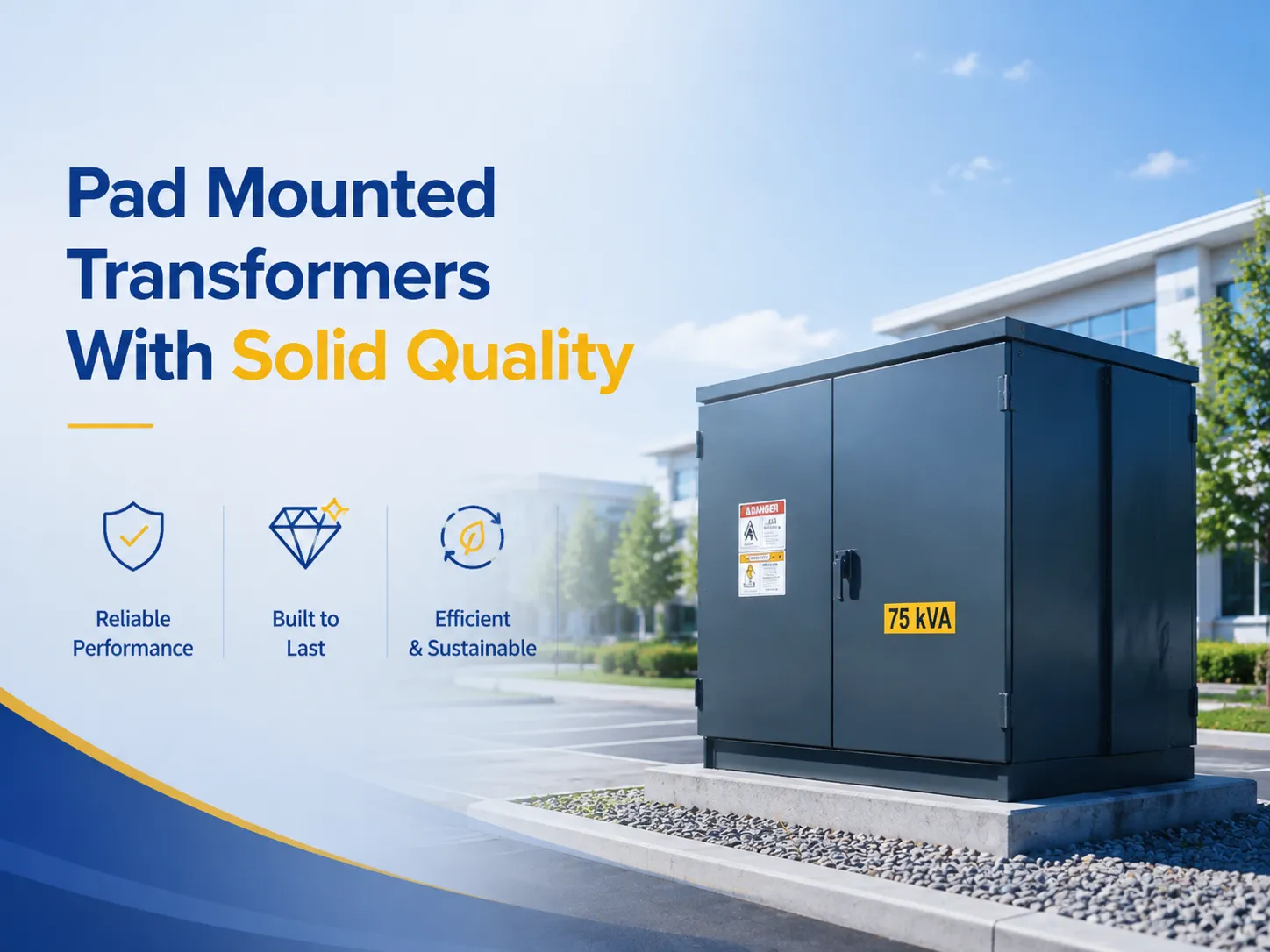
Che cos'è un trasformatore montato su basamento?
Un trasformatore montato su basamento rappresenta un trasformatore di distribuzione sicuro racchiuso in un cabinet in acciaio a terra che poggia su una base in cemento a livello del suolo. È un metodo preferibile che è convenzionale nei sistemi di distribuzione sotterranea in Nord America ed è stato utilizzato sempre di più in Medio Oriente, America Latina e Sud-est asiatico, dove le compagnie di utility e gli sviluppatori preferiscono nascondere le attrezzature di distribuzione in modo che le attrezzature montate su palo non rappresentino più un pericolo per la sicurezza.
Questa particolare famiglia di prodotti è definita da due elementi – il primo è noto come “design a faccia morta”, il che significa un'estremità energizzata da un'estremità all'altra del cablaggio all'interno di un connettore isolato e protetto, il che, a sua volta, significa che non ci sono punti attivi esposti anche nel caso di apertura della porta del cabinet. In secondo luogo, il design resistente alla manomissione implica che l'involucro dovrebbe essere realizzato in modo tale da garantire che l'apertura senza autorizzazione non porterebbe all'esposizione di componenti energizzati, come specificato da IEEE C57.12.27. Il trasformatore è ordinariamente a olio monofase o trifase; la sua capacità varia da 75 kVA a 5000 kVA, a seconda delle esigenze del settore delle utility.
Il termine “montato su basamento” si riferisce all'installazione piuttosto che alla tensione, dove le principali classi di tensione primaria sono 15 kV, 25 kV e 35 kV, con configurazioni di tappo standard che hanno una tensione secondaria di 240/120 V monofase e 480Y/277 V trifase.
Cosa significa realmente “Qualità Solida”
“Qualità solida” è semplicemente un termine di mercato a meno che non sia applicato a criteri misurabili. Nel settore dei trasformatori pad-mounted, “qualità solida” significa cinque cose misurabili:
- Design certificato: L'attrezzatura è progettata e testata secondo IEEE C57.12.00 (specifiche generali), IEEE C57.12.90 (standard di test) e IEEE C57.12.27 (integrità della scatola) con un valido rapporto di prova di tipo.
- Perdite misurabili: Le perdite a vuoto e a carico dell'unità non sono solo citate dalla specifica di design ma misurate fisicamente su ogni singola unità. Un pad mount da 500 kVA con qualità solida ha tipicamente una perdita a vuoto di circa 0,8–1,2 kW e una perdita a carico di circa 5,5–8,5 kW a 85 gradi Celsius.
- Isolamento testato: Il trasformatore supera i test di impulso a onda intera e a onda tagliata, i test di tensione e di tensione indotta, e le misurazioni del fattore di potenza di isolamento.
- Protezione della scatola reale: L'involucro soddisfa i requisiti IEEE C57.12.27 per la resistenza ai manomissioni, il bloccaggio e il flusso d'aria e ha una sigillatura di tipo IP54 con un compartimento cavi completamente sigillato.
- Materiali tracciabili: L'acciaio del nucleo, il rame o l'alluminio delle bobine e l'olio isolante sono documentati e possono essere certificati su richiesta.
Se un cliente chiede “questo è un pad mount di qualità solida?”, la risposta giusta non è una frase accattivante ma una cartella contenente un rapporto di prova di tipo, certificati di test di routine, certificati dei materiali e standard di controllo qualità del sito di produzione. Qualsiasi fornitore incapace di fornire la documentazione sopra indicata non vende qualità ma affermazioni.
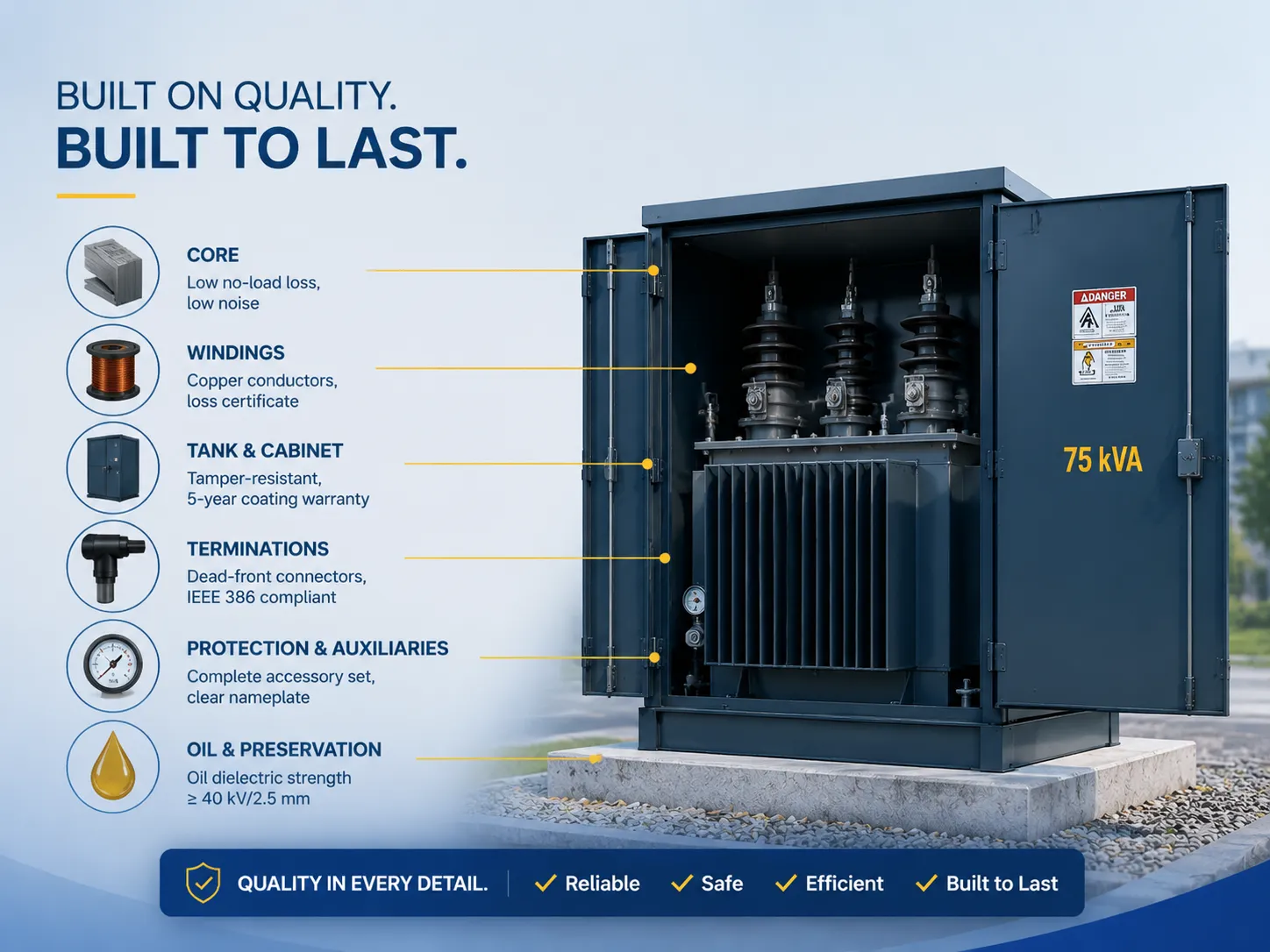
Costruzione e Componenti Chiave
Il trasformatore pad-mounted è composto da un certo numero di assemblaggi che possono essere ben definiti da fattori di qualità.
| Assemblaggio | Componenti Principali | Indicatori di Qualità |
|---|---|---|
| Nucleo | Lamelle in acciaio al silicio orientato al grano (ad es., 23ZH085/27ZH095), giunti a passo | Bassa perdita a vuoto, basso rumore (≤55 dB(A) a 1 m) |
| Bobine | Conduttori in rame o alluminio, bobinatura a strati o a disco, isolamento in carta trattata | Materiale conduttore documentato, certificato di perdita |
| Serbatoio e cabinet | Involucro in acciaio zincato a caldo o acciaio di calibro 14, bloccaggio, cerniere interne | Test di resistenza alla manomissione IEEE C57.12.27, garanzia di rivestimento di 5 anni |
| Terminazioni | Connettori a gomito dead-front, bushing loadbreak o deadbreak, supporti di parcheggio | Soddisfa i requisiti dei connettori IEEE 386 |
| Protezione e ausiliari | Dispositivo di rilascio della pressione, indicatore del livello dell'olio, valvola di drenaggio, targa, piastre di messa a terra | Set completo di accessori operativi, targa chiara secondo IEEE C57.12.00 |
| Olio e conservazione | Olio minerale (o olio vegetale FR3), serbatoio conservatore o sigillato, respiratore disidratante | Resistenza dielettrica dell'olio ≥40 kV/2,5 mm prima della spedizione |
I potenziali acquirenti dovrebbero informarsi su tre cose. Prima, il grado dell'acciaio del nucleo. Secondo, che tipo di bobine vengono utilizzate (rame o alluminio, e quale è il peso del rame o la conduttività elettrica)? Infine, il serbatoio supera il test di manomissione descritto nello standard IEEE C57.12.27?
Tipi e Classificazioni
| Tipo | Gamma di Potenza | Applicazione Tipica |
|---|---|---|
| Pad-mount monofase | 75–333 kVA | Sottodivisioni residenziali, piccole attività commerciali, distribuzione sotterranea rurale |
| Pad-mount trifase | 300–2.500 kVA | Edifici commerciali, scuole, parchi industriali, distribuzione del campus |
| Pad-mount trifase grande | 500–5.000 kVA | Grandi alimentatori industriali, centri dati, ospedali |
| Live-front (stile più vecchio) | 75–2.000 kVA | Installazioni legacy; sostituite da dead-front per sicurezza |
| Dead-front (standard attuale) | 75–5.000 kVA | Tutte le nuove installazioni secondo IEEE C57.12.27 |
Le categorie di tensione a livello primario includono classe 15 kV (in termini di tensione massima di 15,0 kV), classe 25 kV (in termini di tensione massima di 25,0 kV) e classe 35 kV (in termini di tensione massima di 34,5 kV). Le configurazioni di tensione secondaria possono includere 240/120 V (per conversione monofase), 480Y/277 V, 208Y/120V e classe 600 V per caratteristiche speciali. Per quanto riguarda l'impedenza, la caratteristica è normalmente nell'intervallo di 1,4-5,75%, a seconda delle dimensioni e del design.
Come Funziona e Perché È Sicuro
La procedura è semplicemente la fisica classica dei trasformatori – la circolazione magnetica induce una corrente nell'avvolgimento secondario nei rapporti dettati dal numero di spire – ma il design è sicuro per le persone. L'energia arriva attraverso il cavo ad alta tensione sotterraneo che si collega al gomito dead front che va al bushing. Il bushing è isolato e messo a terra di conseguenza, quindi nessun elemento di corrente può essere raggiunto anche nel caso in cui la porta del cabinet venga aperta. Il trasformatore opera secondo il principio di abbassare la tensione a un livello utilizzabile, e i cavi a bassa tensione escono dalla parte inferiore del cabinet verso il contatore o il pannello di servizio.
Ci sono tre strati nel sistema di sicurezza: il sistema di connettori dead front (IEEE 386), un cabinet a prova di manomissione e bloccato (IEEE C57.12.27), e la messa a terra del cabinet e del neutro. Insieme garantiscono che, indipendentemente dal fatto che una persona tocchi cabinet, porte o involucri, non rischi di essere folgorata anche se il cabinet viene attaccato.
Trasformatori a Montaggio su Piastra vs. Altri Montaggi di Trasformatori
| Fattore | Montaggio su Piastra | Montaggio su Polo | Sottostazione Prefabbricata (Tipo Scatola) |
|---|---|---|---|
| Posizione | Terra, piastra di cemento | Polo di utilità | Terra, involucro più grande |
| Valutazione tipica | 75–5.000 kVA | Fino a ~167 kVA | 50–2.500 kVA |
| Terminazioni | Dead-front, sotterraneo | All'aperto, aereo | Chiuso, cavo o barra collettore |
| Standard di sicurezza | IEEE C57.12.27 | Design aperto, regole di distanza | IEC 62271-202 |
| Tempo di installazione | 1–2 giorni | Ore (squadra del palo) | 2–5 giorni |
| Impatto visivo | Basso (cabinet a livello del suolo) | Alto (polo + cavi) | Moderato |
| Migliore per | Distribuzione sotterranea, urbana/suburbana | Linee rurali aeree | Necessità di commutazione MV/LV + trasformatore |
La considerazione presa dai distributori determina la preferenza: i sistemi aerei utilizzano sempre il palo, i sistemi sotterranei utilizzano sempre il montaggio su piastra e ovunque sia necessario installare apparecchiature di commutazione MV, misurazione e protezione in un unico luogo, la sottostazione prefabbricata è una scelta. Ovunque l'estetica, la sicurezza dalla manomissione e l'alimentazione elettrica sotterranea siano importanti, i montaggi su piastra sono più vantaggiosi rispetto agli altri.
Standard e Test
| Standard | Ambito | Requisito Chiave |
|---|---|---|
| IEEE C57.12.00 | Requisiti generali per trasformatori di distribuzione immersi in liquido | Valutazioni, impedenza, accessori, targa |
| IEEE C57.12.90 | Procedure di test per trasformatori di distribuzione | Perdite, impedenza, dielettrico, test di impulso |
| IEEE C57.12.27 | Integrità dell'involucro dell'apparecchiatura montata su piastra | Dead-front, resistenza alla manomissione, bloccaggio |
| IEEE 386 | Sistemi di connettori isolati separabili | Requisiti del connettore a gomito dead-front |
| IEC 60076 (per unità di esportazione) | Trasformatori di potenza | Base di test internazionale alternativa |
| Efficienza DOE 2016 (N. America) | Efficienza del trasformatore di distribuzione | Livelli minimi di efficienza obbligatori |
I test di funzionalità standard vengono eseguiti su ciascun'unità. Test come rapporto e gruppo vettoriale, resistenza dell'avvolgimento, perdite a vuoto e a carico, tensione di impedenza, dielettrica (tensione applicata e indotta), resistenza all'isolamento e test di pressione/vacuo del serbatoio vengono eseguiti. I test di tipo o di resistenza (impulso, aumento di temperatura, resistenza al cortocircuito) vengono effettuati solo una volta per famiglia. Negli Stati Uniti, gli standard minimi di efficienza (adottati nel 2016, applicati nel 2019) limitano le perdite e vietano qualsiasi acciaio per nucleo con bassa efficienza.
Costi e Fasce di Prezzo
I prezzi per i trasformatori montati su basamento di buona qualità (tri-fase, frontale morto, 15–35 kV, secondario 480Y/277 V, avvolgimenti in rame) sono indicati di seguito.
| Valutazione | Classe di Tensione | Prezzo tipico (USD) | Tempo di Consegna |
|---|---|---|---|
| 75–150 kVA (monofase) | 15–25 kV | $1.800–$3.500 | 8–16 settimane |
| 300–500 kVA | 15–25 kV | $4.500–$9.000 | 10–20 settimane |
| 750–1.000 kVA | 25–35 kV | $8.500–$16.000 | 12–22 settimane |
| 500–2.500 kVA | 25–35 kV | $12.000–$30.000 | 14–28 settimane |
| 000–5.000 kVA | 35 kV | $25.000–$60.000 | 16–32 settimane |
Aumentare il prezzo di 5–10% per la classe di 35 kV invece di 15 kV, di 5–8% per la classe di acciaio per nucleo ad alta efficienza, e di $300–$1500 per opzioni aggiuntive (protezione da sovratensioni, gomiti a interruzione di carico o olio vegetale). I prezzi sopra sono quotati Ex Works e variano a seconda delle specifiche, dei marchi e delle regioni. I tempi di attesa per la consegna dei trasformatori sono molto lunghi, quindi gli acquirenti dovrebbero controllare la disponibilità dei dispositivi in anticipo.
Top Brand e Confronto Prezzi
| Marca | Paese | Forza | Prezzo indicativo — 500 kVA (USD) |
|---|---|---|---|
| Prolec GE | USA/Messico | Leader di mercato nordamericano, base di riferimento per le utility | $6.500–$12.000 |
| Hitachi Energy (ABB) | Svizzera | Ingegneria globale, ampio portafoglio di trasformatori | $7.000–$13.000 |
| Siemens | Germania | Opzioni digitali, copertura degli standard internazionali | $7.000–$12.500 |
| Schneider Electric | Francia | Soluzioni di distribuzione, rete di servizi globale | $6.800–$12.000 |
| Eaton | USA | Ampia gamma di montaggio su basamento per uso commerciale e utility | $6.500–$11.500 |
| Jiangsu Subian Energia Elettrica | Cina | Montaggi su basamento conformi a IEEE/IEC, avvolgimenti in rame, OEM | $4.500–$9.000 |
I migliori produttori nordamericani possono garantire una qualificazione di successo per le aziende di servizi, consegne immediate e assistenza post-vendita. Jiangsu Subian Electric Power ha iniziato a produrre trasformatori montati su basamento secondo gli standard IEEE C57.12 con avvolgimenti in rame, terminazione frontale morta e certificato di test delle perdite a un prezzo minimo – circa 30–45% inferiore a quello delle aziende occidentali. Subian può offrire test certificati, documentazione riguardante le perdite ottenute e il costo dei trasformatori, il che rende l'azienda un buon candidato per entrare nella lista finale per la fornitura di tale attrezzatura insieme alle aziende occidentali.
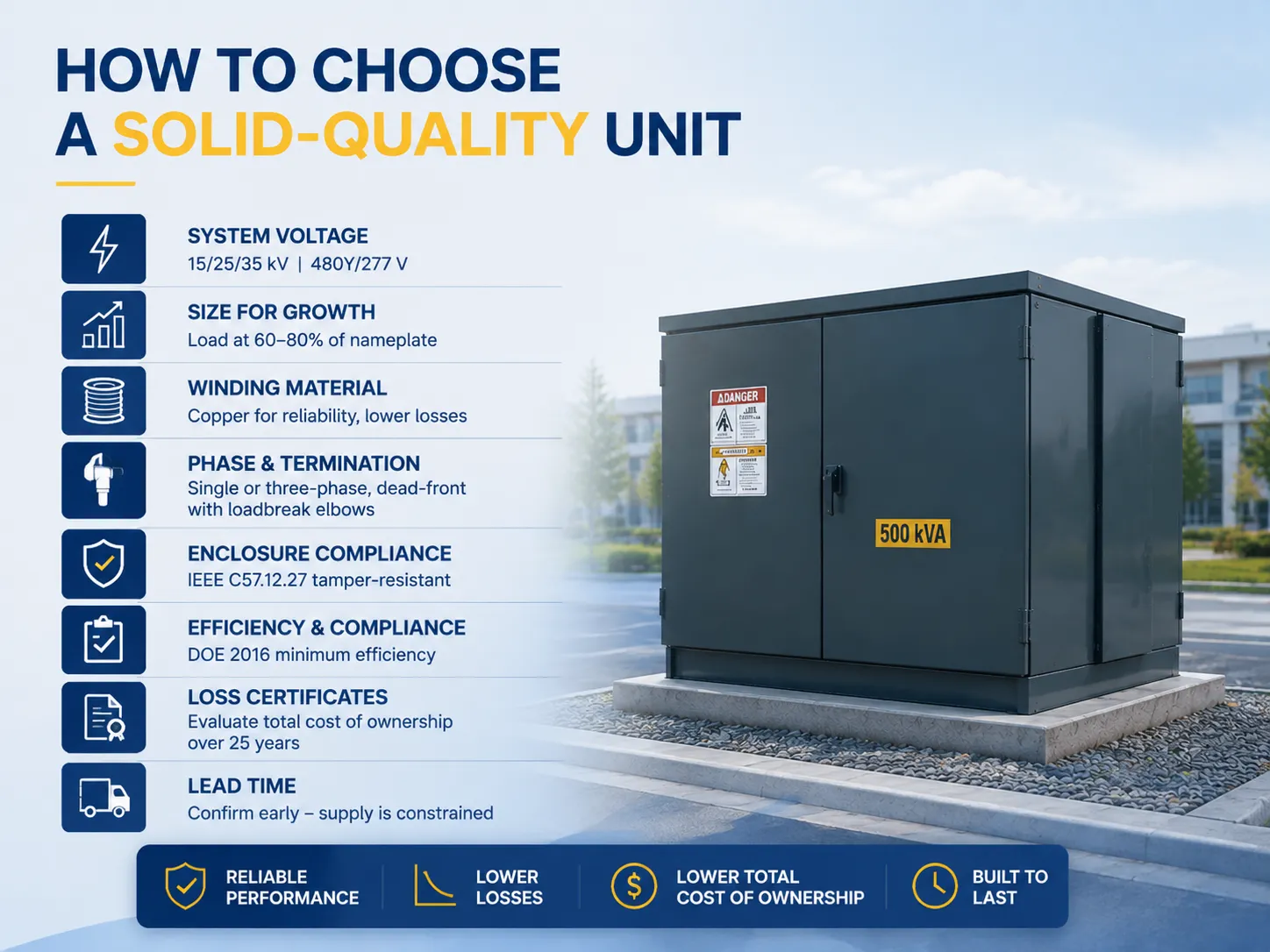
Come scegliere un'unità di qualità solida
- Confermare la tensione nel sistema — classe di tensione primaria (15/25/35 kV) e tensione secondaria precisa (ad esempio, 480Y/277 V).
- Dimensionare per la crescita del carico — selezionare kVA per il carico di picco 60–80% della targa; un'unità da 500 kVA che serve 400 kVA di picco lascerà spazio per la crescita.
- Scegli il materiale dell'avvolgimento con saggezza, considerando il rame per la massima affidabilità e minori perdite, mentre l'alluminio è più economico ma le sue perdite devono essere esaminate.
- Scegli la fase e la terminazione e decidi sul tipo di fase, dead-front o altro, dove si utilizzano gomiti dead-front e loadbreak per frequenti operazioni di commutazione.
- Richiedi la conformità a IEEE C57.12.27 e rivedi il meccanismo di bloccaggio per i tuoi locali.
- Verifica la classe di perdita e controlla la conformità con le linee guida DOE. In questo caso, presta attenzione all'efficienza minima DOE 2016 negli Stati Uniti.
- Ottieni un certificato di perdita per ogni unità e poi calcola il costo totale di proprietà per 25 anni (TCO) dopo aver corretto le tue assunzioni.
Lista di controllo per l'ispezione prima della consegna
- La targhetta corrisponde alle specifiche in termini di valutazione kVA, tensione, valore di impedenza, vettorizzazione di gruppo e tapping.
- I risultati dei test includono rapporto, perdite, valori di impedenza, resistenza dielettrica e di isolamento.
- L'integrità dell'involucro è stata controllata: il furto può essere effettuato attraverso porte aperte; le cerniere funzionano correttamente e le guarnizioni sono intatte.
- Gli accessori per reattori nucleari sono puliti e il tipo di connettore corrisponde a IEEE 386.
- Proprietà dell'olio: il livello totale di tensione di rottura non deve essere inferiore a 40 kV/2,5 mm; il livello dell'olio è visibile dall'esterno e non ci sono perdite visibili nelle giunture del serbatoio e nelle valvole.
- Sono presenti accessori per il serbatoio, come il dispositivo di rilascio della pressione, la valvola di drenaggio e i cuscinetti di messa a terra.
- La documentazione è completa: documentazione IEC e IEEE, certificato dei materiali, rapporto di controllo qualità.
Domande frequenti
Quanto costa un trasformatore montato su basamento?
In generale, i trasformatori montati su basamento possono variare nel prezzo a seconda della loro classe di tensione. Il prezzo di un trasformatore monofase da 75-150 kVA può variare da $1.800 a $3.500. D'altra parte, un trasformatore trifase montato su basamento da 500 kVA può variare da $4.500 a $9.000 e un grande trasformatore montato su basamento da 1500-2500 kVA costa solitamente intorno a $12.000 a $30.000. Altri fattori come accessori aggiuntivi, tipo di avvolgimenti e classe di efficienza aggiungono tipicamente 5-20% al prezzo. Si noti che tutti i prezzi sopra menzionati sono prezzi FOB indicativi che possono variare in base a marca, regione e specifiche.
Qual è la differenza tra montaggi a fronte morto e a fronte vivo?
La differenza fondamentale tra i due tipi di trasformatore si riferisce alle unità a fronte morto. Questi tipi di trasformatori sono isolati e schermati, con unità a fronte morto senza parti in tensione presenti, nemmeno nel caso in cui la porta di un armadio sia aperta. I trasformatori a fronte morto soddisfano gli standard IEEE C57.12.27 per qualsiasi nuova installazione. Per quanto riguarda i trasformatori a fronte vivo, i problemi di sicurezza che possono causare riguardo ai bushing vivi esposti sono le ragioni per cui sono diventati obsoleti decenni fa. Si noti che le unità a fronte morto hanno più vantaggi rispetto a quelle a fronte vivo.
Quanto dura un trasformatore montato su basamento?
In generale, i trasformatori possono durare fino a 25-40 anni se sono mantenuti e fabbricati correttamente. Diversi aspetti determinano la vita utile prevista dei trasformatori, inclusa l'età dell'isolamento fino al momento del guasto (che dipende dai livelli di temperatura e umidità), le condizioni dell'olio utilizzato in un trasformatore e la storia operativa dell'attrezzatura. Questa è la ragione per cui gli operatori solitamente prelevano campioni di olio ogni due-cinque anni per monitorare i livelli di umidità, i livelli di gas disciolto (DGA) e la resistenza elettrica.
I trasformatori montati su basamento necessitano di una recinzione?
Il principale vantaggio dei trasformatori montati su basamento si riferisce al fatto che non è necessario costruire alcuna recinzione aggiuntiva attorno al trasformatore. Grazie alle disposizioni di sicurezza contro le manomissioni, questi trasformatori sono conformi a IEEE C57.12.27, non è necessario proteggere i trasformatori con recinzioni circostanti e altre soluzioni di sicurezza. Inoltre, i trasformatori montati su basamento sono solitamente posizionati vicino a molti oggetti importanti attorno ai parchi giochi, marciapiedi e persino ingressi.
Qual è il tempo di consegna per i trasformatori montati su basamento?
Il tempo di consegna previsto per i trasformatori dipende solitamente dalla loro capacità e dal carico di lavoro della fabbrica. I trasformatori trifase standard necessitano di circa 10-22 settimane per il processo di produzione, mentre i trasformatori più grandi (con capacità di 3000-5000 kVA) possono essere prodotti in 16-32 settimane. Il tempo di consegna negli Stati Uniti è aumentato a più di 30 settimane a causa delle attuali carenze di attrezzature e i posti di produzione devono essere prenotati in anticipo.
Riferimenti
-
-
- IEEE C57.12.00 — Requisiti generali per i trasformatori di distribuzione immersi in liquido — lo standard di progettazione e classificazione di base per i trasformatori montati su basamento.
- IEEE C57.12.90 — Procedure di prova per i trasformatori di distribuzione — la base di test per perdite, prestazioni dielettriche e di impulso.
- IEEE C57.12.27 — Integrità dell'involucro delle apparecchiature montate su basamento — il requisito di protezione frontale e resistenza ai manomissioni che definisce la qualità dell'involucro solido.
- IEEE 386 — Sistemi di connettori isolati separabili — requisiti per i connettori a gomito con protezione frontale.
- U.S. DOE — Standard di efficienza dei trasformatori di distribuzione — livelli minimi di efficienza obbligatori per le unità vendute negli Stati Uniti.
- NEMA — Linee guida per l'applicazione dei trasformatori di distribuzione — linee guida per l'applicazione e la classificazione per il mercato nordamericano.
- Jiangsu Subian Electric Power — sito ufficiale — produttore ed esportatore di trasformatori montati su basamento conformi a IEEE.
-
Conclusione
L'ampia qualità riscontrata nei trasformatori montati su basamento non è semplicemente una dichiarazione di marketing; è una combinazione di un processo certificato, perdite verificate, isolamento testato, coperture inaccessibili e materiali tracciabili. Tutti i clienti che possono controllare questi cinque fattori per iscritto, ispezionare visivamente il prodotto prima del pagamento e confrontare le perdite testate si proteggeranno dai problemi legati a importazioni di bassa qualità.
- Richiedere la conformità a IEEE C57.12.00/.27/.90 e rapporti di prova regolari per tutti gli apparecchi.
- Ordinare apparecchi per almeno 60-80% del valore nominale del carico e indicare soluzioni in rame a protezione frontale dove è richiesta affidabilità.
- Confrontare le offerte basandosi sulle perdite valutate nel corso di 25 anni invece di considerare solo il primo prezzo e stimare in anticipo il tempo di consegna.
- Assicurarsi di ispezionare l'involucro, le connessioni, l'olio e la documentazione prima di accettare la consegna finale.
- Considerare le principali aziende nordamericane, ad esempio Prolec GE, Eaton e quelle certificate IEC/IEEE come Jiangsu Subian Electric Power.