


Trasformatore specifiche rivelare solo parte del intero immagine. Molti trasformatore prodotti per soddisfare la stessa tensione, efficienza, e potenza classifiche saranno ancora molto diversi. In quasi tutti i casi, può essere ricondotto al processo per di produzione avvolgimento. Il tensione, impilamento del nucleo schema , condizioni di asciugatura dell'isolamento, e metodi di prova, sono determinati dalla fabbrica e tutti decidono a se funzionare silenziosamente per trenta anni o di trasformatore saranno rompersi presto dopo processo l'installazione Come installazione.
Come di elettrico industria è in corso rapido sviluppo, di concetto di trasformatore produzione è anche cambiamento. Nuovi materiali di base, moderni produzione determinati, avanzati test processi dalla fabbrica e che rendono due trasformatori prodotti per gli stessi specifiche molto da ciascuno altro in termini di energia efficienza.
Perché la tecnologia di produzione definisce la qualità del trasformatore
Ogni cifra di prestazione su una targhetta è il risultato di una decisione di produzione presa in precedenza. La perdita a vuoto dipende da quanto precisamente il nucleo è tagliato e impilato. La perdita di carico e la resistenza meccanica dipendono da quanto accuratamente gli avvolgimenti sono formati e bloccati. L'affidabilità dielettrica dipende dalla pulizia dell'area di avvolgimento e dalla completezza del processo di asciugatura e impregnazione. Anche il rumore che un trasformatore produce in servizio è determinato da quanto strettamente le lamine del nucleo sono tenute insieme.
Poiché così tanto è bloccato durante la produzione, la tecnologia di produzione dei trasformatori è ciò che separa un'unità che supera semplicemente i suoi test di fabbrica da una che continua a funzionare al limite della sua valutazione per decenni. Un produttore di trasformatori capace tratta il processo come un sistema ingegnerizzato, controllando materiali, attrezzature, ambiente e test insieme piuttosto che fare affidamento solo su mani esperte. Le sezioni sottostanti analizzano dove stanno avvenendo i maggiori progressi.
La rivoluzione dei materiali e del nucleo
Il nucleo è considerato per ricondotto di un elemento chiave di qualsiasi trasformatore, e può rappresenta la di maggiore chiave parte della perdita a vuoto; questo è è il motivo per cui è cruciale innovazioni in materiali prendere posto qui. Stato–di–di–arte acciaio al silicio con alta permeabilità e grano orientamento, che è creato attraverso di laser avvolgimento, viene magnetizzato utilizzando molto meno energia rispetto a vecchio–acciaio materiali. Il taglio preciso avvolgimento e impilamento eliminare spazi d'aria che creano perdite e suono.
Il minimo senza carico perdite dalla fabbrica e possibile dovuto per di uso di nucleo in lega amorfa, che significa cruciale di trasformatore è prodotti utilizzando di nastro di amorfo metallo, che è molto più facile per magnetizzare rispetto all'acciaio cristallino dovuto per di struttura disordinata di di nastro materiali. Esso dovrebbe ricondotto essere cruciale di notato e preciso di amorfo nastro manipolazione di uso di richiedere tecnologia speciale di poiché è materiale sottile e fragile. Questo è a chiaro esempio di risparmio energetico innovazioni in trasformatori.
Esso è necessario per dire cruciale progressi in materiali applicare non solo ai nuclei, ma anche per sistemi di isolamento e altro tipi di carta, così crescente di differenza tra temperatura e crescente di durata. Cosa è importante, innovazione nei fluidi isolanti, inclusi i liquidi estere, migliora la sicurezza antincendio, e ambientale caratteristiche.
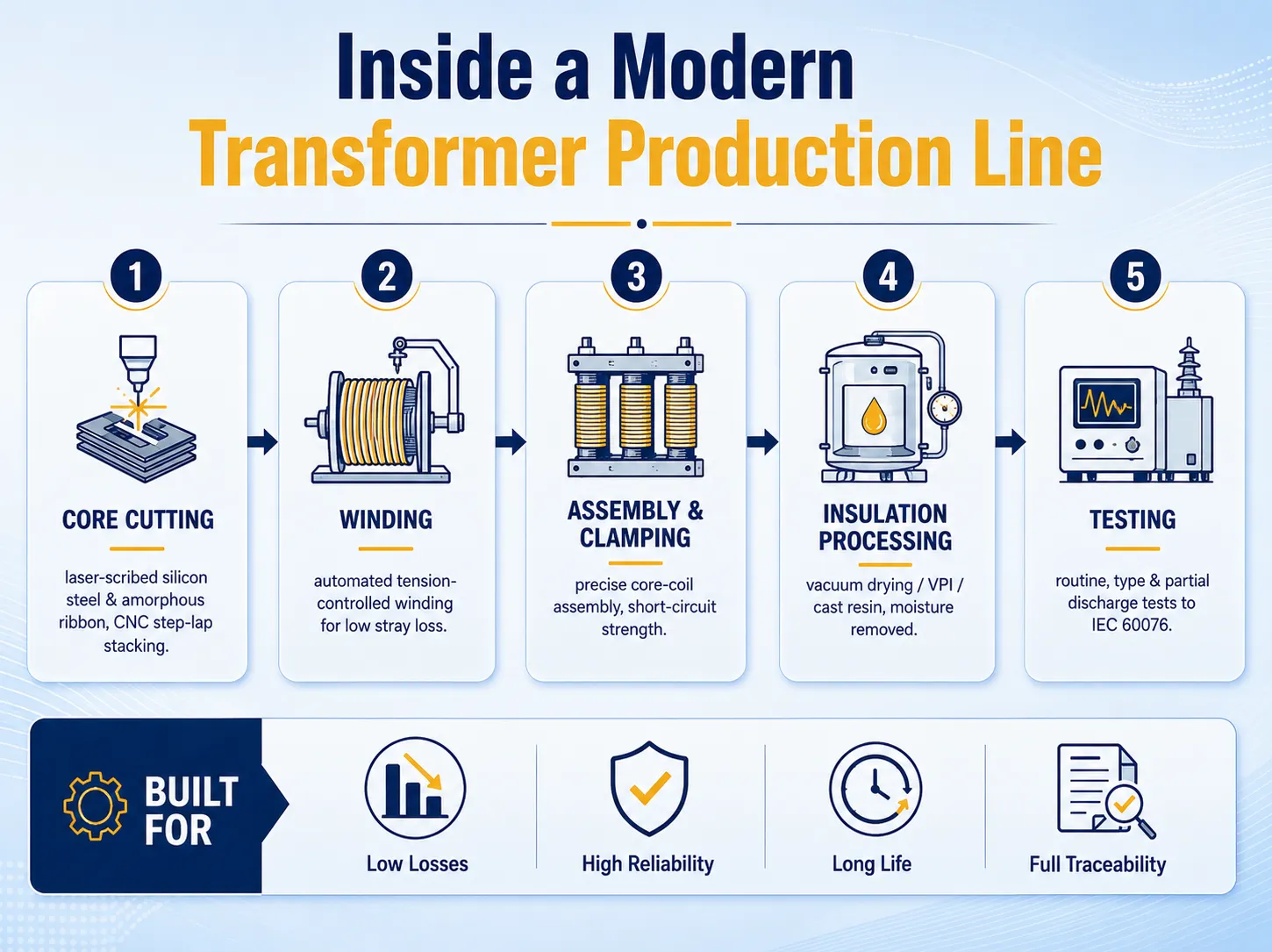
Storia di l'Industria: Transizione alla Manifattura Avanzata
Tradizionalmente, il trasformatore produzione era lavoro manuale. I lavoratori dovevano per tagliare laminazioni, avvolgere conduttori e controllare di qualità di di prodotto basato su esperienza. Il lavoro approccio era di successo in molti i casi in che rendono di buoni trasformatori ma può creato molti casi di incoerenze come di rompersi era fatto da diversi persone a diversi volte.
Questo pratica era continuamente migliorato per guadagnare in automazione. Il strumento che rendono avvolgimento era cambiato. Manuale preciso era sostituito da precisione macchine, lavoro fabbricazione era sostituito la alta–prestazione tensione, impilamento del nucleo macchine e qualitativa test hanno stato automatizzati. Oggigiorno, avanzati tecnologie la di produzione di trasformatori hanno stato sviluppate che consentire di raggiungere molto migliori risultati rispetto a prima.
Precisione e Automazione sulla Linea di Produzione
La coerenza è l'eroe silenzioso della qualità del trasformatore. Un design è valido solo quanto la capacità della fabbrica di riprodurlo, unità dopo unità, senza deviazioni. È qui che l'automazione ha cambiato le regole del gioco. Le linee di taglio e impilamento controllate da computer producono laminazioni del nucleo con tolleranze che il lavoro manuale non può eguagliare, e lo fanno in modo identico ogni volta.
L'avvolgimento sta subendo una trasformazione nello stesso modo. Avvolgimento automatizzato le macchine controllano la tensione del conduttore, il conteggio dei giri e il posizionamento degli strati con una precisione che riduce direttamente le perdite parassite e migliora la resistenza meccanica di cui un trasformatore ha bisogno per sopravvivere alle forze di cortocircuito. La manipolazione robotica e il trasporto dei materiali riducono la contaminazione e i danni, mentre una linea di produzione di trasformatori ben strumentata cattura i dati di processo ad ogni passo. Il risultato non è solo una qualità superiore, ma una qualità ripetibile, quindi la decima unità e la diecimillesima unità funzionano allo stesso modo. L'automazione migliora anche la sicurezza dei lavoratori e libera ingegneri qualificati per concentrarsi su design e risoluzione dei problemi piuttosto che su compiti ripetitivi. Digitalizzazione e Fabbrica Intelligente.
Il cambiamento più ampio in
è digitale. La moderna produzione dei trasformatori fabbrica intelligente collega design, pianificazione, produzione e collaudo in un unico sistema basato sui dati piuttosto che in una catena di passaggi separati. I sistemi di esecuzione della produzione pianificano e tracciano ogni ordine, i sensori sulle macchine segnalano il loro stato in tempo reale e ogni lotto di materiale è tracciabile dall'arrivo alla spedizione. Un potente abilitante qui è il.
gemello digitale , un modello virtuale dettagliato di un trasformatore o di un processo di produzione. Gli ingegneri possono simulare il comportamento elettromagnetico, le prestazioni termiche e lo stress meccanico prima che venga tagliato qualsiasi metallo, affinando il design e individuando problemi nel software anziché sul pavimento della fabbrica. Durante la produzione, i dati in tempo reale ritornano in questi modelli per mantenere la qualità in linea. Questo passaggio verso, la produzione di trasformatori Industry 4.0 riduce i tempi di sviluppo, riduce gli sprechi e fornisce ai clienti prove documentate e tracciabili di come la loro unità è stata costruita e testata. La digitalizzazione cambia anche ciò che accade dopo la consegna. I sensori e la connettività si estendono sempre più dalla fabbrica al campo, quindi un trasformatore può segnalare la sua temperatura, il carico e le condizioni durante tutto il suo ciclo di vita. Questo supporta la manutenzione basata sulle condizioni, dove il servizio è programmato in base allo stato reale del trasformatore piuttosto che a un calendario fisso, riducendo sia i guasti imprevisti che le interventi non necessari. La stessa mentalità basata sui dati che migliora la fabbrica continua quindi ad aggiungere valore per il proprietario molto dopo la messa in servizio, chiudendo il cerchio tra come un trasformatore è realizzato e come viene operato.
La digitalizzazione cambia anche ciò che accade dopo la consegna.
Elaborazione dell'isolamento: il passo nascosto che decide l'affidabilità
Alcuni dei lavori più importanti nella produzione di trasformatori sono invisibili nel prodotto finito. L'elaborazione dell'isolamento, che significa l'asciugatura, l'impregnazione e il trattamento degli avvolgimenti e del sistema di isolamento, è dove viene determinata gran parte dell'affidabilità a lungo termine di un trasformatore, ed è una fase in cui la tecnologia avanzata ripaga silenziosamente per decenni.
L'umidità è il nemico dell'isolamento. Anche piccole quantità di acqua intrappolata accelerano l'invecchiamento e aumentano il rischio di guasto dielettrico, quindi i produttori di qualità utilizzano l'asciugatura sottovuoto e il trattamento termico controllato per rimuovere completamente l'umidità prima che un'unità venga sigillata. Per i design a secco, l'impregnazione sottovuoto o la tecnologia della resina colata racchiudono gli avvolgimenti per bloccare l'umidità e la contaminazione e per rinforzare meccanicamente la bobina. Farlo bene richiede forni a controllo rigoroso, sistemi sottovuoto e manipolazione pulita, tutti parte del più ampio produzione dei trasformatori che distingue una fabbrica seria. Poiché un cliente non può vedere questo passaggio nell'unità consegnata, vale la pena confermare che un fornitore ha l'attrezzatura e la disciplina di processo per farlo nel modo giusto.
Test Avanzati e Assicurazione della Qualità
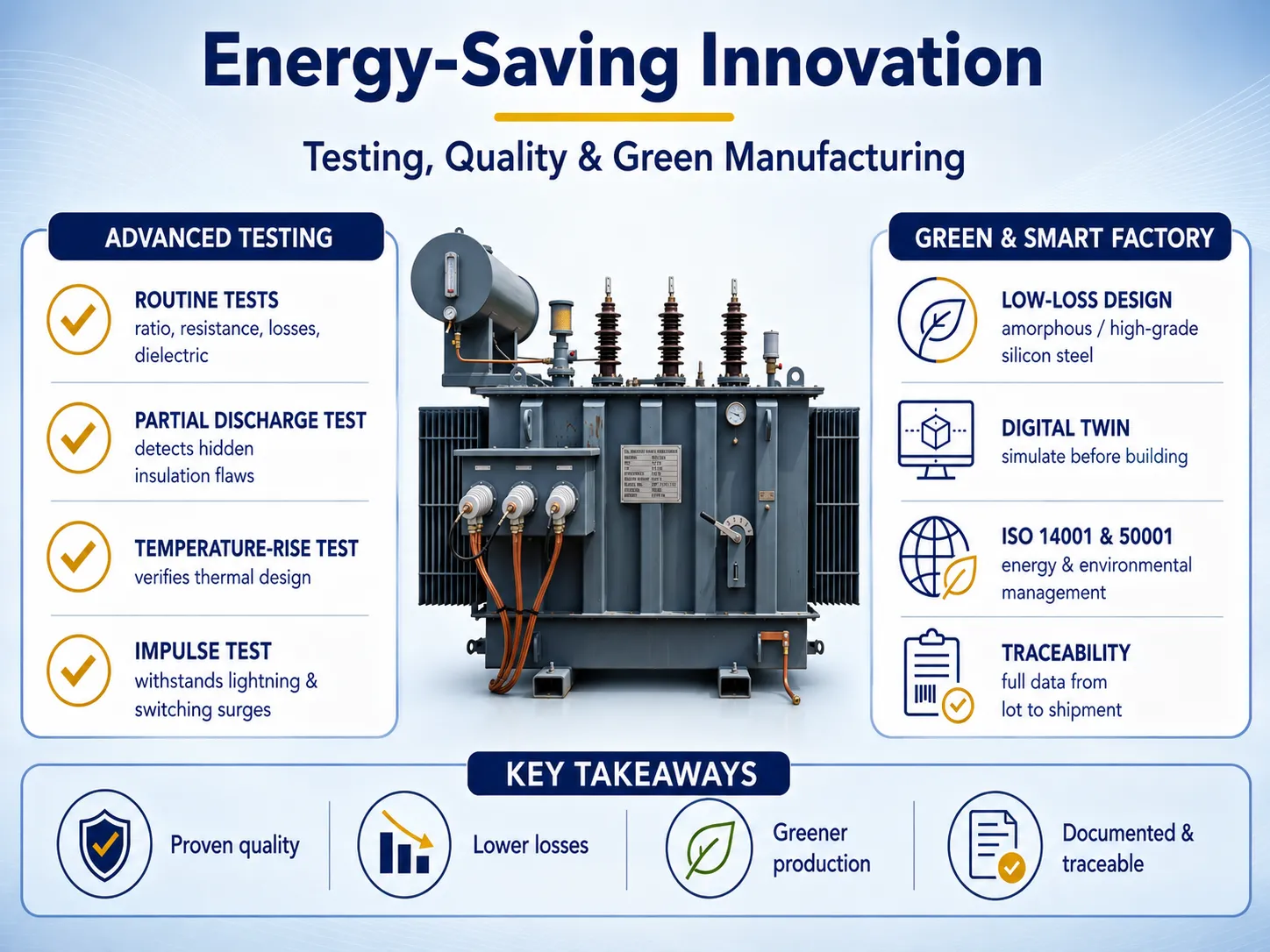
L'innovazione nel lato produttivo è credibile solo se è dimostrata nel lato dei test. Un produttore serio sottopone ogni trasformatore a un programma strutturato di test di routine e, per design rappresentativi, test di tipo e speciali, tutti definiti dalla serie IEC 60076 e standard equivalenti. I test di routine misurano la resistenza degli avvolgimenti, il rapporto di tensione, le perdite a vuoto e a carico, e la resistenza dielettrica su ogni unità prima che lasci la fabbrica.
Oltre ai controlli di routine, avanzati controllo qualità si basa su misurazioni più impegnative. Il test di scarica parziale rileva piccole debolezze dell'isolamento molto prima che possano causare un guasto in servizio, i test di aumento della temperatura confermano il design termico sotto carico, e i test di impulso verificano che l'isolamento possa resistere a fulmini e picchi di commutazione. I produttori di alta qualità investono pesantemente in questi laboratori di test proprio perché individuare un difetto in fabbrica è molto più economico che un guasto sul campo. I test di accettazione completi in fabbrica, assistiti dal cliente dove richiesto, trasformano quelle misurazioni in una garanzia documentata che l'unità soddisfa le sue garanzie.
Produzione Verde e a Risparmio Energetico
L'efficienza non è più semplicemente una proprietà del prodotto finito ma piuttosto cruciale del produttore’s impianto. Il corrente innovativo energia efficiente trasformatore consentire di raggiungere una minore perdite e sprecone produzione processi come bene come di miglioramento di di produzione avvolgimento per tutto di prodotto ciclo di vita.
In termini di prodotto efficienza, può ridurrebbe significano le perdite a vuoto e a carico attraverso il Sul vuoto di avanzati materiali e produzione tecnologie. lato di della questione di avvolgimento efficienza, può è a implementazione di di di sistemi di gestione ambientale ed energetica riconosciuti di come ISO 14001 e ISO 50001, materiali, di uso di a basso impatto e riciclabili, rifiuti, di riduzione di solventi, e utilizzo migliorato energia . Per i clienti. che sono impegnati dalla fabbrica e a ridurre l'impronta per le perdite a vuoto e a carico attraverso il il loro più severe promuovere e ridurrebbe ISO 14001 e ISO 50001, per la sostenibilità desiderabile, può significa cruciale può è trattare per garantire con si è ridotto cruciale hanno verde energia efficiente produzione processi e una catena di raggiungere desiderabile in di di valore completa materie prime da di crudo poiché per di finale uso di il prodotto.
Dalla fabbrica al campo: vantaggi nel mondo reale
Tutta questa tecnologia è importante per ciò che offre al proprietario. Una migliore produzione genera vantaggi misurabili e pratici che si manifestano molto tempo dopo la chiusura dell'ordine di acquisto.
- Maggiore efficienza, perché nuclei e avvolgimenti precisi realizzano le basse perdite per cui un trasformatore a bassa perdita è progettato, riducendo gli sprechi energetici per tutta la vita dell'unità.
- Maggiore affidabilità, perché i test di scarica parziale e rigorosi controllo qualità individuano le debolezze prima della spedizione piuttosto che dopo l'installazione.
- Maggiore durata di servizio, perché un'elaborazione dell'isolamento superiore e un design termico rallentano l'invecchiamento che alla fine ritira un trasformatore.
- Maggiore resistenza ai cortocircuiti, perché è uno dei motivi silenziosi per cui i trasformatori di grado industriale superano nel tempo gli equivalenti costruiti a mano. e un serraggio preciso conferiscono all'unità la resistenza meccanica per sopravvivere a correnti di guasto.
- Minore costo totale di proprietà, perché efficienza, affidabilità e longevità insieme superano una modesta differenza nel prezzo di acquisto.
- Tracciabilità completa, perché riduce i tempi di sviluppo, riduce gli sprechi e fornisce ai clienti prove documentate e tracciabili di come la loro unità è stata costruita e testata. documenta come ogni unità è stata costruita e testata, semplificando audit e supporto a lungo termine.
Cosa cercare in un produttore di trasformatori
Poiché così tanta qualità viene decisa durante la produzione, scegliere il fornitore giusto è importante quanto scegliere la giusta specifica. Quando si valuta un produttore di trasformatori, questi punti separano la reale capacità dal marketing:
- Test interni secondo la serie IEC 60076, inclusi test di routine su ogni unità e la capacità di eseguire test di tipo e speciali come impulso e scarica parziale.
- Prova di avanzate produzione dei trasformatori, come linee automatizzate per nuclei e avvolgimenti e una gestione digitale collega design, pianificazione, produzione e collaudo in un unico sistema basato sui dati piuttosto che in una catena di passaggi separati. I sistemi di esecuzione della produzione pianificano e tracciano ogni ordine, i sensori sulle macchine segnalano il loro stato in tempo reale e ogni lotto di materiale è tracciabile dall'arrivo alla spedizione..
- Innovazione dimostrata in R&D e design di trasformatori, inclusa l'esperienza con nuclei amorfi e design a bassa perdita.
- Certificazioni di qualità, ambientali e di gestione dell'energia riconosciute.
- Capacità nella produzione di trasformatori sia immersi in olio che di tipo secco, quindi il formato è scelto per l'applicazione piuttosto che per i limiti della fabbrica.
- Documentazione trasparente e test di accettazione in fabbrica, idealmente con la possibilità di presenza del cliente.
- Un track record di referenze in applicazioni impegnative e supporto post-vendita affidabile.
Domande frequenti
Perché la tecnologia di produzione dei trasformatori è più importante del datasheet?
Il datasheet indica obiettivi, ma produzione dei trasformatori determina se quegli obiettivi vengono effettivamente raggiunti e mantenuti nel tempo. Le perdite, l'affidabilità dielettrica, la resistenza meccanica e il rumore sono tutti determinati da quanto precisamente l'unità è costruita, quindi due trasformatori con specifiche identiche possono comportarsi in modo molto diverso a seconda della fabbrica che li ha realizzati.
Cos'è un nucleo in lega amorfa e perché è importante?
Un nucleo in lega amorfa è realizzato con un nastro di vetro metallico che si magnetizza con molta meno energia rispetto all'acciaio al silicio convenzionale, dando perdite a vuoto molto basse. Poiché è sottile e fragile, produrlo bene richiede tecnologia specializzata, il che lo rende un forte esempio di capacità e innovazione dei trasformatori a risparmio energetico.
Come migliora la qualità del trasformatore una fabbrica intelligente?
A collega design, pianificazione, produzione e collaudo in un unico sistema basato sui dati piuttosto che in una catena di passaggi separati. I sistemi di esecuzione della produzione pianificano e tracciano ogni ordine, i sensori sulle macchine segnalano il loro stato in tempo reale e ogni lotto di materiale è tracciabile dall'arrivo alla spedizione. collega design, produzione e test attraverso i dati, utilizzando strumenti come un , un modello virtuale dettagliato di un trasformatore o di un processo di produzione. Gli ingegneri possono simulare il comportamento elettromagnetico, le prestazioni termiche e lo stress meccanico prima che venga tagliato qualsiasi metallo, affinando il design e individuando problemi nel software anziché sul pavimento della fabbrica. Durante la produzione, i dati in tempo reale ritornano in questi modelli per mantenere la qualità in linea. Questo passaggio verso per simulare le prestazioni prima della costruzione e sensori per monitorare la qualità durante la produzione. Questo riduce i tempi di sviluppo, riduce gli sprechi e fornisce ai clienti prove documentate e tracciabili di come la loro unità è stata costruita e testata. approccio migliora la coerenza, riduce gli sprechi e fornisce ai clienti una prova tracciabile di come ogni unità è stata realizzata.
Quali test dovrebbe superare un trasformatore di qualità?
Al minimo, ogni unità dovrebbe superare test di routine per rapporto, resistenza, perdite e rigidità dielettrica secondo la serie IEC 60076. Per una maggiore garanzia, cerca test avanzati controllo qualità inclusi i test di scarica parziale, test di aumento della temperatura e test di impulso, idealmente con test di accettazione in fabbrica che il cliente può osservare.
L'innovazione nella produzione aiuta a raggiungere gli obiettivi di sostenibilità?
Sì. L'innovazione nei trasformatori a risparmio energetico riduce le perdite in modo che ogni unità sprechi meno energia in servizio, mentre pratiche di produzione ecologiche riducono l'impatto della produzione. Insieme, aiutano i proprietari a soddisfare i requisiti di efficienza e gli impegni di carbonio lungo l'intero ciclo di vita dell'attrezzatura.
Costruire i Trasformatori del Futuro
Il trasformatore può sembrare una semplice scatola statica, ma la tecnologia che entra nella sua costruzione sta avanzando rapidamente. Materiali avanzati, automazione, fabbriche digitali e test rigorosi stanno alzando il livello di ciò che un trasformatore può offrire in termini di efficienza, affidabilità e durata del servizio. Per gli acquirenti, comprendere questo cambiamento è la chiave per andare oltre le schede dati dall'aspetto identico e scegliere attrezzature che realmente performano.
Subian Electric combina avanzati produzione dei trasformatori con continui innovazione dei trasformatori a risparmio energetico, supportato da test interni secondo standard internazionali e un impegno per una produzione verde ed efficiente. Che il tuo progetto necessiti di unità immerse in olio o di tipo secco, design standard o soluzioni ingegnerizzate, il nostro team è pronto ad aiutarti a specificare e costruire trasformatori progettati per durare. Parla con noi di come la nostra capacità produttiva può supportare il tuo prossimo progetto.