


Quando un tifone si abbatte su una regione costiera, la rete elettrica è uno dei primi sistemi messi alla prova. Piogge torrenziali, allagamenti, detriti volanti e fulmini convergono su sottostazioni e apparecchiature di distribuzione che mantengono accese le luci, e pochi pezzi di quell'attrezzatura sono più critici, o più esposti, del trasformatore. Il trasformatore immerso nell'olio è il cavallo da lavoro delle reti di distribuzione e potenza nelle aree soggette a tempeste, apprezzato per la sua efficienza, prestazioni di raffreddamento e durata. Ma come qualsiasi bene all'aperto, ha bisogno del giusto design, preparazione e disciplina operativa per superare in sicurezza una tempesta violenta.
Questa guida spiega come un trasformatore immerso nell'olio è costruito per resistere a condizioni meteorologiche avverse, quali specifici pericoli porta un tifone e le concrete precauzioni che gli operatori dovrebbero adottare prima, durante e dopo la tempesta. Che tu sia responsabile di un'unità singola in una fabbrica o di una flotta di trasformatore immerso in olio da 35kV installazioni in una rete, i principi sono gli stessi: proteggere l'attrezzatura, proteggere l'alimentazione elettrica e, soprattutto, proteggere le persone intorno ad essa.
Perché i tifoni rappresentano una seria minaccia per i trasformatori
Un tifone combina diverse forze distruttive contemporaneamente, e ognuna attacca un trasformatore in modo diverso. La pioggia torrenziale e l'onda di tempesta causano allagamenti che possono sommergere l'attrezzatura e costringere l'acqua a superare le guarnizioni. Venti sostenuti trasformano oggetti liberi in proiettili che possono colpire i bushing, i radiatori e le alette di raffreddamento. I fulmini iniettano enormi picchi di tensione nelle linee aeree che viaggiano direttamente verso l'attrezzatura connessa. Sulla costa, la spruzzata di sale trasportata dal vento accelera la corrosione molto tempo dopo che la tempesta è passata.
Poiché un trasformatore immerso in liquido si basa su olio isolante e condizioni interne attentamente controllate per svolgere il suo lavoro, qualsiasi violazione di quell'ambiente sigillato è pericolosa. L'acqua è il nemico più grande: anche una piccola quantità di umidità che entra nel serbatoio riduce drasticamente la resistenza dielettrica dell'olio e dell'isolamento, aumentando il rischio di flashover interno e guasto. Comprendere queste minacce è il primo passo per difendersi da esse, il che rende la sicurezza dei trasformatori immersi in olio una priorità di pianificazione in qualsiasi regione esposta ai tifoni.
Come i trasformatori immersi in olio sono costruiti per resistere a condizioni meteorologiche avverse
Un trasformatore immerso nell'olio ben realizzato include già una grande quantità di protezione integrata contro gli agenti atmosferici, motivo per cui il formato è affidabile per un servizio all'aperto impegnativo. Comprendere queste caratteristiche aiuta gli operatori ad apprezzare cosa l'attrezzatura può e non può gestire da sola.
Il nucleo e le avvolgimenti si trovano all'interno di un serbatoio in acciaio sigillato riempito di olio isolante, che raffredda sia le parti attive sia esclude aria e umidità. Il serbatoio, i radiatori e i raccordi sono rifiniti con rivestimenti resistenti alle intemperie per resistere a pioggia e corrosione. Un conservatore e un respiratore in gel di silice gestire l'espansione e la contrazione dell'olio mentre la temperatura cambia mantenendo l'aria in ingresso asciutta. I manicotti in porcellana o compositi portano le connessioni ad alta tensione attraverso la parete del serbatoio con un lungo percorso di creep progettato per resistere ai flashover anche quando bagnato. Le moderne serie a bassa perdita come il trasformatore S11 e SZ11 sono ampiamente utilizzate a tensioni di distribuzione, con le unità SZ11 che aggiungono il cambio di tap sotto carico per mantenere costante la tensione di uscita mentre la rete fluttua durante una tempesta.
La protezione continua all'esterno del serbatoio. Un'installazione correttamente specificata abbina il trasformatore a un scaricatore di sovratensione su ciascuna linea in ingresso per deviare in sicurezza i fulmini e le sovratensioni di commutazione a terra, e con una solida messa a terra del trasformatore che fornisce una via a bassa impedenza per la corrente di guasto lontano da attrezzature e persone. Per i siti più difficili, il trasformatore può essere collocato all'interno di un involucro prefabbricato, e le sezioni seguenti spiegano come combinare queste difese integrate con la giusta preparazione.
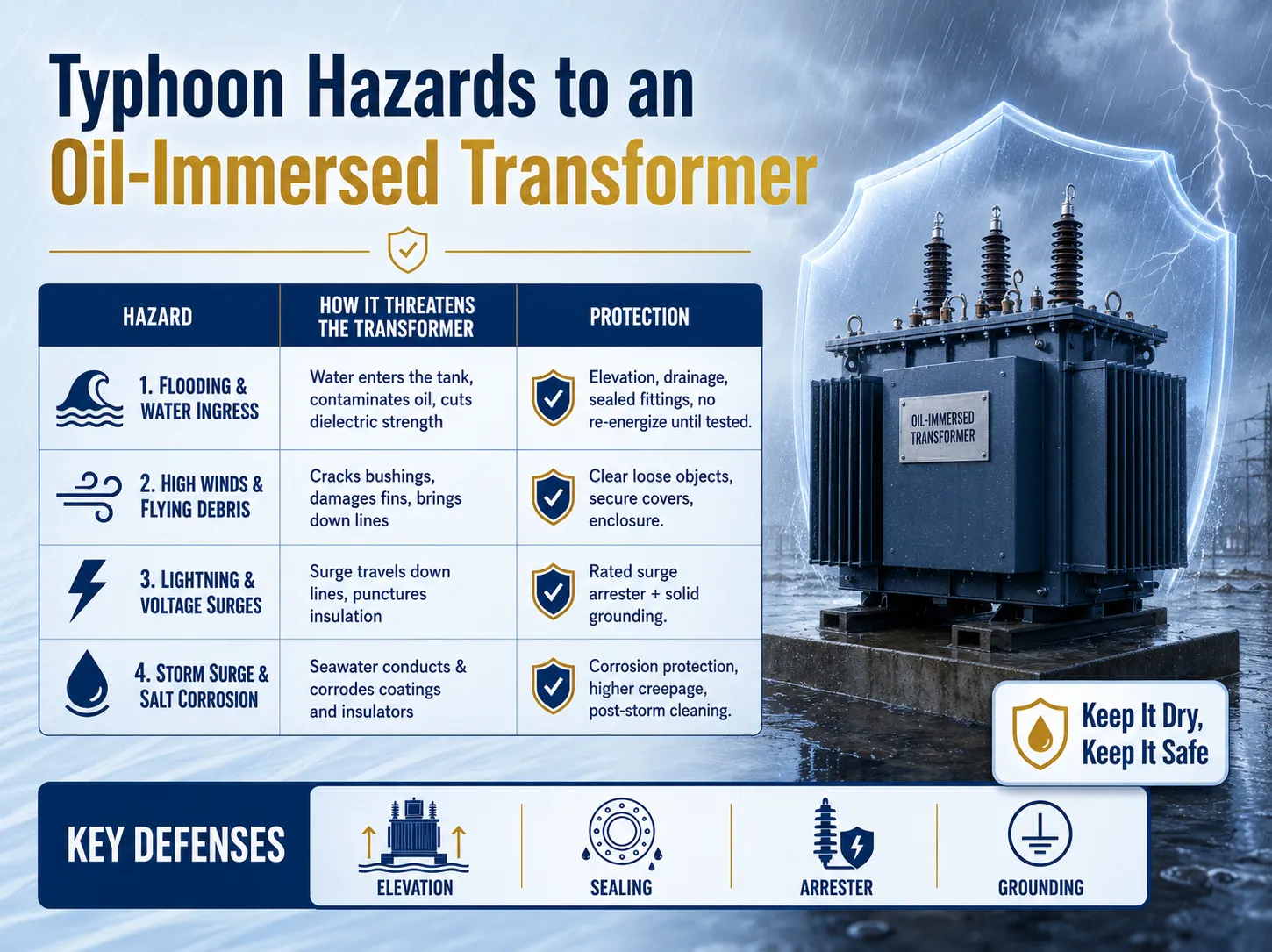
I principali pericoli del tifone, spiegati
Per prepararsi in modo efficace, è utile esaminare ogni pericolo singolarmente e comprendere esattamente come mette in pericolo un trasformatore immerso in liquido.
Allagamenti e ingresso d'acqua
Gli allagamenti sono il pericolo da tifone più dannoso e comune per le attrezzature montate a terra. Se l'acqua di allagamento sale al livello dei manicotti, delle guarnizioni o delle scatole dei cavi, può penetrare nel serbatoio e contaminare l'olio. L'acqua nel sistema isolante riduce drasticamente la sua resistenza dielettrica, e un trasformatore che è energizzato o ri-energizzato in quella condizione può guastarsi in modo catastrofico. I quadri di controllo sommersi e i meccanismi di cambio tap sono anch'essi vulnerabili, e l'acqua di allagamento spesso trasporta limo e detriti che ostruiscono i radiatori e il drenaggio.
Venti forti e detriti volanti
I venti di forza tifone possono superare le assunzioni di progettazione delle strutture vicine e lanciare segnali, tetti, rami e materiali da costruzione attraverso un sito. Un colpo diretto su un manicotto può incrinare la porcellana e aprire un percorso per l'umidità o causare un guasto immediato. Il vento può anche rovesciare pali e linee aeree mal fissati, facendo cadere conduttori energizzati su o vicino al trasformatore e al suo involucro.
Fulmini e sovratensioni
I fulmini non devono colpire direttamente un trasformatore per danneggiarlo. Un colpo in qualsiasi punto di una linea aerea connessa invia un'improvvisa sovratensione che corre verso ogni pezzo di attrezzatura su quel circuito. Senza un scaricatore di sovratensione, adeguatamente dimensionato e installato correttamente, quella sovratensione può perforare l'isolamento e distruggere le avvolgiture in microsecondi. Le operazioni di commutazione durante le perturbazioni della rete creano stress transitori simili, sebbene più piccoli.
Ondata di tempesta e corrosione da sale
Le installazioni costiere affrontano una minaccia aggiuntiva. L'onda di tempesta può portare acqua salata molto all'interno, e l'acqua salata è sia altamente conduttiva che aggressivamente corrosiva. Anche dove non si verifica allagamento, la spruzzata di sale spinta dal vento ricopre gli isolatori e le strutture metalliche, degradando l'isolamento superficiale e attaccando rivestimenti e fissaggi nel tempo. I siti vicino al mare necessitano quindi di un'attenzione extra per la sigillatura, i rivestimenti e la pulizia post-tempesta.
Prima della Tempesta: Preparazione e Precauzioni
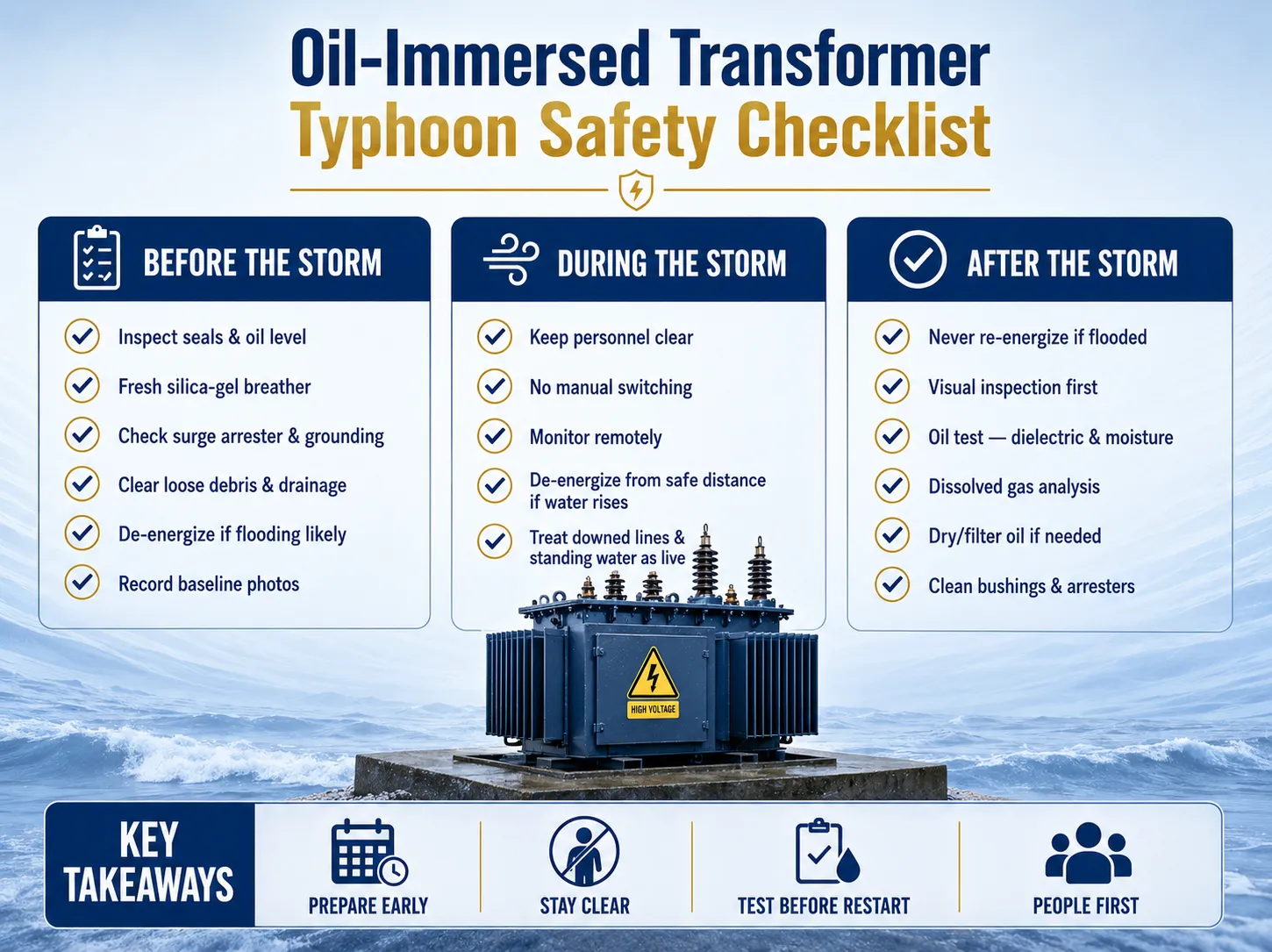
La finestra più importante per proteggere un trasformatore è il giorno o due prima che un tifone colpisca, mentre le condizioni consentono ancora un lavoro sicuro. Una routine disciplinata pre-tempesta migliora notevolmente le probabilità che un trasformatore immerso nell'olio sopravviva intatto. La seguente lista di controllo copre gli elementi essenziali:
- Ispezionare il serbatoio, i bushing e le guarnizioni per eventuali perdite, crepe o danni esistenti, e ripararli prima dell'arrivo della tempesta.
- Confermare che il livello dell'olio sia corretto e che il conservatore e respiratore in gel di silice stiano funzionando, con il desiccante fresco e asciutto piuttosto che saturo.
- Verificare che ciascun scaricatore di sovratensione sia integro, correttamente collegato e adeguatamente messo a terra, e controllare che messa a terra del trasformatore le connessioni siano strette e a bassa resistenza.
- Liberare l'area circostante da oggetti, attrezzi e materiali sciolti che il vento potrebbe trasformare in proiettili, e potare i rami vicini dove pratico.
- Fissare le porte dell'involucro, i coperchi delle scatole di cavi e le aperture in modo che il vento e la pioggia battente non possano forzarli ad aprirsi.
- Controllare e liberare il drenaggio del sito in modo che l'acqua possa defluire dalla fondazione del trasformatore invece di accumularsi attorno ad essa.
- Dove il rischio di allagamento è reale, preparati a disattivare e, per le unità mobili o montate su skid, considera di spostare l'attrezzatura in un'area più alta.
- Registra le letture di base e scatta fotografie, in modo che l'ispezione post-tempesta abbia un chiaro punto di riferimento.
- Conferma che l'alimentazione di emergenza, i pezzi di ricambio e le procedure di contatto di emergenza siano in atto prima che le comunicazioni e l'accesso diventino difficili.
Per le installazioni fisse, la decisione di mantenere un trasformatore energizzato o di spegnerlo prima della tempesta dovrebbe seguire il piano di emergenza dell'utility o della struttura e le istruzioni della rete locale. In caso di dubbio, proteggere l'asset e le persone intorno ha la priorità rispetto al mantenimento dell'alimentazione per carichi non critici.
Durante la Tempesta: Operazioni e Decisioni Sicure
Una volta che un tifone colpisce effettivamente, la regola guida è semplice: tenere le persone lontane dall'attrezzatura energizzata e lasciare che le difese preparate facciano il loro lavoro. Questo non è il momento per un intervento manuale al trasformatore. Cercare di operare interruttori, aprire armadi o ispezionare un trasformatore immerso in liquido in condizioni di forte vento e allagamento è estremamente pericoloso e non dovrebbe mai essere tentato.
Dove una struttura ha monitoraggio e controllo remoto, gli operatori possono osservare la temperatura dell'olio, il carico e lo stato degli allarmi da una posizione sicura e prendere decisioni di commutazione da remoto. Se l'acqua dell'allagamento sta salendo verso un trasformatore che è ancora energizzato, la risposta corretta è disattivarlo attraverso la protezione adeguata a monte da una distanza sicura, non attraversare a piedi. Un trasformatore che si disattiva durante una tempesta dovrebbe rimanere offline fino a quando non può essere ispezionato correttamente. Soprattutto, tratta ogni linea caduta e ogni pozzetto d'acqua stagnante vicino all'attrezzatura elettrica come attiva e letale, e mantieni tutto il personale a distanza.
Dopo la Tempesta: Ispezione e Recupero
Il periodo subito dopo un tifone è quando si verificano errori costosi, perché la pressione per ripristinare l'alimentazione è intensa. La regola più importante del recupero è questa: non riattivare mai un trasformatore che è stato allagato o sommerso fino a quando non è stato ispezionato e testato a fondo. Farlo comporta il rischio di un guasto violento che può ferire il personale e distruggere l'unità. Un recupero attento e metodico protegge entrambi.
Inizia con un'ispezione visiva da una distanza sicura, controllando strutture inclinate, bushing danneggiati, perdite d'olio, coperture spostate e segni che l'acqua ha raggiunto l'attrezzatura. Una volta confermata la sicurezza dell'area e isolata l'unità, un team qualificato può eseguire controlli elettrici e dell'olio. I passaggi chiave includono:
- Misurare la resistenza di isolamento e la resistenza degli avvolgimenti per rilevare l'ingresso di umidità o danni interni.
- Eseguire test dell'olio del trasformatore per la tensione di rottura dielettrica e il contenuto di umidità per confermare che l'olio fornisca ancora un'adeguata isolamento.
- Utilizzare analisi dei gas disciolti per rivelare eventuali difetti interni come surriscaldamento o scarica parziale che la tempesta potrebbe aver innescato.
- Ispezionare e pulire i terminali, gli arrestatori e le connessioni, prestando particolare attenzione ai depositi di sale nei siti costieri.
- Confermare che il conservatore, il respiratore e i sistemi di raffreddamento siano liberi da detriti e funzionino normalmente.
- Asciugare o filtrare l'olio, o trattare gli avvolgimenti, se i test mostrano che l'umidità è entrata nel sistema di isolamento.
Solo quando l'ispezione e i test confermano che il trasformatore è sano, dovrebbe essere rimesso in servizio, e anche allora è saggio monitorarlo attentamente durante le prime ore di riattivazione. trasformatore immerso in olio da 35kV Un'alimentazione a una sottostazione importante merita una particolare attenzione prima della riattivazione, poiché le conseguenze di un guasto a quel livello sono gravi.
Olio Immerso vs Tipo Secco in Aree a Rischio di Inondazione
Gli acquirenti nelle regioni esposte a tempeste a volte chiedono se un'unità di tipo secco sarebbe più sicura di un trasformatore immerso nell'olio quando l'inondazione è una preoccupazione. La risposta onesta è che nessun formato è progettato per essere sommerso, e entrambi devono essere protetti dall'acqua di inondazione. Ciò che differisce è il profilo delle loro forze.
Un trasformatore immerso nell'olio offre un'eccellente raffreddamento, alta capacità di sovraccarico e durata comprovata per servizi all'aperto e ad alta tensione, motivo per cui domina le applicazioni di distribuzione e sottostazione, inclusi trasformatore immerso in olio da 35kV installazioni. Il suo sistema di olio sigillato è una barriera robusta contro l'umidità in condizioni normali, ma se l'acqua di inondazione rompe i sigilli, l'olio contaminato deve essere trattato o sostituito. Le unità di tipo secco evitano completamente il liquido isolante e sono spesso preferite in ambienti interni o in luoghi sensibili al fuoco, tuttavia i loro avvolgimenti esposti sono altamente vulnerabili all'umidità e alla contaminazione se vengono allagati, e generalmente si adattano a tensioni più basse e ambienti protetti.
In pratica, il fattore più decisivo rispetto al formato è l'installazione: l'elevazione sopra il livello di inondazione, il drenaggio efficace e un'involucro adatto proteggono entrambi i tipi molto più della scelta tra di essi. Per la maggior parte delle esigenze di distribuzione all'aperto e costiera nei paesi colpiti da tifoni, un trasformatore immerso in liquido ben sigillato e ben posizionato di un produttore di qualità rimane la scelta affidabile, a condizione che venga tenuto lontano dall'acqua.
Costruire un Piano di Emergenza per Tifoni
Le precauzioni individuali funzionano meglio quando fanno parte di un piano scritto che tutti comprendono prima che il vento si intensifichi. Un piano di emergenza pratico per le risorse dei trasformatori trasforma buone intenzioni sparse in una routine ripetibile che resiste allo stress di una tempesta in avvicinamento.
Un piano solido assegna responsabilità chiare, in modo che ogni persona sappia se sta ispezionando, mettendo in sicurezza, monitorando o prendendo decisioni di spegnimento. Definisce i punti di attivazione, come una velocità del vento prevista o un livello di allagamento al quale un trasformatore viene disattivato, rimuovendo l'esitazione dal momento. Elenca la checklist pre-tempesta, le regole di distanza di sicurezza per la tempesta stessa e la sequenza di ispezione e test per dopo, in modo che nulla venga dimenticato sotto pressione. Mantiene i pezzi di ricambio, l'olio isolante, l'attrezzatura di test e i contatti dei fornitori identificati in anticipo, perché reperirli in mezzo a una crisi è lento e costoso. Infine, registra dati di base e fotografie per ogni unità importante, fornendo al team di recupero un chiaro riferimento per giudicare i danni causati dalla tempesta. Rivedere e provare questo piano all'inizio di ogni stagione dei tifoni mantiene la sicurezza dei trasformatori immersi in olio da dipendere dalla memoria o dall'improvvisazione quando conta di più.
Resilienza a lungo termine: Posizionamento, Progettazione e Manutenzione
Sopravvivere a un tifone è buono; essere costruiti per resistere a ogni stagione di tempeste è meglio. Gran parte della resilienza reale di un trasformatore alle tempeste viene decisa molto prima di un particolare tifone, in come e dove viene installato e quanto bene viene mantenuto.
L'elevazione è la misura singola più efficace contro le inondazioni. Montare un trasformatore su una fondazione o piattaforma rialzata sopra il livello di allagamento previsto tiene lontana l'acqua dal serbatoio e dalle guarnizioni quando il terreno circostante è inondato. Alloggiare l'attrezzatura all'interno di un sottostazione di tipo box o di un involucro prefabbricato aggiunge una barriera ulteriore contro vento, detriti e pioggia battente, e concentra lo sforzo di sigillatura e drenaggio in un pacchetto ingegnerizzato. Un buon drenaggio del sito, una fondazione stabile e un ancoraggio sicuro contro il sollevamento del vento contribuiscono tutti a un'installazione resiliente.
Anche le scelte di materiali e specifiche sono importanti. Per le località costiere e industriali-costiere, specificare una protezione dalla corrosione migliorata, guarnizioni a maggiore creepage e raccordi sigillati ripaga nel corso della vita dell'asset. Scegliere una serie robusta a bassa perdita come un trasformatore S11 e SZ11 da un produttore rinomato garantisce che l'unità sia costruita con qualità costante e con guarnizioni e isolamento affidabili. Infine, nulla di tutto ciò funziona senza manutenzione: una regolare test dell'olio del trasformatore, servizio del respiratore, ispezione delle guarnizioni e controlli di messa a terra mantengono le difese integrate efficaci, in modo che quando arriva un tifone l'attrezzatura sia già nelle migliori condizioni possibili.
Persone prima: Sicurezza elettrica attorno a attrezzature danneggiate dalla tempesta
Nessun trasformatore vale una vita umana, e i tifoni creano esattamente le condizioni in cui si verificano incidenti elettrici. L'acqua allagata conduce elettricità e nasconde pericoli; il vento fa cadere linee che potrebbero essere ancora energizzate; e l'urgenza di ripristinare rapidamente l'energia può indurre le persone a scorciatoie pericolose. Tutti coloro che lavorano vicino o attorno a un trasformatore immerso in liquido durante e dopo una tempesta dovrebbero seguire alcune regole non negoziabili.
Mantenere una distanza di sicurezza da qualsiasi linea elettrica abbattuta o pendente e assumere che sia sotto tensione. Non entrare mai in acqua stagnante che potrebbe essere in contatto con attrezzature energizzate. Non tentare riparazioni o manovre senza una corretta isolamento, blocco e l'adeguato equipaggiamento di protezione personale, e lasciare il lavoro ad alta tensione a personale formato e autorizzato. Segnalare i pericoli all'utility piuttosto che cercare di risolverli autonomamente. Queste abitudini non costano nulla e prevengono le tragedie che troppo spesso seguono le grandi tempeste.
Domande frequenti
Un trasformatore immerso in olio può essere riutilizzato dopo un'alluvione?
Solo dopo un'ispezione e un test approfonditi. Un trasformatore immerso nell'olio non deve mai essere ri-energizzato fino a test dell'olio del trasformatore e i controlli dell'isolamento confermano che l'acqua non ha compromesso l'olio e l'isolamento. In molti casi, l'olio deve essere filtrato o sostituito e gli avvolgimenti asciugati prima che l'unità possa essere rimessa in servizio.
Come danneggia l'acqua un trasformatore immerso in liquido?
L'olio isolante e la carta all'interno di un trasformatore immerso in liquido dipendono dal rimanere asciutti per resistere ad alta tensione. Anche una piccola quantità di umidità riduce drasticamente la resistenza dielettrica, il che può portare a flashover interni e guasti. Ecco perché la sigillatura, i respiratori e i test post-alluvione sono così importanti.
Gli arrestatori di sovratensione proteggono davvero contro i fulmini dei tifoni?
Sì. Un scaricatore di sovratensione correttamente dimensionato e adeguatamente messo a terra devia i fulmini e le sovratensioni da commutazione a terra prima che raggiungano gli avvolgimenti, ed è una delle protezioni più convenienti disponibili. Deve essere abbinato a un solido messa a terra del trasformatore per funzionare come previsto e dovrebbe essere ispezionato prima della stagione delle tempeste.
Una sottostazione di tipo box è migliore nelle aree soggette a tifoni?
Spesso, sì. Alloggiare l'attrezzatura in un sottostazione di tipo box o in un involucro prefabbricato aggiunge protezione contro il vento, i detriti e la pioggia battente, e rende più facile elevare e sigillare l'installazione contro le inondazioni. È un'opzione forte per siti costieri e industriali esposti.
Quale tensione e modello dovrei scegliere per un sito soggetto a tempeste?
Abbina la tensione e la capacità al tuo carico e alla tua rete, sia che si tratti di un'unità di classe distribuzione o di un trasformatore immerso in olio da 35kV per una sottostazione. Per affidabilità, una serie a bassa perdita comprovata come la trasformatore S11 e SZ11 famiglia, specificata con protezione dalla corrosione e involucro e elevazione appropriati, fornisce una solida base per la resilienza alle tempeste.
Quanto tempo ci vorrà per ripristinare l'energia dopo un tifone?
Dipende interamente dalle condizioni dell'attrezzatura. Un trasformatore che è rimasto asciutto e non danneggiato, con guarnizioni, arrestatori e messa a terra intatti, può essere autorizzato al servizio dopo un'ispezione visiva e controlli di base. Uno esposto all'acqua di inondazione necessita di un completo test dell'olio del trasformatore, misurazione dell'isolamento e spesso analisi dei gas disciolti prima di ri-energizzare, il che richiede più tempo ma previene un guasto molto più costoso. Ripristinare l'energia in sicurezza è sempre più veloce a lungo termine rispetto a ripristinarla frettolosamente.
Affrontare la tempesta con fiducia
I tifoni metteranno sempre alla prova la rete elettrica, ma un trasformatore ben progettato, ben preparato e ben mantenuto può superare anche una tempesta severa e tornare in servizio rapidamente. La formula è costante: scegliere attrezzature robuste adatte all'ambiente, prepararsi accuratamente prima della tempesta, evitare interventi pericolosi durante essa e ispezionare e testare attentamente prima di tornare in servizio successivamente. Segui quella disciplina e la sicurezza dei trasformatori immersi in olio diventa una questione di routine piuttosto che di fortuna.
Subian Electric progetta e produce soluzioni affidabili trasformatore immerso nell'olio , comprese le serie S11 e SZ11 e trasformatore immerso in olio da 35kV unità progettate per condizioni esterne e costiere impegnative. Se la tua operazione affronta la stagione dei tifoni, il nostro team può aiutarti a selezionare, specificare e proteggere l'attrezzatura progettata per mantenere l'energia accesa quando il tempo si fa più difficile. Parla con noi di trasformatori progettati per affrontare la tempesta.