


台風が沿岸地域に迫ると、電力網は最初に試されるシステムの一つです。激しい雨、洪水、飛散する破片、雷がすべて、電気を供給する変電所や配電設備に集中します。その中で、変圧器ほど重要で、さらには露出している機器はほとんどありません。 油浸変圧器 は、嵐の多い地域における配電および電力ネットワークの主力であり、その効率、冷却性能、耐久性が評価されています。しかし、すべての屋外資産と同様に、厳しい嵐を安全に乗り切るためには、適切な設計、準備、運用の規律が必要です。.
このガイドでは、どのように 油浸変圧器 が厳しい天候に耐えるように構築されているか、台風がもたらす具体的な危険、そしてオペレーターが嵐の前、最中、後に取るべき具体的な予防策を説明します。工場の単一ユニットを担当している場合でも、ネットワーク全体にわたる 35kV油浸変圧器 の設置を担当している場合でも、原則は同じです:機器を保護し、電力供給を保護し、そして何よりも周囲の人々を保護することです。.
台風が変圧器にとって深刻な脅威である理由
台風は同時にいくつかの破壊的な力を組み合わせ、それぞれが異なる方法で変圧器に攻撃します。豪雨と高潮は、機器を水没させ、水がシールを通過する原因となる洪水を引き起こします。持続的な強風は、自由に転がる物体を弾丸に変え、ブッシング、ラジエーター、冷却フィンに衝突させることがあります。雷は、接続された機器に直接入る高電圧のサージを架空線に注入します。沿岸では、風に吹かれた塩水の霧が、嵐が過ぎ去った後も腐食を加速させます。.
なぜ 液体浸漬変圧器 は、絶縁油と慎重に制御された内部条件に依存してその機能を果たすため、その密閉された環境のいかなる侵害も危険です。水は最大の敵です:タンクに少量の湿気が入るだけで、油と絶縁体の誘電強度が劇的に低下し、内部のフラッシュオーバーや故障のリスクが高まります。これらの脅威を理解することは、それに対抗するための第一歩であり、これにより 油浸変圧器の安全性 は、台風にさらされる地域での計画の優先事項となります。.
油浸変圧器が厳しい天候に耐えるように構築されている方法
よく作られた 油浸変圧器 は、すでに自然の要素に対する多くの内蔵保護を含んでおり、これがこの形式が要求の厳しい屋外サービスで信頼される理由の一つです。これらの機能を理解することで、オペレーターは機器が自力で何を処理でき、何を処理できないかを理解するのに役立ちます。.
コアと巻線は、絶縁油で満たされた密閉された鋼製タンクの内部にあり、これがアクティブな部分を冷却し、空気と湿気を排除します。タンク、ラジエーター、フィッティングは、雨や腐食に耐えるために耐候性コーティングで仕上げられています。コンザーバーと シリカゲルブリーザー 温度変化に伴う油の膨張と収縮を管理し、外部からの空気を乾燥した状態に保ちます。ポーセリンまたは複合材料のブッシングは、タンク壁を通して高電圧接続を運び、湿った状態でもフラッシュオーバーに耐えるように設計された長いクリープパスを持っています。 S11およびSZ11トランス の設計は、配電電圧で広く展開されており、SZ11ユニットは、嵐の間にグリッドが変動する際に出力電圧を安定させるために負荷切替を追加しています。.
保護はタンクの外側でも続きます。適切に指定された設置は、トランスを サージアレスタ と各入力ラインにペアリングし、雷やスイッチングサージを安全に地面に逸らし、堅固な トランス接地 を提供し、故障電流が機器や人から低インピーダンスの経路を持つようにします。最も過酷なサイトでは、トランスはプレハブのエンクロージャー内に収容されることがあり、次のセクションでは、これらの内蔵防御を適切な準備と組み合わせる方法を説明します。.
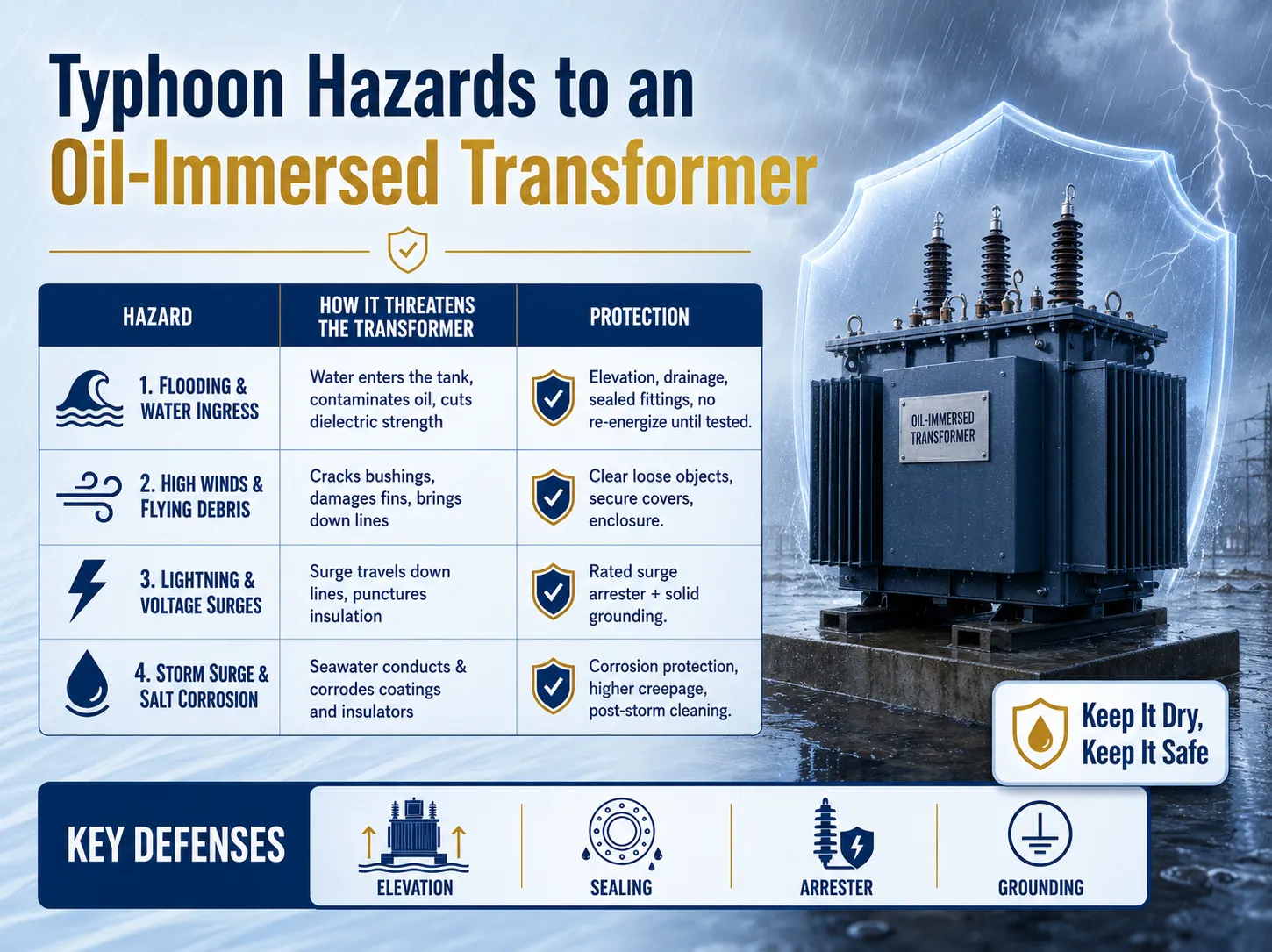
主な台風の危険、説明
効果的に準備するためには、各危険を個別に見て、それがどのようにトランスを危険にさらすかを正確に理解することが役立ちます。 液体浸漬変圧器.
洪水と水の侵入
洪水は、地上設置機器にとって最も損害を与え、最も一般的な台風の危険です。洪水がブッシング、ガスケット、またはケーブルボックスのレベルまで上昇すると、タンクに浸透し、油を汚染する可能性があります。絶縁システム内の水は、その誘電強度を急激に低下させ、そうした状態で通電または再通電されたトランスは壊滅的に故障する可能性があります。水没した制御キャビネットやタップチェンジャー機構も脆弱であり、洪水はしばしばラジエーターや排水を詰まらせる泥やゴミを運びます。.
強風と飛散物
台風の強風は、近くの構造物の設計仮定を超えることがあり、看板、屋根、枝、建設資材をサイト全体に投げ飛ばします。ブッシングへの直接的な打撃は、ポーセリンを割れさせ、湿気の侵入経路を開くか、即座に故障を引き起こす可能性があります。風はまた、適切に固定されていないポールや架空線を倒し、通電した導体をトランスやそのエンクロージャーの上または近くに落とすことがあります。.
雷と電圧サージ
雷はトランスに直接打撃を与えなくても損傷を与えることがあります。接続された架空線のどこかに打撃があれば、その回路上のすべての機器に向かって急激な電圧サージが走ります。適切に定格され、正しく設置された サージアレスタ, がない場合、そのサージは絶縁を貫通し、数マイクロ秒で巻線を破壊する可能性があります。グリッドの障害時のスイッチング操作は、同様の、ただし小さな過渡的ストレスを引き起こします。.
嵐の高潮と塩腐食
沿岸の設備は追加の脅威に直面しています。嵐の高潮は海水を内陸に運び、塩水は非常に導電性が高く、攻撃的に腐食性があります。洪水が発生しない場所でも、風によって運ばれた塩の飛沫が絶縁体や金属部品を覆い、表面の絶縁を劣化させ、時間の経過とともにコーティングやファスナーを攻撃します。したがって、海の近くのサイトは、シーリング、コーティング、および嵐後の清掃に特別な注意が必要です。.
嵐の前:準備と予防策
トランスを保護するための最も重要なウィンドウは、台風が上陸する1、2日前であり、条件が安全な作業を許す間です。規律ある嵐前のルーチンは、トランスが無事に生き残る確率を劇的に向上させます。 油浸変圧器 次のチェックリストは、必須事項をカバーしています:
- タンク、ブッシング、およびガスケットに既存の漏れ、亀裂、または損傷がないかを点検し、嵐が到来する前に修理します。.
- 油のレベルが正しいことを確認し、コンザーバーと シリカゲルブリーザー が機能していることを確認し、乾燥した新鮮な乾燥剤が飽和状態ではないことを確認します。.
- 各 サージアレスタ が無事で、正しく接続され、適切に接地されていることを確認し、 トランス接地 接続がしっかりしていて低抵抗であることを確認します。.
- 周囲のエリアから、風によって飛ばされる可能性のある物体、工具、および材料を取り除き、実用的な範囲で近くの枝を剪定します。.
- エンクロージャーのドア、ケーブルボックスのカバー、および通気口を固定し、風や激しい雨がそれらを開けることができないようにします。.
- トランスフォーマーの基礎周辺に水が溜まるのではなく、水が流れるように現場の排水を確認し、清掃してください。.
- 洪水のリスクが現実的な場合は、電源を切る準備をし、移動式またはスキッドマウントユニットの場合は、機器を高い場所に移動することを検討してください。.
- ベースラインの測定値を記録し、写真を撮影して、嵐後の検査に明確な参照点を持たせます。.
- 通信やアクセスが困難になる前に、バックアップ電源、予備部品、および緊急連絡手順が整っていることを確認してください。.
固定設置の場合、嵐の前にトランスフォーマーを通電させ続けるか、シャットダウンするかの決定は、電力会社または施設の緊急計画および地域のグリッド指示に従うべきです。疑わしい場合は、資産と周囲の人々を保護することが、非重要負荷への供給を維持することよりも優先されます。.
嵐の間:安全な運用と決定
台風が実際に襲来している場合、基本的なルールはシンプルです:人々を通電した機器から遠ざけ、準備された防御が機能するようにします。これはトランスフォーマーで手動介入を行うべき時ではありません。スイッチを操作したり、キャビネットを開けたり、点検したりすることは、 液体浸漬変圧器 強風や洪水の中では非常に危険であり、決して試みるべきではありません。.
遠隔監視と制御が可能な施設では、オペレーターは安全な場所から油温、負荷、およびアラーム状態を監視し、リモートで切り替えの決定を行うことができます。洪水がまだ通電しているトランスフォーマーに向かって上昇している場合、正しい対応は、安全な距離から適切な上流保護を通じて電源を切ることであり、水に浸かることではありません。嵐の間にオフラインになるトランスフォーマーは、適切に点検されるまでオフラインのままにしておくべきです。何よりも、すべての倒れた電線と電気機器の近くにあるすべての水たまりを生きているものとして扱い、すべての人員を遠ざけてください。.
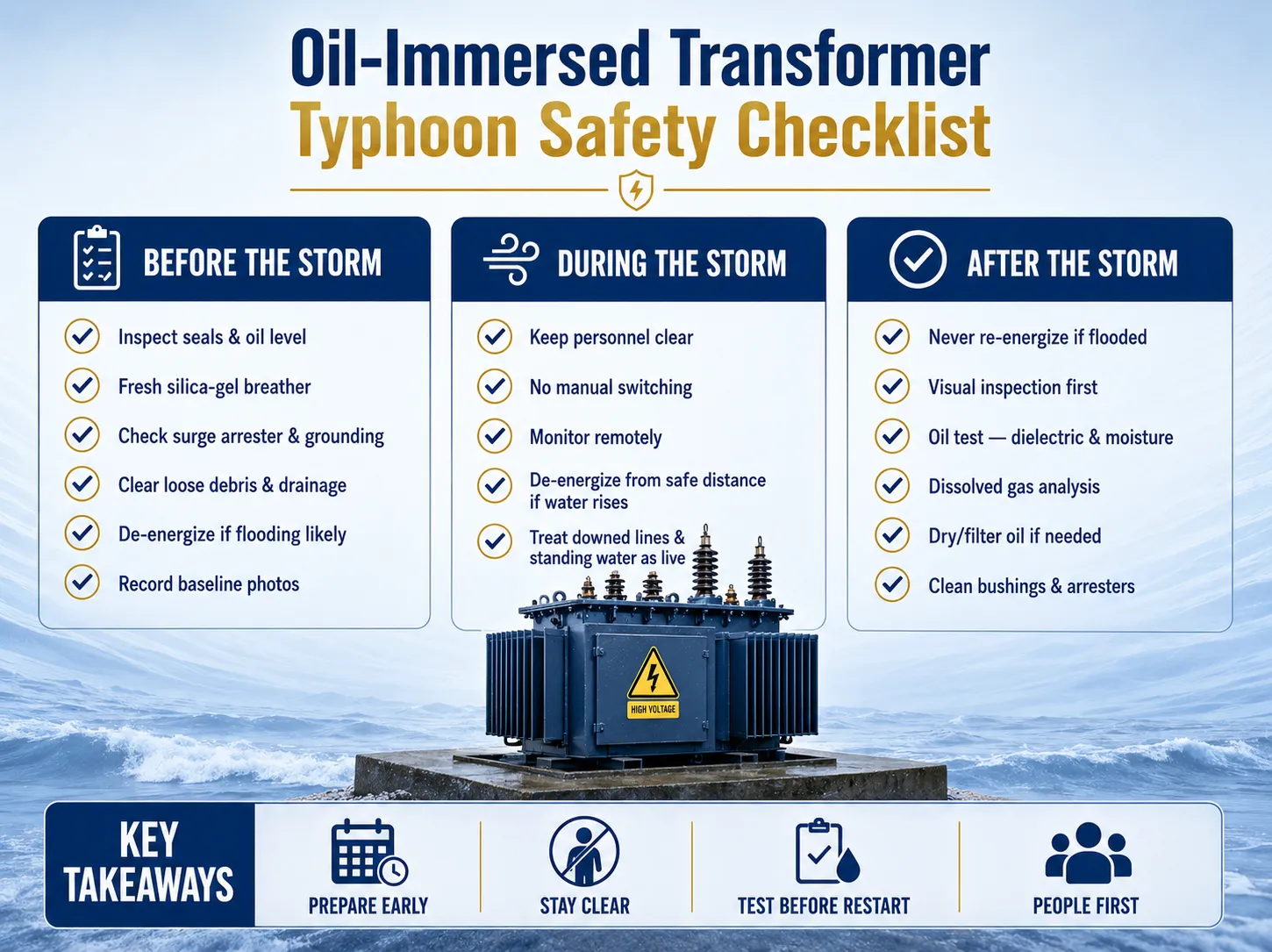
嵐の後:点検と回復
台風直後の期間は、電力を復旧させるプレッシャーが強いため、高価なミスが発生する時です。回復の最も重要なルールはこれです:浸水または水没したトランスフォーマーを徹底的に点検し、テストするまで再通電してはいけません。そうすることで、職員を傷つけ、ユニットを破壊する可能性のある激しい故障のリスクがあります。慎重で体系的な回復が両方を保護します。.
安全な距離からの視覚的点検を開始し、傾いている構造物、損傷したブッシング、油漏れ、ずれたカバー、および水が機器に達した兆候を確認します。エリアが安全であり、ユニットが孤立していることが確認されたら、資格のあるチームが電気および油のチェックを実施できます。重要なステップには以下が含まれます:
- 湿気の侵入や内部損傷を検出するために、絶縁抵抗と巻線抵抗を測定します。.
- トランスフォーマー油のテスト 誘電破壊電圧と水分含有量を確認し、油が依然として適切な絶縁を提供していることを確認します。 溶解ガス分析.
- 嵐が引き起こした過熱や部分放電などの内部故障を明らかにします。 ブッシング、アレスタ、接続を点検し、沿岸サイトの塩分堆積物に特に注意を払います。 内部故障、例えば過熱や部分放電など、嵐によって引き起こされた可能性のあるものを明らかにするため。.
- ブッシング、アレスタ、接続部を点検し、特に沿岸地域の塩分堆積物に注意を払って清掃する。.
- コンザーバー、ブリーザー、冷却システムがゴミで詰まっておらず、正常に機能していることを確認する。.
- テストで絶縁システムに水分が侵入していることが示された場合は、油を乾燥させるかフィルター処理を行うか、巻線を処理する。.
点検とテストで変圧器が正常であることが確認されて初めて、サービスに戻すべきであり、その際にはオンラインに戻った最初の数時間は特に注意深く監視することが賢明である。 35kV油浸変圧器 重要な変電所に供給する場合は、再通電前に特に慎重なクリアランスが必要である。なぜなら、そのレベルでの故障の結果は深刻だからである。.
洪水の危険がある地域における油浸型と乾式型
嵐にさらされる地域のバイヤーは、洪水が懸念される場合、乾式ユニットがより安全であるかどうかを尋ねることがある。 油浸変圧器 正直な答えは、どちらの形式も水没するようには設計されておらず、両方とも洪水から保護されなければならないということである。異なるのは、それぞれの強みのプロファイルである。.
一つの 油浸変圧器 優れた冷却、高い過負荷容量、屋外および高電圧サービスに対する実績のある耐久性を提供するため、配電および変電所のアプリケーションで支配的である。 35kV油浸変圧器 その密閉された油システムは、通常の天候における水分に対する堅牢なバリアであるが、洪水がシールを破ると、汚染された油は処理または交換しなければならない。乾式ユニットは絶縁液を完全に回避し、屋内または火災に敏感な場所で好まれることが多いが、洪水に遭遇すると露出した巻線は水分や汚染に非常に脆弱であり、一般的には低電圧および保護された環境に適している。.
実際には、形式よりも決定的な要因は設置である:洪水レベル以上の高さ、効果的な排水、適切なエンクロージャーが、どちらのタイプも選択の違いよりもはるかに保護する。台風の国におけるほとんどの屋外および沿岸の配電ニーズに対して、質の高いメーカーからの適切に密閉された、適切に設置されたものが信頼できる選択肢であり、水から遠ざけておく限りである。 液体浸漬変圧器 台風緊急計画の策定.
個々の予防策は、風が強くなる前に全員が理解する書面による計画の一部であるときに最も効果的である。変圧器資産のための実用的な緊急計画は、散発的な良い意図を、迫り来る嵐のストレスの下でも持続可能なルーチンに変える。
個々の予防策は、風が強くなる前に誰もが理解できる書面の計画の一部であるときに最も効果的です。変圧器資産のための実用的な緊急計画は、散発的な良い意図を、迫り来る嵐のストレスに耐える繰り返し可能なルーチンに変えます。.
明確な責任を割り当てる計画は、各人が検査、確保、監視、またはシャットダウンの決定を行っているかを知ることができるようにします。これは、トランスフォーマーが非活線化される予測風速や洪水レベルなどのトリガーポイントを定義し、その瞬間にためらいを取り除きます。事前の嵐チェックリスト、嵐自体の安全距離ルール、そしてその後の検査およびテストの手順をリストアップし、プレッシャーの下で何も忘れられないようにします。予備部品、絶縁油、試験機器、契約業者の連絡先を事前に特定しておくことで、危機の最中にそれらを調達するのは遅く高価になるからです。最後に、すべての重要なユニットのベースラインデータと写真を記録し、回復チームが嵐の損傷を判断するための明確な参照を提供します。この計画を毎年の台風シーズンの始まりに見直し、リハーサルすることで、 油浸変圧器の安全性 最も重要な時に記憶や即興に依存することを避けることができます。.
長期的なレジリエンス:設置、設計、維持管理
一つの台風を生き延びることは良いことですが、毎年の嵐のシーズンを乗り越えるように設計されていることはさらに良いことです。トランスフォーマーの実際の嵐に対するレジリエンスの多くは、特定の台風の前にどのように設置され、どのように維持管理されるかによって決まります。.
高さは洪水に対する最も効果的な単一の対策です。トランスフォーマーを予想される洪水レベルの上にある高い基礎またはプラットフォームに設置することで、周囲の地面が浸水しているときにタンクやブッシングから水を遠ざけることができます。機器を ボックス型変電所 またはプレハブのエンクロージャー内に収容することで、風、破片、激しい雨に対するさらなるバリアを追加し、シーリングと排水の努力を一つのエンジニアリングパッケージに集中させます。良好なサイト排水、安定した基礎、風による持ち上げに対する安全な固定は、すべてレジリエントな設置に寄与します。.
材料と仕様の選択も重要です。沿岸および工業沿岸の場所では、強化された腐食保護、高いクリーページブッシング、およびシールされたフィッティングを指定することで、資産の寿命全体にわたって利益を得ることができます。信頼できるメーカーからのロバストな低損失シリーズを選択することで、ユニットが一貫した品質で信頼性のあるシールと絶縁を備えて構築されることが保証されます。最後に、これらすべてはメンテナンスなしでは機能しません:定期的な S11およびSZ11トランス 、ブリーザーのサービス、ガスケットの検査、および接地チェックは、内蔵された防御を効果的に保ち、台風が到来したときに機器が最良の状態にあることを保証します。 誘電破壊電圧と水分含有量を確認し、油が依然として適切な絶縁を提供していることを確認します。, 人を第一に:嵐による損傷を受けた機器の周りの電気安全.
どんなトランスフォーマーも人命には代えられず、台風は電気事故が発生する条件を作り出します。洪水は電気を導き、危険を隠します;風はまだ活線の可能性があるラインを倒します;そして、迅速に電力を復旧しようとする衝動は、人々を安全でない近道に誘惑することがあります。嵐の間やその後に
の近くで働くすべての人は、いくつかの譲れないルールに従うべきです。 液体浸漬変圧器 嵐の間と後には、いくつかの譲れないルールに従うべきです。.
倒れたりたるんだりしている電線からは十分に離れ、通電しているものとみなしてください。通電機器に接触している可能性のある立ち入り禁止の水域には絶対に入らないでください。適切な絶縁、ロックアウト、適切な個人用保護具なしでの修理や切替作業は行わず、高電圧作業は訓練を受けた認可された作業員に任せてください。危険箇所は独自に修理しようとせず、必ず電力会社に報告してください。これらの習慣は費用がかからず、大規模な台風後に頻発する悲劇を防ぎます。.
よくある質問
油浸式変圧器は洪水後に再使用できますか?
徹底的な点検と試験を行った後のみ可能です。洪水に浸かった 油浸変圧器 再エネルギー化されることは決してない 誘電破壊電圧と水分含有量を確認し、油が依然として適切な絶縁を提供していることを確認します。 そして絶縁チェックが水が油と絶縁体を損なっていないことを確認します。多くの場合、油はフィルター処理または交換され、巻線はユニットが安全にサービスに戻る前に乾燥させる必要があります。.
水は液体浸漬トランスにどのように損傷を与えるのですか?
内部の絶縁油と紙は 液体浸漬変圧器 高電圧を維持するために乾燥している必要があります。少量の湿気でも誘電強度が急激に低下し、内部フラッシュオーバーや故障を引き起こす可能性があります。これが、シーリング、ブリーザー、および洪水後のテストが非常に重要な理由です。.
サージアレスタは本当に台風の雷から保護しますか?
はい。正しく定格され、適切に接地された サージアレスタ は、雷やスイッチングサージを巻線に到達する前に地面に逸らし、最もコスト効果の高い保護の一つです。それは堅固な トランス接地 と組み合わせて機能する必要があり、嵐の季節前に点検されるべきです。.
ボックス型変電所は台風地域でより良いですか?
多くの場合、はい。設備を ボックス型変電所 またはプレハブのエンクロージャに収容することで、風、破片、激しい雨からの保護が追加され、洪水に対して設置を高くし、密閉することが容易になります。これは、露出した沿岸および産業用サイトにとって強力な選択肢です。.
嵐の多いサイトにはどの電圧とモデルを選ぶべきですか?
負荷とネットワークに応じて電圧と容量を一致させてください。配電クラスのユニットまたは 35kV油浸変圧器 変電所用のものです。信頼性のために、腐食保護と適切なエンクロージャおよび高所を指定した S11およびSZ11トランス ファミリーのような実績のある低損失シリーズは、嵐に対する強固な基盤を提供します。.
台風の後、電力はどれくらい早く復旧できますか?
それは完全に設備の状態に依存します。乾燥して無傷で、バッシング、アレスタ、接地が intact のトランスは、目視検査と基本的なチェックの後にサービスにクリアされる場合があります。洪水水にさらされたものは、完全な 誘電破壊電圧と水分含有量を確認し、油が依然として適切な絶縁を提供していることを確認します。, 、絶縁測定、そしてしばしば ブッシング、アレスタ、接続を点検し、沿岸サイトの塩分堆積物に特に注意を払います。 再エネルギー化する前に必要で、時間がかかりますが、はるかに高価な故障を防ぎます。安全に電力を復旧することは、急いで復旧するよりも常に長期的には早くなります。.
自信を持って嵐を乗り越える
台風は常に電力網を試すでしょうが、よく設計され、よく準備され、よくメンテナンスされたトランスは、厳しい嵐を乗り越え、迅速にサービスに戻ることができます。公式は一貫しています:環境に適した堅牢な設備を選び、嵐の前に徹底的に準備し、嵐の最中には危険な介入を避け、サービスに戻る前に慎重に点検およびテストします。その規律に従えば、 油浸変圧器の安全性 は運任せではなくルーチンの問題になります。.
Subian Electricは信頼性のある 油浸変圧器 ソリューションを設計・製造しており、S11およびSZ11シリーズや 35kV油浸変圧器 厳しい屋外および沿岸条件に対応するユニットを提供しています。あなたの運用が台風シーズンに直面している場合、私たちのチームは、電力を維持するために設計された設備を選択、仕様、保護する手助けができます。嵐を乗り越えるために作られたトランスについて私たちに話してください。.