


Когда тайфун обрушивается на прибрежный регион, электросеть становится одной из первых систем, подвергаемых испытанию. Ливневые дожди, наводнения, летящие обломки и молнии сходятся на подстанциях и распределительном оборудовании, которые обеспечивают свет, и немногие элементы этого оборудования более критичны или более подвержены воздействию, чем трансформатор. масляный трансформатор является рабочей лошадкой распределительных и энергетических сетей в районах, подверженных штормам, ценится за свою эффективность, производительность охлаждения и долговечность. Но, как и любое наружное оборудование, он нуждается в правильном дизайне, подготовке и операционной дисциплине, чтобы безопасно пережить сильный шторм.
Этот гид объясняет, как масляный трансформатор построен для сопротивления суровым погодным условиям, какие конкретные опасности приносит тайфун и какие конкретные меры предосторожности операторы должны предпринять до, во время и после шторма. Независимо от того, отвечаете ли вы за единичный блок на заводе или за флот 35кВ масляного трансформатора установок по всей сети, принципы остаются теми же: защищать оборудование, защищать электроснабжение и, прежде всего, защищать людей вокруг него.
Почему тайфуны представляют серьезную угрозу для трансформаторов
Тайфун сочетает в себе несколько разрушительных сил одновременно, и каждая из них атакует трансформатор по-разному. Ливневые дожди и штормовой нагон вызывают наводнения, которые могут затопить оборудование и заставить воду проходить мимо уплотнений. Устойчивые сильные ветры превращают свободные объекты в снаряды, которые могут ударить по изоляторам, радиаторам и ребрам охлаждения. Молния вносит огромные импульсы напряжения в воздушные линии, которые напрямую попадают в подключенное оборудование. На побережье соляной спрей, поднимаемый ветром, ускоряет коррозию еще долго после того, как шторм прошел.
Поскольку жидкостный трансформатор полагается на изоляционное масло и тщательно контролируемые внутренние условия для выполнения своей работы, любое нарушение этой запечатанной среды опасно. Вода является самым большим врагом: даже небольшое количество влаги, попадающее в бак, резко снижает диэлектрическую прочность масла и изоляции, увеличивая риск внутреннего пробоя и выхода из строя. Понимание этих угроз является первым шагом к защите от них, что делает безопасность масляного трансформатора приоритетом в планировании в любом регионе, подверженном тайфунам.
Как масляные трансформаторы построены для выдерживания суровых погодных условий
Хорошо сделанный масляный трансформатор уже включает в себя множество встроенных защит от элементов, что является одной из причин, по которой этот формат доверяют для требовательного наружного обслуживания. Понимание этих характеристик помогает операторам оценить, что оборудование может и не может выдержать самостоятельно.
Сердечник и обмотки находятся внутри запечатанного стального бака, заполненного изоляционным маслом, которое как охлаждает активные части, так и исключает воздух и влагу. Бак, радиаторы и фитинги покрыты защитными покрытиями, устойчивыми к погодным условиям, чтобы противостоять дождю и коррозии. Консерватор и осушитель с силикагелем управлять расширением и сжатием масла по мере изменения температуры, сохраняя при этом входящий воздух сухим. Фарфоровые или композитные вводы проводят высоковольтные соединения через стенку бака с длинным путём утечки, предназначенным для предотвращения пробоя даже во влажных условиях. Современные низкотеряемые серии, такие как трансформатор S11 и SZ11 широко используются на распределительных напряжениях, при этом устройства SZ11 добавляют переключение отводов под нагрузкой, чтобы поддерживать стабильное выходное напряжение по мере колебаний сети во время шторма.
Защита продолжается за пределами бака. Правильно спроектированная установка соединяет трансформатор с разрядником на каждой входящей линии, чтобы безопасно отводить молнии и переключающие перенапряжения в землю, а также с надежным заземлением трансформатора которое обеспечивает низкоимпедансный путь для токов короткого замыкания, уходящих от оборудования и людей. Для самых суровых условий трансформатор может быть помещен в предварительно изготовленный кожух, а следующие разделы объясняют, как сочетать эти встроенные защиты с правильной подготовкой.
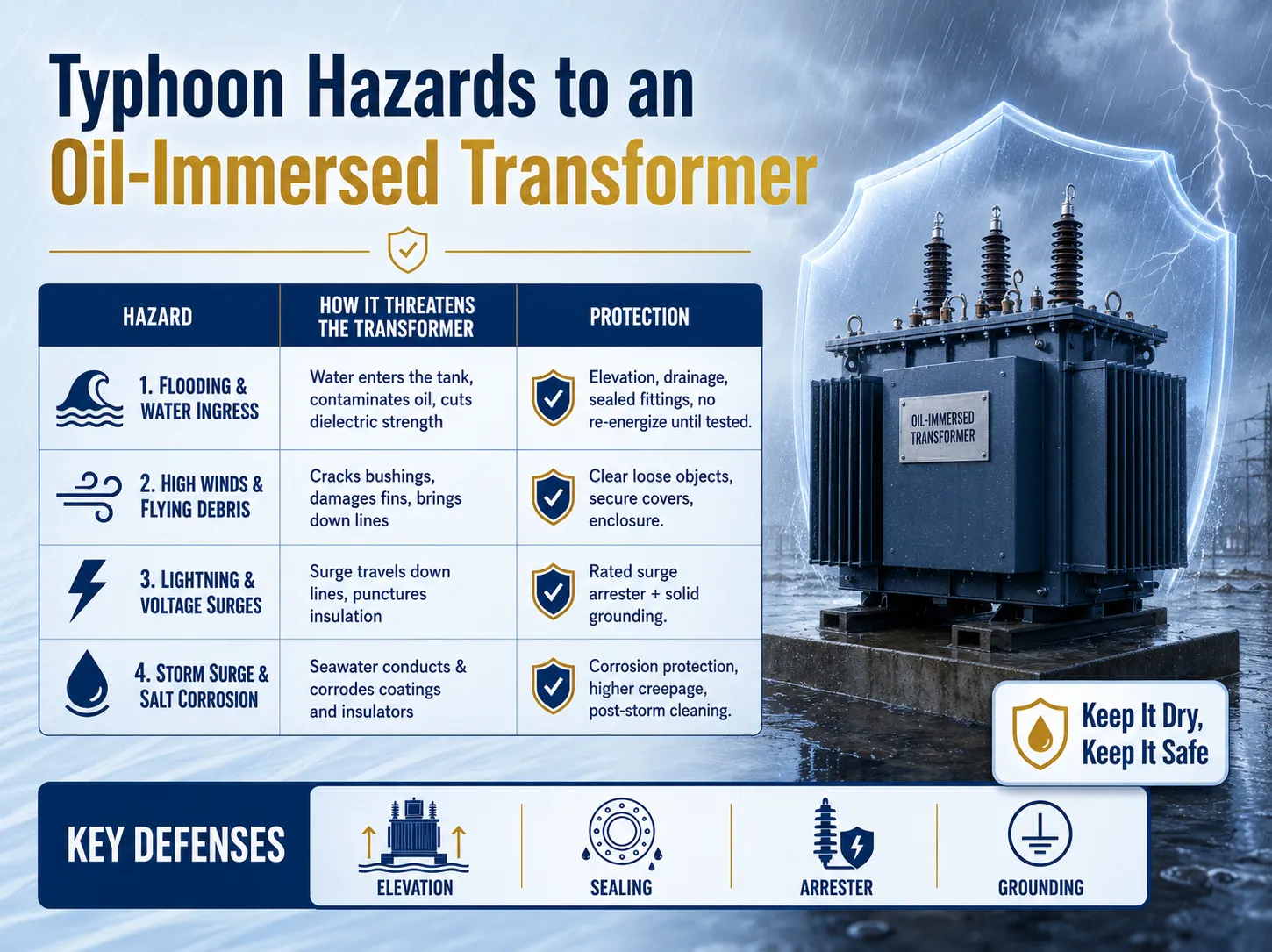
Основные угрозы тайфуна, объясненные
Чтобы подготовиться эффективно, полезно рассмотреть каждую угрозу отдельно и понять, как именно она угрожает жидкостный трансформатор.
Наводнения и проникновение воды
Наводнение является самой разрушительной и распространенной угрозой тайфуна для наземного оборудования. Если уровень наводнения поднимается до уровня вводов, прокладок или кабельных коробок, оно может проникнуть в бак и загрязнить масло. Вода в изоляционной системе резко снижает её диэлектрическую прочность, и трансформатор, который находится под напряжением или повторно включается в таком состоянии, может потерпеть катастрофическую аварию. Погруженные шкафы управления и механизмы переключения отводов также уязвимы, а наводненная вода часто несет ил и мусор, которые забивают радиаторы и дренаж.
Сильные ветры и летящие обломки
Ветры силы тайфуна могут превышать проектные предположения близлежащих конструкций и выбрасывать вывески, кровлю, ветви и строительные материалы по площадке. Прямое попадание на ввод может треснуть фарфор и открыть путь для влаги или вызвать немедленный короткое замыкание. Ветер также может повалить плохо закрепленные столбы и воздушные линии, сбрасывая под напряжением проводники на трансформатор или рядом с ним.
Молния и перенапряжения
Молния не обязательно должна ударять в трансформатор напрямую, чтобы повредить его. Удар в любом месте на подключенной воздушной линии отправляет резкий скачок напряжения к каждому элементу оборудования на этой цепи. Без адекватно оцененного и правильно установленного разрядником, это перенапряжение может пробить изоляцию и уничтожить обмотки за микросекунды. Операции переключения во время нарушений в сети создают аналогичные, хотя и меньшие, переходные нагрузки.
Штормовой подъем и коррозия от соли
Прибрежные установки сталкиваются с дополнительной угрозой. Штормовой прилив может занести морскую воду далеко вглубь страны, а соленая вода является как высокопроводящей, так и агрессивно коррозионной. Даже в тех местах, где наводнения не происходят, соляной спрей, поднимаемый ветром, покрывает изоляторы и металлические конструкции, ухудшая поверхностную изоляцию и разрушая покрытия и крепежи со временем. Поэтому объекты, расположенные близко к морю, требуют дополнительного внимания к герметизации, покрытиям и очистке после шторма.
Перед штормом: подготовка и меры предосторожности
Единственное наиболее важное время для защиты трансформатора — это день или два до того, как тайфун достигнет берега, пока условия все еще позволяют безопасную работу. Дисциплинированная предштормовая рутина значительно повышает шансы на то, что масляный трансформатор останется целым. Следующий контрольный список охватывает основные моменты:
- Проверьте бак, вводы и прокладки на наличие утечек, трещин или повреждений и отремонтируйте их до прихода шторма.
- Подтвердите, что уровень масла правильный и что консерватор и осушитель с силикагелем функционируют, с новым и сухим осушителем, а не насыщенным.
- Убедитесь, что каждый разрядником цел, правильно подключен и правильно заземлен, и проверьте, что заземлением трансформатора соединения плотные и с низким сопротивлением.
- Очистите окружающую территорию от свободных предметов, инструментов и материалов, которые ветер может превратить в снаряды, и обрежьте близлежащие ветви, где это возможно.
- Закрепите двери ограждений, крышки кабельных коробок и вентиляционные отверстия, чтобы ветер и ливневой дождь не могли их открыть.
- Проверьте и очистите дренаж на площадке, чтобы вода могла стекать от фундамента трансформатора, а не скапливаться вокруг него.
- Если существует реальный риск наводнения, подготовьтесь к обесточиванию и, для мобильных или установленных на шасси устройств, рассмотрите возможность перемещения оборудования на более высокую местность.
- Запишите базовые показания и сделайте фотографии, чтобы инспекция после шторма имела четкую отправную точку.
- Убедитесь, что резервное питание, запасные части и процедуры экстренного контакта готовы до того, как связь и доступ станут затруднительными.
Для стационарных установок решение о том, оставлять ли трансформатор под напряжением или отключить его перед штормом, должно следовать плану экстренных ситуаций утилиты или объекта и местным инструкциям по сети. В случае сомнений защита актива и людей вокруг него имеет приоритет над поддержанием подачи энергии на некритические нагрузки.
Во время шторма: безопасная эксплуатация и решения
Как только тайфун фактически начнет действовать, основное правило простое: держите людей подальше от оборудования под напряжением и позвольте подготовленным защитным системам выполнять свою работу. Это не время для ручного вмешательства в работу трансформатора. Пытаться управлять выключателями, открывать шкафы или проверять жидкостный трансформатор в условиях сильного ветра и наводнения крайне опасно и никогда не должно предприниматься.
Если на объекте есть удаленный мониторинг и управление, операторы могут следить за температурой масла, нагрузкой и состоянием сигнализации из безопасного места и принимать решения о переключении удаленно. Если уровень наводнения поднимается к трансформатору, который все еще под напряжением, правильный ответ — обесточить его через соответствующую защиту сверху с безопасного расстояния, а не заходить в воду. Трансформатор, который отключился во время шторма, должен оставаться отключенным до тех пор, пока его не смогут должным образом проверить. Прежде всего, относитесь к каждой упавшей линии и каждому участку стоячей воды рядом с электрическим оборудованием как к живым и опасным, и держите весь персонал в стороне.
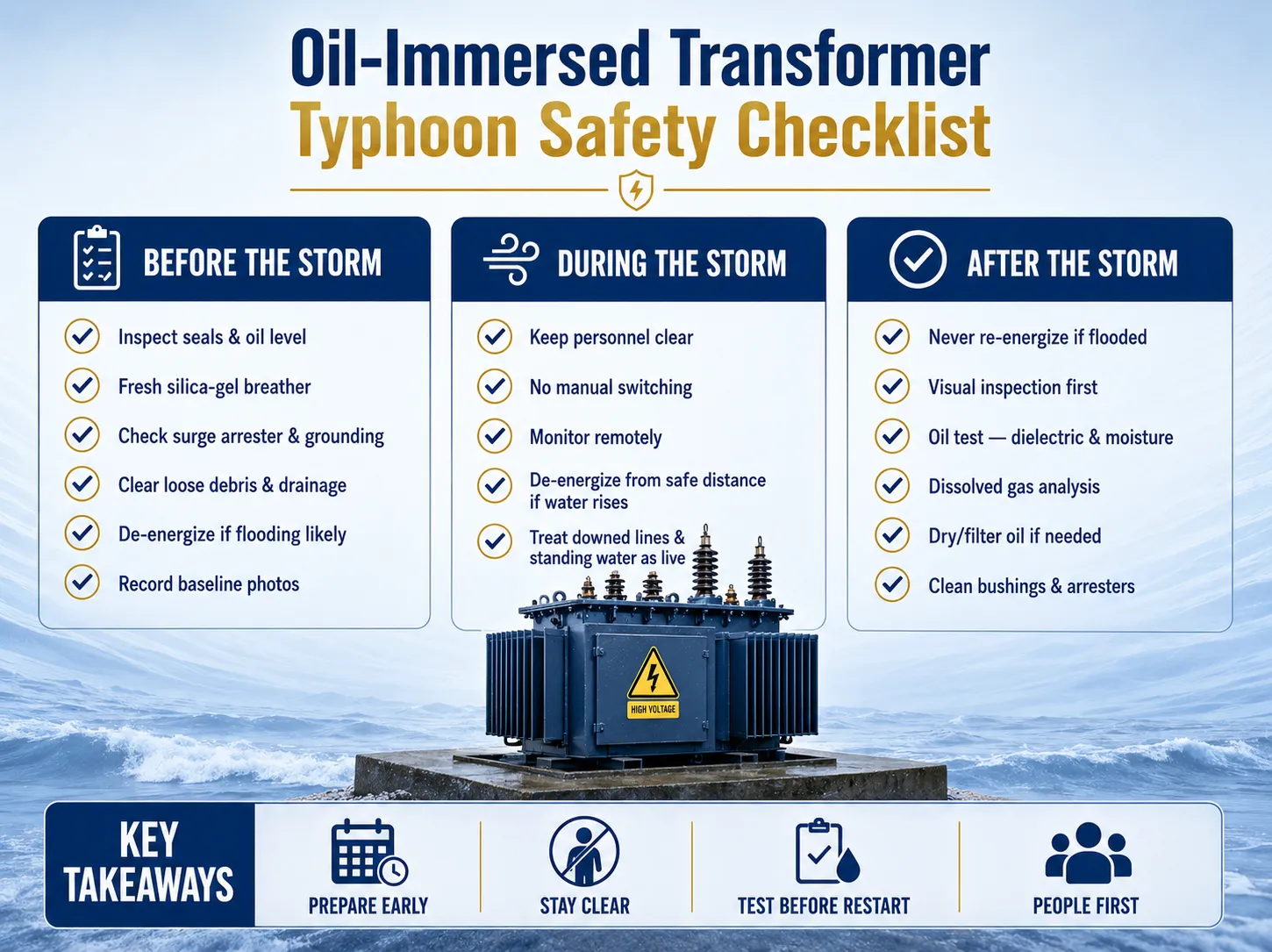
После шторма: инспекция и восстановление
Период сразу после тайфуна — это время, когда происходят дорогостоящие ошибки, потому что давление на восстановление электроэнергии велико. Самое важное правило восстановления таково: никогда не включайте трансформатор, который был затоплен или погружен, пока он не будет тщательно проверен и протестирован. Это может привести к разрушительному отказу, который может травмировать персонал и уничтожить устройство. Осторожное, методичное восстановление защищает и то, и другое.
Начните с визуальной инспекции с безопасного расстояния, проверяя наклонные конструкции, поврежденные изоляторы, утечки масла, смещенные крышки и признаки того, что вода достигла оборудования. Как только область будет подтверждена как безопасная и устройство изолировано, квалифицированная команда может провести электрические и масляные проверки. Ключевые шаги включают:
- Измерьте сопротивление изоляции и сопротивление обмотки, чтобы обнаружить проникновение влаги или внутренние повреждения.
- Проведите тестирование трансформаторного масла на диэлектрическую прочность и содержание влаги, чтобы подтвердить, что масло все еще обеспечивает адекватную изоляцию.
- Используйте анализ растворенных газов чтобы выявить любые внутренние неисправности, такие как перегрев или частичный разряд, которые могли быть вызваны штормом.
- Проверьте и очистите вводы, ограничители и соединения, уделяя особое внимание солевым отложениям на прибрежных участках.
- Убедитесь, что консерватор, воздухоотводчик и системы охлаждения свободны от мусора и работают нормально.
- Просушите или отфильтруйте масло, или обработайте обмотки, если испытания показывают, что в изоляционную систему попала влага.
Только когда проверка и испытания подтвердят, что трансформатор в исправном состоянии, его следует вернуть в эксплуатацию, и даже тогда разумно внимательно следить за ним в первые часы после повторного включения. 35кВ масляного трансформатора Питание важной подстанции требует особенно тщательной очистки перед повторным включением, поскольку последствия сбоя на этом уровне серьезны.
Масло-иммерсионные против сухих типов в зонах, подверженных наводнениям
Покупатели в регионах, подверженных штормам, иногда спрашивают, будет ли сухой тип более безопасным, чем масляный трансформатор когда наводнение представляет собой проблему. Честный ответ заключается в том, что ни один из форматов не предназначен для погружения, и оба должны быть защищены от наводненных вод. Различия заключаются в профиле их сильных сторон.
Масло-иммерсионный трансформатор масляный трансформатор предлагает отличное охлаждение, высокую перегрузочную способность и доказанную долговечность для работы на открытом воздухе и при более высоких напряжениях, что и объясняет его доминирование в распределительных и подстанционных приложениях, включая 35кВ масляного трансформатора установки. Его герметичная масляная система является надежным барьером против влаги в нормальных погодных условиях, но если наводненные воды нарушают герметичность, загрязненное масло должно быть обработано или заменено. Сухие типы полностью избегают изоляционной жидкости и часто предпочитаются в помещениях или в местах, чувствительных к огню, однако их открытые обмотки крайне уязвимы к влаге и загрязнению, если они затоплены, и они, как правило, подходят для более низких напряжений и защищенных условий.
На практике более решающим фактором, чем формат, является установка: высота над уровнем наводнения, эффективный дренаж и подходящий кожух защищают любой тип гораздо больше, чем выбор между ними. Для большинства потребностей в распределении на открытом воздухе и прибрежных условиях в странах тайфунов надежным выбором остается хорошо герметизированный, правильно расположенный жидкостный трансформатор от качественного производителя, при условии, что он не попадает в воду.
Создание плана экстренной ситуации при тайфуне
Индивидуальные меры предосторожности работают лучше всего, когда они являются частью письменного плана, который все понимают до того, как ветер начнет усиливаться. Практический план экстренной ситуации для активов трансформатора превращает разрозненные добрые намерения в повторяемую рутину, которая выдерживает стресс приближающегося шторма.
Звуковой план назначает четкие обязанности, чтобы каждый человек знал, проверяет ли он, обеспечивает ли безопасность, контролирует или принимает решения о отключении. Он определяет триггерные точки, такие как прогнозируемая скорость ветра или уровень наводнения, при которых трансформатор отключается, устраняя колебания в критический момент. Он перечисляет контрольный список перед штормом, правила безопасного расстояния для самого шторма и последовательность проверки и тестирования после, чтобы ничего не было забыто под давлением. Он заранее определяет запасные части, изоляционное масло, испытательное оборудование и контакты подрядчиков, потому что их поиск в условиях кризиса медленный и дорогой. Наконец, он фиксирует базовые данные и фотографии для каждого важного устройства, предоставляя команде по восстановлению четкую ссылку для оценки ущерба от шторма. Просмотр и репетиция этого плана в начале каждого сезона тайфунов помогает безопасность масляного трансформатора избежать зависимости от памяти или импровизации в самые критические моменты.
Долгосрочная устойчивость: размещение, проектирование и обслуживание
Пережить один тайфун — это хорошо; быть построенным так, чтобы игнорировать каждый сезон штормов — лучше. Большая часть реальной устойчивости трансформатора к штормам определяется задолго до конкретного тайфуна, в том, как и где он установлен и насколько хорошо он обслуживается.
Высота — это наиболее эффективная мера против наводнения. Установка трансформатора на приподнятом основании или платформе выше ожидаемого уровня наводнения удерживает воду подальше от бака и вводов, когда окружающая земля затоплена. Размещение оборудования внутри блочного подстанции или предварительно изготовленного корпуса добавляет дополнительный барьер против ветра, мусора и проливного дождя и концентрирует усилия по герметизации и дренажу в одном инженерном решении. Хороший дренаж на площадке, стабильное основание и надежная фиксация против ветрового подъема все способствуют устойчивой установке.
Выбор материалов и спецификаций также имеет значение. Для прибрежных и промышленных прибрежных местоположений спецификация улучшенной защиты от коррозии, более высоких вводов с большим пробегом и герметичных фитингов оправдывает себя на протяжении всего срока службы актива. Выбор надежной серии с низкими потерями, такой как трансформатор S11 и SZ11 от уважаемого производителя, гарантирует, что устройство изготовлено с постоянным качеством с надежными уплотнениями и изоляцией. Наконец, ничего из этого не сработает без обслуживания: регулярные тестирование трансформаторного масла, проверки, обслуживание воздухоотводчиков, инспекция прокладок и проверки заземления поддерживают встроенные защитные механизмы в эффективном состоянии, так что, когда приходит тайфун, оборудование уже находится в наилучшем состоянии.
Люди прежде всего: электрическая безопасность вокруг поврежденного штормом оборудования
Ни один трансформатор не стоит человеческой жизни, и тайфуны создают именно те условия, в которых происходят электрические несчастные случаи. Наводненная вода проводит электричество и скрывает опасности; ветер сбивает линии, которые могут быть под напряжением; и стремление быстро восстановить электроснабжение может заставить людей пойти на небезопасные сокращения. Все, кто работает рядом или вокруг жидкостный трансформатор во время и после шторма, должны следовать нескольким непреложным правилам.
Держитесь подальше от любых упавших или провисающих линий электропередачи и считайте их под напряжением. Никогда не входите в стоячую воду, которая может контактировать с под напряжением оборудованием. Не пытайтесь выполнять ремонт или переключение без надлежащей изоляции, блокировки и соответствующих средств индивидуальной защиты, и оставьте работы с высоким напряжением обученному и уполномоченному персоналу. Сообщайте о опасностях в коммунальную службу, а не пытайтесь исправить их самостоятельно. Эти привычки ничего не стоят и предотвращают трагедии, которые слишком часто следуют за крупными штормами.
Часто задаваемые вопросы
Можно ли снова использовать трансформатор, погруженный в масло, после наводнения?
Только после тщательной проверки и тестирования. Затопленный масляный трансформатор никогда не должен быть повторно под напряжением, пока тестирование трансформаторного масла и проверки изоляции не подтвердят, что вода не повредила масло и изоляцию. Во многих случаях масло должно быть отфильтровано или заменено, а обмотки высушены, прежде чем устройство будет безопасно возвращено в эксплуатацию.
Как вода повреждает трансформатор, погруженный в жидкость?
Изолирующее масло и бумага внутри жидкостный трансформатор зависят от того, чтобы оставаться сухими, чтобы противостоять высокому напряжению. Даже небольшое количество влаги резко снижает диэлектрическую прочность, что может привести к внутреннему пробою и выходу из строя. Вот почему герметизация, воздухоотводчики и тестирование после затопления так важны.
Действительно ли разрядники защищают от молний тайфуна?
Да. Правильно подобранный и правильно заземленный разрядником отклоняет молнии и переключающие импульсы на землю до того, как они достигнут обмоток, и это одна из самых экономически эффективных защит. Он должен быть в паре с надежным заземлением трансформатора для правильной работы и должен быть проверен перед сезоном штормов.
Является ли подстанция в коробке лучше в районах тайфунов?
Часто да. Размещение оборудования в блочного подстанции или предварительно изготовленном корпусе добавляет защиту от ветра, мусора и проливного дождя и облегчает подъем и герметизацию установки от затопления. Это надежный вариант для открытых прибрежных и промышленных площадок.
Какое напряжение и модель я должен выбрать для участка, подверженного штормам?
Соответствуйте напряжению и мощности вашей нагрузке и сети, будь то распределительное устройство или 35кВ масляного трансформатора для подстанции. Для надежности проверенная серия с низкими потерями, такая как трансформатор S11 и SZ11 семейство, с защитой от коррозии и соответствующим корпусом и высотой, обеспечивает надежную основу для устойчивости к штормам.
Как скоро можно восстановить электроснабжение после тайфуна?
Это полностью зависит от состояния оборудования. Трансформатор, который остался сухим и неповрежденным, с целыми вводами, разрядниками и заземлением, может быть допущен к эксплуатации после визуальной проверки и основных проверок. Тот, который подвергся затоплению, требует полной тестирование трансформаторного масла, измерения изоляции и часто анализ растворенных газов перед повторным включением, что занимает больше времени, но предотвращает гораздо более дорогостоящий выход из строя. Безопасное восстановление электроснабжения всегда быстрее в долгосрочной перспективе, чем поспешное восстановление.
Противостояние шторму с уверенностью
Тайфуны всегда испытывают электросеть, но хорошо спроектированный, хорошо подготовленный и хорошо обслуживаемый трансформатор может выдержать даже сильный шторм и быстро вернуться в эксплуатацию. Формула неизменна: выбирайте надежное оборудование, подходящее для окружающей среды, тщательно готовьтесь перед штормом, избегайте опасного вмешательства во время него и тщательно проверяйте и тестируйте перед возвращением в эксплуатацию после. Следуйте этой дисциплине и безопасность масляного трансформатора становится делом рутинным, а не удачей.
Subian Electric разрабатывает и производит надежные масляный трансформатор решения, включая серии S11 и SZ11 и 35кВ масляного трансформатора устройства, разработанные для сложных условий эксплуатации на открытом воздухе и в прибрежных районах. Если ваша работа сталкивается с сезоном тайфунов, наша команда может помочь вам выбрать, специфицировать и защитить оборудование, созданное для обеспечения электроснабжения, когда погода становится самой суровой. Поговорите с нами о трансформаторах, предназначенных для противостояния бурям.