


Cuando un tifón se abate sobre una región costera, la red eléctrica es uno de los primeros sistemas que se pone a prueba. La lluvia torrencial, las inundaciones, los escombros voladores y los rayos convergen en las subestaciones y el equipo de distribución que mantiene las luces encendidas, y pocas piezas de ese equipo son más críticas, o más expuestas, que el transformador. El transformador sumergido en aceite es el caballo de batalla de las redes de distribución y energía en áreas propensas a tormentas, valorado por su eficiencia, rendimiento de enfriamiento y durabilidad. Pero, como cualquier activo al aire libre, necesita el diseño, la preparación y la disciplina operativa adecuadas para salir ileso de una tormenta severa.
Esta guía explica cómo un transformador sumergido en aceite está construido para resistir condiciones climáticas adversas, qué peligros específicos trae un tifón y las precauciones concretas que los operadores deben tomar antes, durante y después de la tormenta. Ya sea que usted sea responsable de una sola unidad en una fábrica o de una flota de transformadores sumergidos en aceite de 35kV instalaciones en una red, los principios son los mismos: proteger el equipo, proteger el suministro de energía y, sobre todo, proteger a las personas a su alrededor.
Por qué los tifones son una amenaza seria para los transformadores
Un tifón combina varias fuerzas destructivas a la vez, y cada una ataca a un transformador de una manera diferente. La lluvia torrencial y la marea de tormenta causan inundaciones que pueden sumergir el equipo y forzar el agua a pasar por los sellos. Los vientos sostenidos convierten los objetos sueltos en proyectiles que pueden golpear los bujes, los radiadores y las aletas de enfriamiento. Los rayos inyectan enormes picos de voltaje en las líneas aéreas que viajan directamente hacia el equipo conectado. En la costa, el rocío de sal arrastrado por el viento acelera la corrosión mucho después de que la tormenta ha pasado.
Porque un transformador sumergido en líquido depende del aceite aislante y de condiciones internas cuidadosamente controladas para hacer su trabajo, cualquier ruptura de ese entorno sellado es peligrosa. El agua es el enemigo más grande: incluso una pequeña cantidad de humedad que ingresa al tanque reduce drásticamente la resistencia dieléctrica del aceite y el aislamiento, aumentando el riesgo de arco interno y falla. Comprender estas amenazas es el primer paso para defenderse contra ellas, lo que convierte a la seguridad de los transformadores sumergidos en aceite en una prioridad de planificación en cualquier región expuesta a tifones.
Cómo los transformadores sumergidos en aceite están construidos para resistir condiciones climáticas adversas
Un transformador sumergido en aceite bien hecho ya incluye una gran cantidad de protección incorporada contra los elementos, lo que es una razón por la que el formato es confiable para un servicio exterior exigente. Comprender estas características ayuda a los operadores a apreciar lo que el equipo puede y no puede manejar por sí solo.
El núcleo y los devanados se encuentran dentro de un tanque de acero sellado lleno de aceite aislante, que enfría las partes activas y excluye el aire y la humedad. El tanque, los radiadores y los accesorios están terminados con recubrimientos resistentes a la intemperie para resistir la lluvia y la corrosión. Un conservador y un respiradero de gel de sílice gestionar la expansión y contracción del aceite a medida que cambian las temperaturas, manteniendo el aire entrante seco. Los terminales de porcelana o compuestos llevan las conexiones de alta tensión a través de la pared del tanque con un largo camino de creepage diseñado para resistir el arco eléctrico incluso cuando está mojado. Las series modernas de baja pérdida como el transformador S11 y SZ11 se utilizan ampliamente en voltajes de distribución, con unidades SZ11 que añaden cambio de toma bajo carga para mantener el voltaje de salida constante a medida que la red fluctúa durante una tormenta.
La protección continúa fuera del tanque. Una instalación correctamente especificada empareja el transformador con un pararrayos en cada línea entrante para desviar de manera segura los rayos y las sobretensiones de conmutación a tierra, y con una puesta a tierra del transformador que proporciona un camino de baja impedancia para la corriente de falla lejos del equipo y las personas. Para los sitios más severos, el transformador puede estar alojado dentro de un recinto prefabricado, y las secciones siguientes explican cómo combinar estas defensas integradas con la preparación adecuada.
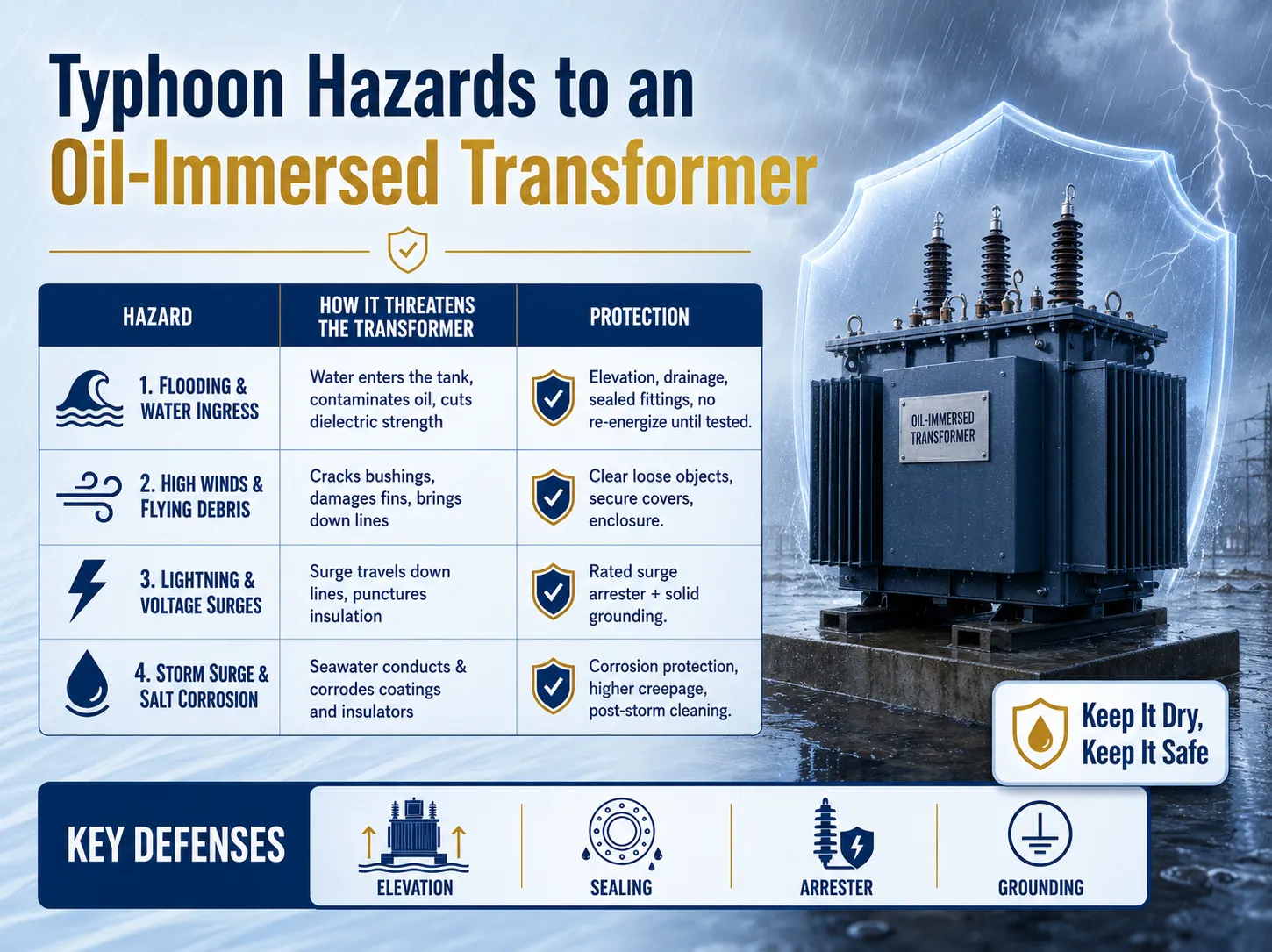
Los principales peligros del tifón, explicados
Para prepararse de manera efectiva, es útil analizar cada peligro individualmente y entender exactamente cómo pone en peligro un transformador sumergido en líquido.
Inundaciones y entrada de agua
Las inundaciones son el peligro de tifón más dañino y común para el equipo montado en el suelo. Si el agua de la inundación sube al nivel de los terminales, juntas o cajas de cables, puede penetrar en el tanque y contaminar el aceite. El agua en el sistema aislante reduce drásticamente su resistencia dieléctrica, y un transformador que está energizado o re-energizado en esa condición puede fallar catastróficamente. Los gabinetes de control sumergidos y los mecanismos de cambio de toma también son vulnerables, y el agua de la inundación a menudo transporta sedimentos y escombros que obstruyen los radiadores y el drenaje.
Vientos fuertes y escombros voladores
Los vientos de fuerza de tifón pueden exceder las suposiciones de diseño de las estructuras cercanas y lanzar señales, techos, ramas y materiales de construcción a través de un sitio. Un golpe directo a un terminal puede agrietar la porcelana y abrir un camino para la humedad o causar una falla inmediata. El viento también puede derribar postes y líneas aéreas mal asegurados, dejando conductores energizados sobre o cerca del transformador y su recinto.
Rayos y sobretensiones
Un rayo no necesita golpear directamente a un transformador para dañarlo. Un golpe en cualquier parte de una línea aérea conectada envía una fuerte sobretensión corriendo hacia cada pieza de equipo en ese circuito. Sin un pararrayos, adecuadamente clasificado e instalado correctamente, esa sobretensión puede perforar el aislamiento y destruir los devanados en microsegundos. Las operaciones de conmutación durante las perturbaciones de la red crean tensiones transitorias similares, aunque más pequeñas.
Oleaje de tormenta y corrosión por sal
Las instalaciones costeras enfrentan una amenaza adicional. La marea de tormenta puede llevar agua de mar tierra adentro, y el agua salada es tanto altamente conductora como agresivamente corrosiva. Incluso donde no ocurre inundación, el rocío salino impulsado por el viento recubre los aislantes y las estructuras metálicas, degradando el aislamiento superficial y atacando recubrimientos y sujetadores con el tiempo. Por lo tanto, los sitios cerca del mar necesitan atención adicional en sellado, recubrimientos y limpieza posterior a la tormenta.
Antes de la Tormenta: Preparación y Precauciones
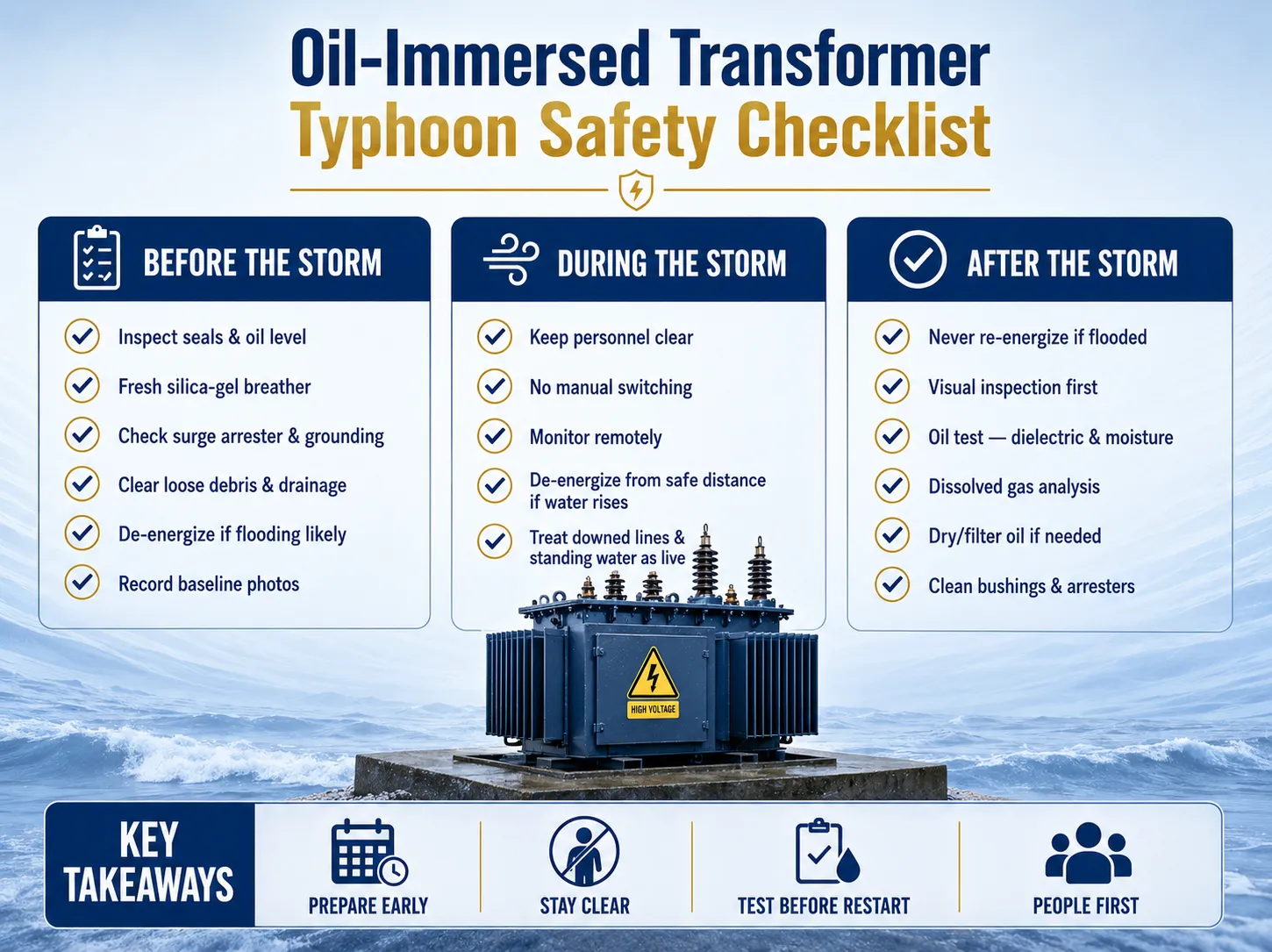
La ventana más importante para proteger un transformador es el día o dos antes de que un tifón toque tierra, mientras las condiciones aún permiten un trabajo seguro. Una rutina disciplinada antes de la tormenta mejora drásticamente las probabilidades de que un transformador sumergido en aceite sobreviva intacto. La siguiente lista de verificación cubre lo esencial:
- Inspeccione el tanque, los bujes y las juntas en busca de fugas, grietas o daños existentes, y repárelos antes de que llegue la tormenta.
- Confirme que el nivel de aceite es correcto y que el conservador y respiradero de gel de sílice están funcionando, con el deshidratante fresco y seco en lugar de saturado.
- Verifique que cada pararrayos esté intacto, correctamente conectado y debidamente aterrizado, y compruebe que puesta a tierra del transformador las conexiones estén firmes y con baja resistencia.
- Limpie el área circundante de objetos sueltos, herramientas y materiales que el viento podría convertir en proyectiles, y recorte las ramas cercanas donde sea práctico.
- Asegure las puertas de la envoltura, las cubiertas de la caja de cables y las rejillas para que el viento y la lluvia intensa no puedan forzarlas a abrirse.
- Verifique y limpie el drenaje del sitio para que el agua pueda fluir lejos de la fundación del transformador en lugar de acumularse alrededor de ella.
- Donde el riesgo de inundación es real, prepárese para desenergizar y, para unidades móviles o montadas sobre patines, considere reubicar el equipo a un terreno más alto.
- Registre lecturas de referencia y tome fotografías, para que la inspección posterior a la tormenta tenga un punto de referencia claro.
- Confirme que la energía de respaldo, las piezas de repuesto y los procedimientos de contacto de emergencia estén en su lugar antes de que las comunicaciones y el acceso se vuelvan difíciles.
Para instalaciones fijas, la decisión de mantener un transformador energizado o apagarlo antes de la tormenta debe seguir el plan de emergencia de la utility o de la instalación y las instrucciones de la red local. En caso de duda, proteger el activo y a las personas a su alrededor tiene prioridad sobre mantener el suministro a cargas no críticas.
Durante la Tormenta: Operación Segura y Decisiones
Una vez que un tifón está realmente golpeando, la regla guía es simple: mantenga a las personas alejadas del equipo energizado y deje que las defensas preparadas hagan su trabajo. Este no es el momento para la intervención manual en el transformador. Intentar operar interruptores, abrir gabinetes o inspeccionar un transformador sumergido en líquido en vientos fuertes e inundaciones es extremadamente peligroso y nunca debe intentarse.
Donde una instalación tiene monitoreo y control remoto, los operadores pueden observar la temperatura del aceite, la carga y el estado de las alarmas desde un lugar seguro y tomar decisiones de conmutación de forma remota. Si el agua de la inundación está subiendo hacia un transformador que aún está energizado, la respuesta correcta es desenergizarlo a través de la protección adecuada aguas arriba desde una distancia segura, no entrar en el agua. Un transformador que se apaga durante una tormenta debe permanecer apagado hasta que pueda ser inspeccionado adecuadamente. Sobre todo, trate cada línea caída y cada charco de agua estancada cerca del equipo eléctrico como si estuviera energizada y letal, y mantenga a todo el personal alejado.
Después de la Tormenta: Inspección y Recuperación
El período justo después de un tifón es cuando ocurren errores costosos, porque la presión para restaurar la energía es intensa. La regla más importante de la recuperación es esta: nunca reenergice un transformador que ha sido inundado o sumergido hasta que haya sido inspeccionado y probado a fondo. Hacerlo arriesga una falla violenta que puede lesionar al personal y destruir la unidad. Una recuperación cuidadosa y metódica protege a ambos.
Comience con una inspección visual desde una distancia segura, verificando estructuras inclinadas, aisladores dañados, fugas de aceite, cubiertas desplazadas y signos de que el agua alcanzó el equipo. Una vez que el área se confirme segura y la unidad aislada, un equipo calificado puede llevar a cabo verificaciones eléctricas y de aceite. Los pasos clave incluyen:
- Medir la resistencia de aislamiento y la resistencia de devanado para detectar la entrada de humedad o daños internos.
- Realizar pruebas de aceite de transformador para el voltaje de ruptura dieléctrica y el contenido de humedad para confirmar que el aceite aún proporciona un aislamiento adecuado.
- Usar análisis de gases disueltos para revelar cualquier falla interna como sobrecalentamiento o descarga parcial que la tormenta pueda haber desencadenado.
- Inspeccionar y limpiar los terminales, pararrayos y conexiones, prestando especial atención a los depósitos de sal en sitios costeros.
- Confirmar que el conservador, el respiradero y los sistemas de enfriamiento estén libres de escombros y funcionen normalmente.
- Secar o filtrar el aceite, o procesar los devanados, si las pruebas muestran que la humedad ha entrado en el sistema de aislamiento.
Solo cuando la inspección y las pruebas confirmen que el transformador está en buen estado debe ser devuelto al servicio, y aun así es prudente monitorearlo de cerca durante las primeras horas de funcionamiento. transformadores sumergidos en aceite de 35kV La alimentación de una subestación importante merece una limpieza particularmente cuidadosa antes de la reenergización, porque las consecuencias de una falla a ese nivel son severas.
Aceite Inmerso vs Tipo Seco en Áreas Propensas a Inundaciones
Los compradores en regiones expuestas a tormentas a veces preguntan si una unidad de tipo seco sería más segura que una transformador sumergido en aceite cuando la inundación es una preocupación. La respuesta honesta es que ninguno de los formatos está diseñado para ser sumergido, y ambos deben ser protegidos del agua de inundación. Lo que difiere es el perfil de sus fortalezas.
Un transformador sumergido en aceite ofrece excelente enfriamiento, alta capacidad de sobrecarga y durabilidad comprobada para servicio al aire libre y de mayor voltaje, razón por la cual domina las aplicaciones de distribución y subestaciones, incluyendo transformadores sumergidos en aceite de 35kV instalaciones. Su sistema de aceite sellado es una barrera robusta contra la humedad en condiciones normales, pero si el agua de inundación rompe los sellos, el aceite contaminado debe ser tratado o reemplazado. Las unidades de tipo seco evitan completamente el líquido aislante y a menudo se prefieren en interiores o en lugares sensibles al fuego, sin embargo, sus devanados expuestos son altamente vulnerables a la humedad y la contaminación si se inundan, y generalmente son adecuados para voltajes más bajos y entornos protegidos.
En la práctica, el factor más decisivo que el formato es la instalación: la elevación por encima del nivel de inundación, el drenaje efectivo y un recinto adecuado protegen a cualquiera de los tipos mucho más que la elección entre ellos. Para la mayoría de las necesidades de distribución al aire libre y costeras en países de tifones, un transformador sumergido en líquido de un fabricante de calidad sigue siendo la opción confiable, siempre que se mantenga fuera del agua.
Construyendo un Plan de Emergencia para Tifones
Las precauciones individuales funcionan mejor cuando son parte de un plan escrito que todos entienden antes de que aumente el viento. Un plan de emergencia práctico para activos de transformadores convierte las buenas intenciones dispersas en una rutina repetible que se mantiene bajo la presión de una tormenta que se aproxima.
Un plan sólido asigna responsabilidades claras, para que cada persona sepa si está inspeccionando, asegurando, monitoreando o tomando decisiones de apagado. Define puntos de activación, como una velocidad del viento pronosticada o un nivel de inundación en el que un transformador se desenergiza, eliminando la vacilación en el momento. Enumera la lista de verificación previa a la tormenta, las reglas de distancia segura para la tormenta misma y la secuencia de inspección y prueba para después, para que nada se olvide bajo presión. Mantiene piezas de repuesto, aceite aislante, equipos de prueba y contactos de contratistas identificados con anticipación, porque obtenerlos en medio de una crisis es lento y costoso. Finalmente, registra datos de referencia y fotografías para cada unidad importante, dando al equipo de recuperación una referencia clara para juzgar los daños de la tormenta. Revisar y ensayar este plan al inicio de cada temporada de tifones evita la seguridad de los transformadores sumergidos en aceite depender de la memoria o la improvisación cuando más importa.
Resiliencia a Largo Plazo: Ubicación, Diseño y Mantenimiento
Sobrevivir a un tifón es bueno; estar construido para resistir cada temporada de tormentas es mejor. Gran parte de la resiliencia real de un transformador ante tormentas se decide mucho antes de cualquier tifón en particular, en cómo y dónde se instala y qué tan bien se mantiene.
La elevación es la medida más efectiva contra inundaciones. Montar un transformador sobre una base o plataforma elevada por encima del nivel de inundación esperado mantiene el agua alejada del tanque y los terminales cuando el terreno circundante está inundado. Alojar el equipo dentro de un subestación tipo caja o un recinto prefabricado añade una barrera adicional contra el viento, los escombros y la lluvia intensa, y concentra el esfuerzo de sellado y drenaje en un paquete diseñado. Un buen drenaje del sitio, una base estable y un anclaje seguro contra el levantamiento por viento contribuyen a una instalación resiliente.
Las elecciones de materiales y especificaciones también importan. Para ubicaciones costeras e industriales-costeras, especificar protección contra la corrosión mejorada, terminales de mayor creepage y accesorios sellados resulta beneficioso a lo largo de la vida del activo. Elegir una serie robusta de baja pérdida como un transformador S11 y SZ11 de un fabricante de renombre asegura que la unidad esté construida con calidad consistente y sellos e aislamiento confiables. Finalmente, nada de esto funciona sin mantenimiento: el pruebas de aceite de transformador, el servicio del respirador, la inspección de juntas y las verificaciones de conexión a tierra mantienen las defensas integradas efectivas, de modo que cuando llega un tifón, el equipo ya está en la mejor condición posible.
La Seguridad de las Personas Primero: Seguridad Eléctrica Alrededor del Equipo Dañado por Tormentas
Ningún transformador vale una vida humana, y los tifones crean exactamente las condiciones en las que ocurren accidentes eléctricos. El agua de inundación conduce electricidad y oculta peligros; el viento derriba líneas que pueden seguir energizadas; y la urgencia de restaurar la energía rápidamente puede tentar a las personas a tomar atajos inseguros. Todos los que trabajen cerca o alrededor de un transformador sumergido en líquido durante y después de una tormenta deben seguir algunas reglas innegociables.
Manténgase alejado de cualquier línea eléctrica caída o en tensión y asuma que está energizada. Nunca entre en agua estancada que podría estar en contacto con equipos energizados. No intente reparaciones o conmutaciones sin la debida aislamiento, bloqueo y el equipo de protección personal adecuado, y deje el trabajo de alta tensión a personal capacitado y autorizado. Informe sobre los peligros a la empresa de servicios públicos en lugar de intentar solucionarlos de forma independiente. Estos hábitos no cuestan nada y previenen las tragedias que a menudo siguen a tormentas importantes.
Preguntas Frecuentes
¿Se puede volver a utilizar un transformador sumergido en aceite después de una inundación?
Solo después de una inspección y pruebas exhaustivas. Un transformador inundado transformador sumergido en aceite nunca debe ser reenergizado hasta pruebas de aceite de transformador y las verificaciones de aislamiento confirmen que el agua no ha comprometido el aceite y el aislamiento. En muchos casos, el aceite debe ser filtrado o reemplazado y los devanados secados antes de que la unidad sea segura para volver al servicio.
¿Cómo daña el agua a un transformador sumergido en líquido?
El aceite aislante y el papel dentro de un transformador sumergido en líquido dependen de mantenerse secos para resistir alta tensión. Incluso una pequeña cantidad de humedad reduce drásticamente la resistencia dieléctrica, lo que puede llevar a un arco interno y falla. Por eso el sellado, los respiraderos y las pruebas posteriores a inundaciones son tan importantes.
¿Los pararrayos realmente protegen contra los rayos de tifones?
Sí. Un pararrayos correctamente dimensionado y debidamente aterrizado desvía los rayos y las sobretensiones de conmutación a tierra antes de que lleguen a los devanados, y es una de las protecciones más rentables disponibles. Debe estar emparejado con un puesta a tierra del transformador para funcionar como se pretende, y debe ser inspeccionado antes de la temporada de tormentas.
¿Es mejor una subestación tipo caja en áreas de tifones?
A menudo, sí. Alojar equipos en un subestación tipo caja o recinto prefabricado añade protección contra el viento, los escombros y la lluvia intensa, y facilita elevar y sellar la instalación contra inundaciones. Es una opción sólida para sitios costeros e industriales expuestos.
¿Qué voltaje y modelo debo elegir para un sitio propenso a tormentas?
Alinee el voltaje y la capacidad con su carga y red, ya sea que se trate de una unidad de clase de distribución o un transformadores sumergidos en aceite de 35kV para una subestación. Para fiabilidad, una serie de baja pérdida comprobada como la transformador S11 y SZ11 familia, especificada con protección contra la corrosión y un recinto y elevación apropiados, proporciona una base sólida para la resiliencia ante tormentas.
¿Cuánto tiempo puede tardar en restaurarse la energía después de un tifón?
Depende completamente de la condición del equipo. Un transformador que se mantuvo seco y sin daños, con bujes, pararrayos y conexión a tierra intactos, puede ser autorizado para servicio después de una inspección visual y verificaciones básicas. Uno que estuvo expuesto a agua de inundación necesita una pruebas de aceite de transformador, completa, medición de aislamiento y a menudo análisis de gases disueltos antes de reenergizar, lo que toma más tiempo pero previene una falla mucho más costosa. Restaurar la energía de manera segura siempre es más rápido a largo plazo que restaurarla apresuradamente.
Afrontando la Tormenta con Confianza
Los tifones siempre pondrán a prueba la red eléctrica, pero un transformador bien diseñado, bien preparado y bien mantenido puede superar incluso una tormenta severa y volver al servicio rápidamente. La fórmula es consistente: elija equipos robustos adecuados para el entorno, prepárese a fondo antes de la tormenta, evite intervenciones peligrosas durante la misma, e inspeccione y pruebe cuidadosamente antes de volver al servicio después. Siga esa disciplina y la seguridad de los transformadores sumergidos en aceite se convierte en un asunto de rutina en lugar de suerte.
Subian Electric diseña y fabrica soluciones confiables transformador sumergido en aceite , incluyendo las series S11 y SZ11 y transformadores sumergidos en aceite de 35kV unidades diseñadas para condiciones exteriores y costeras exigentes. Si su operación enfrenta la temporada de tifones, nuestro equipo puede ayudarle a seleccionar, especificar y proteger equipos diseñados para mantener la energía cuando el clima se vuelve adverso. Hable con nosotros sobre transformadores hechos para resistir la tormenta.