


三相間の巻線抵抗が0.5%以内で、紙絶縁が要求事項(0.5%以下の湿度)に従って乾燥され、無負荷損失試験を受けて保証されたレベルが3%以内である変圧器は、何年も生き残り機能し続けます。逆に、注意を払わずに製造された変圧器で、適切に乾燥されず、コアがクランプされていないものは、運転からわずか4年で機能を停止します。電力変圧器の品質管理は、3種類の異なる材料(鋼、銅、または紙)が高い信頼性を持つ変圧器に組み立てられることを保証します。.
この記事の主な目的は、変圧器の生産プロセスにおける制御ポイントがどこにあるかを説明することです。これには、材料の入荷検査、コアと巻線の組立、変圧器の真空乾燥と油充填、製品の最終試験が含まれます。.
短い答え:変圧器製造の品質管理プロセスは、5つの主要な品質管理ポイントで構成されています:原材料の検査、コアと巻線の製造、コイルの真空乾燥と油浸透、変圧器の組立、およびIEC 60076-1に従った工場受入試験です。品質管理の主な合格基準には、変圧器の巻数比が±0.5%以内、電圧降下比の偏差が2%未満、無負荷および負荷損失がIEC 60076-1に従って(±10%から+15%)含まれます。.
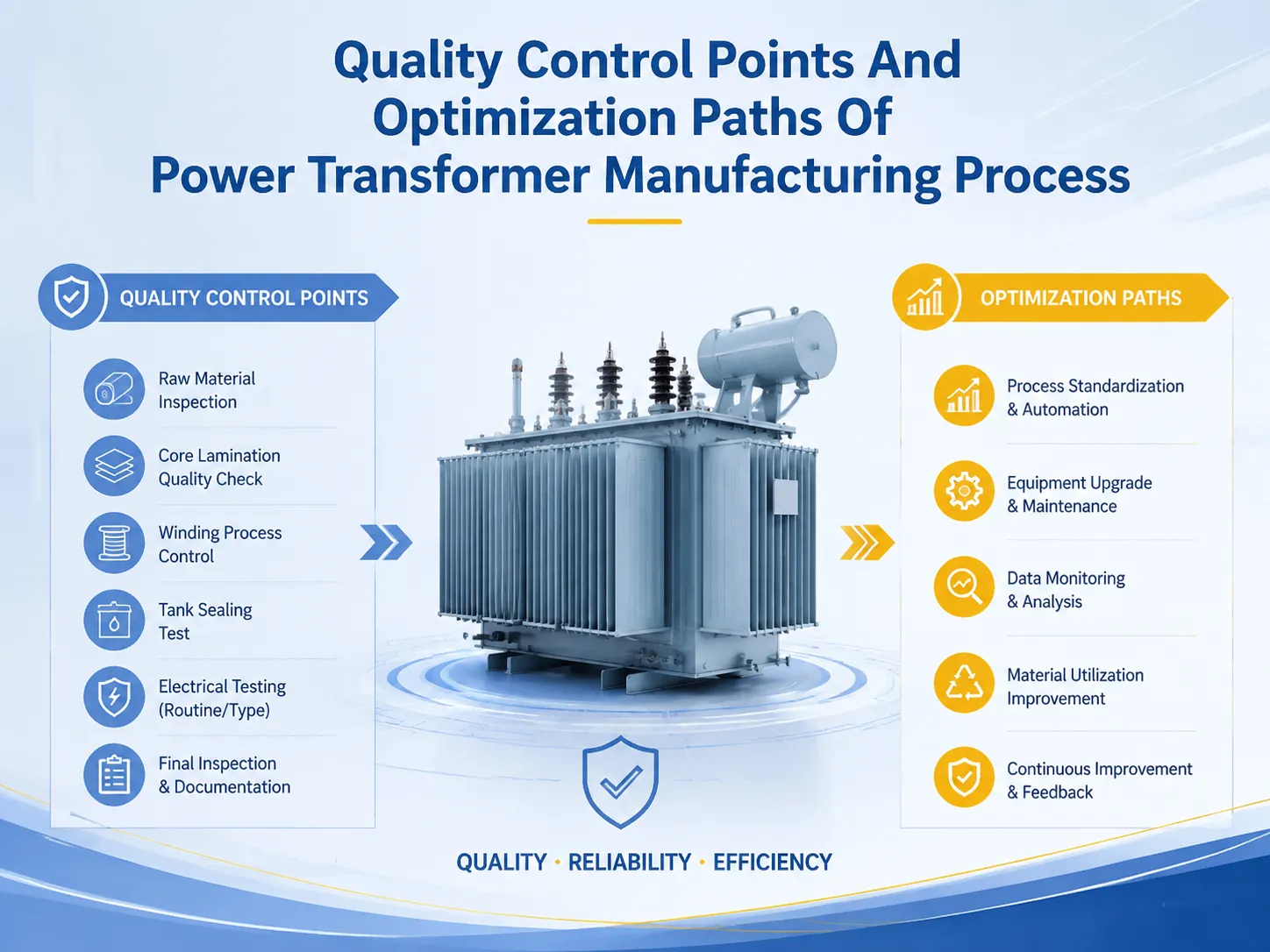
変圧器製造の品質管理とは何ですか?
変圧器製造における品質管理とは、少なくとも25〜40年の設計寿命に従って、ユニットが電気的、熱的、機械的効率を持つことを保証するための計画されたチェック、測定、ホールドポイントの一連を意味します。品質管理はテストとは異なることを強調することが重要です。テストは欠陥を検出しますが、品質管理はそれを防ぎます。したがって、優れた最終テストを持ちながらプロセス管理が弱い工場は、プロセスの最後で問題を特定するだけであり、その時点で修正は最もコストがかかります。厳格なプロセス管理を持つ工場は、低い廃棄コストで安定した製品を生産します。これが、最良の中国および国際的な製造業者がQCを最終検査の部門ではなく、生産の技術と見なす理由です。.
標準の基礎は、IEC 60076-1(一般要件および試験)であり、IEC 60076-3(絶縁レベル)、IEC 60076-5(短絡に対する耐性の程度)、およびIEC 60076-10(音レベル)によって補完されています。バイヤーは、信頼できる工場の大多数が製品標準に加えてISO 9001品質管理システムを使用していることも知らされるべきです。.
製造プロセス:品質が作られるか失われる場所
標準の油浸式電力変圧器は、約10段階の工程を含み、各段階にはプロセスで何かが間違った場合の故障モードがあります。コアのラミネーションは、制御されたスタッキングファクターとクランプ圧で切断され、積み重ねられ、過剰なストレスがかかるか、シート間に腐食が存在する場合、無負荷損失が増加し、コアにホットスポットが発生します。巻線は、銅またはアルミニウムのワイヤーから作成され、これも制御された張力と層絶縁の下にあり、単一の不均一な中間紙が部分放電を引き起こす可能性があります。アクティブパートは、湿気を取り除くために真空チャンバーで乾燥され、これはプロセスにおける最初かつ最も重要な品質チェックポイントです。その後、タンクが真空を作り、脱ガスおよび乾燥した油で満たされ、プロセスの最後の部分は工場テストの実施です。.
輸送も品質チェックポイントであり、変圧器は衝撃や傾きによる損傷を受ける可能性があります。この問題の解決策は、IEC 60076-11であり、大型タービンで衝撃および傾き記録装置を利用することを提案しています。読者は、次の段落で最も重要な制御ポイントを見つけることができます。.
| プロセス段階 | QC方法 | 未チェックの場合の失敗コスト |
|---|---|---|
| 材料受領 | サプライヤー証明書 + スポットテスト | 低 — 早期に発見 |
| コア切断/積み重ね | 借用サイズ制御、スタッキングファクターのチェック | 中 — 高い無負荷損失 |
| 巻線構築 | ターンカウント、張力、抵抗チェック | 高 — 短絡ターン、ホットスポット |
| 真空乾燥 | 湿気エンドポイント、充填後のPI | 非常に高 — 早期故障 |
| 組立およびタンク作成 | トルク記録、接合部検査 | 中 — 漏れ、緩い部品 |
| 工場テスト | IEC 60076-1 定期バッテリー | 高 — 保証の逸脱を見逃す |
| 梱包および輸送 | 衝撃/傾き記録装置、取り扱い計画 | 高 — 輸送中の損傷 |
制御ポイント1: 入荷材料検査
| 材料 | 検査方法 | 一般的な受入基準 | 不良材料の結果 |
|---|---|---|---|
| 粒状シリコン鋼 | ASTM A876 / IEC 60404に基づく磁気特性試験 | 特定の総損失 ≤ カタログ制限; コーティング無傷 | 高い無負荷損失、低い効率クラス |
| 銅 / アルミニウム導体 | 抵抗率および寸法チェック | ≥ 99.9% Cu導電率; 直径公差 ±0.5% | 高い負荷損失、ホットスポット |
| 絶縁紙およびプレスボード | 密度、引張強度、湿気含量 | 密度 0.9–1.2 g/cm³; 湿気は仕様に従う | PDリスク、機械的弱点 |
| 絶縁油 | 絶縁強度 (IEC 60156)、水分含量、DGA | BDV ≥ 40 kV、水 < 20 ppm (新油) | 耐圧低下、加速劣化 |
| ブッシングとタップチェンジャー | 視覚、絶縁抵抗、タンデルタ、ガス密閉性 | 供給者の試験証明書およびスポット再試験に基づく | ブッシングフラッシュオーバー、OLTC故障 |
真剣な製造企業は、ブランド名だけでなく供給仕様に基づいて持ち込む材料を厳密に監視しています。たとえば、鋼コイルは同じ製造元から来ていても、コイルごとに組成や品質が異なります。これは、金属の実際の特性に基づいて鋼を選択し、すべてのリールを追跡する企業が、すでに最低コストで品質を達成していることを意味します。.
コントロールポイント 2–3: コアおよび巻線製造
| ステージ | 主要なチェック項目 | 一般的な受入基準 |
|---|---|---|
| コアの切断と積み重ね | 積み重ね係数、バリの高さ、クランプ圧力、積層絶縁 | 積み重ね係数 ≥ 0.95; バリ < 0.02 mm; 短絡した積層なし |
| コアの組立てとバンディング | クランプトルク、コア接地接続、ボルト絶縁 | 単一ポイントコア接地; 積層間の絶縁抵抗 > 100 MΩ |
| 巻線導体と絶縁 | 導体の張力、紙巻きの連続性、層絶縁の配置 | 裸の導体の露出なし; 連続層絶縁 |
| 巻線ディスク/層構築 | ターン数、転置、冷却ダクトの整列 | 設計に対して確認されたターン数; ダクトはクリアで均一 |
| コイルの圧縮とクランプ | 軸方向圧力、コイル高さの一貫性 | 設計ウィンドウ内の圧力; フェーズ間の高さの変動 < 1 mm |
| タップチェンジャーとリード接続 | ブレージング/はんだ付けの品質、絶縁距離、トルク | 低抵抗接合部; 絶縁レベルごとのクリアランスを確認 |
これに関連する重要な側面が2つあります。まず第一に、製造時に相間の巻線抵抗の不均衡を理想的には2%未満に維持する必要があります。そうでないと、並列導体システムの不適切な転置が、負荷下で動作するシステム内の循環電流やホットスポットの形で現れます。もう一つは、コアのクランプ圧力で、緩すぎてもきつすぎてもいけません。緩い構成はコアのハミングを引き起こし、きつい構成は積層の絶縁が潰れる原因となります。この問題は、生産過程での測定によって解決できます。.
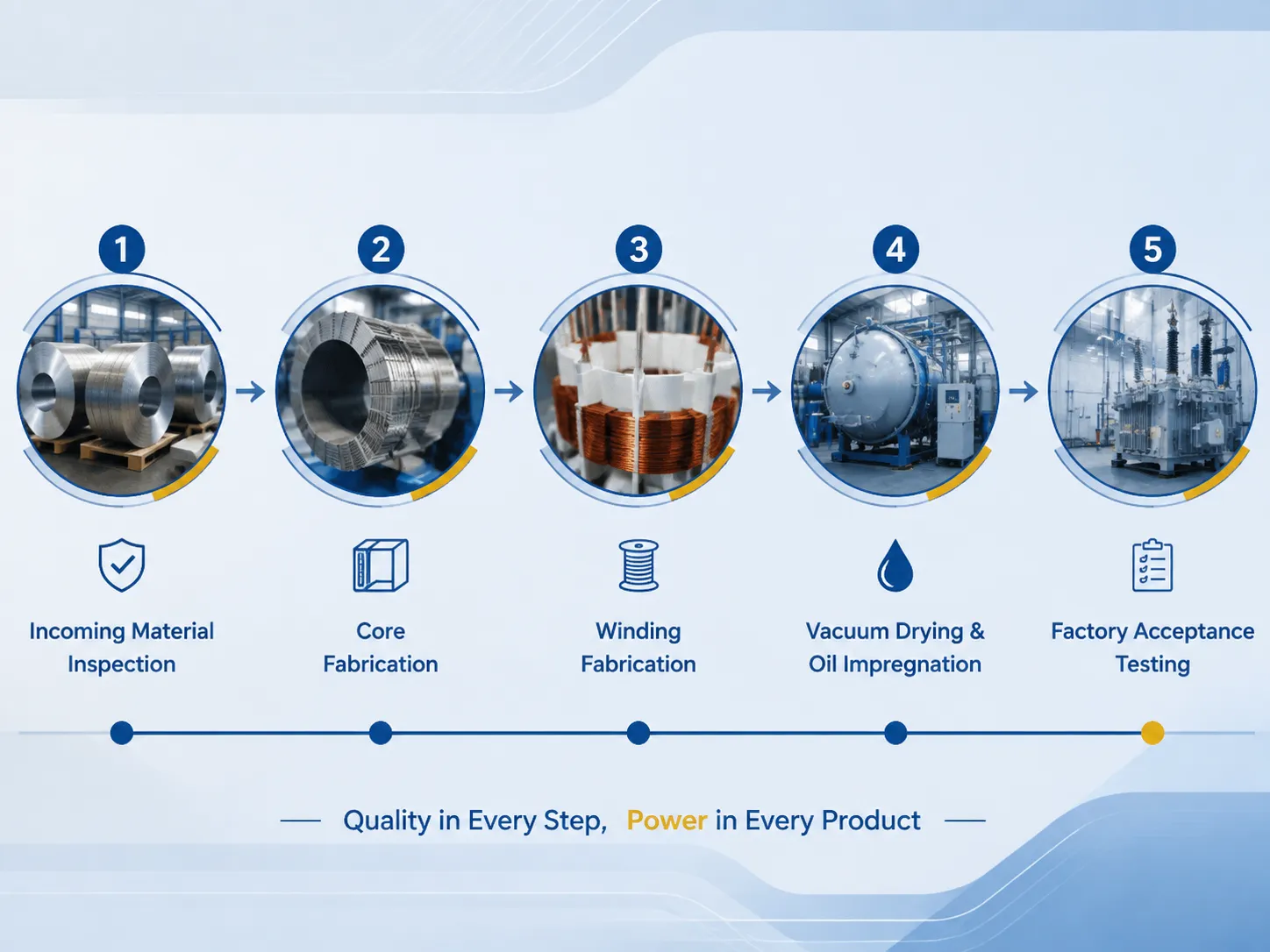
コントロールポイント 4: 真空乾燥と油浸透
湿気は変圧器にとって主な脅威であり、乾燥および油充填作業の過程で排除されるか、アクティブ巻線に取り込まれます。紙は真空オーブンで乾燥され(通常100〜130 °Cに達し、分配ユニットではさらに高温、深真空下で50 Paまたは0.5 mb未満)、湿気が質量分率で0.5%未満に低下するまで乾燥され、その品質はカールフィッシャー法または露点測定によって確認されます。その後、タンクに油が充填され、紙の内部に気泡が残らないように浸漬プロセスが完了します — すべての気泡は潜在的な放電の危険源です。.
このプロセスは通常、乾燥時間が短縮されると急がれます。適切に乾燥し浸漬された変圧器は通常、乾燥に数日かかります。例えば、10 MVAの変圧器は乾燥プロセスに少なくとも2〜4日、真空充填に1日を要します。このプロセスを急ぐ工場は今はコストを節約しますが、後で問題に直面します。乾燥プロセスの正確性は、充填プロセスが完了した後に絶縁抵抗および偏極指数の測定を使用して確認できます。偏極指数が2.0以上であれば紙は乾燥しており、1.5未満であれば湿気が残っています。.
コントロールポイント5: 工場受入試験
| テスト | 標準参照 | 一般的な受入基準 |
|---|---|---|
| ターン比試験(すべてのタップ) | IEC 60076-1 | 設計比の±0.5%以内 |
| 巻線抵抗 | IEC 60076-1 | 相不均衡 ≤ 2%; 基準温度に補正 |
| 絶縁抵抗 / PI | IEEE 43 / IEC 60076-1 | 油浸ユニットのPI ≥ 2.0 |
| 無負荷損失 & 電流 | IEC 60076-1 | 許容範囲内: 損失 +15%(および −10%)IECに基づく保証値 |
| 負荷損失 & インピーダンス | IEC 60076-1 | 負荷損失 +15%以内; インピーダンス ±7.5%以内 |
| 絶縁試験(LI、AC、適用) | IEC 60076-3 | 指定されたレベルでのフラッシュオーバーまたはブレークダウンなし |
| 部分放電測定 | IEC 60270 | 通常、HVユニットの定格電圧の1.1倍で100 pC未満 |
| 温度上昇試験 | IEC 60076-2 | 巻線上昇 ≤ 65 K(クラスA)、油上昇 ≤ 60 K(典型的) |
| 音レベル試験 | IEC 60076-10 | 合意された値に従い; 分配ユニットの場合、通常55〜70 dB(A) |
工場試験手順は、製品が保証要件を満たしていることを示す主要な証拠として機能します。10MVA変圧器の完全な試験には通常約2〜5日かかり、通常はデバイスのコストに含まれています。ただし、目撃試験(購入者自身または第三者による)を要求すると、いくつかの物流が関与しますが、はるかに安心感を提供します。IEC 60076-1は、いくつかの正の損失許容範囲を認めているため、メーカーは損失保証レベルよりもやや大きな損失を提供できます。したがって、損失保証の交渉と試験された数値の確認は、単なる形式的なものではなく、良好な商業ツールです。.
最適化の道筋: リーン、オートメーション & デジタルQC
現代の製造業は、コストを削減しながら高い品質レベルを維持することを目指しており、さまざまな戦術を利用しています。その一つがリーン生産プロセスであり、これは企業が材料の輸送を減少させ、均一な作業プロセスを作成し、すべてのステーションで5S手法を独占的に実施することを可能にする方法を採用しています。さらに、この方法論は企業が手動エラーの数を最小限に抑えることを可能にします。例えば、切断、巻き取りプロセス制御、ろう付けなどの手順の生産プロセスの自動化は、工場に手作業が最終的な生産性に与える影響を排除する機会を提供します。例えば、巻き取りプロセスを行う機械は、手動で行うのではなく、ワイヤーの張力を常に±3%の許容範囲内に保ちます。.
第三の方法はデジタル品質記録の使用です。紙の視覚テストを使用するのと比較して、工場はすべての必要な情報をデータベースに保持することを好み、これにより問題を事前に特定することができます。基本的に、これは中国企業が生産プロセス中に大きく注力した分野です。最新の機械は、回転数、トルク、乾燥プロセス、品質を追跡し、最初からすべての製品に対して品質チェックを確保します。顧客への実用的な提案は、デジタルトレース可能性の概要と品質チェック文書を求めることであり、これにより工場についての情報をプロモーション資料以上に知ることができます。.
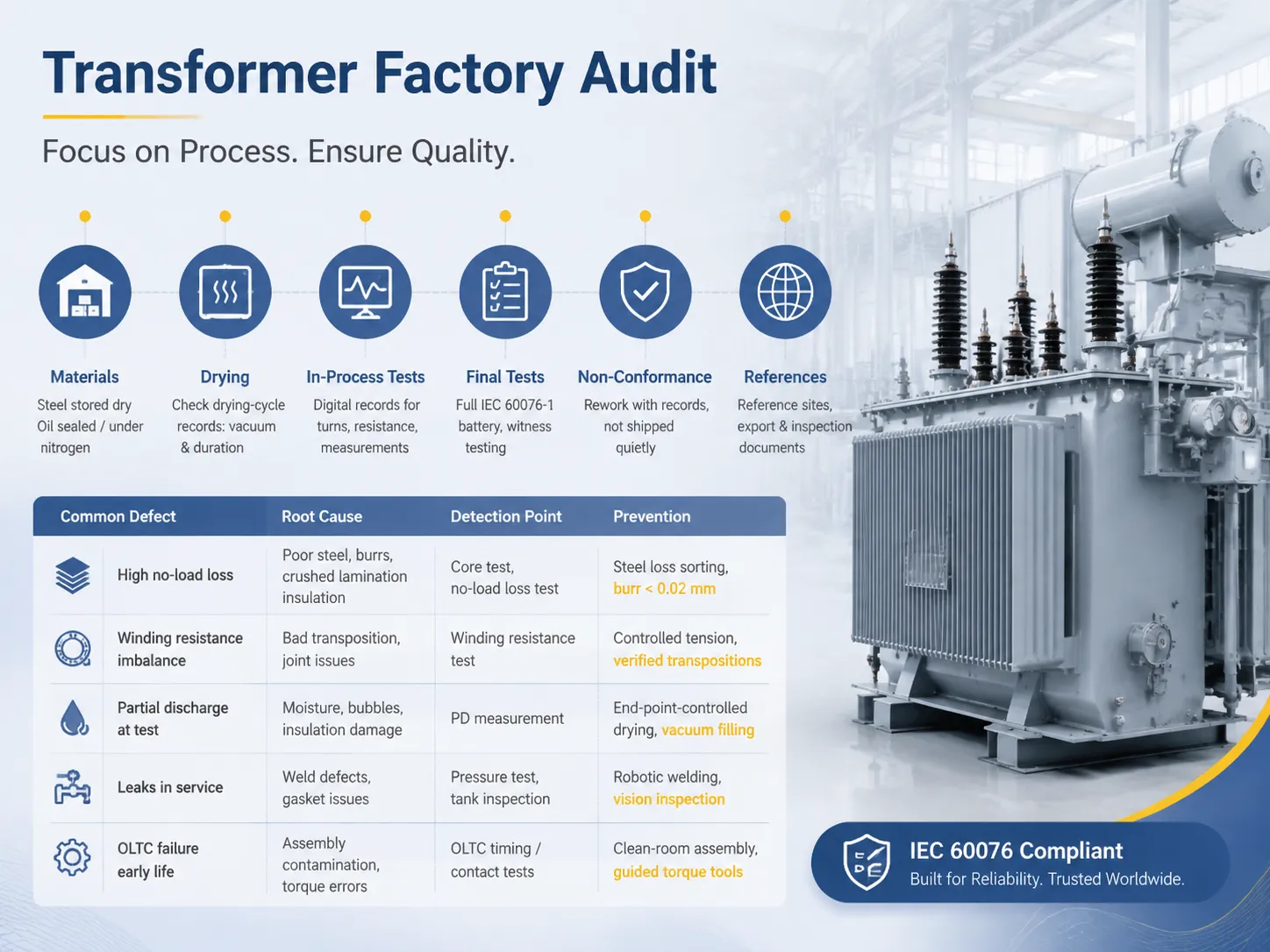
トランスフォーマー工場の監査方法
複数の機器を購入する場合、工場監査はそのコスト以上の価値があることを知っておくべきです。小さなチェックリストを持参し、書類ではなく行動を探すべきです。まず、材料倉庫を検査する必要があります: 鋼が乾燥して保護されているか、油が窒素下または密閉容器に保管されているかを確認します。次に、乾燥ラインをチェックする時間です: 最後の機器の乾燥サイクルの実際の記録を要求し、真空と時間が仕様に従っていることを確認します。第三に、品質管理ステーションをチェックする必要があります: 記録はコンピュータまたは紙で回転数と抵抗を記録していますか。第四に、テストフロアをチェックする必要があります: 工場は完全なIEC 60076-1テストを使用しており、テストのパフォーマンスを観察できますか。第五に、不適合ユニットの取り扱いを確認する必要があります: テストに失敗したユニットはどうなりますか — 適切に再配線されるのか、それとも気づかれずに送られるのか?
また、運転中の設備と輸出履歴の参考資料を取得するべきです。これにより、税関および検査記録を確認することができます。地域で運転中のユニット、試験報告書、成功事例を提示できる工場は、確実に信頼できるパートナーですが、そのような文書がない場合は大きなリスクとなります。IEC 60076に準拠した製造業者であり、世界中に輸出している江蘇省蘇辺電力は、検査に対してオープンであり、検査にオープンな企業は通常、成功裏に通過します。.
| 一般的な欠陥 | 根本原因 | 検出ポイント | 予防 |
|---|---|---|---|
| 高い無負荷損失 | 不良鋼、バリ、圧縮されたラミネーション絶縁 | コアテスト、無負荷損失テスト | 鋼損失の選別、バリ < 0.02 mm |
| 巻線抵抗の不均衡 | 不良な転置、接合部の問題 | 巻線抵抗テスト | 制御された張力、確認された転置 |
| テスト時の部分放電 | 湿気、気泡、絶縁損傷 | PD測定 | エンドポイント制御乾燥、真空充填 |
| 使用中の漏れ | 溶接欠陥、ガスケットの問題 | 圧力テスト、タンク検査 | ロボット溶接、ビジョン検査 |
| OLTCの早期故障 | 組立汚染、トルクエラー | OLTCのタイミング/接点テスト | クリーンルーム組立、ガイド付きトルク工具 |
よくある質問
トランスフォーマー製造における最も重要な品質管理ステップは何ですか?
最も熟練した専門家は、真空乾燥と油飽和が故障の原因であると述べるでしょう。湿気は運転中に発生する故障の大部分に責任があります。紙の湿気は0.5%以下に減少させる必要があり、油は脱ガスされ、真空処理されて気泡が形成されないようにする必要があります。乾燥プロセスを早めようとする組織は製造時間を短縮しますが、機器を早期老化と潜在的な部分放電に陥らせます。充填後の分極指数がその証拠です。指数が2.0を超えるのは正常であり、1.5を下回ると問題を示します。.
トランスフォーマーを受け入れる前に、どの工場テストを要求すべきですか?
工場にIEC 60076-1規制テストを含む完全なテストセットを実施するよう要求することをお勧めします。これには、ターン比、巻線抵抗、絶縁抵抗のテスト、損失およびインピーダンスのテスト、誘電強度のテストが含まれます。大きなトランスフォーマーやノイズに敏感なトランスフォーマーを扱う場合は、温度上昇テストや新しい機械によって生成されるノイズレベルのテストも実施する必要があります。トランスフォーマーが短絡のリスクがあるアプリケーションで使用される場合は、短絡テストも要求する必要があります。大きな購入に関する決定を下す前に、テストプロセスについて知っておくことを確認してください。.
工場テスト報告書の費用はいくらですか?
定期的な工場試験は、トランスの価格に通常含まれており、10MVAトランスの場合、通常2〜5日かかります。上昇チェックなどの特別な試験は、試験の複雑さに応じて$2000-15000の追加費用が必要です。ただし、プロセス後に発見されたエラーを排除するためのコストがかかることを十分に理解する必要があります。.
保証された損失に対してどの程度の許容範囲を期待できますか?
IEC 60076-1規則によれば、損失の差は契約で定められた割合に対して+15%まで許容されます。したがって、製造段階で最大15%の性能不足が許可されています。しかし、資格のある工場では、値はかなり正確に設定されるべきであり、損失の重要性から許容範囲は可能な限り低くなければなりません。.
トランス製造業者が本当にIEC準拠であるかどうかはどうやって判断できますか?
効率的な製造業者と取引していることを確認するためには、現在のISO認証を確認し、過去の業務の統計報告を要求し、該当する製造業者の工場試験計画を確認する必要があります。ユーザーはこれを読む必要があります。.
参考文献
- IEC 60076-1: 電力変圧器 – パート1: 一般 — 評価、損失許容範囲、工場試験のための基盤標準。.
- IEC 60076-3: 電力トランス – パート3: 絶縁レベルと誘電体試験 — 絶縁調整と誘電体試験の要件を定義します。.
- IEC 60076-5: 電力トランス – パート5: 短絡に耐える能力 — 短絡耐性資格を規定する標準。.
- IEEE 43: 絶縁抵抗および偏極指数試験 — 絶縁乾燥の受け入れ基準を参照します。.
- IEC 60270: 高電圧試験技術 – 部分放電測定 — PD受け入れ基準の背後にある測定標準。.
- ISO 9001: 品質管理システム — ほとんどのトランス工場がプロセス制御に使用するシステムフレームワーク。.
- 江蘇省蘇辺電力 — IEC 60076準拠のトランス製造業者で、試験が立会いで行われ、完全な工場試験文書が提供されます。.
結論
電力変圧器の製造品質管理プロセスは、入荷した鋼材から工場での最終受入試験までのさまざまな測定可能なステップで構成されています。このプロセスには、入荷検査、コアと巻線の製造、真空乾燥、組み立て、工場試験の5つの主要な品質チェックが含まれています。これらのチェックはそれぞれ非常に具体的な基準を持っており、顧客が信頼できる会社と詐欺を見分けるのを容易にします。製造プロセス中に品質とコストの両方を改善する最適化技術には、リーン手法、自動化、最終製品のデジタルトラッキングが含まれます。これは顧客が工場監査中に確認すべきことです。.
- 受領時に特性の検証を必ず行ってください。これは品質を監視する最も安価な方法です。.
- 工場がオーブン内で少なくとも2.0の絶縁を達成し、湿度が0.5%未満であることを確認してください。.
- 工場がIEC 60076-1規格に従ってすべての定期試験を実施したことを確認してください。特に大口注文の場合は重要です。.
- 許容損失値を交渉し、実際のデータを保証数値と照らし合わせて確認してください。.
- 製品の乾燥記録とそのトレーサビリティの監査も非常に重要です。.
- IEC規格に従って製造を行い、すべての試験証明書を取得したい場合は、購入リストに必ず江蘇省蘇辺電力を含めるべきです。.