


Трансформатор с сопротивлением обмотки в пределах 0.5% между тремя фазами, чья бумажная изоляция была высушена в соответствии с требованиями (влажность 0.5% или меньше) и прошел испытания на холостые потери, которые подтверждают гарантированные уровни в пределах 3%, будет работать и функционировать в течение многих лет. Напротив, трансформатор, который был изготовлен небрежными производителями и который не был должным образом высушен и не имел зажима сердечников, перестанет функционировать всего через четыре года эксплуатации. Управление качеством трансформаторов обеспечивает сборку трех различных типов материалов (сталь, медь или бумага) в высоконадежный трансформатор.
Основная цель этой статьи — объяснить, где расположены контрольные точки в производственных процессах трансформаторов — это входные проверки материалов, сборка сердечников и обмоток, вакуумная сушка и заливка масла в трансформаторы, а также финальные испытания продукции.
Краткий ответ: Процесс контроля качества при производстве трансформаторов состоит из пяти основных пунктов контроля качества: инспекция сырьевых материалов, производство сердечника и обмотки, вакуумная сушка и масляная имплантация катушки, сборка трансформатора и приемочные испытания на заводе в соответствии с IEC 60076-1. Основные параметры для контроля качества включают отношение витков трансформатора в пределах ±0.5%, отклонение коэффициента падения напряжения ниже 2% и холостые и нагрузочные потери в соответствии с IEC 60076-1 (±10% до +15%).
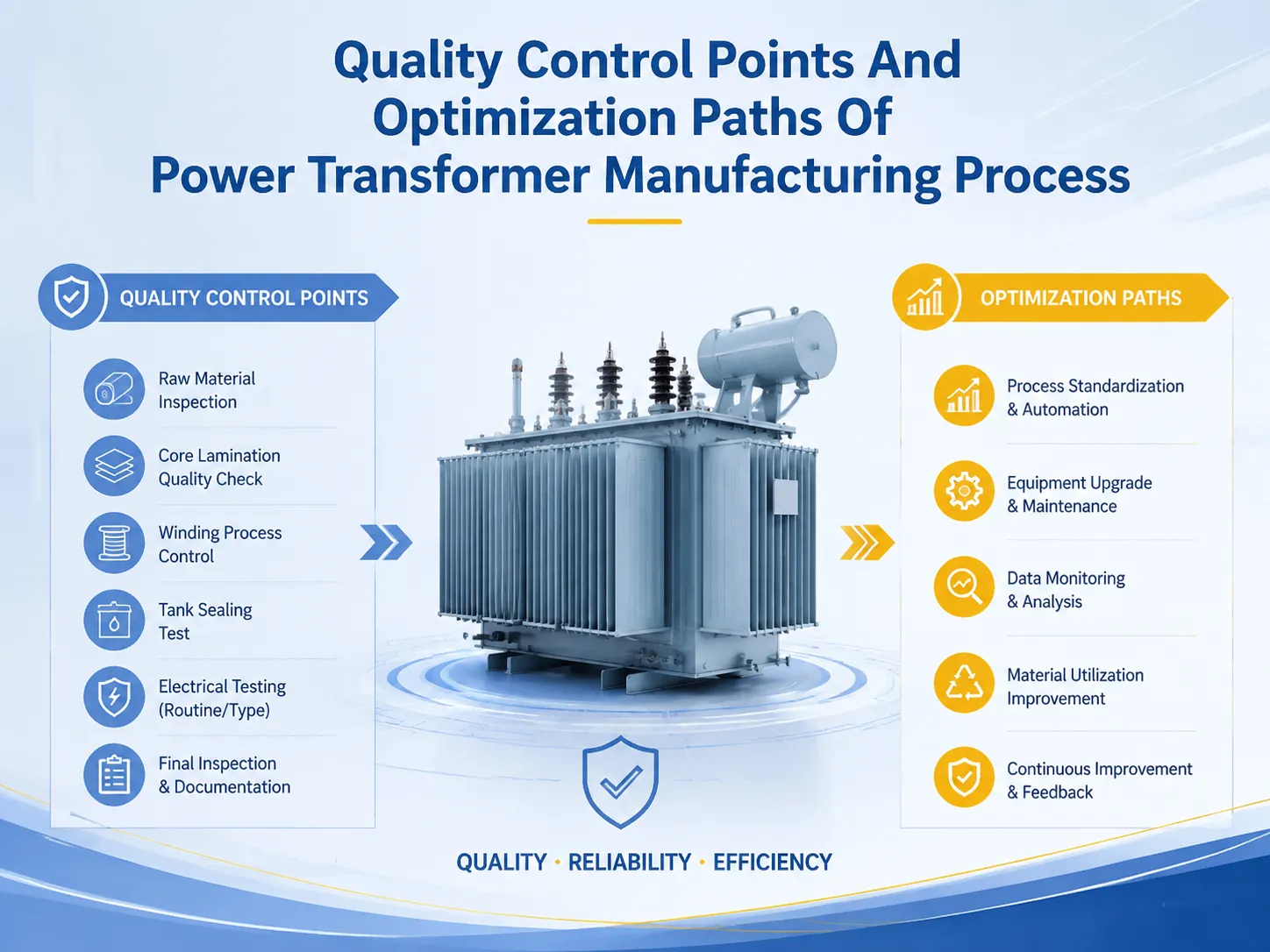
Что такое контроль качества при производстве трансформаторов?
В производстве трансформаторов контроль качества означает серию запланированных проверок, измерений и контрольных точек, которые гарантируют, что устройство будет способно к электрической, тепловой и механической эффективности в течение как минимум 25–40 лет проектного срока службы. Важно подчеркнуть, что контроль качества не является тем же самым, что и испытания. Испытания выявляют дефекты, в то время как контроль качества предотвращает их. Таким образом, завод, который имеет отличные финальные испытания, но слабый процессный контроль, просто выявляет проблемы в конце процесса, когда исправления стоят дороже всего. Завод с жестким процессным контролем производит стабильные продукты с низкими затратами на брак, поэтому лучшие китайские и международные производители рассматривают QC как технологию производства, а не как отдел финальной инспекции.
Основой стандартов является IEC 60076-1 (общие требования и испытания), дополненный IEC 60076-3 (уровни изоляции), IEC 60076-5 (степень сопротивления короткому замыканию) и IEC 60076-10 (уровень шума). Покупатели также должны быть проинформированы о том, что большинство надежных заводов используют систему управления качеством ISO 9001 в дополнение к стандартам продукции.
Производственный процесс: где качество создается или теряется
Стандартный масляный трансформатор мощностью включает примерно 10 этапов, и каждый этап имеет свой собственный режим отказа, если что-то пойдет не так в процессе. Ламели сердечника нарезаются и укладываются с контролируемым коэффициентом укладки и давлением зажима, и если они перегружены или присутствует коррозия между листами, потери без нагрузки увеличиваются, и возникают горячие точки на сердечнике. Обмотки создаются из медных или алюминиевых проводов, которые также находятся под контролируемым натяжением и изоляцией слоев, и одна неровная межслойная бумага может привести к частичным разрядам. Активная часть сушится в вакуумной камере, чтобы избавиться от влаги, что является первой и основной контрольной точкой качества в данном процессе. После этого бак создаёт вакуум и заполняется дегазированным и высушенным маслом, а последней частью процесса является выполнение заводских испытаний.
Транспортировка также является контрольной точкой качества, так как трансформатор может подвергнуться повреждениям в результате ударов и наклона. Решением проблемы является IEC 60076-11, который предлагает использовать регистраторы ударов и наклона в крупных турбинах. Читатель найдет лучшие контрольные точки в следующих абзацах.
| Этап процесса | Метод контроля качества | Стоимость отказа при отсутствии контроля |
|---|---|---|
| Прием материалов | Сертификаты поставщика + выборочные испытания | Низкая — выявляется на ранней стадии |
| Резка/укладка сердечника | Контроль размера заготовки, проверка коэффициента укладки | Средняя — более высокие потери без нагрузки |
| Сборка обмоток | Проверка количества витков, натяжения, сопротивления | Высокая — короткие витки, горячие точки |
| Вакуумная сушка | Конечная точка влажности, PI после заполнения | Очень высокая — преждевременный отказ |
| Сборка и установка бака | Записи крутящего момента, проверка соединений | Средняя — утечки, слабые части |
| Заводское тестирование | Рутинная проверка IEC 60076-1 | Высокая — пропущенные отклонения гарантии |
| Упаковка и транспортировка | Регистраторы ударов/наклона, план обработки | Высокая — повреждения в процессе транспортировки |
Контрольная точка 1: Проверка входящих материалов
| Материал | Метод проверки | Типичные критерии приемки | Последствия плохих материалов |
|---|---|---|---|
| Кремний с зерновой ориентацией | Испытание магнитных свойств по ASTM A876 / IEC 60404 | Общие потери ≤ предельное значение каталога; покрытие целостное | Более высокие потери без нагрузки, более низкий класс эффективности |
| Медь / алюминиевый проводник | Проверка сопротивления и размеров | ≥ 99.9% проводимость Cu; допуск по диаметру ±0.5% | Более высокие потери нагрузки, горячие точки |
| Изоляционная бумага и прессованная бумага | Плотность, прочность на растяжение, содержание влаги | Плотность 0.9–1.2 г/см³; влага по спецификации | Риск PD, механическая слабость |
| Изолирующее масло | Диэлектрическая прочность (IEC 60156), содержание воды, DGA | BDV ≥ 40 кВ, вода < 20 ppm (новое масло) | Более низкая стойкость, ускоренное старение |
| Вводы и переключатели отводов | Визуальная проверка, сопротивление изоляции, тангенс угла, герметичность | По сертификатам испытаний поставщика и выборочным повторным испытаниям | Пробой изоляции, отказ OLTC |
Серьезные производственные компании тщательно контролируют материалы, которые они используют, основываясь на спецификациях поставки, а не только на названиях брендов. Например, стальные катушки различаются по составу и качеству от одной катушки к другой, даже если они поступают от одного и того же производителя. Это означает, что компания, которая отслеживает каждую катушку и выбирает сталь на основе реальных характеристик металла, а не по штампу, уже достигает качества при минимальных затратах.
Контрольные точки 2–3: Изготовление сердечника и обмотки
| Этап | Ключевые проверки | Типичные критерии приемки |
|---|---|---|
| Резка и укладка сердечника | Коэффициент укладки, высота заусенцев, давление зажима, изоляция ламинации | Коэффициент укладки ≥ 0.95; заусенец < 0.02 мм; отсутствие короткозамкнутых ламинаций |
| Сборка и обжим сердечника | Крутящий момент зажима, заземление сердечника, изоляция болтов | Одноточечное заземление сердечника; сопротивление изоляции между ламинациями > 100 МΩ |
| Обмоточный проводник и изоляция | Натяжение проводника, непрерывность бумажной обертки, размещение изоляции слоя | Отсутствие оголенного проводника; непрерывная изоляция слоя |
| Построение обмоточного диска / слоя | Количество витков, транспозиция, выравнивание охлаждающего канала | Количество витков проверено по проекту; каналы чистые и равномерные |
| Прессование и зажим катушки | Осевое давление, согласованность высоты катушки | Давление в пределах проектного окна; изменение высоты < 1 мм по фазам |
| Переключатель отводов и соединения проводов | Качество пайки/сварки, расстояние изоляции, крутящий момент | Низкоомные соединения; проверенные зазоры по уровню изоляции |
Существует два важных аспекта, связанных с этим. Прежде всего, необходимо поддерживать дисбаланс сопротивления обмотки между фазами на этапе производства на уровне менее 2%. В противном случае неправильная транспозиция параллельной системы проводников приводит к возникновению циркулирующих токов и горячих точек в системе, работающей под нагрузкой. Еще один момент — это давление зажима сердечника, которое не должно быть ни слишком слабым, ни слишком сильным. Слабая конфигурация приводит к гудению сердечника, в то время как слишком сильная вызывает сжатие изоляции ламинаций. Проблему можно решить с помощью измерений в процессе производства.
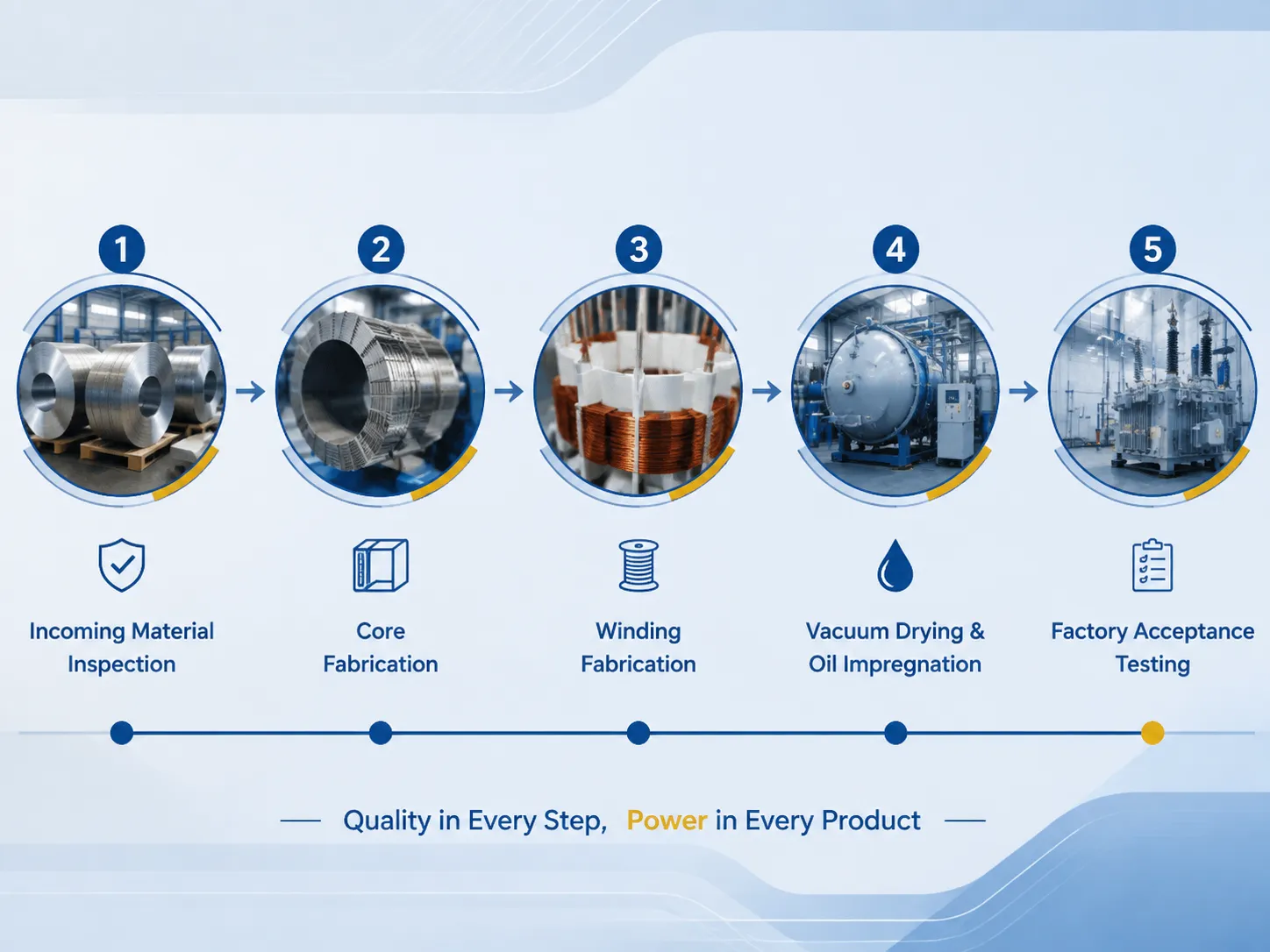
Контрольная точка 4: Вакуумная сушка и пропитка маслом
Влага является основной угрозой для трансформатора, и она либо устраняется, либо попадает в активную обмотку в процессе сушки и заполнения маслом. Бумага сушится в вакуумной печи (при температуре, как правило, достигающей минимум 100–130 °C с распределительными блоками и даже более высокими температурами для крупных установок в глубоком вакууме ниже 50 Па или 0.5 мбар) до тех пор, пока влажность не упадет ниже 0.5% (в массовой доле), качество которой проверяется с помощью метода Карла Фишера или измерения точки росы. После этого масло заливается в бак, и процесс пропитки завершается без оставшихся пузырьков внутри бумаги — все пузырьки являются опасными источниками потенциального разряда.
Этот процесс обычно спешат, когда время сушки сокращается. Правильно высушенный и пропитанный трансформатор обычно требует несколько дней для сушки, например, трансформатор мощностью 10 МВА требует как минимум 2–4 дня для сушки в процессе сушки и 1 день для вакуумной заливки. Заводы, которые спешат с этим процессом, экономят деньги сейчас, но столкнутся с проблемами позже. Правильность процесса сушки можно проверить с помощью измерений сопротивления изоляции и поляризационного индекса после завершения процесса заливки. Поляризационный индекс выше 2.0 гарантирует, что бумага сухая, в то время как значение ниже 1.5 означает, что осталась влажность.
Контрольная точка 5: Приемочные испытания на заводе
| Испытание | Стандартная ссылка | Типичные критерии приемки |
|---|---|---|
| Испытание коэффициента трансформации (все отводы) | IEC 60076-1 | В пределах ±0.5% от расчетного соотношения |
| Сопротивление обмотки | IEC 60076-1 | Непропорциональность фаз ≤ 2%; скорректировано до эталонной температуры |
| Сопротивление изоляции / ПИ | IEEE 43 / IEC 60076-1 | ПИ ≥ 2.0 для масляных единиц |
| Потребление без нагрузки и ток | IEC 60076-1 | В пределах допуска: потери +15% (и −10%) по гарантированному значению согласно IEC |
| Потребление при нагрузке и импеданс | IEC 60076-1 | Потери нагрузки в пределах +15%; импеданс в пределах ±7.5% |
| Диэлектрические испытания (LI, AC, прикладываемые) | IEC 60076-3 | Без пробоя или разрушения на заданных уровнях |
| Измерение частичных разрядов | IEC 60270 | Обычно < 100 pC при 1.1× номинальном напряжении для ВН-единиц |
| Испытание на повышение температуры | IEC 60076-2 | Повышение обмотки ≤ 65 K (класс A), повышение масла ≤ 60 K (типично) |
| Испытание уровня шума | IEC 60076-10 | По согласованному значению; часто 55–70 дБ(A) для распределительных единиц |
Процедура испытаний на заводе служит основным доказательством для покупателя того, что продукт соответствует его гарантийным требованиям. Полное испытание трансформатора мощностью 10 МВА обычно требует около 2-5 дней и обычно уже включено в стоимость устройства; однако запрос на испытание с наблюдением (либо самим покупателем, либо третьей стороной) потребует некоторой логистики, но обеспечит гораздо большее спокойствие. Важно отметить, что IEC 60076-1 допускает некоторую положительную толерантность потерь, что означает, что производитель может предоставить потери, которые несколько превышают уровень гарантии потерь. Таким образом, обсуждение гарантий потерь и проверка протестированных значений является хорошим коммерческим инструментом, а не просто формальностью.
Пути оптимизации: Бережливое производство, Автоматизация и Цифровой контроль качества
Современная производственная отрасль стремится поддерживать высокий уровень качества, одновременно снижая затраты, используя различные тактики. Одна из них — это процесс бережливого производства, который использует методы, позволяющие компаниям уменьшить транспортировку материалов, создать единообразные рабочие процессы и внедрить технику 5S исключительно на всех своих станциях. Более того, эта методология позволяет компаниям минимизировать количество ручных ошибок. Например, автоматизация производственных процессов таких процедур, как резка, контроль процесса намотки и пайка, предоставляет заводам возможность устранить влияние, которое ручной труд оказывает на конечную производительность. Например, машины, выполняющие процесс намотки, поддерживают натяжение проводов постоянно в пределах ±3% допусков, в отличие от выполнения этого вручную.
Третий метод — использование цифровых записей качества. В отличие от визуальных тестов на бумаге, заводы предпочитают хранить всю необходимую информацию в базах данных, что позволяет заранее выявлять проблемы. В основном, это та область, на которой китайские компании значительно сосредоточились в процессе производства. Современные машины могут отслеживать количество витков, крутящий момент, процесс сушки и качество, а также обеспечивать контроль качества для каждого продукта с самого начала. Практическое предложение для клиентов — запросить сводку цифровой трассируемости и документы контроля качества, так как это даст им больше информации о заводе, чем любые рекламные материалы.
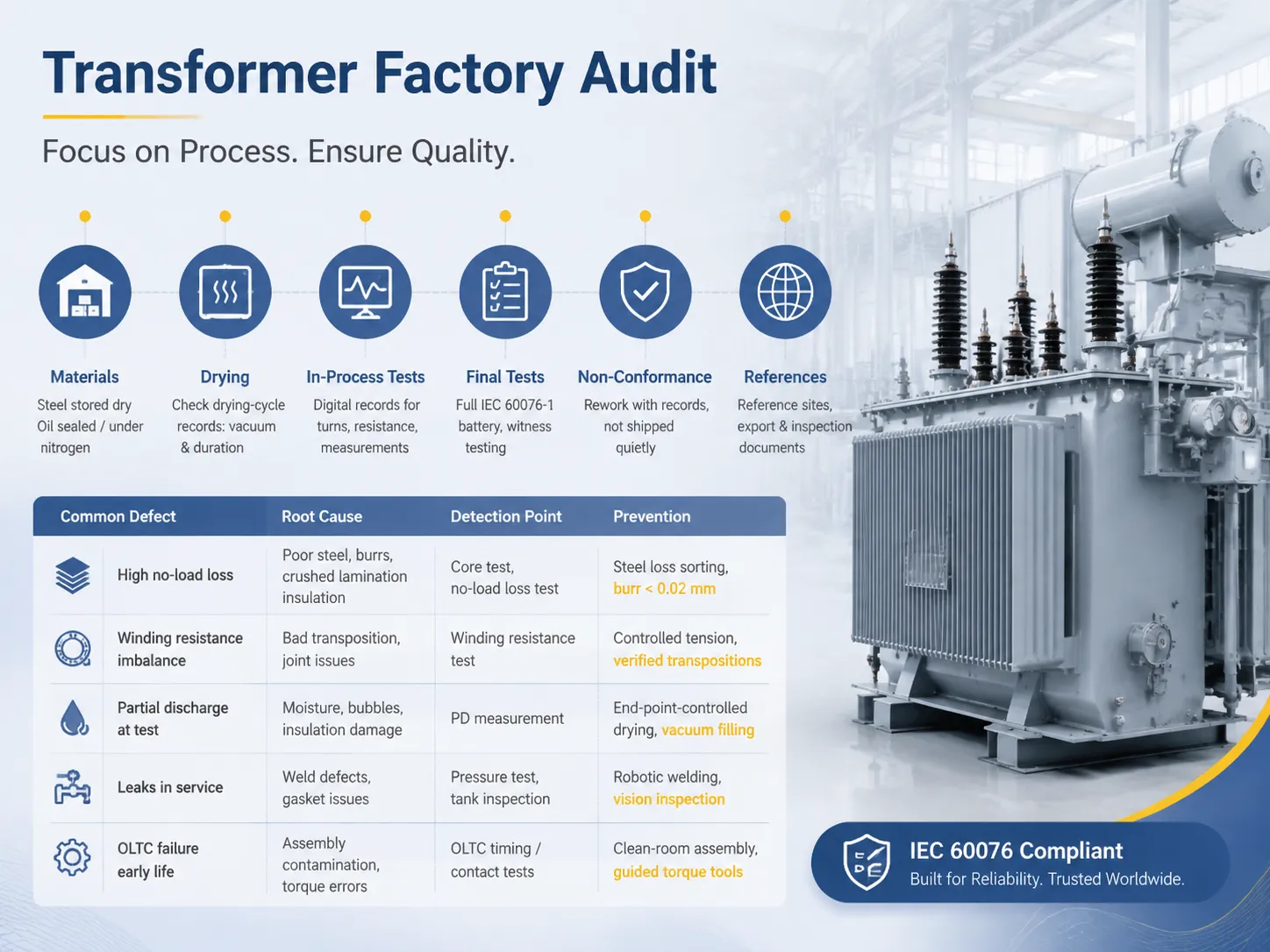
Как провести аудит завода трансформаторов
Если вы покупаете несколько единиц оборудования, вам следует знать, что аудиты заводов определенно стоят гораздо больше своей стоимости. У вас должен быть небольшой контрольный список, и вам следует искать действия, а не бумаги. Во-первых, необходимо осмотреть склад материалов: хранится ли сталь в сухом и защищенном месте, хранилось ли масло либо под азотом, либо в герметичном контейнере. Во-вторых, пришло время проверить линию сушки: запросите реальные записи о цикле сушки последнего оборудования и убедитесь, что вакуум и временные интервалы соответствуют спецификациям. В-третьих, вам следует проверить станции контроля качества: учитываются ли записи о количестве вращений и сопротивлении на компьютере или бумаге. В-четвертых, вам следует проверить испытательный пол: использует ли завод полные испытания IEC 60076-1 и можете ли вы наблюдать за проведением теста? В-пятых, вам нужно проверить обработку несоответствующих единиц: что происходит с единицей, которая не прошла тесты — перепаивается ли она соответствующим образом или уходит незамеченной?
Также вам следует получить рекомендации по работающим установкам и истории экспорта, что позволит вам проверить таможенные и инспекционные записи. Завод, способный представить работающую единицу в вашем регионе, отчеты о тестах и успешные практики, определенно является надежным партнером, но если у него нет таких документов, это большой риск. Jiangsu Subian Electric Power, как производитель, соответствующий IEC 60076 и экспортирующий по всему миру, открыт для инспекции, и компании, которые открыты для инспекции, обычно проходят ее успешно.
| Общий дефект | Коренная причина | Точка обнаружения | Профилактика |
|---|---|---|---|
| Высокие потери в холостом режиме | Плохая сталь, заусенцы, поврежденная изоляция ламинации | Испытание сердечника, испытание потерь в холостом режиме | Сортировка потерь стали, заусенец < 0.02 мм |
| Несоответствие сопротивления обмотки | Плохая транспозиция, проблемы с соединениями | Испытание сопротивления обмотки | Контролируемое натяжение, проверенные транспозиции |
| Частичное разрядное испытание | Влага, пузыри, повреждение изоляции | Измерение PD | Сушка с контролем конечной точки, вакуумная заливка |
| Утечки в эксплуатации | Дефекты сварки, проблемы с прокладками | Испытание на давление, инспекция бака | Роботизированная сварка, визуальная инспекция |
| Ранняя неисправность OLTC | Загрязнение сборки, ошибки крутящего момента | Испытания времени/контактов OLTC | Сборка в чистой комнате, направляемые инструменты для крутящего момента |
Часто задаваемые вопросы
Какой самый важный этап контроля качества в производстве трансформаторов?
Самые квалифицированные специалисты, как правило, называют вакуумную сушку и насыщение маслом причиной неисправностей, так как влага является причиной значительной части сбоев, происходящих в эксплуатации. Влага в бумаге должна быть снижена ниже 0.5%, а масло должно быть обработано, дегазировано и обработано вакуумом, чтобы не образовывались пузыри. Организация, которая пытается ускорить процесс сушки, экономит часы на производстве, но обречет оборудование на преждевременное старение и потенциальный частичный разряд. Доказательством служит индекс поляризации после заливки. Нормально, если индекс превышает 2.0, и это указывает на проблему, если он опускается ниже 1.5.
Какие заводские испытания я должен настоять на проведении перед приемкой трансформатора?
Я бы рекомендовал требовать от завода выполнения полного набора испытаний, включая испытания по регламенту IEC 60076-1, такие как испытания коэффициента трансформации, сопротивления обмотки, сопротивления изоляции, а также испытания потерь и импедансов, которые включают испытания диэлектрической прочности. Когда вы имеете дело с большими трансформаторами или трансформаторами, чувствительными к шуму, вам также следует проводить испытания на повышение температуры и уровень шума, который генерирует новая машина. В случае, если трансформатор будет использоваться в приложении с риском короткого замыкания, вам также потребуется требовать испытания на короткое замыкание. Убедитесь, что вы знаете о процессе испытаний, прежде чем принимать решение о вашей крупной покупке.
Сколько стоит отчет о заводских испытаниях?
Обычные заводские испытания обычно включены в цену трансформатора и занимают обычно от 2 до 5 дней для трансформатора мощностью 10MVA. Специальные испытания, такие как проверка повышения, потребуют дополнительных затрат в размере $2000-15000 в зависимости от сложности испытания. Однако следует полностью понимать, что цена устранения ошибок, выявленных после процесса, уже обошлась в определенную сумму.
Какую допустимую погрешность я могу ожидать по гарантированным потерям?
Согласно регламенту IEC 60076-1, разница в потерях может составлять +15% к проценту, установленному в контракте на производство. Таким образом, производителю разрешается недоработка максимум 15% на этапах производства. Однако для квалифицированных заводов отклонение означает, что значения должны быть установлены достаточно точно, и допустимые отклонения должны быть минимальными из-за важности потерь.
Как я могу определить, что производитель трансформаторов действительно соответствует стандартам IEC?
Три регламента должны быть соблюдены, чтобы быть уверенным, что вы имеете дело с эффективным производителем: проверьте наличие текущей сертификации ISO, запросите статистический отчет о предыдущих операциях и ознакомьтесь с планом заводских испытаний производителя, с которым пользователи должны ознакомиться.
Ссылки
- IEC 60076-1: Трансформаторы мощностью – Часть 1: Общие сведения — основополагающий стандарт для оценки, допустимых потерь и заводских испытаний.
- IEC 60076-3: Силовые трансформаторы – Часть 3: Уровни изоляции и диэлектрические испытания — определяет требования к координации изоляции и диэлектрическим испытаниям.
- IEC 60076-5: Силовые трансформаторы – Часть 5: Способность выдерживать короткое замыкание — стандарт, регулирующий квалификацию на выдерживание короткого замыкания.
- IEEE 43: Испытания на сопротивление изоляции и индекс поляризации — критерии приемки для сухости изоляции.
- IEC 60270: Высоковольтные испытательные методы – Измерения частичных разрядов — стандарт измерений, лежащий в основе критериев приемки PD.
- ISO 9001: Системы управления качеством — система, которую большинство заводов по производству трансформаторов используют для контроля процессов.
- Jiangsu Subian Electric Power — производитель трансформаторов, соответствующий IEC 60076, с подтвержденными испытаниями и полной документацией заводских испытаний.
Заключение
Процесс контроля качества производства силовых трансформаторов состоит из различных измеримых этапов, начиная от поступающей стали и заканчивая финальным приемочным испытанием на заводе. В процессе участвуют пять ключевых проверок качества, а именно: входной контроль, производство сердечника и обмоток, вакуумная сушка, сборка и заводские испытания. Каждая из этих проверок имеет очень специфические критерии, что облегчает клиенту выбор между надежной компанией и мошенником. Техники оптимизации, которые улучшают как качество, так и затраты в процессе производства, включают бережливую методологию, автоматизацию и цифровой учет конечного продукта. Это то, что клиент должен проверить во время аудита завода.
- Всегда проводите проверку свойств при получении; это самый дешевый способ контроля качества.
- Убедитесь, что завод может достичь изоляции в печи не менее 2.0 и влажности менее 0.5%.
- Убедитесь, что завод провел все рутинные испытания в соответствии со стандартом IEC 60076-1, особенно для крупных заказов.
- Договоритесь о допустимых значениях потерь и проверьте фактические данные с гарантированными показателями.
- Аудит записей сушки продуктов и их прослеживаемость также очень важны.
- Ваш список покупок определенно должен включать Jiangsu Subian Electric Power, если вы хотите производить в соответствии со стандартами IEC и иметь все сертификаты испытаний.