


Um engenheiro do projeto encarregado de uma empresa de serviços públicos está formulando especificações para um transformador de potência principal com capacidade de 40 MVA e tensão de 132/33 kV que pode regular o barramento de distribuição de 33 kV de toda a região. O processo de design para o transformador está quase concluído, mas em um ponto foram levantadas questões nas reuniões realizadas: refere-se ao comutador sob carga, que gerou muitas perguntas sobre isso. As avaliações de vários fabricantes foram preparadas do ponto de vista técnico, mas seus custos podem diferir em 30%, os intervalos de manutenção diferem 3 vezes, e as métricas de serviço entre diferentes designs não estão disponíveis nas fichas técnicas. O engenheiro entende que a utilização do comutador sob carga é crítica para o custo da operação do transformador durante o período de 30 anos.
O objetivo deste artigo é fornecer informações sobre a seleção dos comutadores sob carga do transformador de potência principal, que incluirá a faixa de tap, tamanho do passo, classificações de corrente e tensão do passo, as diferenças entre os tipos de resistor e vácuo, seus custos e especificações que precisam ser enviadas aos fornecedores.
Resposta: Um dispositivo de comutação sob carga é usado para ajustar o tap na bobina de um transformador quando está sob carga, a fim de regular a tensão sem interrupção do fornecimento. Para uma unidade de 10 MVA – 60 MVA, as faixas de configuração possíveis, respectivamente, são cerca de ± 8 × 1.25% ou ± 6 × 2.5%. O dispositivo OLTC é classificado para a mesma corrente contínua que a classificação máxima contínua do transformador e tem a tensão do passo igual à tensão da bobina.
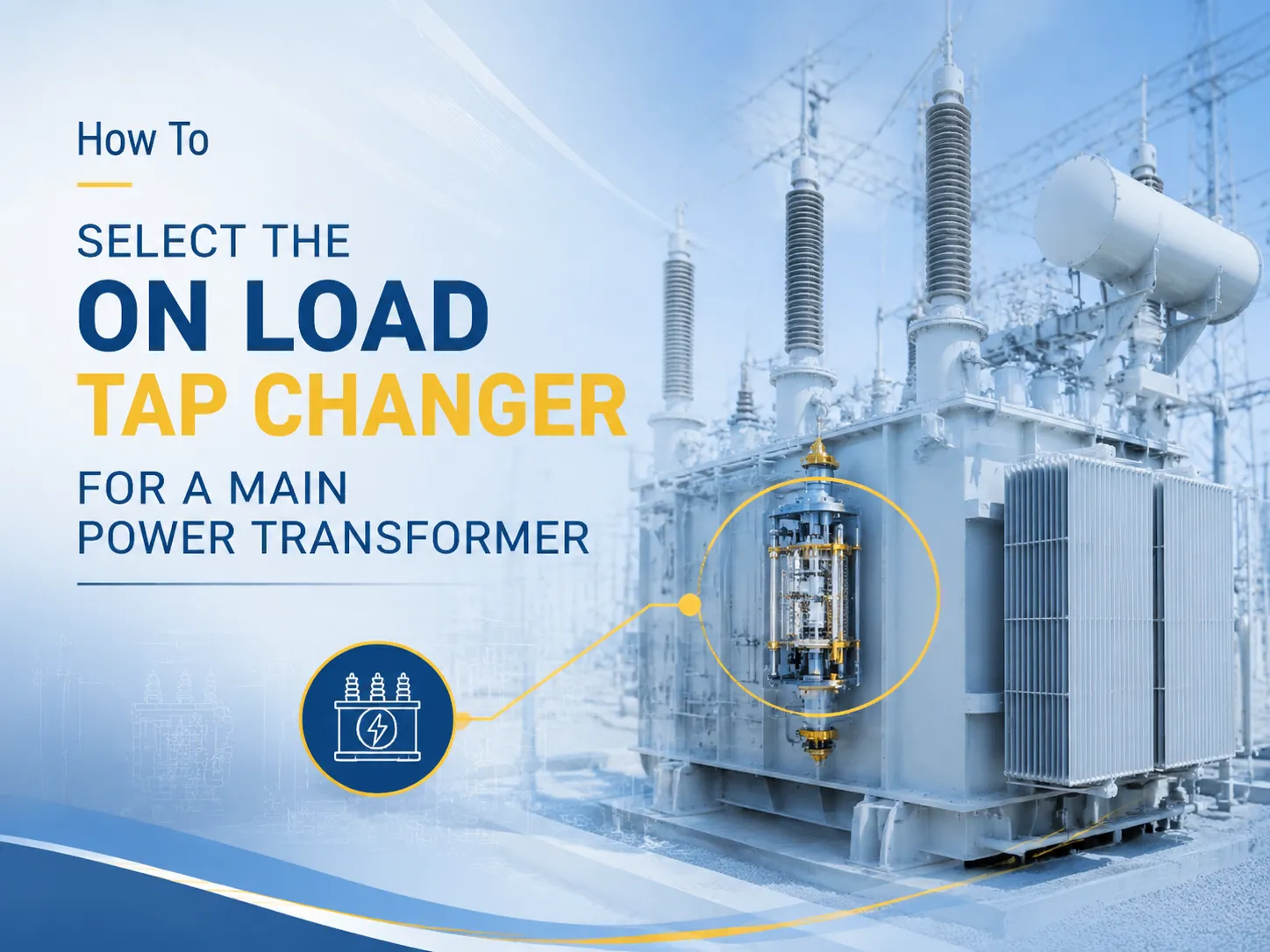
O que é um Comutador Sob Carga?
O comutador sob carga (OLTC) é um dispositivo controlado por motor encontrado em transformadores de potência que altera as conexões do tap da bobina de ajuste enquanto a energia permanece em uso. Isso é feito aumentando ou diminuindo os taps, alterando assim a relação de transformação e a diferença de potencial de saída, o que indica que o OLTC desempenha um papel vital no processo contínuo de regulação de tensão sob condições de carga e fonte variáveis.
Sendo o tipo de dispositivo que continuamente realiza operações enquanto a corrente flui, o OLTC é um instrumento de precisão, o que significa que a comutação deve ser feita sob condições particulares, enquanto o processo de comutação deve ocorrer milhares de vezes antes que o OLTC possa se desgastar.
Por que um Transformador Principal Precisa de Um
Transformadores são instalados entre o sistema de transmissão e o sistema de distribuição. Ambos os lados do transformador podem experimentar flutuações de carga ao longo do dia, uma vez que a demanda pode mudar, assim como a tensão de transmissão, que muda devido à configuração da rede. Por exemplo, quando o transformador em questão tem uma capacidade de 40 MVA, a queda de impedância pode variar entre 6-12%. Portanto, quando se trata de carga total ou sem carga, as regulamentações podem afetar a queda de tensão em vários por cento do próprio transformador. Além disso, há o risco de que o barramento de 33 kV possa cair 5-8% abaixo da tensão normal, o que, de acordo com as regulamentações locais, não é aceitável.
Para manter as variações de tensão necessárias dentro de uma faixa aceitável, um OLTC é geralmente combinado com o regulador automático de tensão (AVR).
Como um OLTC comuta sem interrupção
O OLTC é projetado em duas fases. O seletor encontra o novo ponto de tap mecanicamente com as bobinas já conectadas via o tap ativo. Assim, é aqui que a operação do seletor é considerada como ocorrendo com valor de corrente zero. Depois disso, vem o momento do interruptor desviador que, consequentemente, move a corrente do tap principal para o novo tap. A impedância de transição é colocada entre o seletor e o interruptor desviador, de modo que a corrente que flui nunca seja interrompida.
O design do desviador de resistor opera de tal forma que a corrente passa por um ou dois resistores de transição que estão colocados entre eles. O valor da resistência é selecionado de tal maneira que o fluxo de corrente é limitado ao valor mínimo durante o processo.
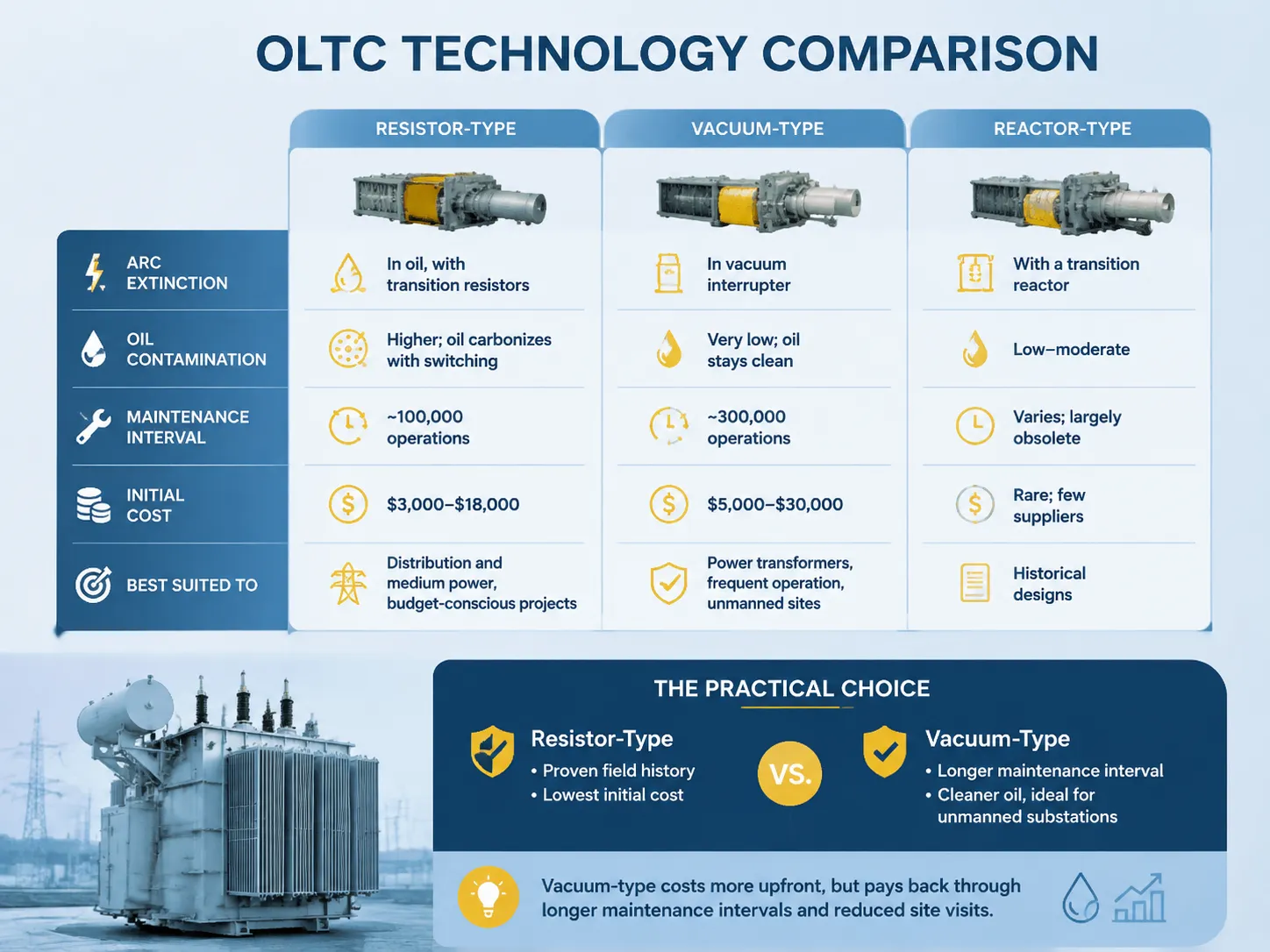
OLTC do tipo resistor vs. vácuo vs. reator
| Característica | OLTC do tipo resistor | OLTC do tipo vácuo | OLTC do tipo reator (legado) |
|---|---|---|---|
| Extinção de arco | Em óleo, com resistores de transição | Em interruptor a vácuo | Com um reator de transição |
| Taxa de contaminação do óleo | Mais alta; o óleo se carboniza com a comutação | Muito baixa; o óleo permanece limpo | Baixa-moderada |
| Intervalo de manutenção | ~100.000 operações | ~300.000 operações | Varia; amplamente obsoleto |
| Custo inicial | $3,000-$18,000 | $5,000-$30,000 | Raro; poucos fornecedores |
| Melhor adequado para | Projetos de distribuição e média potência, com orçamento consciente | Transformadores de potência, operação frequente, locais não tripulados | Projetos históricos |
Quando se trata de novos transformadores principais, geralmente pode-se escolher entre variedades de resistor ou vácuo. A variedade de resistor tem sido utilizada por um longo tempo e tem o menor custo inicial. O tipo a vácuo, no entanto, custa mais no início devido a intervalos de manutenção mais longos e menos requisitos para trocas de óleo, o que pode ser uma consideração importante em caso de subestações não tripuladas, onde a substituição de óleo requer visita ao local e tempo de inatividade.
Selecionando a Faixa de Tap e o Tamanho do Passo
A faixa de tap é um cálculo de controle de tensão. O processo consiste em várias etapas:
- Pegue a flutuação de tensão real. Meça a tensão do lado primário e a tensão do barramento sob estado de carga total; pode variar ±3-8% em uma rede real entre condições de carga leve e total.
- Adicione a queda na impedância do transformador. Na capacidade total, a regulação de transformadores com 10-40 MVA de potência atinge 4-8%, e os taps devem considerar tanto a mudança de fonte quanto a queda interna.
- Determine o tamanho do passo. Normalmente, passos de 1.25% são usados para grandes transformadores com regulação adequada, enquanto transformadores menores trabalham com passos de 2.5%.
- Defina a faixa. A faixa de tap ±8×1.25% fornece ±10% em 16 passos, enquanto a faixa de tap ±6×2.5% gera ±15% utilizando 12 passos. Para a maioria dos transformadores na faixa entre 10MVA e 60MVA, a primeira faixa é escolhida como padrão.
- Pense no AVR que fornece uma tensão de barramento com a ajuda de relé em um passo com atraso de tempo, permitindo evitar hunting, e o número de passos deve atender aos requisitos mencionados.
Em conclusão, fazer estimativas erradas pode levar a consequências: se a faixa for estreita, o transformador não conseguirá manter a tensão nas piores condições, e se for muito ampla, isso significará a necessidade de despesas adicionais com OLTC ou seu enrolamento regulador.
Compreendendo as Classificações de Corrente e Tensão do Passo
| Classificação | Significado | Valores Típicos para 10-60 MVA |
|---|---|---|
| Corrente nominal | Corrente contínua máxima que o OLTC suporta | 300-1.250 A (por classificação do transformador) |
| Tensão de passo nominal | Tensão entre taps adjacentes | 500-3.000 V por passo |
| Capacidade de comutação nominal | Produto da corrente × tensão de passo que o desviador pode suportar | Até ~1.000 kVA por passo de comutação |
| Ciclos de operação | Vida útil em operações | 100,000-300,000+ |
| Normas | Base de projeto e teste de tipo | IEC 60214-1/-2, IEEE C57.131 |
A corrente de passagem deve cobrir a maior corrente contínua do transformador mais o fator de sobrecarga, se aplicável, de modo que para um contrato de sobrecarga 20% a classificação do OLTC também terá que refletir isso. Em outras palavras, a tensão de passo é tão importante, pois uma alta tensão de passo significa muito mais estresse no desviador do que uma alta corrente com baixa tensão de passo; isso é verificado pelo fornecedor durante o teste de capacidade de comutação.
Para ajudá-lo a visualizar a relação, fornecemos a você a seguinte referência de dimensionamento relacionada ao transformador que você está especificando.
| Classificação do Transformador | Tensão HV | Corrente Contínua Máxima | Classificação Típica do OLTC | Faixa de Preço do OLTC |
|---|---|---|---|---|
| 10 MVA | 66 kV | ~88 A | 100 A, passo 500-800 V | $4,000-$12,000 |
| 20 MVA | 110 kV | ~105 A | 125 A, passo 800-1.200 V | $6,000-$16,000 |
| 40 MVA | 132 kV | ~175 A | 200 A, passo 1.200-1.800 V | $8,000-$22,000 |
| 60 MVA | 220 kV | ~157 A | 200 A, passo 1.500-2.500 V | $12,000-$30,000 |
Após estabelecer as classificações, é essencial que a especificação delineie todos os requisitos usando uma linguagem detalhada. No mínimo, o RFQ deve especificar os seguintes itens de forma clara:
- Faixa de taps e passos: deve ser especificada claramente, por exemplo, ±8×1.25% (17 passos) no enrolamento HV.
- A corrente de passagem nominal: qual é a corrente contínua máxima, incluindo operação de sobrecarga.
- Tensão de passo: tensão máxima entre os taps.
- Tipo: seja um tipo resistor ou um tipo vácuo, design de montagem em torre (tipo cabeça) ou uma unidade em tanque.
- Acionamento do motor: tensão (110/220 DC ou AC), limitações de torque, operação local ou remota e interface AVR.
- Monitoramento: display de posição, contador de horas de trabalho, nível de óleo e monitoramento de pressão do espaço do OLTC.
- Normas e testes de tipo: testes de tipo conforme IEC 60214-1, além de IEEE C57.131 se o projeto estiver baseado na América do Norte.
- Peças de reposição e serviços: peças de reposição e serviços disponíveis dos fabricantes.
Existem dois pontos de especificação mais importantes que são frequentemente ignorados. Primeiro, a base de sobrecarga, que afirma que o OLTC deve ser classificado para a capacidade de sobrecarga do transformador e não apenas para a capacidade contínua nominal. Segundo, a interface AVR e o protocolo de comunicação, que mostram se o trocador de taps pode se tornar parte dos sistemas de automação de subestações ou funcionará de forma isolada manualmente.
OLTC por Tamanho e Dever do Transformador
- Transformadores de menor potência (menos de 5 MVA): Transformador imerso em óleo ou transformador circulante de óleo (OLTC) não utiliza OLTC; a captação em circuito é feita complementada por regulação em reguladores a montante.
- Transformadores no nível da subestação (5 a 60 MVA): A faixa de potência para a instalação de OLTC; reguladores baseados em sistema causados diretamente são usados juntamente com impactos tentativos padrão no barramento regulado.
- Transformadores elevadores de gerador; A opção OELTC é rara; a regulação é feita no nível do gerador ou da rede, dependendo da capacidade de geração dos geradores.
- Transformadores no nível industrial (10 a 50 MVA): A opção OLTC também está disponível neste nível; no entanto, o tipo de OLTC a vácuo é escolhido onde as mudanças na operação são frequentes.
- Transformadores de forno e transformadores retificadores; há alta frequência de operação de tapping, assim o tipo de OLTC a vácuo é desejado para a operação.
Comparação de Marcas e Preços
| Marca | Origem | Produtos OLTC | Faixa de Preço Aproximada |
|---|---|---|---|
| SR Reinhausen | Alemanha | Série de resistores VACUTAP a vácuo e OILTAP — a referência global | $6,000-$35,000 |
| ABB | Suíça/Suécia | Pacotes completos de transformadores + OLTC | $5,000-$30,000 |
| Siemens | Alemanha | OLTC para grandes transformadores de potência | $6,000-$32,000 |
| Hitachi Energy | Suíça | Mudança de tap do transformador de potência | $7,000-$35,000 |
| Schneider Electric | França | Mudadores de tap de classe de distribuição | $3,000-$15,000 |
| Jiangsu Subian Electric Power (integrado) | China | Transformadores com OLTCs comprovados coordenados com IEC 60214 | $4,000-$15,000 (como opção de transformador) |
como a tecnologia MR ou designs licenciados estão sendo usados por quase todos os principais transformadores ao redor do mundo. A série VACUTAP de mudadores de tap a vácuo é a que estabeleceu o padrão para operação sem manutenção. ABB, Siemens e Hitachi Energy oferecem sua própria tecnologia OLTC ou em parceria. O OLTC é geralmente um item nomeado no contrato do transformador e a escolha depende das capacidades do fabricante do transformador e da filosofia de manutenção do projeto. Jiangsu Subian Electric Power está entre os fabricantes que instalam OLTCs testados em seus transformadores, incluindo o tipo a vácuo para comutação frequente. Em vez de obter um produto que vem com um OLTC adicional anexado, o comprador recebe uma montagem turnkey cobrindo torre, acionamento e AVR como um sistema completo. Devido à política de produção e preços eficiente da Subian, a faixa de preço dos transformadores OLTC é cerca de 40-60% mais baixa em comparação com ofertas semelhantes de fabricantes europeus. No entanto, independentemente da marca que você escolher, sempre indique o tipo de OLTC no contrato e verifique o certificado de teste de tipo.
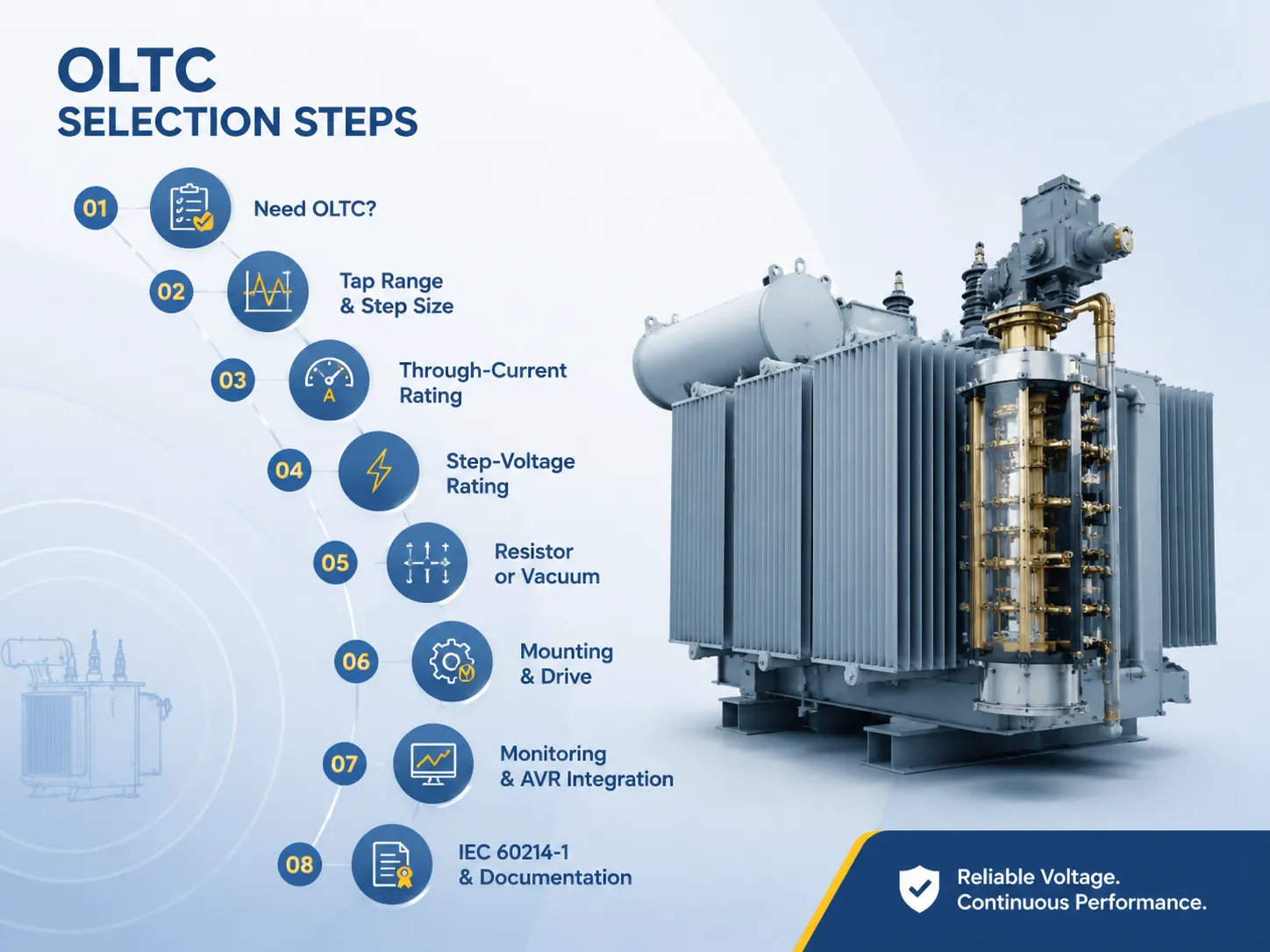
Procedimento de Seleção Passo a Passo
- Avalie se um OLTC é necessário. Se a fonte e a carga forem estáveis, você pode precisar apenas de taps manuais, mas no caso de um transformador de potência, a regulação automática é quase sempre necessária.
- Determine o tamanho e a faixa do passo do tap de acordo com a regulação interna do transformador e as flutuações de tensão.
- Determine a capacidade de corrente com base na corrente máxima disponível durante a operação contínua com sobrecargas.
- Verifique novamente a tensão do passo com a tensão de tap para tap do enrolamento regulador.
- Decida se usará resistores ou vácuo com base no orçamento, domínio de aplicação e frequência de comutação.
- Identifique se é necessário montagem em torre ou cabeça e decida sobre o acionamento do motor, garantindo que suporte a tensão correta e os controles.
- Liste os requisitos de monitoramento e os requisitos para a integração do regulador automático de tensão, incluindo a posição, contador, nível de óleo e protocolos de comunicação.
- Certifique-se de que o certificado do teste de tipo e do teste de processo de acordo com IEC 60214-1 esteja disponível e inclua a designação do OLTC no contrato.
Operação, Monitoramento e Manutenção
A necessidade de manutenção do OLTC é influenciada principalmente pelo tipo de OLTC e com que frequência ele liga e desliga. As recomendações incluem:
- Acompanhe quantas vezes o OLTC foi operado a cada mês. Um OLTC usado em associação com um transformador de potência pode realizar de 1.000 a 10.000 comutações por ano; portanto, os intervalos de manutenção devem ser calculados com base na contagem de operações, em vez de com base no número de anos.
- Nos OLTCs de resistor, o óleo de instalação do desvio deve ser considerado separadamente do óleo no tanque principal, pois ele se carboniza durante a operação de comutação e se degrada muito mais rápido; filtre ou substitua conforme o intervalo especificado pelo fabricante (~100.000 comutações).
- Nos OLTCs a vácuo, não ocorre contaminação durante a operação; portanto, os intervalos podem ser muito mais longos (~300.000 comutações); ainda assim, o mecanismo e o acionamento devem ser verificados a cada viagem importante.
- O torque do acionamento do motor, a posição do interruptor do relé AVR e a posição do indicador de posição devem ser verificados anualmente.
- Monitore as temperaturas e pressões do óleo do desvio; um aumento na temperatura indica uma falha nos contatos ou um processo de comutação anormal.
- Registrar o contador de operações é o mais econômico, pois transforma “fazer manutenção a cada cinco a sete anos” em “fazer manutenção a cada 100.000 operações”, o que significa uma diferença considerável para um transformador ocupado.
A manutenção exigida por diferentes designs é drasticamente diferente. Os dois principais tipos de OLTC devem ser comparados com base em seus gastos.
| Item de Manutenção | OLTC do tipo resistor | OLTC do tipo vácuo |
|---|---|---|
| Intervalo de troca do óleo do desvio | ~100.000 operações | ~300.000 operações |
| Taxa de carbonização do óleo | Moderada a alta | Muito baixo |
| Intervalo de inspeção de contatos | A cada troca de óleo | A cada 2ª-3ª troca de óleo |
| Manutenção do acionamento do motor | Igual para ambos (verificação anual) | Igual para ambos |
| Custo estimado de manutenção de 20 anos | $8,000-$20,000 | $4,000-$10,000 |
Perguntas Frequentes
Quanto custa um comutador sob carga?
Qual faixa de comutação devo especificar para meu transformador principal?
Qual é a diferença entre um comutador sob carga de resistor e um de vácuo?
Com que frequência um OLTC precisa de manutenção?
Posso adaptar um comutador sob carga a um transformador existente?
Raramente e raramente de forma econômica. O enrolamento regulador, montagem em torre, folgas do tanque e resfriamento devem se adequar ao OLTC, e a maioria dos transformadores de conexão fixa nunca foi projetada para um. Se você precisar de regulação contínua em uma unidade existente, considere um transformador regulador de tensão separado ou um regulador de tensão em série. Caso contrário, especifique o OLTC na fase de projeto.
Referências
- IEC 60214-1 — Cambiadores de Tomadas, Requisitos de Desempenho e Métodos de Teste — O padrão central do OLTC cobrindo testes de tipo e classificações.
- IEC 60214-2 — Cambiadores de Tomadas, Guia de Aplicação — Orientação de seleção para faixas, etapas e classificações.
- IEEE C57.131 — Requisitos para Cambiadores de Tomadas Sob Carga — Padrão OLTC da América do Norte.
- MR Reinhausen — Portal de Cambiadores de Tomadas — A documentação e dados de ciclo de vida do fabricante líder de OLTC, VACUTAP/OILTAP.
- IEC 60076-1 — Transformadores de Potência, Requisitos Gerais — Contexto em nível de transformador para integração e teste de trocadores de tomadas.
- Transformadores ABB — Referência para integração de transformador e trocador de tomadas.
Conclusão
Escolher o trocador de tomadas sob carga para um transformador principal é um processo baseado em fatos. A variação de tensão e a regulação do transformador determinam a faixa, enquanto a corrente do transformador e a capacidade de comutação determinam a saída. Desde que tudo seja feito corretamente, o OLTC desempenhará suas funções por muitos anos.
- Calcule a faixa de tomadas usando os valores de tensão reais e a regulação interna.
- Classifique o OLTC de acordo com o desempenho de sobrecarga, não apenas com a classificação na placa.
- Opte pelo tipo a vácuo quando a comutação frequente estiver envolvida e não houver operador.
- Siga os registros de desempenho, registre o contador e mantenha o certificado do teste de tipo anexado ao contrato.