


Молодой инженер, отвечающий за планирование в коммунальном предприятии, проводит время, готовясь к бюджету на следующий год. Это включает не только подключение нового солнечного парка мощностью 40 МВт и создание новых электросетей для 3,000 домохозяйств, построенных на периметре города, но и выполнение нового нормативного требования по снижению потерь распределения через существующие устаревшие сети. Одно и то же оборудование постоянно появляется на каждом этапе ее плана как то, что как позволяет, так и ограничивает ее проект — распределительный трансформатор. Поскольку трансформаторов неоправданно мало, линии перегружены, дорогие старые трансформаторы приводят к потерям, а использование правильных трансформаторов упрощает работу всей системы.
Эта статья обсуждает роль распределительного трансформатора в современных энергетических системах, включая функции, которые выполняет трансформатор, а также некоторые новые применения в солнечной энергетике, хранении энергии и технологиях умных сетей; а также предоставляет основную информацию о ценовых структурах и стандартах, необходимых для потенциальных покупателей.
Что такое распределительный трансформатор?
Последний элемент оборудования, изменяющий напряжение в линии передачи электроэнергии, известен как распределительный трансформатор. Генерация и передача происходят на более высоких уровнях напряжения — 110 кВ, 220 кВ и т.д. — поскольку высокое напряжение вызывает низкий ток, что приводит к снижению потерь. Однако потребители требуют 400/230 В (или 120/240 В), поэтому процесс перехода от напряжения передачи к уровню, подходящему для использования, необходимо выполнять в несколько этапов. Распределительный трансформатор выполняет последний и самый важный этап в этом процессе трансформации.
В отличие от силового трансформатора, используемого на высоковольтных подстанциях, распределительный трансформатор имеет другие размеры и другие функции. Силовые трансформаторы (обычно свыше 2,500 кВА) могут быть найдены на подстанциях передачи или субпередачи, в то время как распределительные трансформаторы (обычно от 5 до 2,500 кВА) расположены ближе к потребителям (на столбах, бетонных плитах или внутри небольших подстанций). В среднем городе может быть несколько силовых трансформаторов и тысячи распределительных трансформаторов.
С физической точки зрения большинство распределительных трансформаторов охлаждаются маслом (ONAN) и используются на улице, хотя сухие трансформаторы (из литого смолы) могут встречаться в помещениях и в местах с повышенным риском пожара. Например, трехфазный трансформатор с масляным погружением мощностью 100 кВА весит от 700 кг до 900 кг с размерами 1.3 × 0.9 × 1.4 м, в то время как сухой трансформатор мощностью 100 кВА меньше по размеру и весу, но шумнее в работе.
Роль распределительного трансформатора в сети
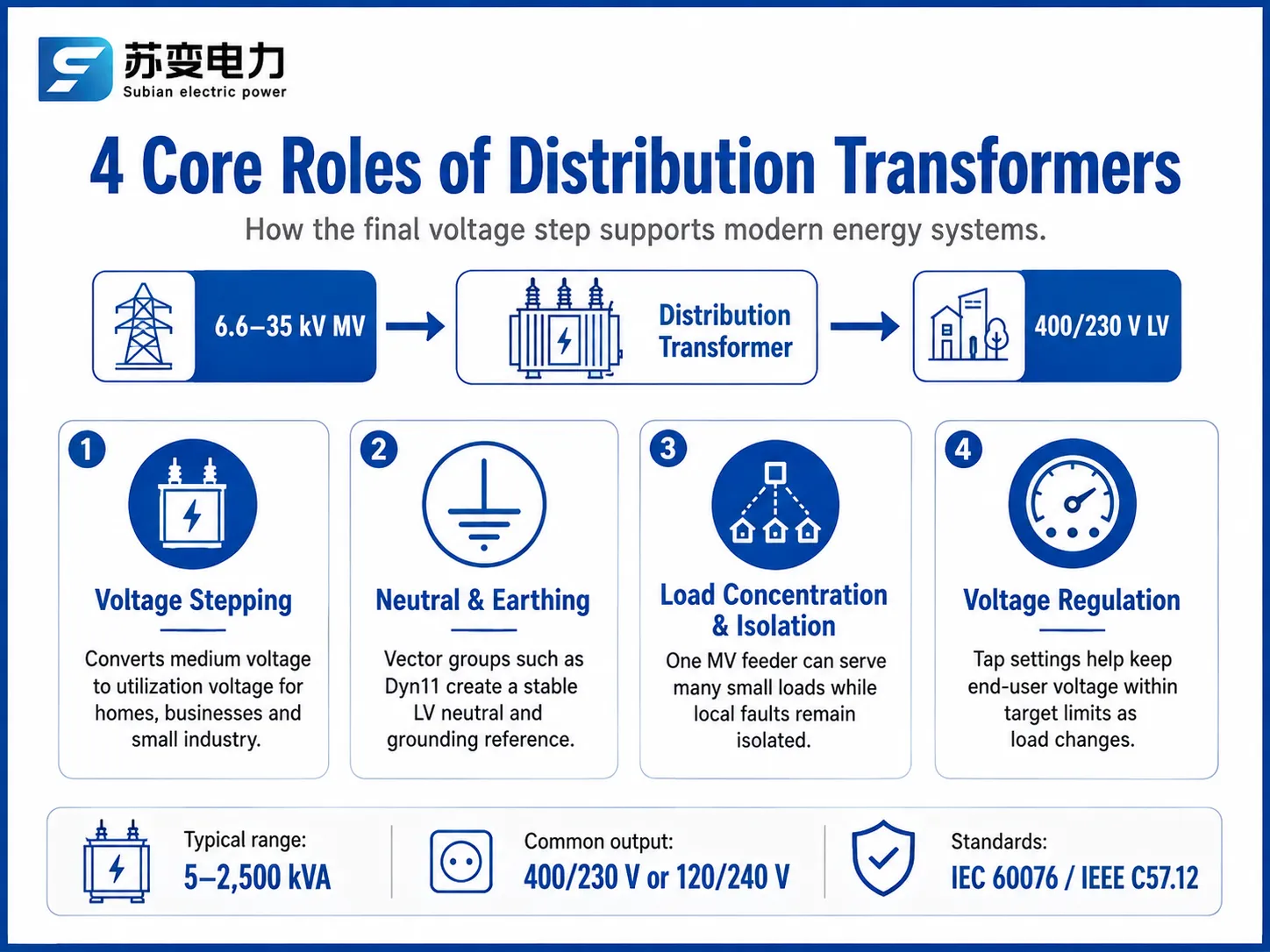
Распределительный трансформатор выполняет четыре задачи в современной энергетической системе, и каждая из них заслуживает понимания, поскольку она изменяет то, что вы покупаете:
| Роль | Что он делает | Пример на практике |
|---|---|---|
| Понижение напряжения | Снижает 6.6–35 кВ СВ до 400/230 В или 120/240 В НН | 11/0.4 кВ установка, питающая жилую улицу |
| Система разделения и заземления | Обеспечивает определённый нейтральный и заземляющий референс для сети низкого напряжения | Векторная группа Dyn11 создаёт надёжно заземлённый нейтраль низкого напряжения |
| Концентрация нагрузки / изоляция | Позволяет одному МВ вводить питание для многих мелких потребителей, изолируя неисправности | Один неисправный уличный трансформатор не отключает ввод питания |
| Регулирование напряжения | Переключатели под нагрузкой поддерживают напряжение низкого напряжения по мере изменения нагрузки | OLTC поддерживает 400 В в пределах ±5% по всей кривой нагрузки в течение дня |
Особое внимание следует уделить роли “разделения системы”. Векторная группа распределительного трансформатора (обычно Dyn11 на рынках IEC) определяет, как заземляется нейтраль. Концепция заземления впоследствии влияет на технику защитного реле на стороне низкого напряжения и её эффективность, поэтому это часто первый вопрос, который задаст вам уважаемый производитель.
Потери и эффективность: почему они важнее, чем вы думаете
В большинстве современных систем электрического распределения распределительные трансформаторы представляют собой крупнейший индивидуальный источник технических потерь. Согласно данным Международного энергетического агентства, потери при распределении оцениваются примерно в 4–6% от глобального производства электроэнергии, при этом распределительные трансформаторы несут значительную часть ответственности. Распределительные трансформаторы работают потенциально максимум 8,760 часов в год, и поэтому даже небольшие различия в потерях приводят к большим потерям по всей стране.
Существуют два компонента потерь, которые ведут себя по-разному:
Потери без нагрузки (также называемые железными потерями) – это постоянные и всегда присутствующие потери. Они определяются квадратом приложенного напряжения и не изменяются при подключении электрической нагрузки.
Потери нагрузки (также называемые медными потерями) – определяются квадратом тока, потребляемого нагрузкой, и, следовательно, увеличиваются в соответствии с темпом увеличения нагрузки.
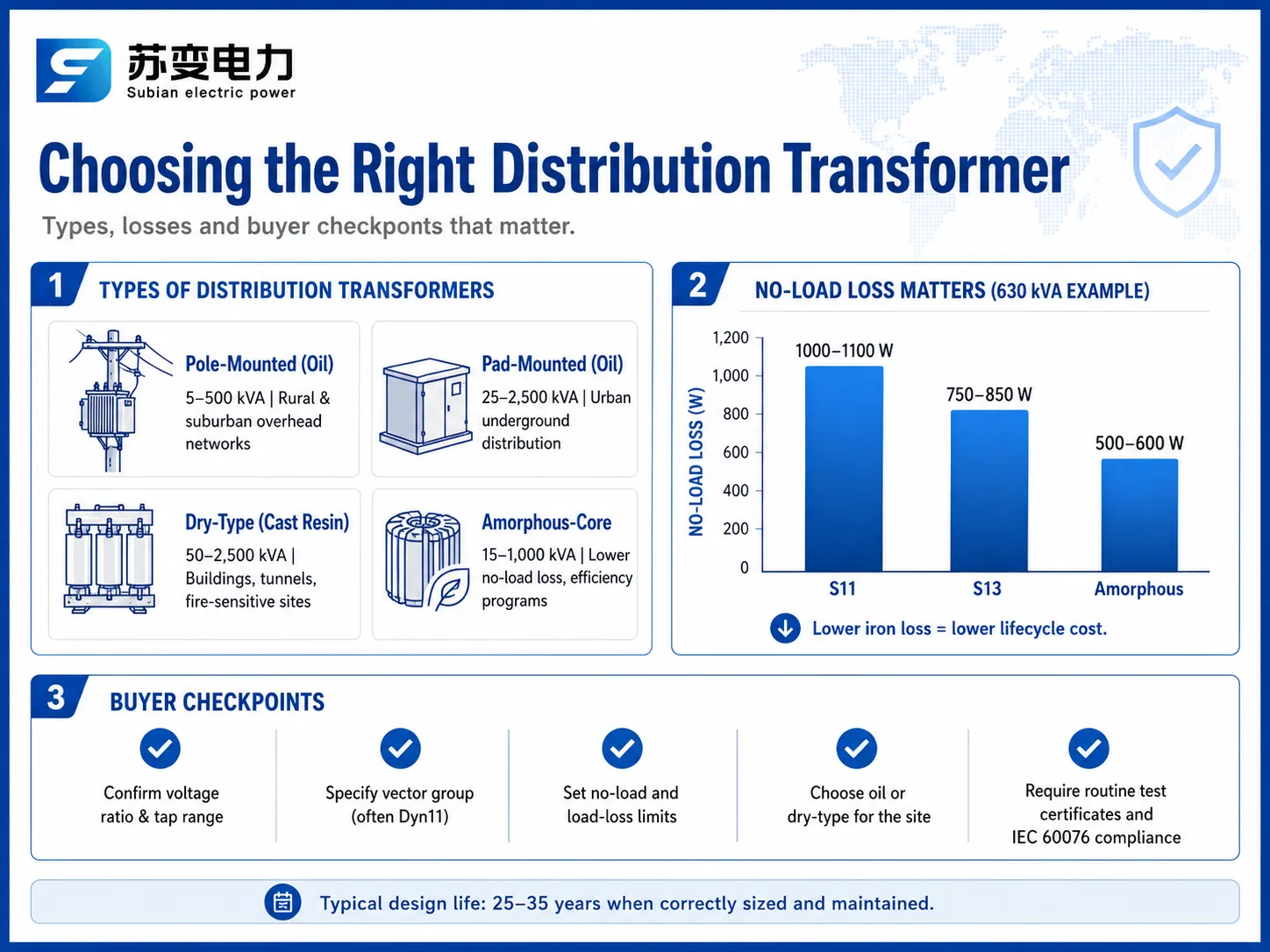
Современные стандарты эффективности, такие как законодательство по экодизайну Европейского Союза, регламенты Министерства энергетики США и GB 20052 в Китае, требуют сокращения потерь без нагрузки. Таким образом, распределительный трансформатор, относящийся к категории 1 класса, который имеет аморфное сердечник, имеет возможность сократить железные потери до 70–80% по сравнению с продуктом, разработанным в 1990-х годах. Таким образом, для трансформатора мощностью 630 кВА указанная разница соответствует ежегодной экономии в $300–600 в затратах на электроэнергию. Таблица ниже демонстрирует годовые показатели, связанные с энергией, потребляемой постоянно работающим трансформатором мощностью 630 кВА.
| Дизайн винтаж | Потеря без нагрузки (630 кВА) | Железная энергия в год | Годовая стоимость при $0.10/кВтч |
|---|---|---|---|
| 1990-е (класс S7) | ≈ 1,800–2,000 Вт | ≈ 15,800–17,500 кВтч | $1,580–$1,750 |
| Класс S11 (класс 3) | ≈ 1,000–1,100 Вт | ≈ 8,800–9,600 кВтч | $880–$960 |
| Класс S13 (класс 2) | ≈ 750–850 Вт | ≈ 6,600–7,400 кВтч | $660–$740 |
| Аморфный (класс 1) | ≈ 500–600 Вт | ≈ 4,400–5,300 кВтч | $440–$530 |
В парке из нескольких тысяч единиц выбор аморфных сердечников 1-го класса вместо стали класса S11 тихо экономит шесть цифр в год только на потерях железа — до учета любых сбережений на потерях нагрузки.
Типы распределительных трансформаторов
Покупатели выбирают среди нескольких семейств, и выбор определяется монтажом, окружением и пожарной безопасностью. Таблица ниже суммирует основные типы с реалистичными ценовыми диапазонами (FOB, Китай) для общих номиналов.
| Тип | Номиналы | Типичное использование | Ценовой диапазон (FOB) |
|---|---|---|---|
| Установленные на столбах (масло) | 5–500 кВА | Сельские и пригородные воздушные сети | $350–$6,500 |
| Установленные на площадках (масло) | 25–2,500 кВА | Городские подземные сети, запертые корпуса | 1ТП4Т900–1ТП4Т12,000 |
| Сухой тип (литой смола) | 50–2,500 кВА | Здания, туннели, больницы, объекты с повышенными требованиями к пожарной безопасности | $3,500–$30,000 |
| Аморфные сердечники (масло) | 15–1,000 кВА | Программы, ориентированные на эффективность, цели 1-го класса | $900–$15,000 |
| Компактный трансформатор подстанции в коробке | 100–2,500 кВА | Интегрирован в коробочные станции | $2,500–$18,000 |
| Герметично запечатанные (масло) | 50–630 кВА | Увлажненные прибрежные и влажные участки | $800–$8,000 |
Существуют две основные тенденции, трансформирующие этот каталог. Первая тенденция — увеличение доли сухих трансформаторов в помещениях из-за устранения риска пожара и затрат, связанных с удержанием масла. Вторая тенденция — использование аморфных сердечников в программах возврата эффективности, где дополнительная стоимость 15%–25% по сравнению с традиционными конструкциями CRGO может быть компенсирована за 3–6 лет экономии.
Современные роли: Возобновляемые источники, хранение и умная сеть
Традиционное изображение распределительного трансформатора как простого пассивного устройства больше не применимо. Современные распределительные трансформаторы быстро превращаются в активные элементы электрических систем снабжения.
Интеграция солнечной энергии и электромобилей: Солнечные станции на крышах и зарядные устройства для электромобилей подают электричество в обоих направлениях через трансформатор. Двусторонний поток тока создает новые режимы нагрузки, вызывая перегрев трансформаторов, предназначенных для однонаправленных токов. Некоторые коммунальные службы уже снижают мощность трансформаторов в районах с высокой долей солнечных станций на 15-20% или внедрили умные переключатели.
Интеграция хранения батарей: Станции хранения энергии в сообществе заряжаются и разряжаются через распределительный трансформатор, помогая сгладить нагрузку, а также продлевая срок службы трансформаторов.
Умная сеть: Современные трансформаторы имеют внутренние датчики температуры и уровня масла, а также устройства беспроводной связи для предоставления данных о состоянии трансформаторов.
Гибкость спроса: Новые умные трансформаторы оснащены переключателями под нагрузкой и системами удаленного мониторинга, позволяющими оперативному персоналу снижать напряжение в часы пик (снижение напряжения для сохранения или CVR).
Все эти факторы изменяют процесс закупок: тендеры коммунальных служб сегодня часто требуют использования устройств, оснащенных портами мониторинга и связи, соответствующими IEC 61850, даже для трансформаторов мощностью 100 кВА.
Ключевые спецификации и стандарты
Каждый распределительный трансформатор, который вы покупаете, должен быть специфицирован и протестирован в соответствии с серией IEC 60076 (или IEEE C57.12 в Америке). Критические поля спецификации для типичного трехфазного устройства мощностью 400 кВА:
| Параметр | Типичное значение (400 кВА) | Стандарт |
|---|---|---|
| Номинальная мощность | 400 кВА, ONAN | IEC 60076-1 |
| Напряжение | 11,000 ± 2×2.5% / 400–433 В | IEC 60076-1 |
| Векторная группа | Дин11 | IEC 60076-1 |
| Импеданс короткого замыкания | 4.5–5.0% | IEC 60076-5 |
| Потребление без нагрузки | ≤ 570–650 Вт (класс S11) | IEC 60076-1 / GB 20052 |
| Потери нагрузки при 75°C | ≤ 4,000–4,500 Вт | IEC 60076-1 |
| Устойчивость к импульсам | 75 кВп (LI) | IEC 60076-3 |
| Повышение температуры обмотки | ≤ 65 K (в среднем) | IEC 60076-2 |
| Уровень звука | ≤ 52–55 дБ(A) | IEC 60076-10 |
Для проектов, направленных в США, используйте IEEE C57.12.00 для общих требований и C57.12.20 для установок на подставках, и проверьте, применяется ли эффективность NEMA TP-1 в целевом штате. Для всех рынков требуйте сертификаты рутинных испытаний на единицу и отчеты о типовых испытаниях дизайна.
Размеры и управление нагрузкой
Правильный расчет размеров распределительного трансформатора требует изучения нагрузки; не дикой фантазии. Мы можем следовать методу, используемому электрическими компаниями по всему миру:
Определите подключенную нагрузку (которая является суммой общей нагрузки ниже по течению, измеренной в кВт).
Учитывайте разнообразие в подключенной нагрузке (в жилых районах можно ожидать, что коэффициент разнообразия обычно будет находиться в диапазоне от 0.4 до 0.6, в то время как в коммерческой зоне он составит от 0.6 до 0.8).
Разделите полученную сумму на коэффициент мощности (который обычно составляет от 0.85 до 0.95 для смешанной нагрузки, таким образом, преобразуя кВт в кВА).
Добавьте дополнительный запас роста (в диапазоне от 15 до 25% для будущих увеличений нагрузки, происходящих в течение срока службы трансформатора).
Проверьте падение напряжения (особенно на длинных линиях низковольтного распределения).
Как правило, можно сказать, что трансформатор мощностью 100 кВА обслуживает от 60 до 120 домохозяйств, трансформатор мощностью 315 кВА может обеспечить электроэнергией небольшой коммерческий район или до 200-400 домохозяйств, а трансформатор мощностью 630 кВА обеспечивает электроэнергией деловой центр района или небольшую промышленную зону. Избыточный размер трансформатора означает потери денег на холостых потерях; недостаточный размер означает, что трансформатор выйдет из строя раньше. Оба этих ошибки гораздо дороже, чем умеренные гонорары инженеров, которые предотвращают их возникновение.
Топовые бренды и ценовые категории
Рынок охватывает премиальные международные бренды и конкурентоспособных китайских и индийских производителей. Цены ниже являются ориентировочными для трехфазного масляного трансформатора мощностью 400 кВА, на условиях FOB.
| Бренд | Страна | Ценовой диапазон 400 кВА | Примечания |
|---|---|---|---|
| ABB | Швейцария | $14,000–$22,000 | Премиальное качество, глобальное обслуживание |
| Сименс | Германия | $13,500–$23,000 | Сильная интеграция в интеллектуальные сети |
| Schneider Electric | Франция | $13,000–$21,000 | Полная экосистема НН/СН |
| Hitachi Energy | Швейцария/Япония | $15,000–$24,000 | Наследие надежности уровня коммунальных услуг |
| Итон | Ирландия/США | $12,000–$20,000 | Сильные позиции в Северной и Южной Америке |
| TBEA / Китай XD | Китай | $5,500–$9,000 | Крупные государственные производители |
| Jiangsu Subian Electric Power | Китай | $5,000–$8,500 | Ориентированные на экспорт, протестированные по стандартам IEC, индивидуальные варианты |
Глобальные компании, такие как ABB, Siemens, Schneider Electric и Hitachi Energy, обеспечивают надежность, установленную НИОКР, цифровые системы мониторинга и сервисные сети, которые позволяют им устанавливать премиальные цены в 2-2,5 раза выше за эти гарантии для коммунальных служб, которые предпочитают это.
В приложениях, где порог эффективности так же важен, как и название, и где деньги действительно могут купить два устройства по цене одного – Jiangsu Subian Electric Power является готовым партнером. Компания производит масляные распределительные трансформаторы мощностью от 5 кВА до 2,500 кВА, а также сухие трансформаторы мощностью до 2,000 кВА, изготовленные в соответствии с IEC 60076 и предоставленные с записью о рутинных испытаниях. Subian предоставляет устройства с аморфными сердечниками, уникальными векторными группами и диапазонами отводов, умными опциями мониторинга и конфигурацией ODM, которые могут быть отправлены по всему миру и даже проверены третьими инспекционными компаниями перед отправкой, если это необходимо.
Что указать при покупке
Независимо от того, какое устройство вы решите приобрести, будь то одно устройство или несколько, убедитесь, что следующая информация предоставлена в письменной форме:
Охлаждение и напряжение: определите номинальную мощность в кВА, используется ли ONAN (или ONAF, если перегружено).
Напряжение и отводы: каково первичное напряжение, максимальное падение напряжения в процентах (±2×2.5% или ±5%).
Векторная группа: Dyn11, Yyn0, YNd11 или другая в соответствии с философией заземления.
Верхние пределы потерь: определите, коэффициент холостых потерь и рабочие потери; также напишите штрафные условия и возможные штрафы в случае превышения потерь.
Стандарты и испытания: обратитесь к IEC 60076, предоставьте сертификаты предельных значений.
Аксессуары: при необходимости предоставьте вариант вводов (фарфоровые или полимерные), консерватор или герметичный бак, дренажные и отводные клапаны, устройства изоляции и т.д.
Требования к мониторингу: укажите индикатор температуры обмотки, уровень масла, частичные разряды, возможный протокол связи (IEC61850/Modbus).
Логистика: определить стандарт упаковочных материалов, детали подъема и транспортировки, а также обязательную проверку соответствующим контрольным органом.
Будьте осторожны с коэффициентом трансформации и векторной группой, так как эти элементы чаще всего связаны с дополнительными затратами на полевые коррекции.
Часто задаваемые вопросы
В чем разница между распределительным трансформатором и силовым трансформатором?
Размер и назначение. Размеры распределительных трансформаторов варьируются от 5 до 2,500 кВА и работают по принципу снижения напряжения с диапазона СВ (6.6-35 кВ) до рабочего напряжения в точке использования. Силовые трансформаторы обеспечивают возможность соединения трансмиссионных систем с напряжениями, превышающими диапазон либо 2,500 кВА, либо 2,500 кВА и выше (например, 110/35 кВ, 220/110 кВ).
Как долго служит распределительный трансформатор?
Проектный срок службы масляных устройств может составлять от 25 до 35 лет при условии, что они были правильно спроектированы, защищены и обслуживались. Долговечность изоляции сокращается вдвое примерно на каждые 8 K выше порога повышения температуры обмотки в 65 K. Практический опыт эксплуатации показывает, что если устройства работают не более чем при среднем нагрузке 70% и подвергаются проверке масла каждые 2-3 года, они достигнут проектного срока службы, а перегруженные единицы в городах могут выйти из строя через 10-15 лет.
Почему потери распределительных трансформаторов так важны?
Поскольку они работают непрерывно. Генератор S7 с мощностью 630 кВА имеет годовые потери железа примерно 2,000 до 2,500 кВтч по сравнению с генератором с аморфным сердечником, который стоит $200 до $300 в год по тарифу $0.10 за киловатт-час на протяжении 25 лет и более. Для тысяч генераторов результат этого несоответствия либо соответствует, либо не соответствует цели.
Должен ли я покупать масляные или сухие трансформаторы?
Масляные устройства стоят примерно на 30-50 процентов меньше по сравнению с аналогичными сухими устройствами, производят меньше шума и более эффективны для наружного применения. Сухие или заполненные смолой устройства находят применение в местах, где существует риск пожара, таких как больницы, тоннели, для соблюдения норм или в помещениях. Если место установки не имеет ограничений по поводу пожара и находится на улице, масляные устройства, как правило, являются рациональным выбором с экономической точки зрения.
Сколько стоит распределительный трансформатор в 2026 году?
Для масляных единиц FOB из Китая: однофазные столбовые типы стоят 1ТП4Т350–1ТП4Т1,500 (5–167 кВА); трехфазные столбовые/падовые типы стоят $1,500–$12,000 (15–500 кВА); более крупные падовые и подстанционные единицы стоят $8,000–$25,000 (630–2,500 кВА). Сухие единицы стоят на 30–50% дороже. Добавьте 30–50% за доставку, установку и ввод в эксплуатацию.
Ссылки
- МЭК — Издатель IEC 60076, основного стандарта для распределительных трансформаторов.
- Международное энергетическое агентство (IEA) — Данные и анализ потерь распределения и эффективности трансформаторов.
- IEEE — Источник стандартов IEEE C57.12 и C57.12.20 для Америки.
- NEMA — Стандарт эффективности TP-1 для распределительных трансформаторов в Северной Америке.
- Министерство энергетики США — Регулирование эффективности распределительных трансформаторов и рыночные данные.
- Европейская комиссия — Регламент экодизайна 548/2014 и 2019/1783 для трансформаторов.
- Jiangsu Subian Electric Power — Производитель масляных и сухих распределительных трансформаторов.
Заключение
- Распределительные трансформаторы играют жизненно важную роль в общем функционировании электрической системы, а также осуществляют окончательные изменения напряжения и заземление. В результате они стали активной частью умных электрических систем с солнечной энергией, накоплением энергии и системами зарядки электромобилей.
Следует отметить класс потерь, векторную группу и диапазон отводов, так как их стоимость и производительность зависят от них.
Следует приобрести наиболее экономически эффективный трансформатор, так как затраты на потерянную мощность окупаются в течение 3-6 лет после покупки трансформатора.
Бюджет $400-$25,000, в зависимости от его типа и характеристик, плюс стоимость установки и доставки в диапазоне от 30-50%.
- Независимо от того, выбираете ли вы ABB, Siemens, Schneider или производителя с конкурентоспособными ценами, таких как Jiangsu Subian Electric Power, настаивайте на документации по испытаниям IEC 60076 и письменных гарантиях потерь.