


Если вы находитесь в торговом центре или дата-центре, в нескольких футах от кабелей, вы пройдете мимо двух основных типов трансформаторов — оборудования на подставке, обслуживающего здание, и сухих трансформаторов, преобразующих 11 кВ в 400 кВ — и даже не заметите. Всё, что работает на электричестве, обязано своей работой трансформатору, который выполняет одну из своих самых важных функций — преобразование напряжения.
В этой статье мы объясним работу трансформаторов просто и ясно, предоставляя адекватные цифры относительно таких процессов, как преобразование напряжения, изоляция, согласование импеданса и регулирование, тем самым демонстрируя, что знания о трансформаторах могут помочь нам в удовлетворении электрических потребностей различных отраслей.
Что такое трансформатор и что он на самом деле делает?
Трансформаторы — это статические устройства с определенным количеством катушек (часто называемых обмотками), размещенных вокруг общего магнитного сердечника. По сути, основная цель трансформатора — передать энергию переменного тока (AC) от одной цепи к другой, изменяя уровень напряжения и тока, сохраняя при этом частоту неизменной. Таким образом, трансформаторы являются очень надежными электрическими устройствами, так как у них нет движущихся компонентов во время работы.
Название трансформатора происходит от его работы, которая заключается в преобразовании напряжения. В общем, трансформаторы повышающего типа позволяют увеличить напряжение для эффективной передачи электроэнергии на большие расстояния, а трансформаторы понижающего типа помогают снизить напряжение. Однако изменение напряжения — это лишь небольшая часть того, что могут делать трансформаторы — они также действуют как изоляторы цепей, устройства согласования импеданса, блокираторы постоянного тока, методы управления подачей и многое другое.
Как работают трансформаторы: индукция в одном диаграмме слов
Рабочий принцип основан на законе индукции Фарадея. Ток в первичной обмотке создает изменяющееся магнитное поле, которое проходит через ламинированный стальной сердечник. Изменяющееся магнитное поле индуцирует ток во вторичной катушке. Соотношение вторичного напряжения к первичному напряжению соответствует соотношению витков:
V1 / V2 = N1 / N2, и в идеале V1 × I1 = V2 × I2.
Поскольку ток течет только через первичную цепь (связь существует через индукцию, но вторичная цепь не подается напрямую электричеством), трансформатор сохраняет обе цепи изолированными. На практике трансформатор распределения мощностью 100 кВА при 11/0,4 кВ будет нести примерно 9 А в первичной цепи при полной нагрузке, в то время как нагрузка на вторичной цепи составит около 144 А.
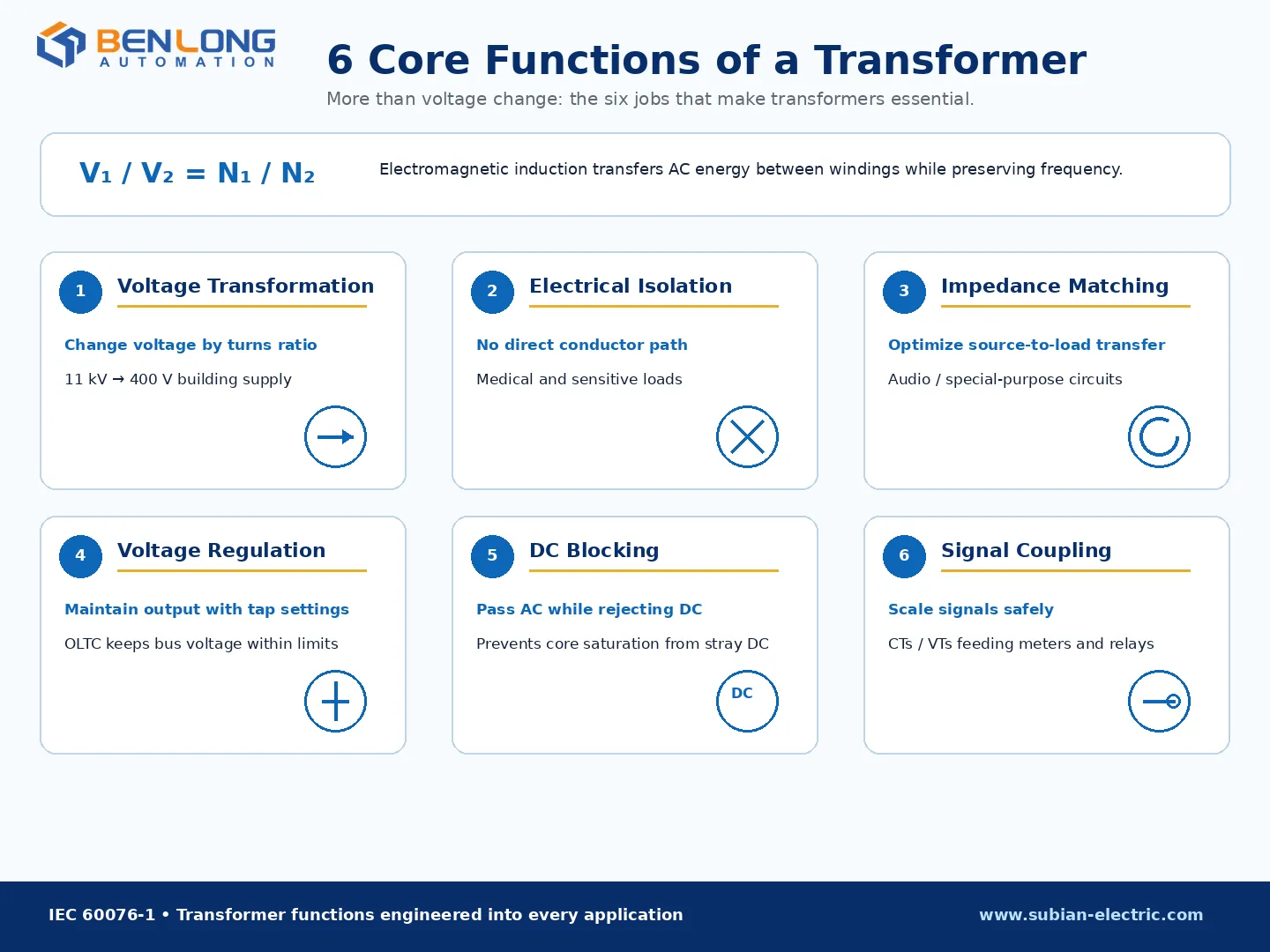
Шесть функций трансформатора
| Функция | Что он делает | Пример из реальной жизни |
|---|---|---|
| Преобразование напряжения | Изменяет уровень напряжения через соотношение витков | 11 кВ → 400 В для питания здания |
| Электрическая изоляция | Разделяет цепи; нет прямого проводникового пути | Изоляция медицинского диагностического кабинета от неисправностей сети |
| Согласование импеданса | Оптимизирует передачу мощности между источником и нагрузкой | Согласование выходного сигнала усилителя с динамиком (аудио трансформаторы) |
| Регулирование напряжения | Удерживает выходные значения в пределах ограничений с помощью переключателей отводов | OLTC удерживает шину 20 кВ на уровне ±2% |
| Блокировка постоянного тока | Пропускает переменный ток, блокирует постоянный ток | Предотвращение насыщения распределительных сердечников блуждающим постоянным током |
| Связывание сигналов | Передает сигналы, изолируя уровни | Инструментальные трансформаторы, питающие релейные защиты |
Большинство людей думают только о первом ряду, но изоляция, регулирование и блокировка постоянного тока — это именно то, что поддерживает работоспособность чувствительного оборудования во время нарушений в сети.
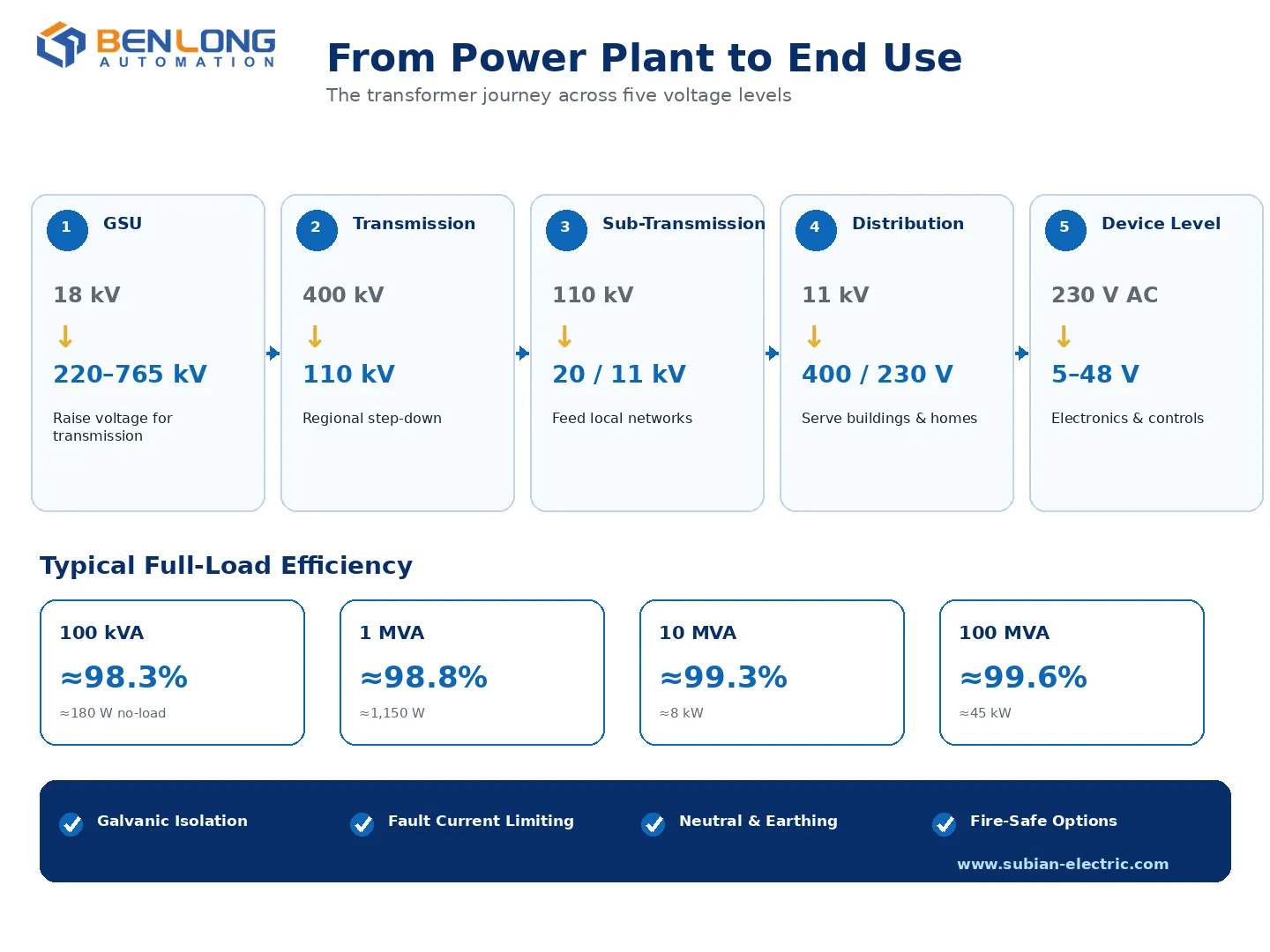
Путешествие трансформатора: от электростанции до вашего дома
Процесс освещения в ваших домах состоит из множества трансформаторов. Рассмотрим те, которые мы можем найти в цепи трансформаторов, используемых для этой цели:
Трансформатор GSU — выходное напряжение генератора 18 кВ повышается до уровня 220–765 кВ.
Трансформатор понижения напряжения — понижает напряжение с 400 кВ до уровня 110 кВ на региональных подстанциях.
Подтрансформатор — снижает входное напряжение 110 кВ до 20/11 кВ.
Распределительный трансформатор — снижает напряжение 11 кВ, которое достигает столба или трансформатора на подставке вне вашего дома, до 400/230 В.
Трансформаторы на уровне устройств — зарядные устройства и другие источники питания снижают напряжение до 5–48 В, необходимого для работы различных электрических приборов.
Таким образом, мы можем легко понять, что между электростанцией и зарядным устройством для мобильного телефона у нас есть 4-6 трансформаторов.
Типы трансформаторов и их функции
| Тип | Диапазон напряжения | Фокус на функции | Типичное использование |
|---|---|---|---|
| Энергетический трансформатор | 33–765 кВ | Массовая передача, регулирование | Подстанции, электростанции |
| Распределительный трансформатор | 4–35 кВ | Финальное понижение, эффективность | Полюсные/падовые крепления, здания |
| Сухие / литые смолы | До 35 кВ | Пожарная безопасность, внутренние условия | Высотные здания, больницы, морские |
| Изоляционный трансформатор | Любой | Гальваническая изоляция, шум | Медицинские, лаборатории, центры обработки данных |
| Автотрансформатор | HV сеть | Экономичное соединение | 220/110 кВ межсоединения |
| Измерительный трансформатор | Любой | Масштабирование измерений и защиты | Реле, счетчики, мониторинг |
Обратите внимание на пересечение: “силовой трансформатор” и “распределительный трансформатор” выполняют одну и ту же основную функцию, но спроектированы для разных рабочих циклов — один для непрерывной высокой нагрузки, другой для переменной частичной нагрузки. Это единственное различие определяет большинство решений по спецификациям.
Эффективность, потери и счета за электроэнергию
Эффективность трансформатора высокая, но не бесплатная. Потери делятся на потери без нагрузки (железные), которые происходят 24 часа в сутки, когда устройство под напряжением, и потери нагрузки (медные), которые растут с квадратом тока. Типичные значения:
| Рейтинг | Потери при холостом ходе | Потери при нагрузке | Эффективность при полной нагрузке |
|---|---|---|---|
| 100 кВА | ≈180 Вт | ≈1,500 Вт | ≈98.3% |
| 1 МВА | ≈1,150 Вт | ≈10,500 Вт | ≈98.8% |
| 10 МВА | ≈8 кВт | ≈55 кВт | ≈99.3% |
| 100 МВА | ≈45 кВт | ≈320 кВт | ≈99.6% |
Поскольку трансформаторы работают непрерывно, затраты, вызванные потерями, имеют значение. Распределительный трансформатор с мощностью 1 МВА, имеющий потери примерно 1.5%, может потратить около 10–15 МВтч электрической энергии в течение года, что может стоить несколько тысяч долларов в год по обычным ценам на коммерческую электроэнергию. Операторы должны помнить, что в случае наличия тысяч единиц в парке, стандарты эффективности (например, GB 20052 Китая и Регламент 548/2014 ЕС) будут иметь экономическое значение для страны.
Функции безопасности: изоляция, заземление и защита
Трансформаторы используются для задач, критически важных для безопасности, которые включают:
Гальваническая изоляция: Нет проводящего соединения между первичными и вторичными обмотками, так что любой сбой, происходящий на стороне нагрузки, не может вернуться в цепь питания.
Ограничение неисправностей: Импеданс трансформатора (обычно между 5 и 10%) ограничивает ток короткого замыкания, что предотвращает повреждение распределительных устройств и защитных устройств в последующих секциях электрической цепи.
Нейтральное заземление: Тип и конфигурация обмотки трансформатора определяют схему нейтрального заземления, которая предоставляет информацию о напряжении касания и способе защиты трансформатора.
Пожарная безопасность: Сухие и трансформаторы с наполнителем из эфира считаются более безопасными, чем оборудование с масляным наполнителем, поскольку стандарты NFPA 70 и IEC 60076-11 способствуют их внутреннему применению из-за их меньшей пожарной опасности в зданиях.
Надежная изоляция напряжений: Масляные изолированные вводы и другие конструкции изоляции трансформаторов прерывают любой доступ к опасным зонам напряжения.
Этот список предоставляет информацию о причинах, по которым регламенты классифицировали установку трансформаторов как инженерную деятельность, требующую знаний таких аспектов, как требования к расстоянию, удержание масла и т. д.
Таблица спецификаций и классов трансформаторов
| Параметр | Типичное значение (1 МВА, 11/0.4 кВ) |
|---|---|
| Номинальная мощность | 1,000 кВА |
| Напряжение | 11,000 / 400 В |
| Векторная группа | Дин11 |
| Напряжение импеданса | 6% |
| Охлаждение | ОНАН |
| Уровень изоляции | 75 кВ BIL первичный |
| Потребление без нагрузки | ≈1,150 Вт |
| Потеря при нагрузке | ≈10,500 Вт |
| Стандарт | IEC 60076-1 |
Эти десять чисел определяют весь функциональный контракт устройства. Когда покупатели сравнивают трансформаторы, они сравнивают эти числа — и гарантии, стоящие за ними.
Применения в зданиях, промышленности и инфраструктуре
- Коммерческие объекты — 11-киловольтные линии, преобразуемые в 400 и 230 вольт.
Медицинские учреждения — изолирующие трансформаторы, используемые для защиты чувствительных медицинских устройств.
Центры обработки данных — распределение средневольтной системы и установки бесперебойного питания и понижающих устройств.
Производственные площадки — трансформаторы используются для понижения напряжения с 33 киловольт до 11 киловольт.
Возобновляемая энергия ветра и солнца — подстанции используются для преобразования выходной мощности возобновляемых источников с низкого напряжения до сетевого.
Железнодорожные эксплуатационные работы — трансформаторы подстанций передают энергию при напряжении 25 кВ.
Реалистичные цены и ведущие бренды
Трансформаторы оцениваются по мощности, спецификации и бренду. Диапазоны на уровне планирования (FOB, погруженные в масло, стандартные потери):
| Бренд / Тип | 1 МВА | 20 МВА / 110 кВ |
|---|---|---|
| Hitachi Energy / Siemens | $35,000–$70,000 | 1ТП4Т430,000–1ТП4Т700,000 |
| Schneider Electric | $30,000–$55,000 | $280,000–$450,000 |
| TBEA (Китай) | $18,000–$35,000 | $180,000–$320,000 |
| Jiangsu Subian Electric Power (Китай) | 1ТП4Т16,000–1ТП4Т30,000 | $160,000–$300,000 |
Цены варьируются в зависимости от спецификации, уровня потерь и региона. Для проектов, которым необходим полный набор функций — трансформация, изоляция, регулирование и безопасность — без премии за европейский бренд, Jiangsu Subian Electric Power производит распределительные и силовые трансформаторы мощностью от 50 кВА до 220 кВ, погруженные в масло и сухие, с отчетами о типовых испытаниях IEC 60076, индивидуальной настройкой OEM/ODM и ценами напрямую от завода, которые обычно на 30%–50% ниже западных аналогов. Их инженеры указывают векторную группу, отводы и интерфейс защиты, чтобы точно соответствовать вашей установке.
Часто задаваемые вопросы
Какова основная функция трансформатора в доме?
Электрический столб или трансформатор, установленный на подставке, снижает распределительное напряжение с примерно 11 кВ до 400 / 230 В. В дополнение к этому снижению трансформатор обеспечивает изоляцию (которая предотвращает попадание любых неисправностей с стороны питания в домашнюю цепь) и масштабирование тока (что позволяет устройству подавать примерно 144 А при 400 В с мощностью 100 кВА вместо примерно 9 А при 11 кВ). После дискретного трансформатора зарядное устройство снова снижает напряжение до 5-48 В постоянного тока.
Почему у трансформатора нет движущихся частей?
Потому что его функция электромагнитная, а не механическая: переменный ток в первичной обмотке создает изменяющийся магнитный поток в сердечнике, который индуцирует напряжение во вторичной обмотке. Нечему вращаться или колебаться, поэтому трансформаторы обычно служат 30–40 лет, при этом обслуживание ограничивается тестированием масла, заменой прокладок и обслуживанием переключателей отводов.
Насколько эффективны трансформаторы в реальной эксплуатации?
Распределительные трансформаторы работают с эффективностью около 98%–99%, а большие силовые трансформаторы — с эффективностью 99.0%–99.7% при полной нагрузке. Эффективность достигает пика при частичной нагрузке (обычно 40%–75% от номинала), поэтому инженеры подбирают трансформаторы так, чтобы нормальная нагрузка находилась в этом диапазоне. Потери постоянны, поэтому гарантии эффективности и потерь доминируют в долгосрочных эксплуатационных расходах.
В чем разница между повышающим и понижающим трансформатором?
Функционально идентичная физика, противоположное направление: повышающий трансформатор имеет больше витков на вторичной обмотке (V2 > V1) и используется на электростанциях для повышения напряжения для передачи; понижающий трансформатор имеет больше витков на первичной обмотке (V2 < V1) и подает на распределение и конечных пользователей. Один и тот же физический трансформатор может даже использоваться в обеих ролях в зависимости от того, какая обмотка является стороной питания.
Сколько стоит трансформатор для здания или фабрики?
Устройство мощностью 100 кВА стоит около $1,500–$8,000, устройство мощностью 1 МВА $18,000–$45,000 (масляное) или $28,000–$70,000 (сухого типа), а силовой трансформатор 20 МВА / 110 кВ $160,000–$700,000 в зависимости от бренда и спецификации. Всегда запрашивайте котировки на идентичные спецификации и учитывайте затраты на установку, защиту и тестирование, которые могут добавить 20%–40% к цене оборудования.
Ссылки
- IEC 60076-1: Силовые трансформаторы — Общие сведения — Международный стандарт для рейтингов, допусков и испытаний.
- IEC 60076-11: Трансформаторы сухого типа — Требования, специфичные для трансформаторов сухого типа и из смолы.
- IEEE C57.12.00: Общие требования к трансформаторам с жидким заполнением — Североамериканский сопутствующий стандарт.
- NFPA 70: Национальный электрический кодекс — Требования к установке и безопасности для трансформаторов в зданиях.
- US EPA: Эффективность трансформаторов — Почему эффективность трансформаторов важна для энергетической и климатической политики.
- Трансформаторы Siemens Energy — Эталонная справка для современной инженерии трансформаторов.
Заключение
Функция трансформаторов является тихим основой современной жизни: преобразование напряжения, изоляция, согласование импеданса, регулирование, блокировка постоянного тока и связывание сигналов, все это осуществляется без движущихся частей и с эффективностью выше 98%. От GSU на электростанции до установки на площадке у вашего здания, каждая стадия электрической цепи зависит от этого устройства.
- Трансформаторы изменяют напряжение по соотношению витков, изолируя цепи и ограничивая неисправности.
- Эффективность 98%–99.7% все равно стоит денег в больших масштабах — гарантии потерь имеют значение.
- Функции безопасности (изоляция, заземление, импеданс) проектируются, а не являются опциональными.
- Бюджет $1.5k–$8k для 100 кВА, $18k–$45k для 1 МВА, $160k–$700k для класса 20 МВА.
Если вы указываете трансформатор для здания, фабрики или проекта коммунального хозяйства, Jiangsu Subian Electric Power поставляет распределительные и силовые трансформаторы мощностью от 50 кВА до класса 220 кВ с сертификатом IEC 60076 и инженерной поддержкой на каждом этапе вашего проекта.