


На пищевом заводе на Среднем Западе один из инженеров недавно установил совершенно новый трансформатор с настенным монтажом мощностью 200 кВА, который должен был поддерживать расширение морозильной камеры. Однако в течение трех недель после установки трансформатор отключился из-за тепловой перегрузки в рабочие часы, и пользователь столкнулся с чрезмерными электрическими счетами, которые свели на нет все ожидаемые преимущества, которые должен был предоставить трансформатор. Проблема не в самом трансформаторе, а в том, что перед установкой никто не проверил, соответствует ли трансформатор необходимой мощности для электрической нагрузки, особенно с учетом пусковых и гармонических нагрузок, а также будущих увеличений нагрузки. Такие ситуации происходят ежедневно, на самом деле каждый год они имеют место в промышленных и торговых условиях и в коммунальных службах.
В этом документе я предоставлю пошаговые инструкции по определению, соответствует ли трансформатор требованиям нагрузки, используя информацию с его таблички, расчеты кВА, анализ коэффициента нагрузки и испытания на месте.
Вы можете узнать, может ли трансформатор поддерживать ваши потребности в мощности, сначала определив реальный спрос: сложите кВА-рейтинги всех подключенных нагрузок, учтите коэффициент разнообразия 0,7-0,85 и, наконец, умножьте полученное число на коэффициент роста 10-20%. Сравните результаты целесообразности с кВА трансформатора на табличке и используйте расчет коэффициента нагрузки — постоянные нагрузки не должны превышать более 80-90% от рейтинга для сухих трансформаторов и 70-80% для масляных.
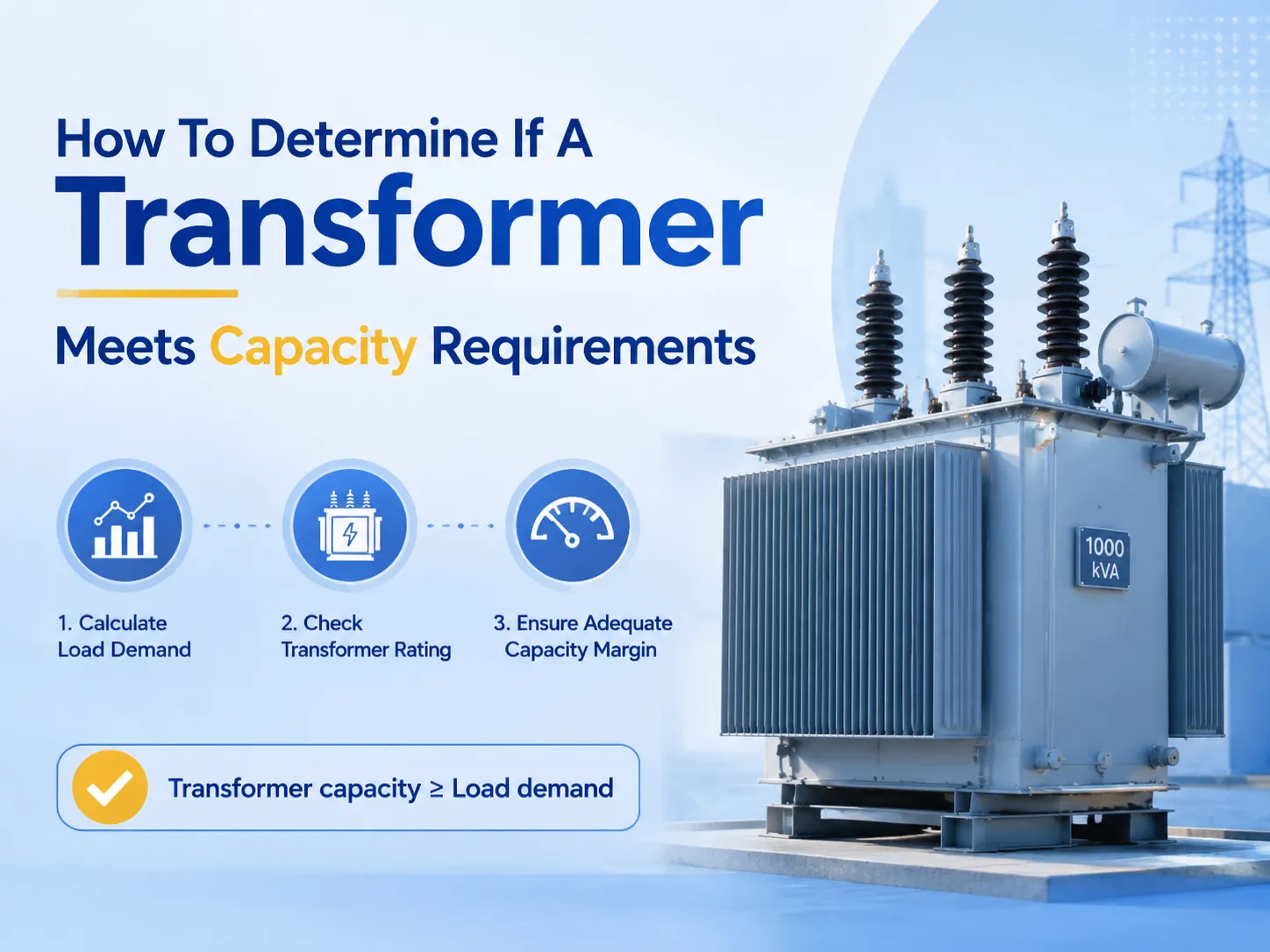
Что означает “требования к мощности” для трансформатора?
Мощность трансформатора — это его заявленная видимая мощность в кВА или МВА при определенных условиях охлаждения. Производитель устанавливает этот рейтинг в соответствии с IEC 60076-1 или IEEE C57.12.00, что является максимальной видимой мощностью устройства, которая может использоваться непрерывно без превышения пределов повышения температуры — обычно 65 °C среднее повышение обмотки для масляных трансформаторов и 100–150 °C для сухих типов в зависимости от соответствия классу изоляции.
Когда речь идет о соблюдении “требований к мощности”, это означает, что трансформатор способен выдерживать увеличенную мгновенную нагрузку при условии, что есть достаточный запас для трех параметров, которые инженеры должны учитывать: пусковой ток, вызванный запуском двигателя (он может достигать 5–8 от номинального тока), гармонические токи, возникающие из-за преобразователей частоты, и перспективы будущего увеличения нагрузки. Через пару лет трансформатор, который сегодня правильно рассчитан, может легко оказаться неправильно подобранным, если на работу объекта будет добавлена какая-либо нагрузка.
Существует две причины, по которым возникают упомянутые несоответствия. Прежде всего, покупатели, вероятно, путают кВА (явная мощность) с кВт (реальная мощность), тем самым теряя факт, что нагрузка, работающая с коэффициентом мощности 0,8, требует на 25% больше кВА по сравнению с кВт. Кроме того, покупатели могут суммировать номинальные значения каждого устройства, не применяя необходимый коэффициент разнообразия, что приводит к переоценке мощности трансформатора примерно на 30–50% без реальной необходимости платить за цепи, которые могут не использоваться в дальнейшем.
Шаг 1: Рассчитайте реальную подключенную нагрузку
Прежде всего, необходимо составить списки всех (нагрузок), которые питаются от трансформатора, и сгруппировать их. Хорошая классификация выглядит следующим образом:
- Непрерывные нагрузки — освещение, системы HVAC и технологическое оборудование, работающие длительное время.
- Прерывистые нагрузки — насосы, компрессоры, краны, которые постоянно включаются и выключаются.
- Нагрузки от двигателей — полное значение тока, пусковой ток и используется ли оборудование с мягким пуском, ПЧ или нет (сколько токов оно использует).
- Нелинейные нагрузки — ПЧ, выпрямители и ИБП, которые имеют гармонический ток.
Теперь вам следует суммировать кВА всех типов нагрузок. Не рассчитывайте только значения кВт для каждой нагрузки. Если у вас есть только кВт и коэффициент мощности, найдите кВА, используя формулу ниже. Как только у вас будут сырые данные в виде суммы всех нагрузок, вам нужно применить коэффициент разнообразия.
| Категория нагрузки | Типичный коэффициент разнообразия | Рекомендуемая маржа спроса |
|---|---|---|
| Общая коммерческая (розничная, офисная) | 0.60–0.75 | 10–15% |
| Промышленные процессные предприятия | 0.70–0.85 | 10–20% |
| Больницы, критическая инфраструктура | 0.90–1.00 | 15–25% |
| Центры обработки данных (высокой плотности) | 0.95–1.00 | 20–30% |
| Школы, муниципальные здания | 0.50–0.70 | 10% |
Увеличьте разнообразный спрос на 10% до 20%, так как этот запас обеспечит, что устройство останется в пределах своих тепловых ограничений во время пиковых летних нагрузок, а также после любых будущих модернизаций. Этот запас является наиболее экономически эффективной формой страховки, доступной на момент выбора.
Шаг 2: Примените формулы расчета кВА
Теперь преобразуйте все в кВА, чтобы сравнить с указанным номиналом. В этом случае нужны три уравнения, которые сформированы на основе законов переменного тока.
В случае однофазного: кВА = (Вольты × Амперы) ÷ 1000
В случае трехфазного: кВА = (√3 × Вольты × Амперы) ÷ 1000
В случае преобразования кВт в кВА: кВА = кВт ÷ коэффициент мощности
Пример расчета: в случае трехфазной линии, работающей при 480 В с током 240 А, спрос составляет (1.732 × 480 × 240) ÷ 1000 = 199.5 кВА. Если учитывать коэффициент мощности, равный 0.85, это означает, что фактическая потребляемая энергия равна 170 кВт.
| Номинальное напряжение линии (В) | Полный ток нагрузки (А) | Рассчитанный спрос (кВА) | Ближайший стандартный номинал (кВА) |
|---|---|---|---|
| 240 (однофазный) | 100 | 24.0 | 25 |
| 480 (трехфазный) | 120 | 99.8 | 112.5 |
| 480 (трехфазный) | 240 | 199.5 | 225 |
| 480 (трехфазный) | 480 | 399.1 | 500 |
| 13,800 (трехфазный) | 25 | 597.5 | 750 |
| 13,800 (трехфазный) | 42 | 1003.8 | 1250 |
Всегда выбирайте следующий более высокий стандартный рейтинг IEC (25, 50, 100, 160, 250, 400, 500, 630, 800, 1000, 1250, 1600, 2000, 2500 кВА), а не пытайтесь получить минимально доступную мощность. Это связано с тем, что стандартные рейтинги IEC созданы для соответствия стандартным конструкциям трансформаторов, размерам сердечников и испытательным приборам; специальные рейтинги будут стоить дороже — на 15-30 процентов больше, на самом деле — и займут больше времени для поставки.
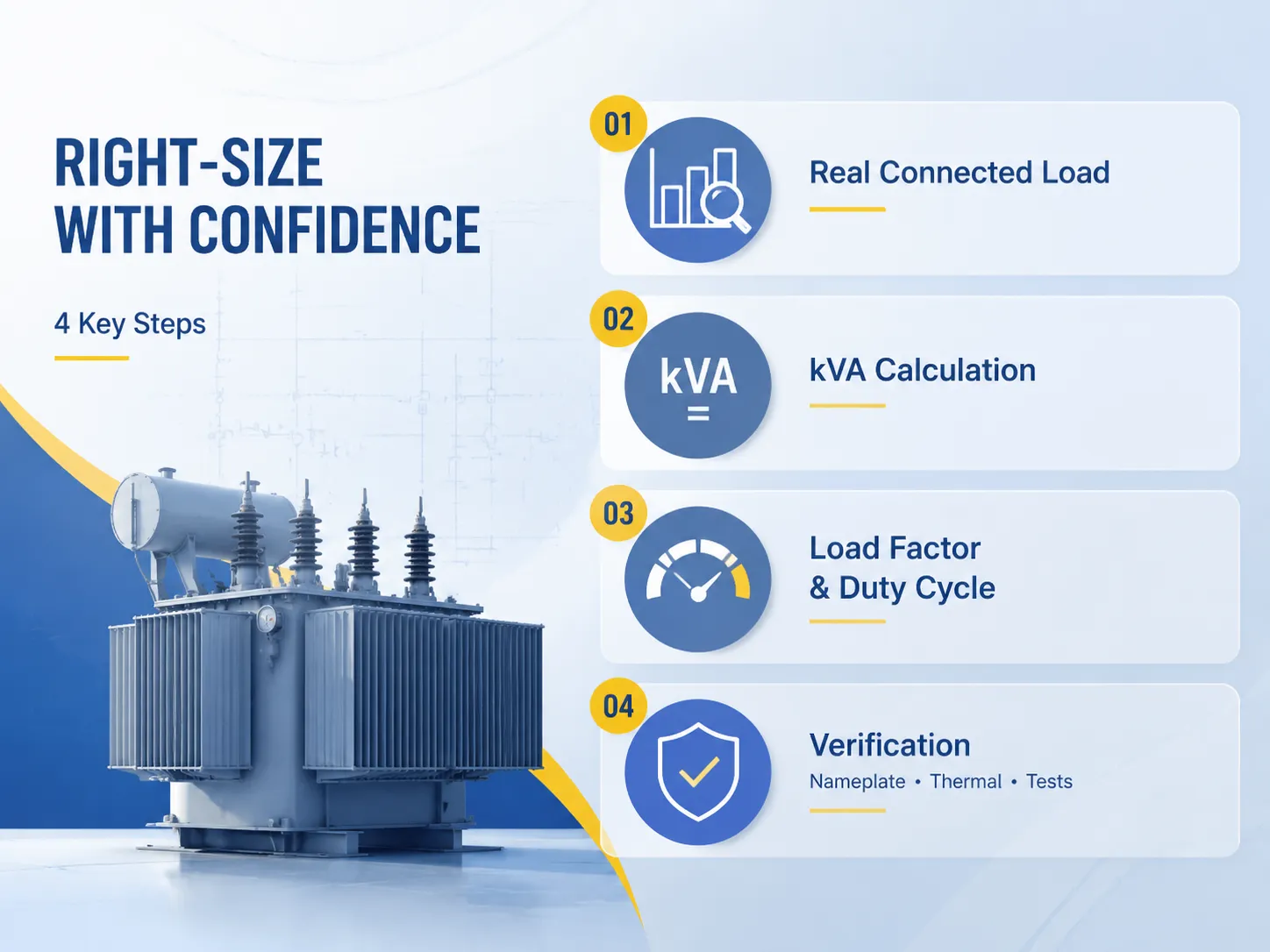
Шаг 3: Проверьте коэффициент загрузки и рабочий цикл
Общая способность определяется не только максимальным объемом, но и продолжительностью высоковольтных операций. Таким образом, коэффициент загрузки определяется как отношение среднего потребления к максимальному потреблению в определенный момент времени по формуле ниже:
Коэффициент загрузки = Среднее потребление ÷ Максимальное потребление
Завод, который потребляет 400 кВА только полчаса утром и имеет среднее потребление 150 кВА, имеет коэффициент загрузки около 0.375. Эта ситуация выгодна для использования трансформатора с низкой тепловой инерцией, так как трансформатор с масляным заполнением может выдерживать временные перегрузки в 1.3–1.5 раза выше номинальной мощности в течение нескольких часов в соответствии с IEC 60076-7 относительно циклических нагрузок. С другой стороны, трансформатор, который работал под нагрузкой 85% непрерывно, страдает от преждевременного старения изоляции.
Срок службы изоляции согласно закону Аррениуса сокращается вдвое при каждом увеличении на 6-8°C в условиях непрерывной работы горячей точки. Например, когда трансформатор загружен на 90% и имеет повышение температуры менее 65°C, температура горячей точки превышает 105°C в течение довольно длительного времени. Вот почему критерий загрузки 80% — это не просто маркетинговый трюк.
Шаг 4: Методы проверки (Табличка, Тепловые, Испытания)
После установки трансформатора необходимо оценить мощность на трех различных уровнях. Сначала нужно проверить административный аспект: необходимо проверить номинал на табличке, уровень импеданса, векторную группу и класс охлаждения ONAN, ONAN/ONAF, AN/AF, используя спецификации покупки и исследование нагрузки. Второй аспект для проверки — это эксплуатационный аспект, где необходимо проверить вторичный ток, напряжение и температуру обмотки.
Важно запросить у производителя заводской отчет для новых трансформаторов. Согласно IEC 60076-1, должны проводиться рутинные испытания по сопротивлению обмотки, соотношению, холостым потерям, активным потерям и испытаниям на повышение температуры. Это единственное лабораторное доказательство, на которое вы можете полагаться, чтобы подтвердить, что трансформатор может работать на номинальном kVA непрерывно, не превышая предела температуры изоляции.
| Метод проверки | Что это подтверждает | Типичные затраты / усилия |
|---|---|---|
| Проверка таблички против исследования нагрузки | Совпадение номинала, импеданса, класса охлаждения | Без затрат, 1 час |
| Логирование нагрузки в течение недели | Пиковый kVA против номинала при реальной нагрузке | $200–$600 (аренда логгера) |
| Инфракрасная термография | Горячие точки на вводах, баке и соединениях кабелей | $300–$800 за обследование |
| Анализ растворенных газов (DGA) | Ранние тепловые/дуговые неисправности в масляных устройствах | $80–$200 за образец |
| Отчет о рутинных испытаниях на заводе | Соотношение, потери, изоляция, доказательство повышения температуры | Включено в покупку |
Для устройств, которые, кажется, перегружены, сначала проведите DGA и тепловое обследование, затем рассмотрите возможность покупки чего-либо еще. Часто настоящая проблема заключается в плохом соединении или блокировке охлаждающих ребер, а не в самом сердечнике; замена или улучшение этих элементов может восстановить полную функциональность по более низкой цене, чем покупка нового трансформатора.
Общие номинальные мощности и их пределы нагрузки
Предоставленная таблица указывает рекомендуемые стандартные номиналы и максимальную устойчивую нагрузку для всех рассматриваемых технологий охлаждения, основанную на разнообразных потребностях и нормальных климатических условиях 30 градусов Цельсия (средняя температура).
| Номинальный kVA | Типичный класс напряжения | Максимальная устойчивая нагрузка — сухой тип (AN) | Максимальная устойчивая нагрузка — масляный (ONAN) | Типичный диапазон цен (FOB Китай) |
|---|---|---|---|---|
| 100 | 4/0.4 кВ, 11/0.4 кВ | 80–90 кВА | 70–80 кВА | $2,500–$6,000 |
| 250 | 11/0.4 кВ | 200–225 кВА | 175–200 кВА | $4,500–$11,000 |
| 500 | 11/0.4 кВ, 33/0.4 кВ | 400–450 кВА | 350–400 кВА | $8,000–$18,000 |
| 1000 | 10/0.4 кВ, 35/10 кВ | 800–900 кВА | 700–800 кВА | $15,000–$32,000 |
| 1600 | 35/10 кВ, 33/0.4 кВ | 1,280–1,440 кВА | 1,120–1,280 кВА | $24,000–$48,000 |
| 2500 | 35/10 кВ | 2,000–2,250 кВА | 1,750–2,000 кВА | $38,000–$75,000 |
Следует отметить, что предполагаемые непрерывные пределы подачи применимы при условиях чистого питания и коэффициента мощности на клеммах трансформатора, почти равного единице. Однако, если учитывать гармоники, ситуация становится совершенно иной. Например, полное гармоническое искажение тока 20-% вызывает увеличение эффективной тепловой нагрузки на 5 до 10%, и уже работающий аппарат может оказаться под перегрузкой, даже если его kVA находится в нормальных пределах.
Спецификации, влияющие на мощность
В дополнение к номиналу kVA, несколько других спецификаций на табличке влияют на фактическую мощность, предоставляемую трансформатором в вашем приложении:
- Классификация охлаждения (IEC 60076-2): Трансформатор ONAN самостийно охлаждается до своего полного номинала. Трансформатор ONAN/ONAF имеет дополнительные активные вентиляторы, обеспечивающие около 20% до 30% больше, чем его стандартный номинал.
- Увеличение температуры (K): Трансформатор, рассчитанный на 65 K, имеет большую мощность, чем трансформатор, рассчитанный на 55 K того же размера, но будет подвергать свою изоляцию большему износу.
- Напряжение импеданса (uk%): Обычно оно составляет от четырех до десяти процентов для распределительных трансформаторов. Более высокое значение импеданса снижает ток короткого замыкания, но имеет худшие характеристики падения напряжения.
- Векторная группа (Dyn11, Yyn0, Yd11): Должна соответствовать системе, чтобы предотвратить проблемы с циркулирующими токами.
- Понижение мощности из-за высоты и температуры: По мере повышения высоты выше 1000 м и превышения температуры 40 °C, согласно IEC 60076-1, трансформаторы должны быть понижены в мощности (обычно 0.5 % до 1 % каждые 100 м выше 1000 м).
- Материал, используемый для обмоток: Медь имеет примерно на 15% до 25% более высокую способность к короткому замыканию, чем алюминиевые обмотки, но также стоит примерно на 20% до 40% дороже.
Бренды и ценовые диапазоны для единиц с градацией мощности
Когда речь идет о зарубежных продуктах, проверка мощности имеет первостепенное значение, поскольку разница между спецификациями производительности и фактической производительностью увеличивается, когда клиенты не могут физически осмотреть продукт на заводе. Международные бренды берут больше за свою номинальную мощность, в то время как китайские производители предлагают почти такую же проверенную мощность по гораздо более низким ценам.
| Бренд | Типичный диапазон | Заметная позиция | Ориентировочная цена (500 кВА) |
|---|---|---|---|
| ABB | Распределение до 50+ МВА | Глобальный лидер, сильная сервисная сеть | $18,000–$30,000 |
| Сименс | Распределение до передачи | Варианты с высокоэффективным аморфным сердечником | $18,000–$32,000 |
| Schneider Electric | Распределение сухого типа | Глубокая интеграция низкого напряжения | 1ТП4Т15,000–1ТП4Т28,000 |
| Hitachi Energy | Коммунальные и промышленные | Экспертиза в области усиления сети и HVDC | $17,000–$30,000 |
| Итон | Распределение, установка на подушке | Сильное присутствие в Северной Америке | 1ТП4Т14,000–1ТП4Т26,000 |
| CG Power, TBEA | Коммунальные и промышленные | Производители крупной партии | $10,000–$18,000 |
| Jiangsu Subian Electric Power | 10 кВА–100 МВА | Сертифицировано по IEC 60076, полные отчеты о заводских испытаниях, стандартные медные обмотки | $8,000–$16,000 |
Указанные выше цены являются лишь оценочными, основанными на FOB Китай / с завода, для единицы класса 500 кВА. Изменения в цене будут зависеть от требований клиента и случаев использования. Международные бренды, перечисленные выше, являются лишь выборкой из множества конкурентов на рынке с многолетним опытом. Что делает Jiangsu Subian Electric Power особенным для тех, кто имеет требования к мощности? Все единицы поставляются с отчетом IEC 60076 для рутинных испытаний, а также стандартными медными обмотками. По сути, покупатель точно знает, что он/она получает с единицей. Эта информация упрощает процесс принятия решений, так как требования к мощности представлены в отчете. В случае сомнений относительно параметров клиент всегда может сверить данные заводского отчета с расчетами в этом исследовании.
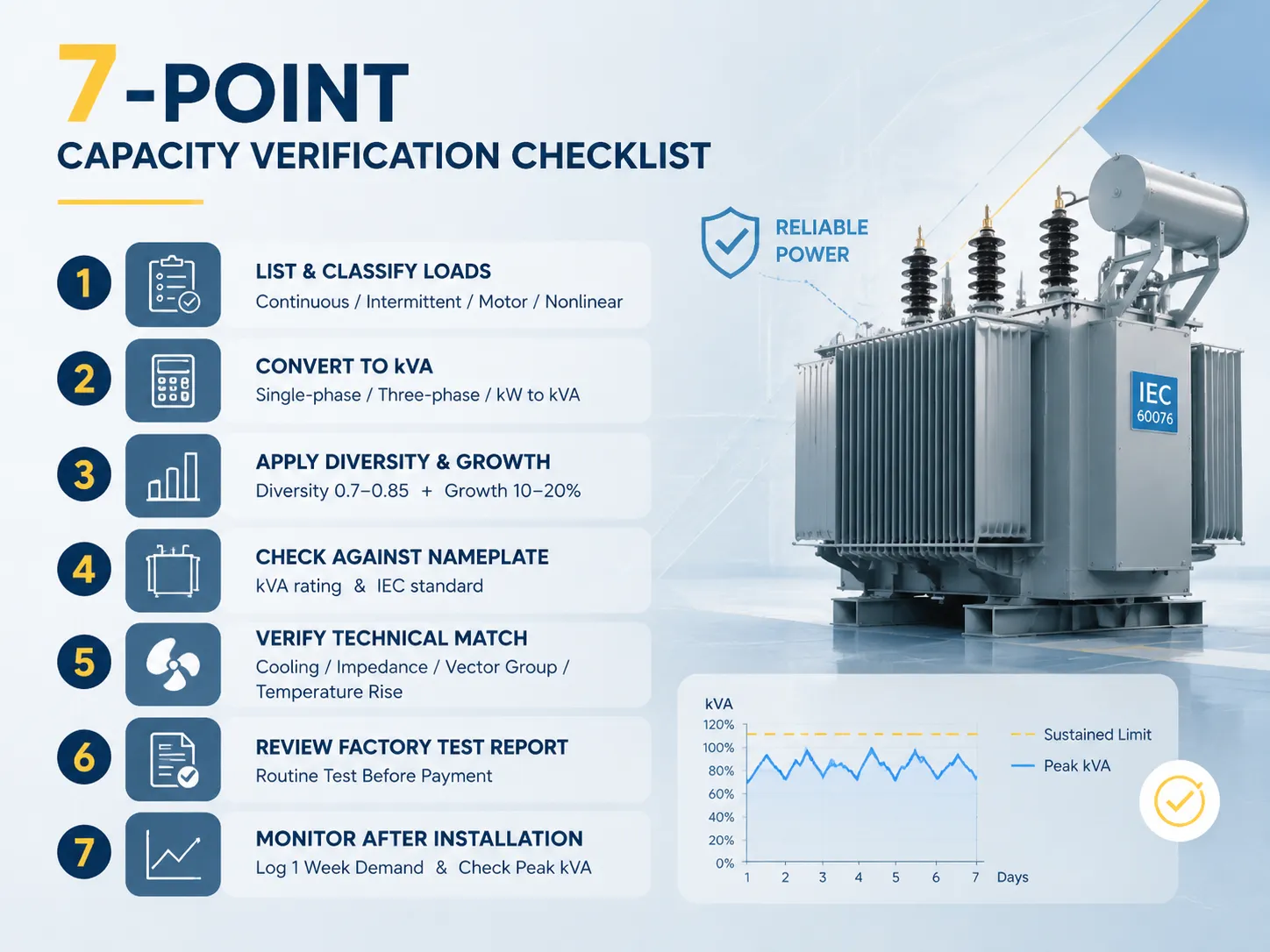
Контрольный список из 7 пунктов для проверки мощности
- Вам следует составить исчерпывающий список всех нагрузок и сгруппировать их как непрерывные, прерывистые, моторные или нелинейные.
- Вам нужно преобразовать каждую нагрузку в кВА на основе либо однофазной, трехфазной, либо формулы преобразования кВт в кВА.
- Вам следует воспользоваться коэффициентом разнообразия (который обычно находится в диапазоне от 0.7 до 0.85 для промышленных предприятий) и коэффициентом роста около 10 до 20 процентов.
- Как только вы получите эти данные, вы можете проверить их с номинальными значениями kVA и убедиться, что они находятся в пределах стандартных значений IEC.
- Убедитесь, что класс охлаждения, импеданс, векторная группа, а также повышение температуры соответствуют стандартам системы.
- Чтобы убедиться, что все в порядке, вы должны запросить и прочитать отчеты о заводских испытаниях перед тем, как произвести оплату.
- После установки системы следите за ее нагрузкой в течение недели и убедитесь, что пиковое значение kVA не превышает установленный уровень.
Часто задаваемые вопросы
Как я могу узнать, перегружен ли мой трансформатор?
Сравните среднюю нагрузку за последние 15 минут с номинальной мощностью трансформатора. Если среднее значение превышает 80% от мощности для масляных трансформаторов или 90% для сухих типов на постоянной основе, это означает, что устройство фактически перегружено. Среди признаков перегрузки, которые можно наблюдать, — температура масла выше 90°C (можно использовать бумагу класса A), показания горячих точек выше 105°C, шум в баке и анализ газов, таких как водород и этилен. Проблему можно решить, перераспределив нагрузку, охладив ее или заменив трансформатор на следующий стандартный рейтинг, превышающий текущий.
В чем разница между kW и kVA в мощности трансформатора?
kW обозначает действительную мощность, в то время как kVA обозначает кажущуюся мощность. kW можно рассчитать по формуле kVA = kW ÷ коэффициент мощности. Например, когда коэффициент мощности составляет 0.8, мощность 100 kW требует трансформаторов с мощностью 125 kVA. Номинальная табличка трансформатора всегда в kVA, потому что вся тепловая мощность трансформатора зависит от обмотки. Если коэффициент мощности меньше единицы, трансформатор может не соответствовать требованиям, если рассчитывать только с помощью kW.
Какой коэффициент нагрузки мне следует использовать при выборе трансформатора?
Используйте реальный коэффициент разнообразия нагрузок в объекте: 0.6–0.75 (для офисных зданий), 0.7–0.85 (для промышленных объектов), 0.9–1.0 (для больниц или центров обработки данных). Не путайте эти факторы — коэффициент разнообразия и коэффициент нагрузки (среднее ÷ пиковая нагрузка). Если вы имеете дело с новым объектом, используйте коэффициент угрозы 0.75 с запасом роста 15–20%. Если вы работаете с существующим объектом и имеете все счета за коммунальные услуги за последние 12 месяцев, вам нужно только рассчитать свой коэффициент нагрузки.
Может ли трансформатор временно работать выше своей номинальной мощности kVA?
Да, может, но это разрешено только в строгих условиях. Согласно IEC 60076-7, масляный трансформатор с системой охлаждения ONAN может выдерживать до 1.3 своей номинальной электрической нагрузки при условии, что она не превышает 70% и температура нагрева остается ниже 120°C. Каждый час работы с перегрузкой значительно сокращает срок службы изоляции — например, изоляция при температуре 110°C будет функционировать только несколько лет вместо нескольких десятилетий при правильном использовании.
Сколько стоит дополнительный запас мощности 10%?
Если трансформатор имеет мощность 500 кВА, покупка нового трансформатора мощностью 630 кВА обойдется вам на 15–25% дороже (что составляет примерно $2,000–4,000). Если вы рассматриваете замену трансформатора после его выхода из строя, вам следует быть готовым заплатить за новое устройство $8,000–18,000 и потратить до 1–4 недель на его ожидание. Если вы сможете избежать отключения нагрузки всего один раз за 20 лет, ваша инвестиция в запас мощности 10–20% уже окупится.
Ссылки
- IEC 60076-1: Силовые трансформаторы — Общие сведения — международный стандарт, определяющий характеристики трансформаторов, мощность и требования к испытаниям.
- IEC 60076-7: Силовые трансформаторы — Руководство по нагрузке для трансформаторов с масляным охлаждением — авторитетное руководство по циклическим перегрузкам и температурным пределам.
- IEEE C57.12.00: Общие требования к распределительным, силовым и регулирующим трансформаторам с жидким заполнением — североамериканский эквивалент мощности и рамки испытаний.
- Electrical4U — Коэффициент нагрузки трансформатора и эффективность — четкое объяснение коэффициента нагрузки, разнообразия и кривых эффективности.
- Eaton — Руководство по выбору трансформатора — практические таблицы расчетов кВА и примеры выбора, используемые в отрасли.
- Fluke — Тепловизионная съемка трансформаторов — полевые рекомендации по инфракрасной проверке нагрузки и соединений.
- Wikipedia — Трансформатор — информация о теории трансформаторов, рейтингах и классификациях охлаждения.
Заключение
Знание о том, достаточно ли вашей трансформаторной мощности, не является вопросом спекулятивного предположения о спросе. Процесс включает четыре простых шага: определение пикового спроса, расчет спроса в кВА, определение коэффициента нагрузки и проверка данных на табличке, подтвержденных результатами испытаний, предоставленными заводом. Следование правилу допуска увеличения на 10–20% и поддержание коэффициента нагрузки ниже 80% для трансформаторов с масляным заполнением сегодня довольно дешево и может предотвратить дорогостоящие сбои в будущем.
- Выполняйте расчеты в кВА и используйте коэффициент разнообразия от 0,7 до 0,85 для смешанных промышленных нагрузок.
- Проверьте мощность по отчету IEC 60076 — это единственное доказательство, а не каталог.
- Предусмотрите запас в 10-20% для будущих потребностей — это самая дешевая форма страхования на этапе закупки.
- Выбирайте поставщика на основе испытанной мощности и уровня прозрачности, а не цены за кВА.