


يقوم مدير المشتريات في شركة توزيع الطاقة بتحليل ثلاثة عروض قدمتها الشركة لعقد يتضمن 250 محولًا. قدم العارض الأول أسعارًا لمحوّلات S11 ويقدم أقل عرض. قدم العارض الثاني اقتراحًا لمحوّلات ذات نواة غير متبلورة ووعد بأن يتم سداد الفرق في الخسائر في غضون 14 شهرًا فقط. يدعي العارض الثالث القدرة على توفير محولات مملوءة بالإستر ومجهزة بمراقبة DGA عبر الإنترنت. في الماضي، كان من المستحيل فقدان عملية المناقصة إذا قدمت أقل سعر. اليوم، يتطلع أعضاء المجلس إلى معرفة تكلفة امتلاك المحولات خلال الـ 25 عامًا القادمة، وما التأثير الذي ستحدثه المحولات على البيئة، وكيف يمكن تنفيذ التقنيات الرقمية المتعلقة بهذه المحولات.
في هذه المقالة، سنحلل الاتجاهات الرئيسية التي تغير صناعة المحولات المغمورة بالزيت اليوم، بما في ذلك لوائح كفاءة الطاقة، واستخدام الزيوت الصديقة للبيئة، والمراقبة الرقمية، وأسعار المواد، والتغيرات في سلسلة التوريد.
الاتجاهات المهمة في صناعة أنظمة المحولات هي كما يلي: (1) تنظيم صارم بشأن تنفيذ الأجهزة - المتطلبات التي وضعتها الاتحاد الأوروبي للتصميم البيئي وكذلك وزارة الطاقة في الولايات المتحدة ومعيار GB 20052 في الصين دفعت الشركات المصنعة إلى إنتاج محولات باستخدام المعادن غير المتبلورة ونوى CRGO ذات الضغط المنخفض حيث تؤدي هذه التقنيات إلى تقليل الخسائر غير المحملة بنسبة 20-70% مقارنةً بمحوّلات S9 التقليدية؛ (2) الاتجاه نحو تطبيق سوائل الإستر، التي نقطة اشتعالها أعلى من 300° مقارنةً بالزيت المعدني (160°)؛ (3) تطبيق التقنيات الرقمية مثل DGA عبر الإنترنت، وأجهزة استشعار IoT، والذكاء الاصطناعي حيث أصبحت هذه التقنية الآن تصل إلى المحولات التوزيعية ذات السعات الأقل من 50 MVA السابقة؛ (4) التصنيع في سلسلة التوريد - يتم بناء مصانع جديدة في الولايات المتحدة، وأوروبا، والهند، والسعودية؛ (5) تقلب الأسعار.

سياق السوق
سوق المحولات العالمي كبير وينمو، بسبب الاستثمارات في أنظمة الشبكات، والكهرباء، ودمج مصادر الطاقة المتجددة. تقدر تقارير الصناعة المختلفة سوق المحولات الكهربائية والتوزيعية بـ $40 - 55 مليار سنويًا، مع الجزء البارز من MVA المقدم من خلال تقنية المغمورة بالزيت. لا تزال هذه التقنية، التي تغطي حوالي 75–80% من جميع شحنات المحولات الكهربائية والتوزيعية، مفضلة لأن طريقة تبريد الزيت أثبتت أنها اقتصادية جدًا لمعظم التصنيفات.
يُلاحظ ضيق في سوق المحولات. على وجه الخصوص، امتدت أوقات تسليم المحولات من 18 إلى 36 شهرًا في بعض المناطق في أوائل عام 2020، بينما كانت أسعار الفولاذ الكهربائي والنحاس غير مستقرة. لذلك، تعلمت كل من المرافق والمصنعين تأمين السعة مسبقًا وإبرام اتفاقيات مع المنتجين، بالإضافة إلى توحيد أساطيل الأجهزة.
تنظيم الكفاءة: المحرك الحاسم
يُعتبر التنظيم أكبر تأثير في هذا القطاع من الصناعة لأنه يستبعد الخيار “الرخيص وغير الفعال”:
| السوق | أداة | تأثير |
|---|---|---|
| الاتحاد الأوروبي | تنظيم الإيكوديزاين 548/2014، المعدل 2019/1783 | حدود خسارة إلزامية؛ تم إلغاء الفئات غير الفعالة |
| الولايات المتحدة | DOE 10 CFR الجزء 431 | زيادة الحد الأدنى من الكفاءة؛ تم تشديد المستويات مرة أخرى في أمر 2022 |
| الصين | GB 20052-2020 | درجات كفاءة ملزمة؛ يتم تقاعد أساطيل S7/S9 |
| الهند | تصنيف كفاءة BEE | محولات توزيع ذات تصنيف نجمي |
| المقرضون العالميون | قواعد الشراء الأخضر | تم تقييم توفير الخسائر في تقييم العطاءات |
من حيث النتائج، يمكن القول إنه في أوروبا، خلقت القواعد الجديدة اختراقًا: تم تقليل الخسائر في محولات التوزيع الآن بنسبة 20-40% مقارنة بالوضع قبل التنظيم. في الصين، جعلت GB 20052-2020 درجات كفاءة الطاقة جزءًا من عملية العطاء مما أدى إلى الانتقال من سلسلة S9 إلى S11 وS13 والتصاميم غير المتبلورة. ونتيجة لذلك، لم يعد يهم أي شخص معني بالمشتريات ما إذا كانت الجهاز “فعالًا من حيث الطاقة” أم لا لأنه أصبح الآن الحد الأدنى والمتطلب الإلزامي.
المواد: غير متبلور، CRGO، وتقلب الأسعار
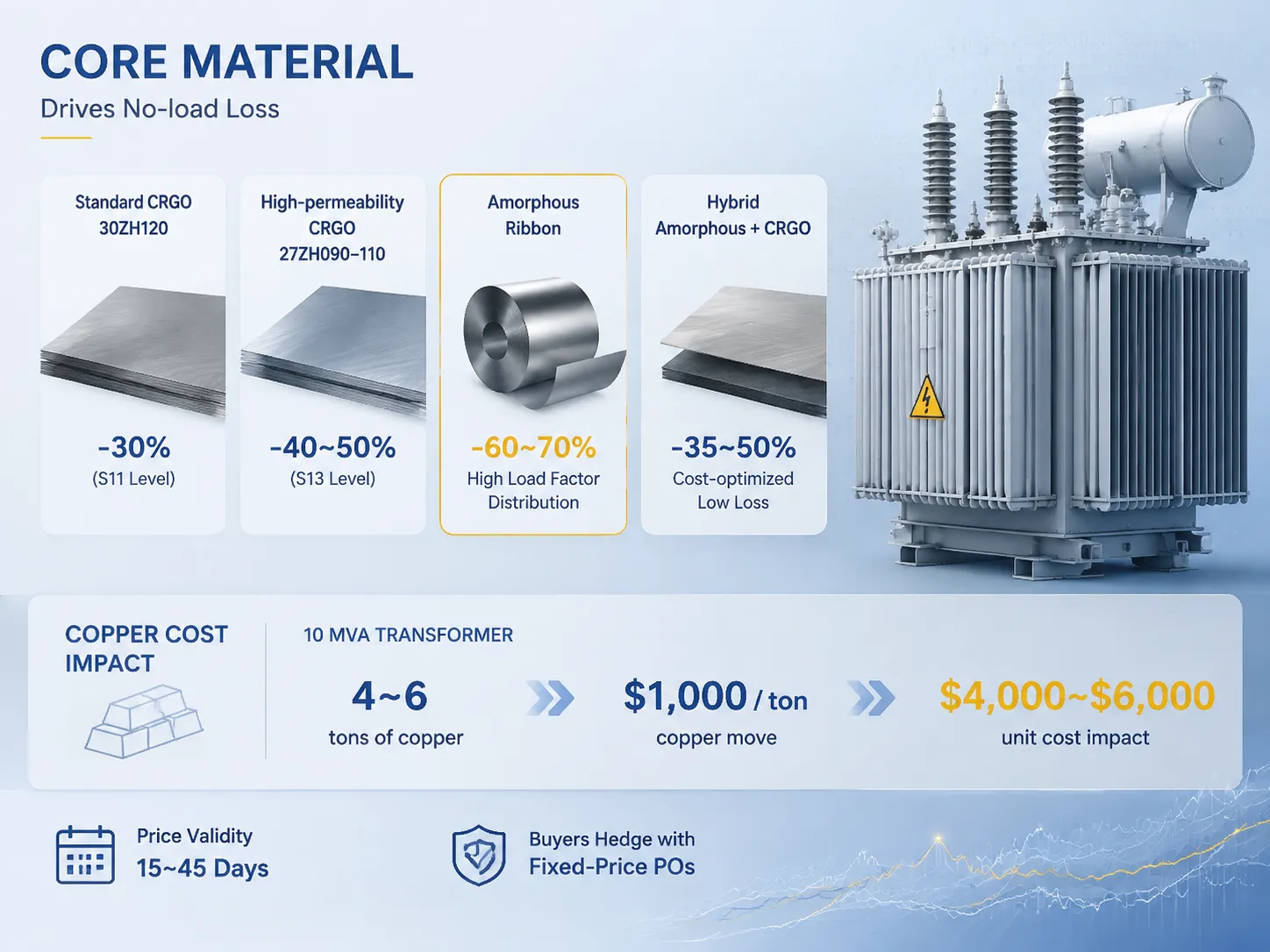
المادة الرئيسية تحدد خسائر عدم التحميل وتحدد النغمة لاختيار المواد المستخدمة في الصناعة.
- CRGO العادي (مثل 30ZH120): المادة المستخدمة في محولات S11 لكنها غير فعالة في مستويات الكفاءة والتكلفة.
- CRGO عالي النفاذية مقطوع بالليزر (27ZH090 إلى 110): يقلل من خسائر القلب بنسبة تتراوح بين 10 و20 في المئة مقارنة بالمادة العادية ويستخدم في محولات S13 ومحولات S11 ذات الأداء العالي نسبيًا.
- الشريط غير المتبلور: مستويات الخسارة حاليًا أقل بنسبة تتراوح بين 60 و70 في المئة مقارنة بـ CRGO العادي وله أهمية متزايدة في نطاق التوزيع حتى حوالي 2500kVA وما فوق.
تؤثر تكاليف هذه المواد بشكل كبير على الصناعة بأكملها حيث تقلبت أسعار صفائح الفولاذ الكهربائي الموجهة من 20 إلى 40% في السنة وهناك عدد قليل جدًا من منتجي الأشرطة غير المتبلورة.
| مادة القلب | خسارة عدم التحميل بالنسبة لـ S9 | التطبيقات النموذجية | ملاحظة التوريد |
|---|---|---|---|
| CRGO القياسي (30ZH120) | −30-40% (مستوى S11) | توزيع الحجم | متاح على نطاق واسع |
| CRGO عالي النفاذية (27ZH090–110) | −40–50% (مستوى S13) | توزيع متميز، طاقة | تتأرجح الأسعار 20–40% سنويًا |
| الشريط غير المتبلور | −60–70% | توزيع عالي عامل الحمل | عدد قليل من المنتجين؛ مدخل استراتيجي |
| غير متبلور هجين + CRGO | −35–50% | تكلفة محسّنة منخفضة الفقد | تعتمد على التصميم |
المحول بسعة 10 MVA يحتوي عادةً على حوالي 4–6 أطنان من النحاس؛ وبالتالي، فإن ارتفاع سعر النحاس بمقدار $1,000/طن يؤثر على تكلفة المحول بمقدار $4,000–6,000. نتيجة لذلك، فإن عروض الأسعار لصناعة المحولات الكهربائية صالحة لمدة 15–45 يومًا ويستخدم العملاء أوامر شراء بسعر ثابت للتحوط ضد تقلبات الأسعار.
السوائل: ارتفاع الإستر
على الرغم من أن سوائل الإستر تُعتبر غالبًا العنصر الرئيسي في المجالات التي تكون فيها اللوائح أو إدارة المخاطر أساسية، إلا أن زيت المعادن لا يزال المنتج الرائد في السوق اليوم.
| سائل | نقطة الاشتعال | حصة المشاريع الجديدة (تقدير) | علاوة سعرية نموذجية |
|---|---|---|---|
| زيت معدني | ~160 درجة مئوية | 75–85% | خط الأساس |
| إستر طبيعي | >300 درجة مئوية | 10–15% ومرتفع | +30–60% |
| إستر صناعي | >300 درجة مئوية | 3–8% | +60–100% |
| زيت معدني عالي الحرارة | ~300 درجة مئوية | 2–5% | +20–40% |
تجد سوائل الإستر قبولًا بشكل رئيسي بسبب ثلاثة عوامل: تقدم شركات التأمين خصومات على سوائل الفئة K في المحطات الفرعية، وتدعو الوكالات البيئية إلى وحدات الإستر حيث سيتم حظر زيت المعادن، وعملية شيخوخة الورق الأبطأ في الإستر (زيادة امتصاص الرطوبة في السائل بدلاً من الورق). تشمل حواجز الدخول سعرًا أعلى، ولزوجة عند درجات حرارة منخفضة، وكمية أقل من الخبرة التشغيلية في الصناعة؛ ومع ذلك، تشير جميع العلامات إلى أن سوائل الإستر ستستمر في اكتساب حصة في السوق، لا سيما في أوروبا وأمريكا الشمالية.
الرقمنة والمراقبة
الاتجاه الملحوظ هو انخفاض حجم تكنولوجيا المراقبة. مع تعديل المولدات، أصبح DGA عبر الإنترنت متاحًا الآن على المحولات لتطبيقات الجهد المتوسط أيضًا. تتوفر أجهزة مراقبة الهيدروجين للآلات المبتدئة من $1500 إلى $4000، ومحللات متعددة الغازات لحوالي $8000 إلى $40000. يمكن أن تنقل بوابات إنترنت الأشياء بيانات الحمل ودرجة الحرارة ومستوى الزيت وموقع التوصيل إلى SCADA أو خدمات السحابة.
- تجعل تشخيصات الذكاء الاصطناعي من الممكن تحديد المشكلات قبل أسابيع أو أشهر من تفسير النسبة.
- تساعد التوائم الرقمية في حساب النقاط الساخنة ومتوسط العمر المتوقع وفقًا للوائح IEC 60076-7 في الوقت الحقيقي.
المنطق الاقتصادي بسيط. DGA لـ 10 MVA يكلف $200-600 سنويًا، بينما الفشل غير المخطط له الذي يحدث له نفقات تتراوح بين $200000-$1000000. وبالتالي، فإن أي تحسين صغير في معدل الفشل يغطي بشكل أكبر تكلفة معدات المراقبة. يمكن للمرء أن يرى أن السؤال الوحيد الذي يتحسن هو ما هو مستوى المراقبة الذي يجب استخدامه لمجموعة الأصول المعينة.
| فئة الأصول | المراقبة الموصى بها | التكلفة السنوية النموذجية |
|---|---|---|
| توزيع <2 MVA | DGA المختبر السنوي | $150-$400 |
| توزيع 2-10 MVA | DGA سنوي + جهاز مراقبة H2 الأساسي على الوحدات الحرجة | $200-$600 + $1,500-$4,000 (مرة واحدة) |
| طاقة 10-40 MVA | DGA متعدد الغازات عبر الإنترنت، تكنولوجيا إنترنت الأشياء | $2,000-$8,000 بما في ذلك البيانات |
| طاقة >40 MVA / حرجة | DGA كامل عبر الإنترنت + توأم رقمي | $5,000-$15,000 |
إقليمية سلسلة التوريد
تجربة العالم مع أوقات التسليم الممتدة - تصل إلى 18 إلى 36 شهرًا للمحولات الكبيرة خلال الجزء الأول من العقد 2020 - قد دفعت إلى رد فعل هيكلي: تظهر المصانع بالقرب من أسواق المستهلكين.
- الولايات المتحدة: تحقق مصانع المحولات الجديدة والقديمة بعض الفوائد من قانون السلسلة لعام 2022 ومعايير وزارة الطاقة وتركز على محولات التوزيع ومحولات الطاقة.
- أوروبا: توسيع قدرة محولات الطاقة بمساعدة جهود الاتحاد الأوروبي الهادفة إلى تقليل الاعتماد على أحجام المحولات الرئيسية من الواردات.
- الهند: كانت تصدر المحولات والآن تخطط لزيادة قدرتها من خلال بناء مرافق جديدة لإنتاج المحولات.
- المملكة العربية السعودية والخليج: ستضمن المناطق الصناعية الجديدة وبرامج الشبكة قدرة التصنيع المحلي للمحولات.
بالنسبة للمشترين، فإن الإقليمية لها مزايا وعيوب: من ناحية، تعني أوقات تسليم أقصر وتكاليف نقل أقل، ومن ناحية أخرى، زيادة في تكاليف الوحدة مقارنةً بالإمدادات من البحر العميق من الصين. لذلك، فإن النهج الأمثل يتضمن عدة موردين - بالنسبة للآلات الحرجة ذات النقطة الواحدة، يجب اختيار الموردين المحليين أو الإقليميين؛ بالنسبة لأساطيل التوزيع الكبيرة، يجب اختيار الموردين المصدرين الذين يهيمنون على التكاليف لكل kVA.

الطاقة المتجددة وضغط الشبكة
أدى دمج الطاقة الشمسية والرياح إلى تعديل المشترين لمواصفاتهم. وهذا يعني أن محولات جمع الطاقة المتجددة يجب أن تتعامل مع أقصى تباين في التحميل، وتقلبات جهد أكثر تكرارًا، وظروف تشغيل دورية أكثر صرامة من معدات التوزيع التقليدية. كل هذا له الآثار التالية:
- يتم استخدام المزيد من محولات التحويل تحت الحمل على محولات الجمع ومحولات الشبكة، من أجل التحكم في تقلبات الجهد الناتجة عن التوليد المتغير.
- تغيرت خصائص العزل والتبريد للمعدات المحددة أيضًا نتيجة لذلك بسبب تأثير التحميل الدوري الذي يزيد من الشيخوخة حتى عندما لا تكون مستويات التحميل المتوسطة مرتفعة.
- أصبحت السوائل الاسترية شائعة الآن في مرافق الرياح والطاقة الشمسية، ليس فقط لأغراض السلامة عند قاعدة التوربينات، ولكن لفائدة البيئة.
- الكفاءة أكثر أهمية من أي وقت مضى للطاقة المتجددة، حيث تعني الخسائر الموفرة طاقة نظيفة لم يتم إنتاجها.
نفس الوضع يدفع التحسينات في مجال المحطات الفرعية، وهو السبب وراء الطلب المتزايد على المحولات المغمورة بالزيت بجهد 35 كيلو فولت و110 كيلو فولت في البلدان ذات الأهداف العالية للطاقة المتجددة.
اتجاهات الأسعار وما يجب تخصيصه
نظرًا لأن المواد متقلبة وسلسلة التوريد مقيدة، فإن تخطيط الميزانيات لمحولات الزيت المغمورة (FOB) اليوم هو:
| التصنيف / الفئة | التصميم التقليدي | منخفض الخسارة / غير المتبلور | مع OLTC والمراقبة |
|---|---|---|---|
| توزيع 500 kVA | $6,000–$10,000 | $8,000–$13,000 | $10,000–$16,000 |
| توزيع 1,000 kVA | $14,000–$22,000 | $18,000–$28,000 | $20,000–$32,000 |
| طاقة 10 MVA (35kV) | $28,000–$48,000 | $36,000–$58,000 | $40,000–$65,000 |
| طاقة 31.5 MVA (35kV) | $65,000–$110,000 | $80,000–$135,000 | $90,000–$150,000 |
يمكننا تلخيص ثلاث قواعد مهمة لأغراض التخطيط: تضمين بنود تصعيد سنوية 10-20% في الاتفاقيات متعددة السنوات؛ بناء المقارنة على رأس المال المفقود؛ والحصول على فترات التسليم في أقرب وقت ممكن حيث أن السوق يتفاعل بشكل أبطأ من السعر.
كيف تتكيف الشركات المصنعة
| العلامة التجارية | تركيز التكيف |
|---|---|
| هيتاشي للطاقة | المحولات الرقمية، HVDC وتوسع المحولات الكهربائية |
| سيمنز للطاقة | خدمات التوأم الرقمي، دمج أتمتة الشبكة |
| ABB | محفظة توزيع واسعة، توسيع القدرة الإقليمية |
| شنايدر إلكتريك | توزيع ذكي، بنية رقمية EcoStruxure |
| هيونداي / هيونغ سونغ | توسيع نطاق المحولات الكهربائية، حجم الصادرات |
| شركة جيانغسو سوبين للطاقة الكهربائية | ترقيات كفاءة الدرجة، نطاق تصدير معتمد من IEC، خيارات الاستر والـ OLTC |
تركز الشركات الكبرى متعددة الجنسيات على الخدمات الرقمية والهندسة ذات المستوى العالمي. في الوقت نفسه، تعتمد الصادرات السائدة على مستوى تصدير يتبنى نفس التقنيات — النواة غير المتبلورة، الفولاذ CRGO الموفّر للطاقة، المراقبة عبر الإنترنت — بتكلفة أقل بكثير.
تعتبر شركة جيانغسو سوبين للطاقة الكهربائية ممثلاً آخر لمستوى التصدير. يتم تصنيع محولاته المغمورة بالزيت وفقًا لمعيار IEC 60076، ولديها درجات كفاءة GB20052 وتقدم الاسترات بالإضافة إلى محولات التحويل تحت الحمل ومنافذ DGA للمراقبة. تقوم سوبين بشحن المحولات إلى المرافق وEPCs في جميع أنحاء آسيا وأفريقيا والشرق الأوسط وأمريكا اللاتينية، مدعومة باختبارات المصنع والتفتيشات من طرف ثالث. تقدم الشركة عرضًا عمليًا للمشترين الذين يبحثون عن الكفاءة، والرقمنة، وظروف التوريد المناسبة. تعرف على المزيد على subian-electric.com.
الأسئلة المتكررة
ما الذي يدفع أسعار المحولات للارتفاع الآن؟
هناك ثلاثة عوامل تسبب الزيادة: الفولاذ الكهربائي الموجه للحبوب وأسعار النحاس المتقلبة (20-40% اختلافات كل عام)، سعة التصنيع المحدودة جدًا على المستوى العالمي مع أوقات تسليم للوحدات الكبيرة تتراوح بين 18-36 شهرًا، وارتفاع الطلب نتيجة للاستثمارات في الشبكة والطاقة المتجددة. يجب على المشترين حجز الطلبات بأسعار ثابتة في أقرب وقت ممكن وإدراج شروط التصعيد في العقود.
هل تستحق المحولات ذات النواة غير المتبلورة السعر الإضافي؟
في معظم الحالات، تستحق ذلك عندما يتعلق الأمر بتطبيقات الحمل الثقيل. إن السعر الإضافي 20-30% يعود بفائدة مع تقليل الخسائر غير المحملة بنسبة 60-70%، مما يعيد تقريبًا استثماراتهم في 6-12 عامًا وفقًا لسياسات تسعير الصناعة. بالنسبة لتشغيل المحولات في الأحمال الخفيفة وعوامل الحمل المنخفضة، قد يكون من الأنسب استخدام CRGO التقليدي بسبب TCO.
هل ستختفي المحولات المغمورة بالزيت؟
لا، لن يحدث ذلك لفترة طويلة. يتم استخدام الزيت المعدني في 75-85% من المشاريع الجديدة بسبب سعره المنخفض، وفهمه الجيد، وكفاءته للتطبيقات بخلاف المواقع ذات مخاطر الحريق والحساسية البيئية. سيتوسع استخدام الاسترات في بعض المجالات، لكن الزيت المعدني سيظل الخيار الأكثر شعبية لسنوات عديدة.
كم يضيف المراقبة عبر الإنترنت إلى طلب المحول؟
يتراوح السعر من $1,500-4,000 لمعدات قياس الهيدروجين/الغاز الأساسية لوحدات التوزيع إلى $8,000-40,000 لأنظمة DGA متعددة الغاز الكاملة مع تكنولوجيا IoT لمحولات الطاقة. يتم قياس العائد من خلال التكاليف الموفرة من الأعطال والتفتيشات، مع تحديد المراقبة القياسية لجميع الوحدات التي تزيد عن 10 MVA.
كيف يمكنني مقارنة العروض من مناطق مختلفة بشكل عادل؟
تأكد من الحصول على السعر النهائي للوحدة مع تضمين الشحن والتأمين. أضف تكلفة الخسائر التي تكبدتها بهذه الطريقة (قد تكون حوالي 20-25 عامًا وفقًا لتعريفات الكهرباء)، بالإضافة إلى قيمة وقت التسليم وقرب الخدمات.
المراجع
- لائحة التصميم البيئي للاتحاد الأوروبي 548/2014 وتعديل 2019/1783 — نظام الكفاءة الذي يشكل سوق المحولات الأوروبية.
- معايير كفاءة محولات التوزيع من وزارة الطاقة الأمريكية (10 CFR Part 431) — مستويات الكفاءة الدنيا واستجابة السوق للعرض.
- IEC 60076-1: محولات الطاقة - عام — خط الأساس للتصميم والاختبار لجميع الوحدات المغمورة بالزيت المشار إليها في هذه المقالة.
- بيانات استثمار الكهرباء والشبكة من وكالة الطاقة الدولية — السياق من جانب الطلب لنمو سوق المحولات.
- IEEE C57.104: تفسير الغازات الناتجة في المحولات المغمورة بالزيت — إطار تفسير DGA وراء اتجاهات المراقبة عبر الإنترنت.
- مختبرات سانديا الوطنية حول سوائل المحولات الطبيعية. — تقييم مستقل لأداء سوائل الاستر وسلامة الحريق.
- الموقع الرسمي لشركة جيانغسو سوبين للطاقة الكهربائية — منتجات المحولات المغمورة بالزيت من فئة الكفاءة ووثائق التصدير.
الخاتمة
تتقدم صناعة المحولات الكهربائية المغمورة بالزيت من خلال نهج رباعي: الامتثال للكفاءة يرفع المعايير، سوائل الاستر تتغلغل في المناطق ذات المخاطر العالية من الحرائق والحساسية البيئية، المراقبة الرقمية تلحق بالركب من حيث الحجم والشكل، وسلاسل الإمداد تتكيف مع الأسعار وأوقات التسليم. كل من هذه التغييرات تؤثر على ديناميكيات اتخاذ قرارات الشراء.
النقاط الرئيسية التي يجب تذكرها:
- أصبح الامتثال للكفاءة الآن إلزاميًا وليس متروكًا لاختيار العميل؛ تحقق من اللوائح السائدة في السوق الذي تعمل فيه.
- سيؤدي استخدام المواد غير المتبلورة والاستر إلى زيادة التكاليف الأولية بنسبة 10-60%، ومع ذلك فإنها توفر مدخرات من حيث TCO في التطبيقات المناسبة.
- خصص $1500-$40,000 للمراقبة حسب مدى أهمية الأصل. احجز التسليمات مسبقًا وقلل من مخاطر تسعير المواد بعقود ثابتة الأسعار.
- العقود.