


The distribution utility’s procurement director is analyzing three bids that the company has received for a contract for 250 transformers. The first bidder has submitted prices for S11 transformers and is offering the lowest bid. The second bidder offered a proposal for amorphous core transformers and promised that the loss differential would be paid off in just 14 months. The third bidder is claiming the ability to supply transformers filled with ester and equipped with online DGA monitoring. In the past, it would have been impossible to lose the bidding process if you submitted the lowest price. Today, the board members are eager to learn how much it will cost to own the transformers in the next 25 years, what impact the transformers will have on the environment, and how one can implement digital technologies concerning these transformers.
In this article, we will analyze the key trends that are changing the oil-immersed transformer industry today, including energy efficiency regulations, use of eco-friendly oil, digital monitoring, price of materials, and changes in the supply chain.
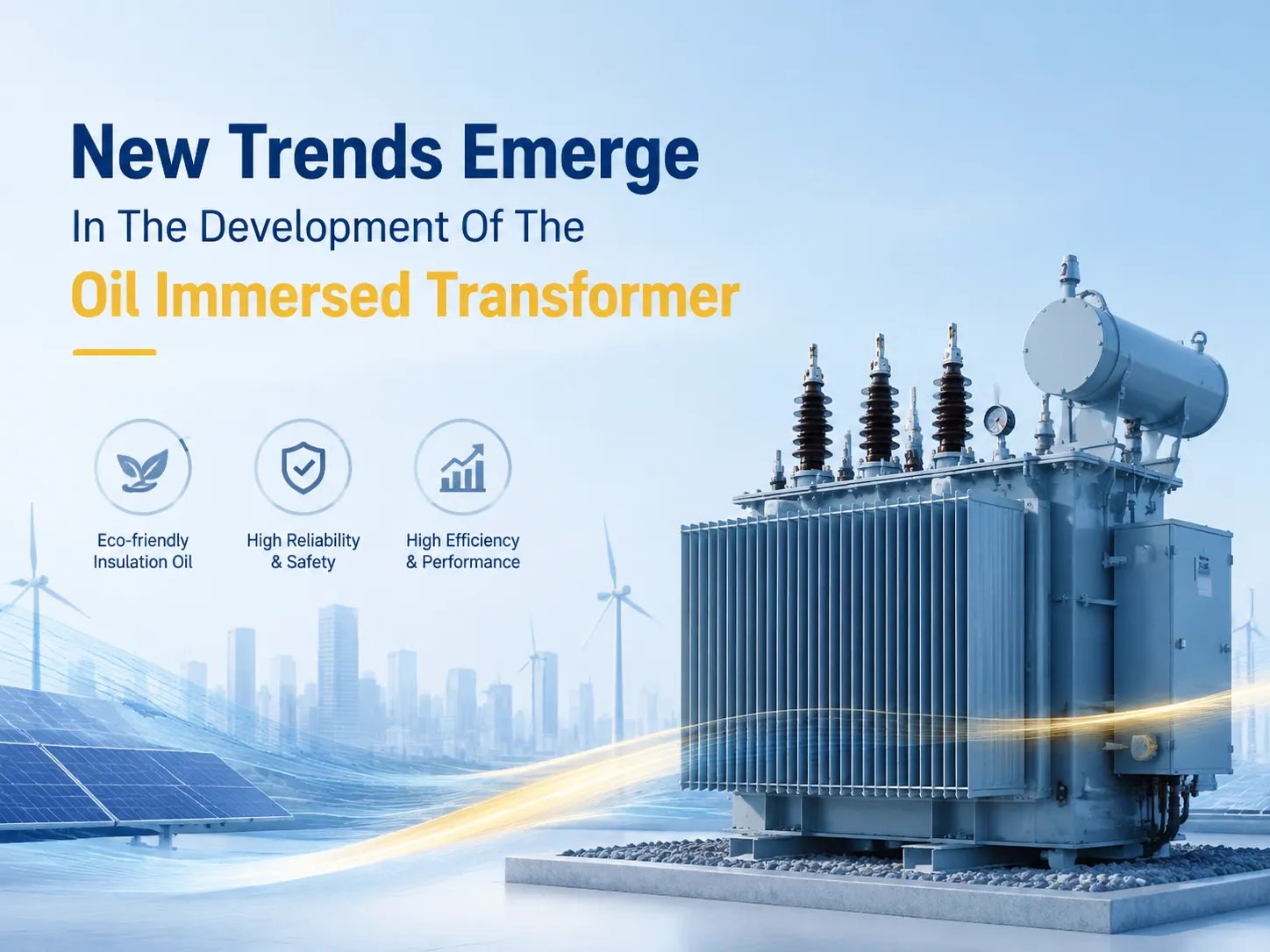
The important trends in the industry of transformer systems are as follows: (1) strict regulation regarding the implementations of devices – requirements set by the European Union Ecodesign as well as by the Department of Energy in the US and China’s GB 20052 led the manufacturers to the production of transformers using amorphous metal and low-pressure CRGO cores as these technologies result in 20-70% reduction in no-load losses compared to the traditional S9 transformers; (2) the trend towards the application of ester fluids, whose fire point is higher than 300° compared to mineral oil (160°); (3) application of digital technologies like online DGA, IoT sensors, and AI as now this technology goes down to distribution transformers with lower capacities from the previous 50 MVA; (4) industrialization of the supply chain – new factories are built in the USA, Europe, India, and Saudi Arabia; (5) price volatility.
The Market Context
The global transformer market is substantial and growing, due to investments in grid systems, electrification, and integration of renewable energy sources. Various industry reports estimate the market for power and distribution transformers at $40 – 55 billion per year, with the outstanding portion of MVA delivered being provided through oil-immersed technology. This technology, which still covers around 75–80% of all shipments of power and distribution transformers, is still preferred because the oil cooling method has proved to be very economical for majority of ratings.
Tightness of the transformer market is observed. In particular, transformer lead times stretched from 18 to 36 months in some areas in the early 2020s, while prices of electrical steels and copper have been unstable. Therefore, both utilities and manufacturers learned to secure capacity in advance and establish agreements with producers, as well as to standardize fleets of devices.
Efficiency Regulation: The Decisive Driver
Regulation stands as the biggest influence in this segment of the industry since it excludes the “cheap and inefficient” option:
| Market | Instrument | Effect |
|---|---|---|
| European Union | Ecodesign Regulation 548/2014, amended 2019/1783 | Mandatory loss limits; inefficient classes phased out |
| United States | DOE 10 CFR Part 431 | Rising minimum efficiency; 2022 order tightened levels again |
| China | GB 20052-2020 | Binding efficiency grades; S7/S9 fleets being retired |
| India | BEE efficiency labeling | Star-rated distribution transformers |
| Global lenders | Green procurement rules | Loss savings capitalized into tender evaluation |
In terms of outcomes, one could say that in Europe, new rules created a breakthrough: losses in distribution transformers are now reduced by 20-40% when compared to the pre-regulation situation. In China, GB 20052-2020 made energy efficiency grades a part of the tender process thereby triggering transition from the S9 series to S11, S13, and amorphous designs. As a result, for everyone involved in purchases, it no longer matters if a device is “energy-efficient” or not because it is now the minimum and mandatory requirement.
Materials: Amorphous, CRGO, and Price Volatility
The principal material determines no-load losses and sets the tone for the selection of materials used in the industry.
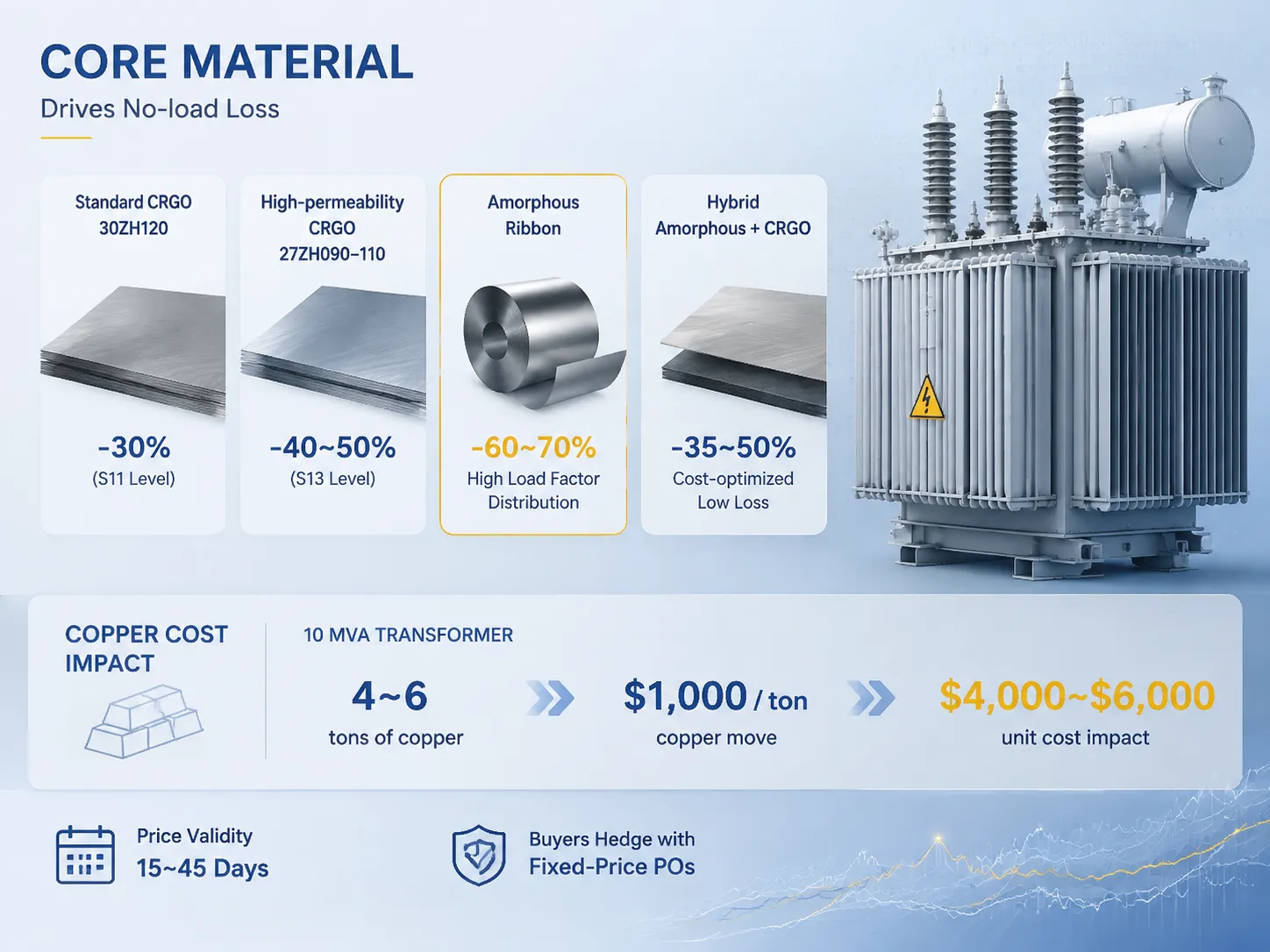
- Regular CRGO (like 30ZH120): The material used for S11 transformers but is ineffective in efficiency levels and cost.
- High permeability laser-cut CRGO (27ZH090 to 110): Reduces the core losses by between 10 and 20 percent compared to the regular material and is used in S13 and relatively high-performance S11 transformers.
- Amorphous ribbon: The loss levels are currently between 60 and 70 percent lower compared to regular CRGO and is of increasing importance in the distribution range up to almost 2500kVA and above.
Costs for these materials have significant impacts on the entire industry as grain-oriented electrical sheet prices have fluctuated from 20 to 40% in a year and there are very few producers of amorphous ribbons.
| Core material | No-load loss relative to S9 | Typical applications | Supply note |
|---|---|---|---|
| Standard CRGO (30ZH120) | −30% (S11 level) | Volume distribution | Widely available |
| High-permeability CRGO (27ZH090–110) | −40–50% (S13 level) | Premium distribution, power | Prices swing 20–40%/yr |
| Amorphous ribbon | −60–70% | High-load-factor distribution | Few producers; strategic input |
| Hybrid amorphous + CRGO | −35–50% | Cost-optimized low loss | Design-dependent |
A transformer with a capacity of 10 MVA generally has around 4–6 tons of copper; thus, a $1,000/ton rise in copper price affects the cost of the transformer by $4,000–6,000. As a result, price quotations for the power transformer industry are valid for 15–45 days and clients use fixed-price purchase orders to hedge against price fluctuations.
Fluids: The Rise of Esters
Even though ester fluids are frequently regarded as the main element in the areas where regulations or risk management are key, mineral oil continues to be the leading product in the market today.
| Fluid | Fire point | Share of new projects (est.) | Typical price premium |
|---|---|---|---|
| Mineral oil | ~160°C | 75–85% | Baseline |
| Natural ester | >300°C | 10–15% and rising | +30–60% |
| Synthetic ester | >300°C | 3–8% | +60–100% |
| High-temp mineral | ~300°C | 2–5% | +20–40% |
Ester fluids find acceptance mainly due to three factors: insurers offer discounts on K-class fluids in substations, environmental agencies advocate for ester units where mineral oil would be banned, and the slower process of paper aging in esters (increased moisture absorption in the fluid instead of paper). The barriers to entry include a higher price, viscosity at low temperatures, and the smaller amount of operational experience in the industry; however, all signs show that ester fluids will continue gaining market share particularly in Europe and North America.
Digitalization and Monitoring
A trend that is noticeable is the decreasing size of monitoring technology. With the modification of generators, online DGA is now available on transformers for medium voltage applications, as well. Hydrogen monitors for entry-level machines are available for $1500 to $4000, and multi-gas analyzers for approximately $8000 to $40000. IoT gateways are capable of transmitting load, temperature, oil level, and tap position data to SCADA or cloud services.
- AI diagnostics make it possible to identify problems weeks or months ahead of ratio interpretation.
- Digital twins assist with the calculation of hot spots and life expectancy according to the IEC 60076-7 regulations in real-time.
The economic rationale is simple. DGA for a 10 MVA charged at $200-600 per annum, while the unplanned failure that happens has expenses of $200000-$1000000. Hence, every small improvement in failure rate much more than pays for the monitoring equipment. One can see that the only question that improves is what level of monitoring for the particular group of assets should be used.
| Asset class | Recommended monitoring | Typical annual cost |
|---|---|---|
| Distribution <2 MVA | Annual lab DGA | $150-$400 |
| Distribution 2-10 MVA | Annual DGA + basic H2 monitor on critical units | $200-$600 + $1,500-$4,000 (one-off) |
| Power 10-40 MVA | Multi-gas online DGA, IoT telemetry | $2,000-$8,000 incl. data |
| Power >40 MVA / critical | Full online DGA + digital twin | $5,000-$15,000 |
Supply Chain Regionalization
The world’s experience with extended lead times — as much as 18 to 36 months for big power transformers during the early part of the 2020s — has prompted a structural reaction: plants are appearing near consumer markets.
- U.S.: new and already existing transformer factories are reaping some benefits from the Chain Act of 2022 and DOE standards and are focusing on distribution transformers and power transformers.
- Europe: expanding capacity of power transformers with help of EU efforts aimed at cutting dependence on key transformer sizes from imports.
- India: has been exporting transformers and now is planning to further increase its capacity by building new transformer production facilities.
- Saudi Arabia and the Gulf: new industrial zones and grid programs will ensure local transformer manufacturing capacity.
For buyers, regionalization has both plus and minuses: on the one hand, it means shorter lead times and reduced transportation costs, and on the other, increased per-unit costs in comparison with deep sea supply from China. Therefore, the optimal approach entails multiple suppliers — for single-point mission-critical machines, domestic or regional suppliers should be chosen; for bulk distribution fleets, export suppliers dominating on costs per kVA should be selected.
Renewables and Grid Stress
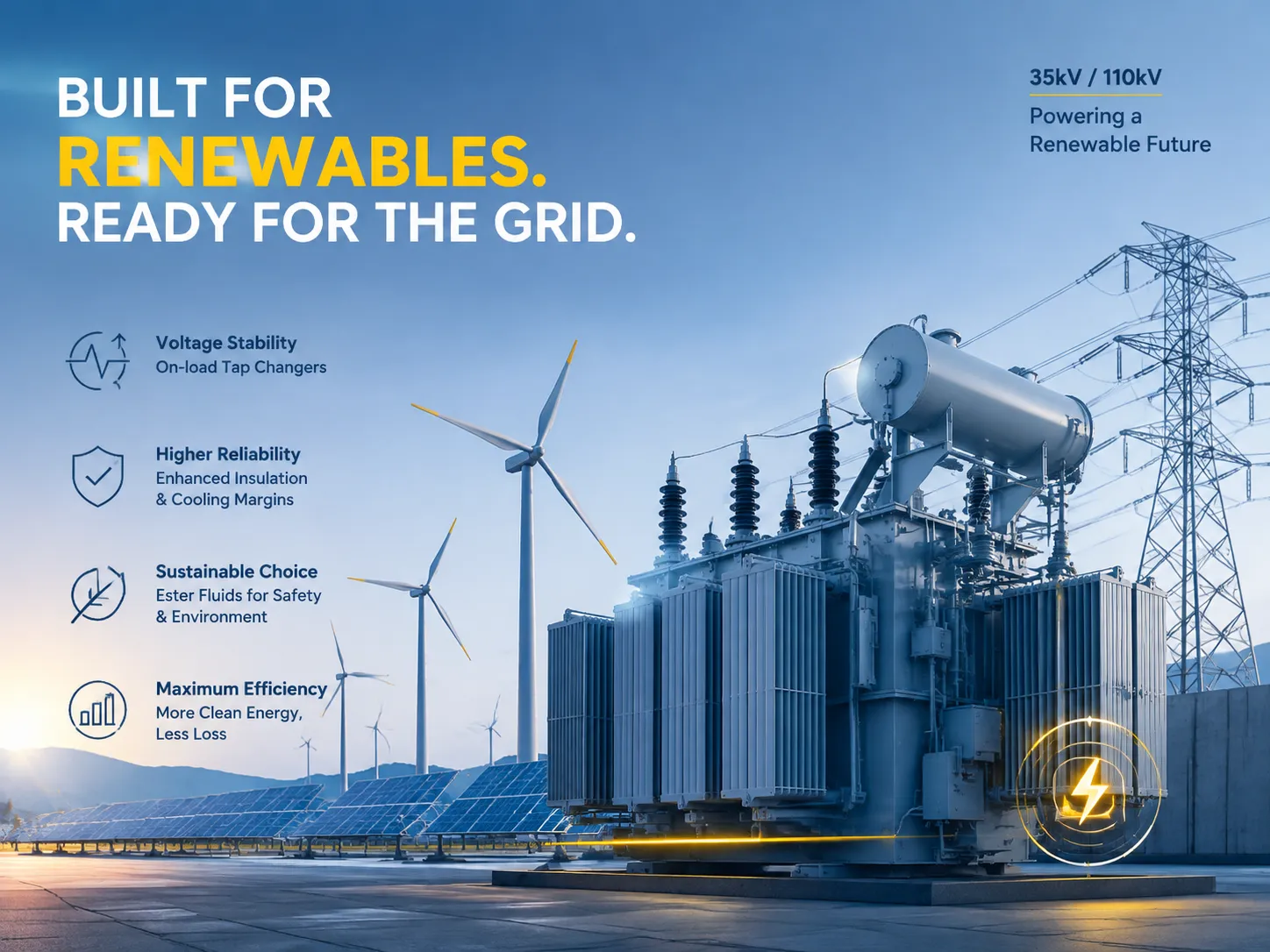
Solar and wind integration has led buyers to modify their specifications. This means that renewable collection transformers must deal with maximum variability in loading, more frequent voltage fluctuations, and more rigorous cyclic operating conditions than traditional distribution equipment. All of this has the following implications:
- More on-load tap changers are being used on the collection and grid-tied transformers, in order to control voltage fluctuations caused by variable generation.
- Insulation and cooling properties of equipment specified have also changed as a result because of the fact that the impact of cyclic loading increases aging even when average loading levels are not high.
- Ester fluids are now common for wind and solar facilities, not only for safety purposes at the base of turbines, but for the benefit of the environment.
- Efficiency is more important than ever for renewables, where saved losses mean clean energy that has not been produced.
The same situation drives the improvements in the field of substations, which is the reason for the increasing demand for 35kV and 110kV oil-immersed transformers in the countries with high renewable targets.
Price Trends and What to Budget
Since the material is volatile and supply chain is constrained, planning budgets for oil-immersed transformers (FOB) today are:
| Rating / class | Conventional design | Low-loss / amorphous | With OLTC and monitoring |
|---|---|---|---|
| 500 kVA distribution | $6,000–$10,000 | $8,000–$13,000 | $10,000–$16,000 |
| 1,000 kVA distribution | $14,000–$22,000 | $18,000–$28,000 | $20,000–$32,000 |
| 10 MVA power (35kV) | $28,000–$48,000 | $36,000–$58,000 | $40,000–$65,000 |
| 31.5 MVA power (35kV) | $65,000–$110,000 | $80,000–$135,000 | $90,000–$150,000 |
We can summarize three important rules for planning purposes: include 10-20% annual escalation clauses in multiyear agreements; base comparison on loss capitalisation; and get delivery slots as early as possible since the market reacts more slowly than the price.
How Manufacturers Are Adapting
| Brand | Adaptation focus |
|---|---|
| Hitachi Energy | Digital transformers, HVDC and power transformer expansion |
| Siemens Energy | Digital twin services, grid-automation integration |
| ABB | Broad distribution portfolio, regional capacity expansion |
| Schneider Electric | Smart distribution, EcoStruxure digital architecture |
| Hyundai / Hyosung | Power transformer scale-up, export volume |
| Jiangsu Subian Electric Power | Efficiency-grade upgrades, IEC-certified export range, ester and OLTC options |
Big multinationals are focusing on digital services and world-class engineering. At the same time, mainstream exports are based on an export tier adopting the same technologies — amorphous core, energy-efficient CRGO steel, online monitoring — for a much smaller cost.
Jiangsu Subian Electric Power is another representative of the export tier. Its oil-immersed transformers are manufactured according to IEC 60076, have GB20052 efficiency grades and offer esters as well as on-load tap changers and DGA ports for monitoring. Subian is shipping transformers to utilities and EPCs all over Asia, Africa, Middle East and Latin America, supported by factory tests and third-party inspections. The company is providing a practical offer for buyers looking for efficiency, digitisation, and proper supply conditions. Find out more at subian-electric.com.
Frequently Asked Questions
What is driving transformer prices up right now?
There are three factors causing the increase: grain-oriented electrical steel and fluctuating copper prices (20-40% differences each year), very constrained manufacturing capacity at the global scale with large units lead times of 18-36 months, and the demand rise as a result of investments in grid and renewables. Buyers must book orders with fixed prices as soon as possible and incorporate escalation conditions in the contracts.
Are amorphous core transformers worth the premium?
In most cases, they are when it comes to heavy-load applications. The 20-30% premium pays off with 60-70% reduction in no-load losses, roughly recouping investments in 6-12 years according to industry pricing policies. For light-load transformer operation and low load factors, conventional CRGO might be found more convenient due to TCO.
Will mineral oil transformers disappear?
No, this will not happen for a long time. Mineral oil is used in 75-85% of the new projects due to its low price, good understanding, and efficiency for applications other than fire-risk and environment-sensitive sites. Use of esters will expand in certain areas, but mineral oil will remain the most popular option for many years.
How much does online monitoring add to a transformer order?
The price ranges from $1,500-4,000 for basic hydrogen/gas measurement equipment for distribution units to $8,000-40,000 for full multi-gas DGA systems with IoT telemetry for power transformers. Payback is measured by the saved costs of failures and inspections, with standard monitoring being specified for all units above 10 MVA.
How do I compare bids from different regions fairly?
Make sure to get the final price of the unit with delivery and insurance included. Add the cost of the losses incurred in this way (this could be around 20-25 years according to the electricity tariffs), plus the value of lead time and proximity of services.
References
- EU Ecodesign Regulation 548/2014 and amendment 2019/1783 — The efficiency regime shaping the European transformer market.
- U.S. DOE distribution transformer efficiency standards (10 CFR Part 431) — Minimum efficiency levels and the market’s supply response.
- IEC 60076-1: Power transformers – General — The design and testing baseline for all oil-immersed units referenced in this article.
- IEA electricity and grid investment data — Demand-side context for transformer market growth.
- IEEE C57.104: Interpretation of Gases Generated in Oil-Immersed Transformers — The DGA interpretation framework behind online monitoring trends.
- Sandia National Laboratories on natural ester transformer fluids — Independent assessment of ester fluid performance and fire safety.
- Jiangsu Subian Electric Power official site — Efficiency-grade oil-immersed transformer products and export documentation.
Conclusion
The industry of oil-immersed electrical transformers is progressing at a four-pronged approach: efficiency compliance is lifting the bar, ester fluids are penetrating risky fire and environmentally sensitive areas, digital monitoring is catching up in terms of size and shape, and supply chains are adapting to prices and delivery times. Each of the above changes the dynamics of making purchasing decisions.
Key points to remember:
- Efficiency compliance is now declared mandatory and not left at customer choice; check the prevailing regulations in the market you operate in.
- Use of amorphous corps and esters will raise initial costs by 10-60%, yet they provide savings in terms of TCO in the right applications.
- Allocate $1500-$40,000 for monitoring depending on how critical the asset is.Book deliveries well in advance and hedge the risks of material pricing with fixed-price
- contracts.