


中西部の食品加工工場で、エンジニアの一人が新たに200 kVAのパッドマウントトランスを設置しました。このトランスは冷凍庫の拡張をサポートするためのものでした。しかし、設置から3週間の間に、トランスは生産時間中の熱過負荷によりトリップし、ユーザーは予想される利益をすべて打ち消す過剰な電気料金を負担することになりました。問題はトランス自体ではなく、設置前にトランスが電気負荷に対して適切な容量を持っているかどうか、特に突入電流や高調波負荷、将来の負荷の増加を考慮して確認しなかったことです。このような状況は日常的に発生しており、実際、毎年工業や商業の現場、公共事業で発生しています。.
この文書では、トランスが負荷要件を満たしているかどうかを判断するためのステップバイステップの手順を提供します。情報は名板、kVA計算、負荷係数分析、現場テストから得られます。.
トランスがあなたの容量ニーズをサポートできるかどうかを確認するには、まず実際の需要を算出します:接続されたすべての負荷のkVA定格を合計し、0.7-0.85の多様性係数を考慮に入れ、最後に到達した数値に10-20%の成長マージンを掛けます。実現可能性の結果をトランスの名板kVAと比較し、負荷係数計算を使用します — 定常負荷は乾式トランスの定格の80-90%を超えてはならず、油浸トランスの場合は70-80%を超えてはなりません。.
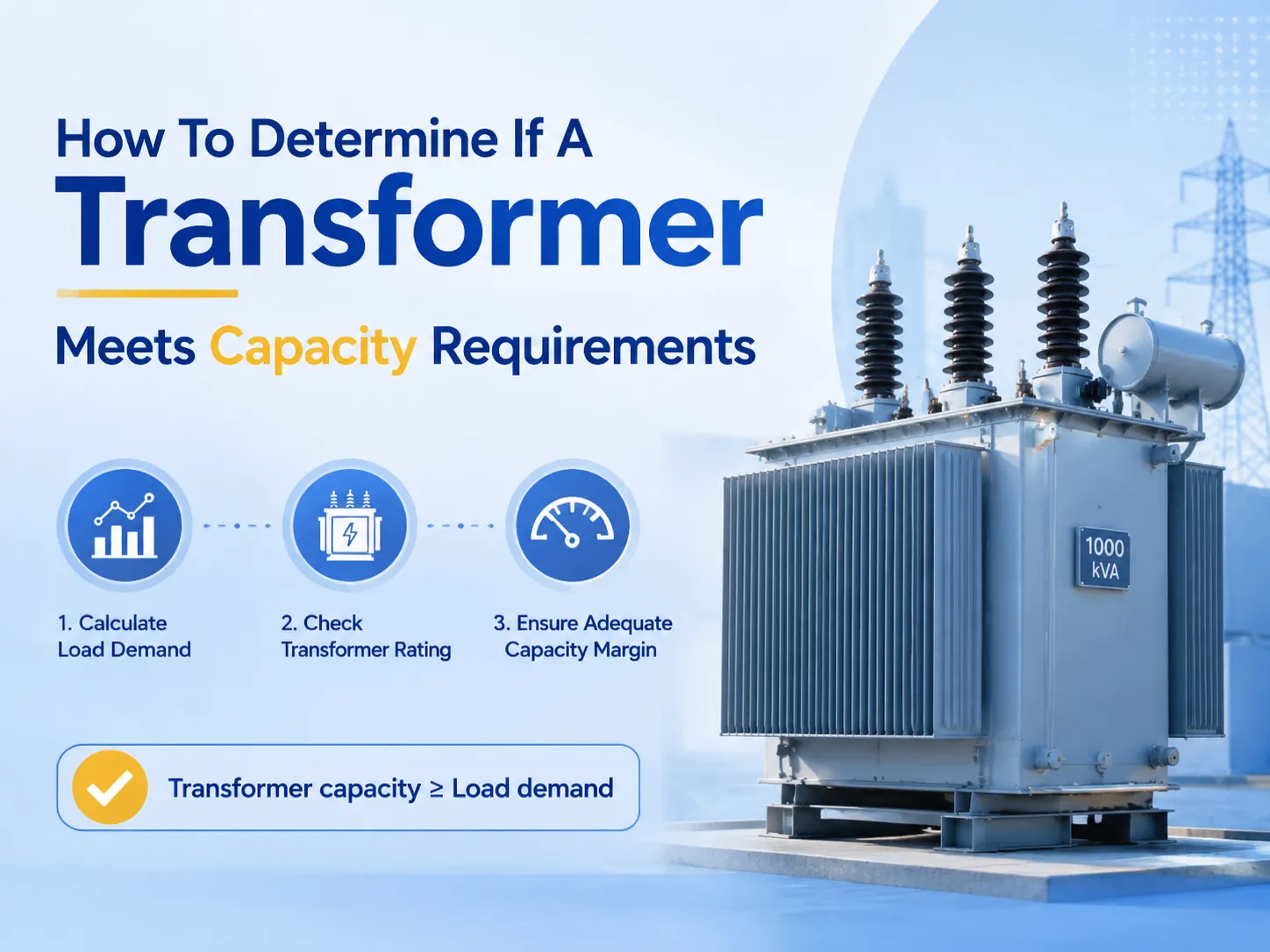
トランスにおける「容量要件」とは何を意味するのか?
トランスの容量は、特定の冷却条件下でのkVAまたはMVAで示された公称出力です。メーカーはこの定格をIEC 60076-1またはIEEE C57.12.00に従って設定し、温度上昇限界を超えずに連続使用できるデバイスの最高公称出力を示します — 通常、油浸トランスの場合は平均巻き線上昇が65 °C、乾式トランスの場合は絶縁クラスに応じて100–150 °Cです。.
「容量要件」に準拠するということは、トランスが増加した瞬時の負荷を運ぶ能力があることを意味します。これは、エンジニアが考慮すべき3つのパラメータに対して十分なマージンがある場合です:モーター起動による突入電流(これは定格電流の5–8倍に達する可能性があります)、可変周波数ドライブによって発生する高調波電流、将来の負荷増加の見込みです。数年後、今日正しく計算されたトランスは、施設の運用に負荷が追加されると簡単に不適切なサイズになる可能性があります。.
前述の不一致が発生する理由は二つあります。まず第一に、購入者はkVA(見かけの電力)をkW(実電力)と混同しがちで、0.8の力率で動作する負荷がkWに比べて25%多くのkVAを必要とするという事実を見失ってしまいます。さらに、購入者は各デバイスの銘板定格を合計し、必要な多様性係数を適用しないため、実際に使用されない回路に対して支払う必要がないのに、変圧器の容量を約30–50%過大評価してしまいます。.
ステップ1: 実接続負荷を計算する
まず、変圧器によって供給されるすべての(負荷)のリストを作成し、それらをグループ化する必要があります。良い分類は以下の通りです:
- 連続負荷 — 照明、HVAC、長時間稼働するプロセス機器。.
- 間欠負荷 — ポンプ、コンプレッサー、オンオフを繰り返すクレーン。.
- モーター負荷 — 定格電流、始動電流、および機器がソフトスタートやVFDを使用しているかどうか(使用している電流の数)。.
- 非線形負荷 — ハーモニック電流を持つVFD、整流器、UPSシステム。.
すべての負荷タイプのkVAを合計する必要があります。各負荷のkW値だけを計算しないでください。kWと力率しかない場合は、以下の式を使用してkVAを求めてください。すべての負荷の合計として生データを得たら、多様性係数を適用する必要があります。.
| 負荷カテゴリ | 一般的な多様性係数 | 推奨需要マージン |
|---|---|---|
| 一般商業(小売、オフィス) | 0.60–0.75 | 10–15% |
| 工業プロセスプラント | 0.70–0.85 | 10–20% |
| 病院、重要インフラ | 0.90–1.00 | 15–25% |
| データセンター(高密度) | 0.95–1.00 | 20–30% |
| 学校、自治体の建物 | 0.50–0.70 | 10% |
多様化された需要を10%から20%に増やしてください。この余裕は、ユニットがピーク夏負荷中に熱的限界内に留まることを保証し、将来の改修後も同様です。この余裕は、選定時に利用可能な最もコスト効果の高い保険の形です。.
ステップ2: kVA計算式を適用する
すべてをkVAに変換して、指定された定格と比較できるようにします。この場合、AC電力の法則に基づいて形成された三つの方程式が必要です。.
単相の場合:kVA = (ボルト × アンペア) ÷ 1000
三相の場合:kVA = (√3 × ボルト × アンペア) ÷ 1000
kWからkVAへの変換の場合:kVA = kW ÷ 力率
計算の例: 480 Vで240 Aの電流が流れる三相回線の場合、需要は(1.732 × 480 × 240) ÷ 1000 = 199.5 kVAです。力率が0.85であることを考慮すると、実際に消費されるエネルギーは170 kWに相当します。.
| 定格ライン電圧 (V) | 定格負荷電流 (A) | 計算された需要 (kVA) | 最寄りの標準定格 (kVA) |
|---|---|---|---|
| 240 (単相) | 100 | 24.0 | 25 |
| 480 (三相) | 120 | 99.8 | 112.5 |
| 480 (三相) | 240 | 199.5 | 225 |
| 480 (三相) | 480 | 399.1 | 500 |
| 13,800 (三相) | 25 | 597.5 | 750 |
| 13,800 (三相) | 42 | 1003.8 | 1250 |
常に次の高い標準IEC定格(25、50、100、160、250、400、500、630、800、1000、1250、1600、2000、2500 kVA)に進むべきであり、最小の電力を得ようとするべきではありません。これは、標準IEC定格が標準の変圧器設計、コアサイズ、および試験機器に適合するように作られているためです。特別な定格は、実際には15〜30%高くなり、納期も長くなります。.
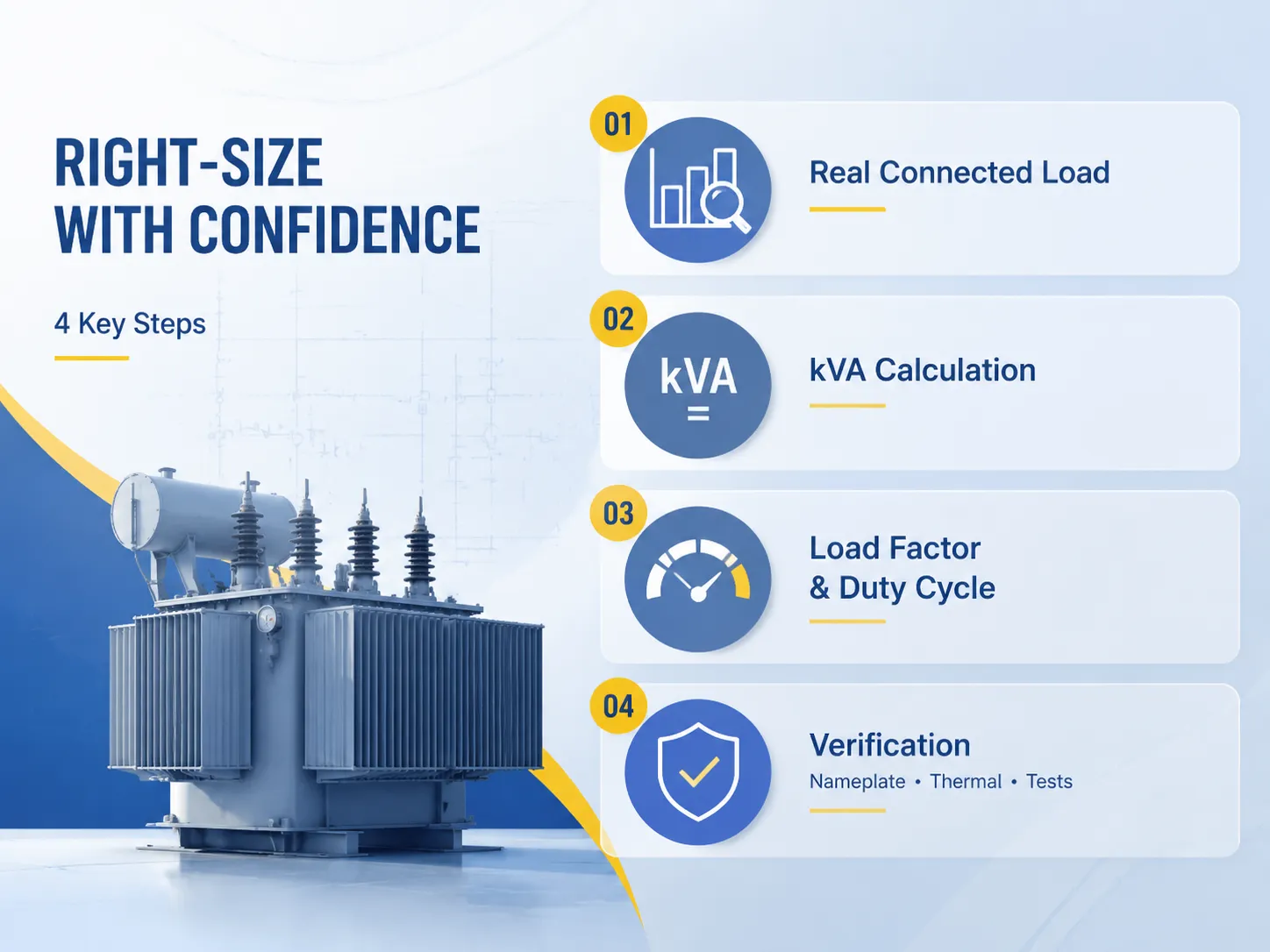
ステップ3:負荷率と稼働サイクルを確認する
全体の能力は、最大容量だけでなく、高電圧操作の持続時間によっても決まります。したがって、負荷率は以下の式で、特定の時間における平均消費量と最大消費量の比率として定義されます:
負荷率 = 平均消費量 ÷ 最大消費量
朝の半時間だけ400 kVAを消費し、平均消費量が150 kVAの工場は、負荷率が約0.375です。この状況は、油入れ変圧器がIEC 60076-7に関するサイクル負荷に従って、定格容量の1.3〜1.5倍の一時的な過負荷に数時間耐えることができるため、低い熱慣性を持つ変圧器の使用に有利です。一方、85%負荷の下で継続的に運転された変圧器は、絶縁の早期劣化に悩まされます。.
アレニウスの法則に従った絶縁寿命は、連続して機能する高点での温度が6-8°C上昇するごとに半分に減少します。例えば、変圧器が90%で負荷され、温度上昇が65°C未満の場合、ホットポイントの温度はかなりの時間105°Cを超えます。これが、80%の負荷基準が単なるマーケティングのトリックではない理由です。.
ステップ4: 検証方法(名板、熱、テスト)
変圧器が設置された後、3つの異なるレベルで容量を評価する必要があります。まず、管理面を確認する必要があります: 名板定格、インピーダンスのレベル、ベクトルグループ、冷却クラスONAN、ONAN/ONAF、AN/AFを購入仕様書と負荷調査を使用して確認する必要があります。次に確認すべきは運用面で、二次電流、電圧、巻線の温度をチェックする必要があります。.
新しい変圧器については、メーカーに工場報告書を求めることが重要です。IEC 60076-1に従い、巻線抵抗、比率、アイドル損失、アクティブ損失、温度上昇テストに関する定期テストが実施されるべきです。これは、変圧器が定格kVAで連続して動作できることを証明するために頼れる唯一のラボベースの証拠です。.
| 検証方法 | 確認する内容 | 一般的なコスト / 労力 |
|---|---|---|
| 名板レビュー対負荷調査 | 定格、インピーダンス、冷却クラスの一致 | コストなし、1時間 |
| 1週間の需要ログ | ピークkVA対実際の負荷下での定格 | $200–$600(ロガーレンタル) |
| 赤外線サーモグラフィ | ブッシング、タンク、ケーブル接続部のホットスポット | $300–$800ごとの調査 |
| 溶解ガス分析(DGA) | 油ユニットにおける早期の熱/アーク故障 | $80–$200ごとのサンプル |
| 工場定期テスト報告書 | 比率、損失、絶縁、温度上昇の証明 | 購入に含まれる |
過負荷のように見えるユニットについては、まずDGAと温度調査を実施し、その後他の購入を検討してください。実際の問題は、コア自体ではなく、接続不良や冷却フィンの詰まりであることが多く、これらを交換または改善することで、新しい変圧器を購入するよりも低コストで完全な機能を回復できます。.
一般的な容量定格とその負荷限界
提供された表は、考慮されるすべての冷却技術に対する推奨標準定格と最大持続負荷を示しており、これは多様なニーズと30度セルシウス(平均温度)の通常の気候条件に基づいています。.
| 定格kVA | 一般的な電圧クラス | 最大持続負荷 — 乾式(AN) | 最大持続負荷 — 油浸(ONAN) | 一般的な価格範囲(FOB中国) |
|---|---|---|---|---|
| 100 | 4/0.4 kV、11/0.4 kV | 80–90 kVA | 70–80 kVA | $2,500–$6,000 |
| 250 | 11/0.4 kV | 200–225 kVA | 175–200 kVA | $4,500–$11,000 |
| 500 | 11/0.4 kV、33/0.4 kV | 400–450 kVA | 350–400 kVA | $8,000–$18,000 |
| 1000 | 10/0.4 kV、35/10 kV | 800–900 kVA | 700–800 kVA | $15,000–$32,000 |
| 1600 | 35/10 kV、33/0.4 kV | 1,280–1,440 kVA | 1,120–1,280 kVA | $24,000–$48,000 |
| 2500 | 35/10 kV | 2,000–2,250 kVA | 1,750–2,000 kVA | $38,000–$75,000 |
クリーンな供給条件および変圧器の端子での力率がほぼ1に等しい場合に、仮定された連続供給限界が適用されることを指摘する必要があります。しかし、ハーモニクスを考慮に入れると、状況はかなり異なります。例えば、20-%の総ハーモニック歪みが電流にあると、実効熱負荷が5から10%増加し、すでに稼働中の装置は、そのkVAが正常範囲に見えても過負荷に陥る可能性があります。.
容量に影響を与える仕様
kVA定格に加えて、アプリケーションにおける変圧器が提供する実際の容量に影響を与えるいくつかの他の銘板仕様があります:
- 冷却分類 (IEC 60076-2): ONAN変圧器はその定格に自冷します。ONAN/ONAF変圧器は追加のアクティブファンを持ち、標準定格よりも約20%から30%多く提供します。.
- 温度上昇 (K): 65 Kに定格された変圧器は、同じサイズの55 Kに定格された変圧器よりも容量が大きいですが、その絶縁体にはより多くの摩耗がかかります。.
- インピーダンス電圧 (uk%): 配電用変圧器では通常4%から10%の範囲です。高いインピーダンス値は故障電流を減少させますが、電圧降下特性は悪化します。.
- ベクトル群 (Dyn11, Yyn0, Yd11): 循環電流の問題を防ぐためにシステムに適合する必要があります。.
- 高度および温度による定格低下: 高度が1000 mを超え、温度が40 °Cを超えると、IEC 60076-1に従って変圧器は定格低下すべきです(一般的に1000 mを超える毎に0.5 %から1 %)。.
- 巻線に使用される材料: 銅巻線はアルミニウム巻線よりも約15%から25%高い短絡容量を持っていますが、価格は約20%から40%高くなります。.
容量グレードユニットのブランドと価格帯
海外製品に関しては、容量の検証が非常に重要です。なぜなら、顧客が工場で製品を物理的に確認できない場合、性能仕様と実際の性能の違いが大きくなるからです。国際ブランドは銘板容量に対して高い価格を請求しますが、中国の製造業者はほぼ同じ検証された容量をはるかに低価格で提供します。.
| ブランド | 一般的な範囲 | 注目すべき位置 | 参考価格 (500 kVA) |
|---|---|---|---|
| ABB | 50+ MVAへの配電 | グローバルリーダー、強力なサービスネットワーク | $18,000–$30,000 |
| シーメンス | 配電から送電へ | 高効率アモルファスコアオプション | $18,000–$32,000 |
| シュナイダーエレクトリック | 乾式配電 | 深い低電圧統合 | $15,000–$28,000 |
| 日立エナジー | 公共事業および産業 | グリッド強化およびHVDCの専門知識 | $17,000–$30,000 |
| イートン | 配電、パッドマウント | 強力な北米の足跡 | $14,000–$26,000 |
| CGパワー、TBEA | 公共事業および産業 | 大量生産メーカー | $10,000–$18,000 |
| 江蘇省蘇辺電力 | 10 kVA–100 MVA | IEC 60076認証、完全な工場試験報告、銅巻線標準 | $8,000–$16,000 |
上記の価格は、500 kVAクラスユニットのためのFOB中国/工場渡しに基づく推定値に過ぎません。価格の変動は、顧客の要件や使用ケースによって異なります。上記の国際ブランドは、市場における多くの競合他社の中からの選択肢に過ぎず、長年の経験があります。容量要件を持つ人にとって、江蘇省蘇辺電力が特別な理由は何でしょうか?すべてのユニットには、IEC 60076レポートが付属しており、標準として銅巻線が使用されています。基本的に、購入者はユニットで何を受け取るかを正確に知っています。この情報は、レポートに提示された容量要件に基づいて意思決定プロセスを容易にします。パラメータに関して疑問がある場合、クライアントは常にこの研究の計算と工場レポートの数値を照らし合わせることができます。.
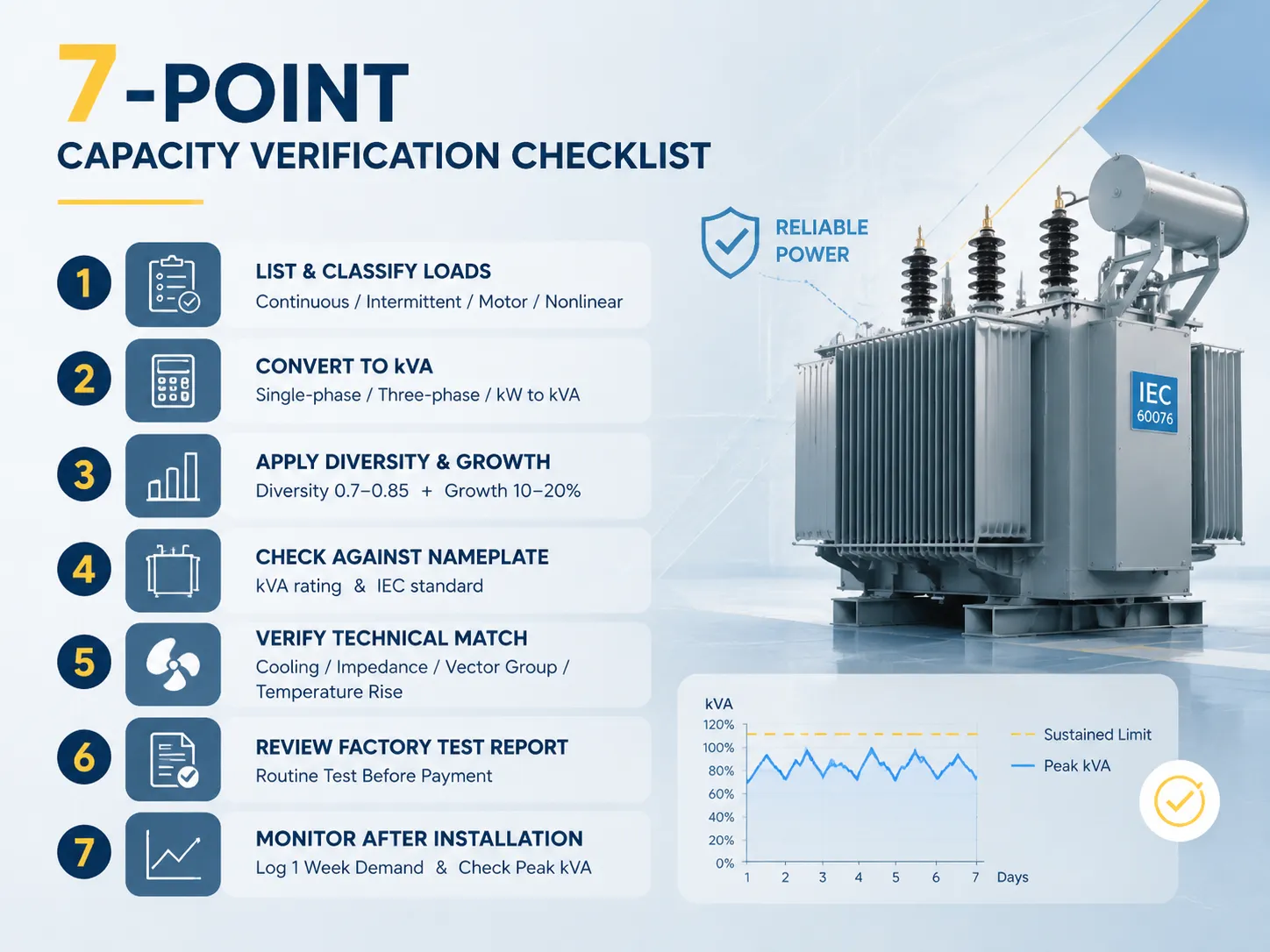
ƒ�イント容量確認チェックリスト
- すべての負荷の包括的なリストを作成し、それらを連続、間欠、モーター、または非線形としてグループ化する必要があります。.
- 各負荷を単相、三相、またはkWからkVAへの変換式に基づいてkVAに変換する必要があります。.
- 多様性係数(通常、工業プラントでは0.7から0.85の範囲にある)と約10から20パーセントの成長係数を活用するべきです。.
- これらの数値を取得したら、名板kVAと照らし合わせて、標準IEC値の範囲内に収まっていることを確認できます。.
- 冷却クラス、インピーダンス、ベクトルグループ、温度上昇がシステム標準に準拠していることを確認してください。.
- すべてが問題ないことを確認するために、支払いを行う前に工場の定期試験レポートを要求し、読むべきです。.
- システムを設置した後、1週間その需要を監視し、ピークkVAが規定のレベルを超えないことを確認してください。.
よくある質問
トランスが過負荷かどうかはどうやってわかりますか?
過去15分間の平均需要をトランスの定格容量と比較してください。平均が油冷式トランスの場合は80%、乾式トランスの場合は90%の容量を常に超える場合、これはデバイスが実際に過負荷であることを意味します。過負荷の兆候として観察できるものには、油の温度が90°Cを超える(クラスAの紙を使用できます)、105°Cを超えるホットスポットの読み取り、タンク内の騒音、水素やエチレンなどのガスの成分分析があります。負荷の再バランス、冷却、または現在のものよりも次の標準定格の高いトランスに交換することで問題に対処できるでしょう。.
トランス容量におけるkWとkVAの違いは何ですか?
kWは実際の電力を表し、kVAは見かけの電力を表します。kWは、kVA = kW ÷ 力率という式を使って計算できます。例えば、力率が0.8のとき、100 kWの電力には125 kVAの容量を持つ変圧器が必要です。変圧器の名板は常にkVAで表示されます。なぜなら、変圧器のすべての熱容量は巻線に依存するからです。力率が1未満の場合、kWだけを使って計算すると、変圧器が要件を満たさない可能性があります。.
変圧器のサイズを決定する際に使用すべき負荷係数は何ですか?
設備内の負荷の実際の多様性係数を使用してください:0.6–0.75(オフィスビル用)、0.7–0.85(工業用サイト用)、0.9–1.0(病院またはデータセンター用)。これらの係数を混同しないでください — 多様性と負荷係数(平均 ÷ ピーク需要)です。新しい施設を扱っている場合は、0.75の脅威係数を使用し、15–20%の成長マージンを考慮してください。既存の施設で作業しており、過去12ヶ月のすべての公共料金の請求書がある場合は、負荷係数を計算するだけで済みます。.
トランスは定格kVAを一時的に超えて動作できますか?
はい、できますが、厳しい条件下でのみ許可されます。IEC 60076-7によれば、ONAN冷却システムを備えた油浸トランスは、定格電気負荷の最大1.3まで処理できますが、70%を超えず、加熱温度が120°C未満である必要があります。過負荷の使用は、絶縁体の寿命を大幅に短縮します — たとえば、110°Cの温度での絶縁体は、適切に使用された場合、数十年ではなく数年しか機能しません。.
追加の10%の容量マージンのコストはどのくらいですか?
トランスの容量が500 kVAの場合、630 kVAの新しいトランスを取得するには、15–25%の追加コストがかかります(約$2,000–4,000相当)。トランスが故障した後に交換を検討する場合、新しい装置に$8,000–18,000を支払う準備をし、最大1–4週間待つ必要があります。20年間に一度でも負荷をオフにすることを避けられれば、10–20%のマージンへの投資はすでに回収されていることになります。.
参考文献
- IEC 60076-1: 電力変圧器 — 一般 — トランスの定格、容量、および試験要件を定義する国際標準。.
- IEC 60076-7: 油浸トランス用の負荷ガイド — 循環過負荷および温度制限に関する権威あるガイド。.
- IEEE C57.12.00: 液体浸漬型配電、電力、調整トランスの一般要件 — 北米の同等の容量および試験フレームワーク。.
- Electrical4U — トランスの負荷係数と効率 — 負荷係数、多様性、および効率曲線の明確な説明。.
- Eaton — トランスのサイズガイド — 業界全体で使用される実用的なkVA計算表とサイズ例。.
- Fluke — トランスの熱画像 — 負荷と接続の赤外線検証に関する現場ガイダンス。.
- Wikipedia — トランス — トランス理論、定格、および冷却分類に関する背景情報。.
結論
トランスの容量が十分かどうかを知ることは、需要についての推測的な推測の問題ではありません。このプロセスは、ピーク需要の特定、kVAでの需要の計算、負荷係数の特定、および工場提供の試験結果に基づく名板データの確認という4つの簡単なステップを含みます。油浸トランスの場合、10–20%の増加を許可し、負荷係数を80%未満に保つというルールに従うことは、今日では非常に安価であり、将来の高額な故障を防ぐことができます。.
- kVAで計算を行い、混合産業負荷に対して0.7から0.85の多様性係数を使用してください。.
- IEC 60076レポートで容量を確認してください — それが唯一の証拠であり、カタログではありません。.
- 将来のニーズに対して10-20%のマージンを確保してください — それが調達段階での最も安価な保険の形です。.
- kVAあたりの価格ではなく、試験された容量と透明性のレベルに基づいてベンダーを選択してください。.