


ラゴスで、ある電気工事業者が、1台あたり1000 kVAの容量を持つ12台の乾式変圧器を非常に魅力的な価格で注文しました。しかし、試運転段階で、インピーダンスの不一致が5パーセント、部分放電証明書の欠如、工場試験報告書と一致しない名札が付いて出荷されたことが明らかになりました。その結果、プロジェクト全体が3か月遅れ、クライアントはサプライヤーチェーンへの信頼を失いました。これは、顧客がサプライヤーを選ぶ際の主要な基準としてkVAあたりの価格を判断するすべての市場で繰り返されるストーリーです。.
このバイヤーズガイドは、乾式変圧器の購入プロセスを理解するのに役立ちます。したがって、電圧、負荷、環境を決定することから始まり、見積もりの読み取り、IEC 60076-11ガイドへの適合性の確認、検査の実施、総所有コストの計算に至るまで、プロセスの各段階を案内します。.
乾式変圧器は、25 kVAから12,500 kVAの容量を持つ空冷変圧器です。これは、油ではなく、キャストエポキシ樹脂またはクラスHのワニスで絶縁されており、原則としてIEC 60076-11(および北米のIEEE C57.12.01 / NEMA TP-1)に従って使用されます。コアの購入プロセスには、システムの電圧と短絡性の確立、損失と効率クラスの決定、キャスト樹脂とVPIの選択、非線形負荷の場合のKファクターの確認、試験証明書の取得、輸送、通関、試運転のために変圧器のコストに10-15%を追加することが含まれます。.
乾式変圧器とは何ですか?
乾式変圧器は、液体絶縁を使用せずに磁気誘導を利用して電気を伝送するものです。代わりに、導体はエポキシ樹脂やクラスHのワニスなどの柔らかい材料で絶縁され、コアは一連のシリコン鋼の積層から構成されています。このタイプの変圧器は、油を使用できない場所、例えば建物、トンネル、船、タワーなどで使用されます。.
IEC規則の下で許可される最大電圧レベルは36 kVに達することができ、変圧器の最も一般的な電力は50 kVAから12,500 kVAの範囲です。損失、インピーダンス、温度上昇は、製造業者がすべての納品時に提供すべき定期試験報告書に含まれるデータに基づいて確認する必要がある値です。.
仕組み
ラミネート鋼コアの磁化は、交流の流れによって発生します。そのため、電磁誘導により二次巻線に電流を誘導する磁場が生成されます。変圧器では、一次巻線と二次巻線の電圧および巻数比は等しいため、100の一次巻線と10の二次巻線を持つ変圧器は、電圧を10分の1に減少させると同時に、電流を同じ比率で増加させます。.
熱は変圧器の運転を制限します。銅損失は負荷の二乗に比例して増加し、コア損失は運転中に一定です。この点において、乾式絶縁システムは温度クラスF(155°C)およびH(180°C)に制限され、温度上昇は周囲温度40°Cを基準に100 Kおよび125 Kです。これらの限界を超えると、数時間の運転後に絶縁が永久に損傷する可能性があります。.
種類と構造
| 構造 | 絶縁システム | 定格範囲 | 主な特性 |
|---|---|---|---|
| キャストレジン(エンキャプスulated) | エポキシ樹脂、真空鋳造 | 100–12,500 kVA | 耐湿性、自己消火性、低PD、静音 |
| VPI(真空圧浸透) | クラスHバーニッシュ | 25–3,000 kVA | 低コスト、クリーンな屋内空気での良好な性能 |
| 開放通気型乾式(OVDT) | アラミド紙 + バーニッシュ | 500–3,000 kVA | ユーティリティスタイルのオープンコイル、高い熱耐久性 |
| アモルファス金属コア | キャストレジンまたはVPI | 50–2,500 kVA | 70–80%低負荷損失、高い初期コスト |
ほとんどの商業クライアントにとって、選択肢は通常キャストレジンとVPIの間です。キャストレジンは高価で、VPIより約15%から30%高いですが、湿気、部分放電ストレス、繰り返しのエネルギー供給に対処するのが得意です。その結果、データセンターやプロセス産業はキャストレジンを好みます。.
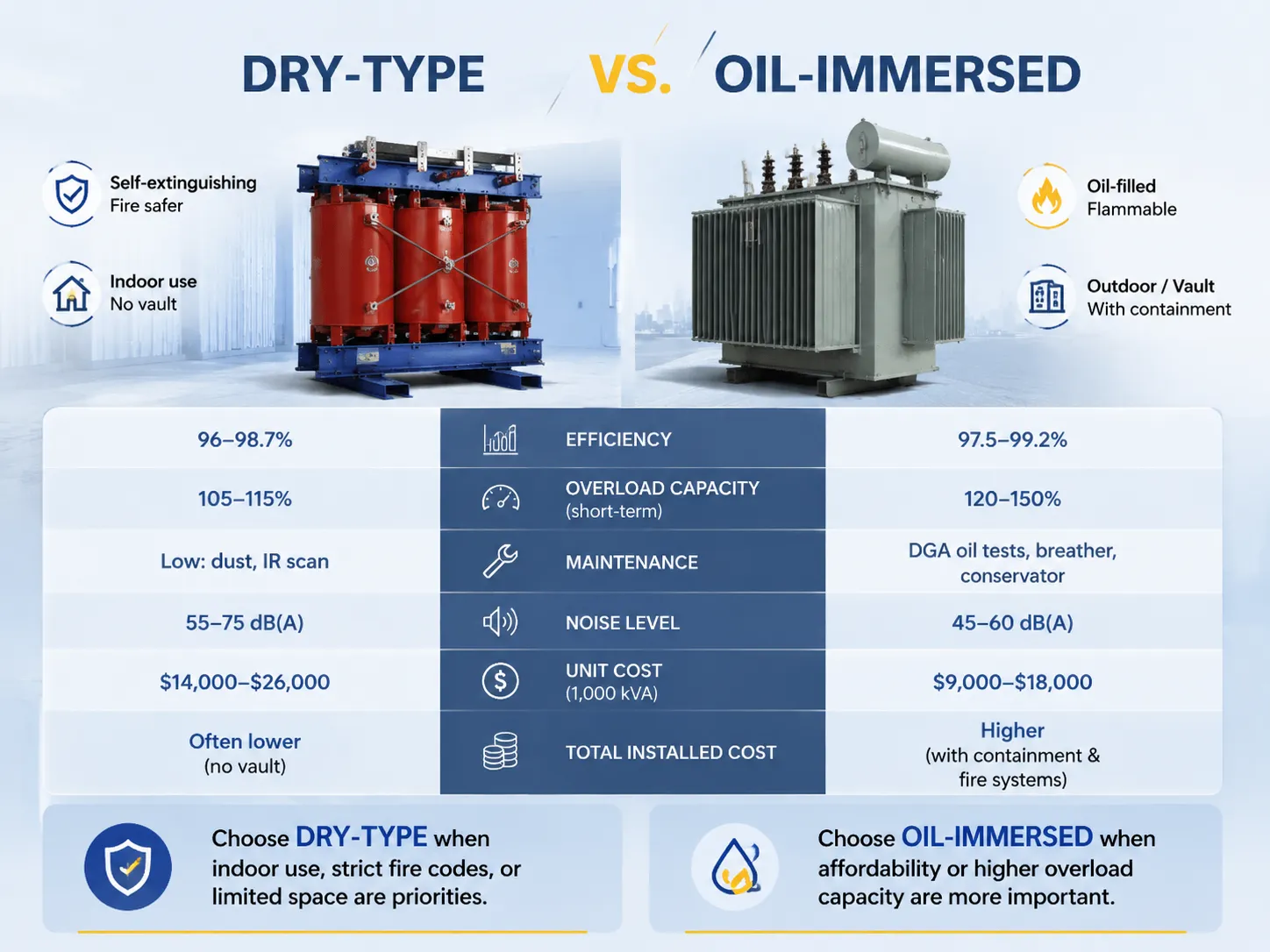
乾式対油浸型
| 基準 | 乾式型 | 油浸型 |
|---|---|---|
| 安全性 / 火災 | 自己消火性材料 | 可燃性油、 containmentが必要 |
| 設置 | 屋内、バルトなし | 屋外またはバルト付きのバンド/ピット |
| 効率 | 96–98.7%典型的 | 5–99.2%典型的 |
| 過負荷 | 105–115%短期 | 120–150%短期 |
| メンテナンス | 低: 塵、IRスキャン | DGA油テスト、ブリーザー、コンザーバー |
| 騒音 | 55–75 dB(A) | 45–60 dB(A) |
| 単位コスト、1,000 kVA | $14,000–$26,000 | $9,000–$18,000 |
| 総設置コスト | より低いことが多い(バルトなし) | containmentおよび火災システムを考慮すると高くなる |
屋内使用が必要な場合や、厳しい火災基準に準拠することや限られた床面積がより重要な場合は、乾式ユニットを選択してください。手頃な価格や高い過負荷ヘッドルームが屋内設置のアイデアよりも重要な場合は、油浸型ユニットを選択してください。.
確認すべき仕様
| パラメータ | 依頼すべき内容 | 典型的な値 |
|---|---|---|
| 定格電力 | 指定された環境での連続kVA | 100–2,500 kVA(配電) |
| 主電圧/副電圧 | 両方、タップ範囲付き | 11 kV / 0.4 kV; 33 kV / 11 kV, ±2×2.5% |
| インピーダンス(uk) | 定格電流での短絡電圧 | 4–8%、許容差 ±7.5% |
| 損失 | 120°Cでの無負荷損失と負荷損失 | 下の効率表を参照 |
| 温度上昇 | 巻線上昇クラス | 100 K (F) または 125 K (H) |
| 絶縁レベル | 雷インパルス(LI)および電力周波数(AC) | 例:11 kVシステム用の75/28 kV |
| 騒音レベル | 1 mでの音圧 | 55–75 dB(A) |
| 冷却方法 | AN、AFまたはANAF | AN標準; AFは15–20%の容量を追加 |
| 規格 | 規定された標準および試験証明書 | IEC 60076-1/-11、IEEE C57.12.01 |
効率クラスと損失値
| 定格(kVA) | 無負荷損失(W) | 120°Cでの負荷損失(W) | 100%での効率 |
|---|---|---|---|
| 250 | 500–700 | 2,600–3,800 | 98.1–98.6% |
| 630 | 1,000–1,400 | 6,000–8,500 | 98.2–98.8% |
| 1,000 | 1,500–2,100 | 8,900–12,500 | 98.3–98.9% |
| 1,600 | 2,100–3,000 | 13,000–18,000 | 98.5–99.0% |
| 2,500 | 3,000–4,200 | 19,000–26,000 | 98.7–99.1% |
高効率トランス(通常はアモルファス金属コアまたはより良いグレードのシリコン鋼で作られています)は、無負荷損失が低く、従来の設計と比較して約30-60%の節約ができます。機械が年間を通じて常時稼働し、軽負荷で動作する場合、節約のコストは、3年から6年の期間で元の投資の追加コスト10-25%をカバーします。投資回収の計算は、損失のコストが$3,000から$6,000の間であると仮定して行う必要があります。.
業界全体での応用
- オフィスビルと高層ビル:油を使用せず、11/0.4 kVの配電方式を持つ地下電気室。.
- データセンター:480/277 Vおよび208/120 Vパネルボードの供給に使用される750–3,000 kVAの乾式トランス。.
- 再生可能エネルギー源:タワー内の1から5 MVAの風力タービントランスおよび補助供給を提供する太陽光発電所。.
- 鉄道輸送:トンネル内で振動と湿気の下で動作できる牽引補助トランス。.
- 海洋分野:塩水のスプレーと凝縮の下で作業を維持するキャストレジン小型トランス。.
- 工業部門:モーター制御とドライブの目的のための絶縁および降圧トランス。.
トップブランドと価格帯
| ブランド | 国 | 1,000 kVAの価格 | 2,500 kVAの価格 | 強度 |
|---|---|---|---|---|
| ABB | スイス | $22,000–$36,000 | $40,000–$62,000 | グローバルネットワーク、デジタル監視 |
| シーメンス | ドイツ | $21,000–$35,000 | $38,000–$58,000 | GEAFOLキャストレジンの参考 |
| シュナイダーエレクトリック | フランス | $22,000–$37,000 | $39,000–$60,000 | エコデザインポートフォリオ |
| 日立エナジー | スイス/日本 | $23,000–$38,000 | $41,000–$65,000 | 高出力キャストレジン |
| イートン | アイルランド/米国 | $15,000–$26,000 | $28,000–$45,000 | UL/NEMAライン、アメリカでの迅速な在庫 |
| CGパワー | インド | $16,000–$28,000 | $29,000–$47,000 | 価値価格、EMEAのリーチ |
| 江蘇省蘇辺電力 | 中国 | $12,000–$22,000 | $22,000–$38,000 | 直接工場、OEM/ODM、IEC 60076テスト済み |
ABB、Siemens、Schneider Electric、Hitachi Energyなどの有名ブランドは、ローカル接続、技術支援、そして長年の技術実証に対して高い価格を請求します。しかし、建設は時代遅れであり、配向性鋼心、樹脂化、そして通常のIECテストはどこでも同じです。例えば、Jiangsu Subian Electric Powerのようなメーカーは、IEC 60076基準に準拠したトランスを提供し、公式のヨーロッパ価格よりも30%から50%安く、60以上の場所に製品を出荷しています。コストを比較するためには、2つのメーカーと2つのローカルサプライヤー以外の選択肢はありません。配達および検査料金を含めて。.
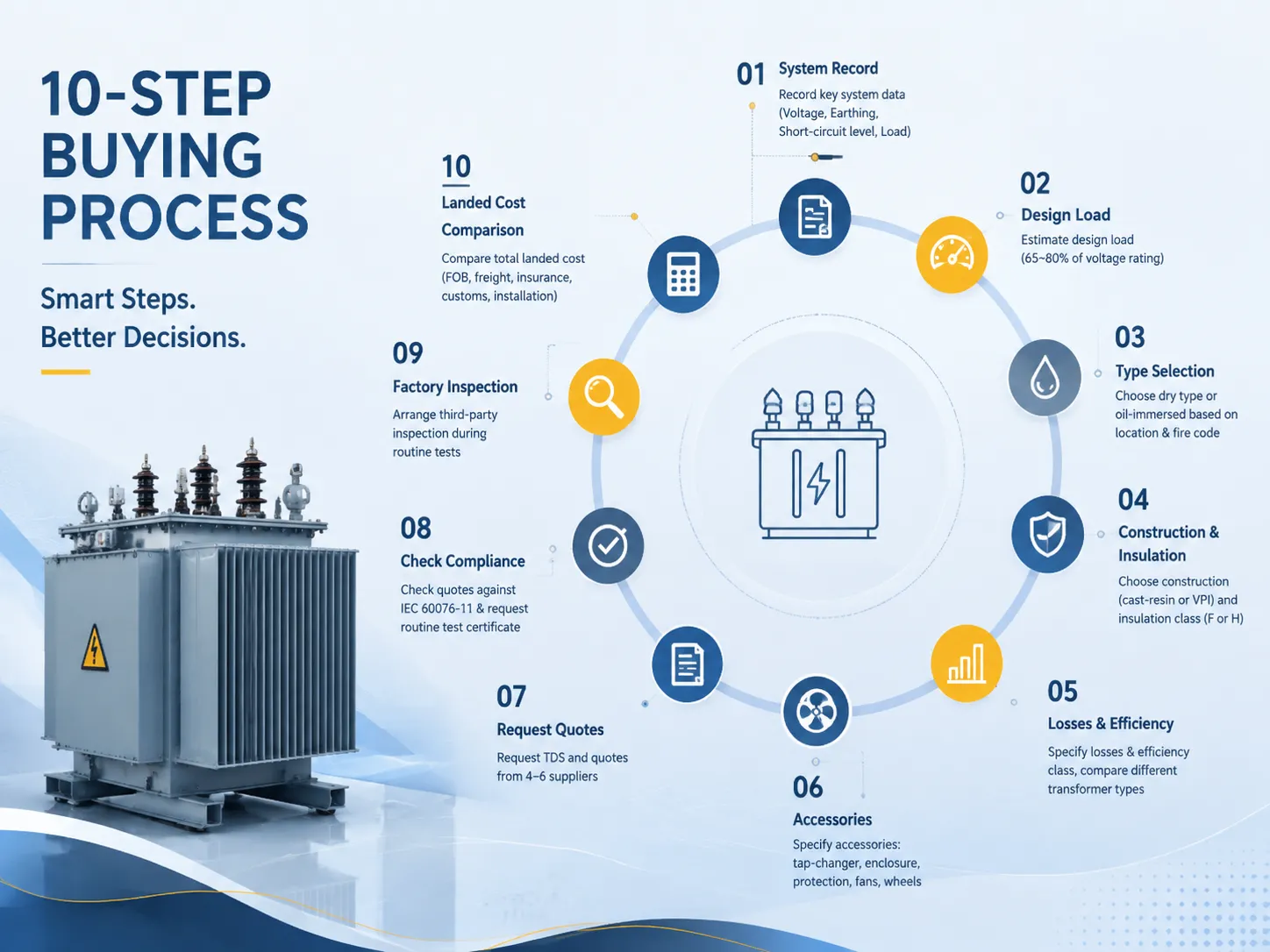
‚¹テップの購入プロセス
- 使用されるシステムのすべての側面を仕様の観点から記録する必要があります:定格電圧、接地配置、短絡レベル、kVAでの負荷および負荷プロファイル。.
- 設計負荷を65〜80%の電圧定格で推定する計算方法を使用し、最大効率を達成します。.
- 位置、消防コード、設置コストに基づいて乾式または油浸トランスを選択します。.
- 構造方法(キャスト樹脂またはVPI)および絶縁クラス(FまたはH)を選択します。.
- 損失と効率クラスを指定します。異なるタイプのトランスの効率と損失を集計します。.
- タップチェンジャー、エンクロージャー、サーミスタ/PTC保護、ファン、車輪などのアクセサリーの種類を決定します。.
- �‹ら6のサプライヤーから技術データシートと見積もりを注文してください。.
- 見積もりをIEC 60076-11と照らし合わせ、基準ユニットの定期試験証明書を要求します。.
- 可能であれば、定期試験中に工場で第三者検査を手配します(ユニット価格の1-3%の費用がかかります)。.
- 陸上コスト比較式(FOB価格だけでなく、運賃、保険、関税、そしてもちろん設置費用も含む)を使用して契約を比較します。.
見積もりの読み取りと罠の回避
- 損失は保証されたものまたは測定されたものとして分類されます:テスト可能な保証された損失のみが受け入れられます - 10%の変動は、各機械ユニットの損失評価を$1,500〜$4,000の範囲にします。.
- インピーダンス許容差:標準はIEC 60076-1に従って±7.5%です;より高い許容差は保護協調の破綻を引き起こす可能性があります。.
- 環境基準:設計環境が指定されていることを確認する必要があります(通常は40°Cです);30°Cで見積もりが行われた場合、それは直接的な比較にはなりません。.
- エンクロージャーと冷却:IP23、ファン、センサーの存在が価格に考慮されているか、別途記載されているかを確認します。これは非常に頻繁であり、価格を8-15%増加させます。.
- インコタームズ:価格がEXW、FOB、またはCIFとして表現されているか確認してください。EXWとして表現された見積もりは、実際には非常に安く見えるため誤解を招く可能性がありますが、その後、運賃や保険を考慮すると価格が倍になることが判明します。.
- ドキュメンテーション:さまざまな種類の試験証明書、定期試験報告書、図面、および条件が明記された1年間の保証が提供されることを確認してください。.
工場検査および試験
- IEC 60076-1/60076-11に従った定期的な検査を行います:変圧比、抵抗、無負荷および負荷損失、IR評価、高電圧試験、部分放電(キャストレジン用)。.
- 名板データを注文詳細と比較します:出力定格、電圧、インピーダンス、損失、基準、製造日。.
- キャストレジンコイルの状態の写真観察、亀裂、気泡、または以前の硬化プロセスからの変色を追跡します。.
- コアクランプの硬度と接地ラグが利用可能であることを確認します。.
- シリアル番号、試験配置、およびパッケージの写真を撮ります。.
配送、設置およびメンテナンス
- リフティングは、定格リフティングラグを使用してのみ行い、ブッシング、コイル、ファンシールドにスリングを使用してはなりません。.
- 屋内に保管し、保管期間が6か月を超える場合は、IR試験を実施し、事前に無負荷状態で4-6時間の通電を行う必要があります。.
- 前面が600-700 mmの高さで、背面に200-300 mmのクリアランスがある平坦な基盤に置きます。.
- 通電操作の前にIRを測定します。500 Vで100 MΩ未満が測定された場合は、乾燥させます。.
- 始動後30日以内に初めて赤外線スキャンを実施し、その後四半期ごとに行います。20 K以上の温度差がある接続を締めます。.
- ラジエーターのダクトとフィンを年に一度、小さな真空清掃を使用して清掃します。.
よくある質問
乾式変圧器のkVAあたりのコストはいくらですか?
キャストレジン変圧器のコストは、630から2000 kVAの出力定格を持つユニットで、kVAあたり約$14から$26の範囲で、VPI変圧器の価格範囲は工場出荷時にkVAあたり$9から$18の範囲です。出力定格1000 kVAの典型的なキャストレジン変圧器は、税金を除いて$14,000から$26,000の間で、送料、通関手数料、設置費用は10から15%の範囲です。価格はブランド、仕様、地理的な違いによって異なります。.
キャストレジンとVPI乾式変圧器の違いは何ですか?
キャストレジン変圧器には巻線およびエポキシ材料が含まれています。この独自のタイプの変圧器は、性能を損なうことなく湿気に対して非常に高い保護レベルを提供し、10 pC未満の低部分放電を提供します。湿気の多い地域や火災の危険がある地域への設置が強く推奨されます。.
乾式変圧器は屋外に設置できますか?
はい、ユニットが適切なエンクロージャー(通常はIP54またはIP55の防水)を備えている限り、結露を制御するためのヒーティングストリップや日よけを設置することができます。屋内使用に指定されたユニット(例えばIP23)を屋外に設置すると、絶縁が劣化し、絶縁追従故障を引き起こす可能性があります。屋外用に評価された乾式トランスは、同様の設計の屋内ユニットよりも約10〜20%高くなります。.
乾式トランスはどのくらい持ちますか?
適切な温度条件下で使用され、清潔に保たれている場合、キャストレジン型トランスは通常、サービス寿命が25〜30年以上持ちます。絶縁寿命は、標準値を8〜10°C超える温度上昇ごとに約2倍短くなります。したがって、機器を保護するためには、巻線の温度を仕様に示された限界内に保つことが推奨されます。.
ドライタイプ変圧器はなぜ油入れ型よりも高価なのですか?
ドライタイプ変圧器に必要な材料の価格は、バルク変圧器油の代わりにエポキシ樹脂とクラスH絶縁体が使用されるため高く、ドライタイプは空気冷却が油冷却よりも効率が悪いため、より大きな導体が必要です。同時に、バルク、油の保持、火災抑制システムの調整を行うと、屋内の場所でもドライシステムの全体的なコストは低くなる傾向があります。.
参考文献
- IEC 60076-11: 電力変圧器 – ドライタイプ変圧器 — ドライタイプユニットの定格、損失、温度上昇および試験のためのコア標準。.
- IEC 60076-1: 一般要件 — 電力変圧器の定格値、許容差、および一般的な試験手順をカバーします。.
- IEEE C57.12.01: ドライタイプ配電および電力変圧器 — 北米の要件と試験方法。.
- NEMA TP-1: 配電変圧器のエネルギー効率を決定するためのガイド — 北米の入札で使用される効率基準。.
- 米国DOE配電変圧器効率 — 最低効率規制と損失評価を説明します。.
- NFPA 70 (NEC) — 変圧器の設置およびクリアランス要件。.
- 江蘇省蘇辺電力 — キャストレジンおよびVPIラインを提供し、OEMサポートを行うIEC 60076準拠のドライタイプ変圧器メーカー。.
結論
ドライタイプ変圧器の成功した購入は、提供する仕様の種類、見積もりの完全性、および工場検査の品質に依存します。ドライタイプ変圧器は実績のある技術であり、技術仕様書に依存するのではなく、損失、インピーダンス、温度上昇クラス、および基準への適合の検証に基づいて、有利な購入と高価な購入を区別します。.
- IEC 60076-11の適合性、損失レベル、および試験提出を文書で明確にしてください。.
- ランディング価格とともに総所有コストの比較を行い、$3,000-$6,000 per kWの損失見積もりを含めてください。.
- また、物流のために価格に追加で10-15%を支払う準備をしてください。.
ABBやSiemensのような市場リーダーから購入する場合でも、Jiangsu Subian Electric Powerから直接購入する場合でも、契約には使用される基準、必要な試験、および保証条項を明記する必要があります。.