


في لاغوس، قام مقاول كهربائي بتقديم طلب لاثني عشر محول جاف بسعة 1000 كVA لكل وحدة بسعر جذاب للغاية. ومع ذلك، خلال مرحلة التشغيل، تم الكشف عن أن الوحدات تم شحنها مع عدم تطابق في المقاومة بنسبة 5 في المئة، وغياب شهادة التفريغ الجزئي، ولوحة الاسم التي لم تتطابق مع تقرير اختبار المصنع. ونتيجة لذلك، تأخر المشروع بالكامل لمدة ثلاثة أشهر، وفقد العميل الثقة في سلسلة الموردين. إنها القصة التي تتكرر في كل سوق حيث يحكم العملاء على السعر لكل كVA كمعيار رئيسي لاختيار المورد.
ستساعدك هذه الدليل للمشترين على فهم كيفية التعامل مع عملية شراء المحولات الجافة. وبالتالي، سيتم إرشادك خلال كل مرحلة من العملية بدءًا من تحديد جهدك، وحملك، وبيئتك، واستمرارًا بقراءة الاقتباسات، والتحقق من الامتثال لدليل IEC 60076-11، وإجراء الفحص، وحساب التكلفة الإجمالية للملكية.
المحول الجاف هو محول مبرد بالهواء بسعة تتراوح من 25 كVA إلى 12,500 كVA. يتم عزله باستخدام راتنجات الإيبوكسي المصبوبة أو طلاء من الفئة H، وليس بالزيت، ويستخدم بشكل أساسي وفقًا لـ IEC 60076-11 (و IEEE C57.12.01 / NEMA TP-1 في أمريكا الشمالية). تشمل عملية الشراء الأساسية: تحديد الجهد والقصور الذاتي للنظام، وتحديد الخسائر وفئة الكفاءة، والاختيار بين راتنجات الإيبوكسي المصبوبة و VPI، والتحقق من عامل K في حالة الأحمال غير الخطية، والحصول على شهادات الاختبار، وإضافة 10-15% إلى تكلفة المحول للشحن، والجمارك، والتشغيل.
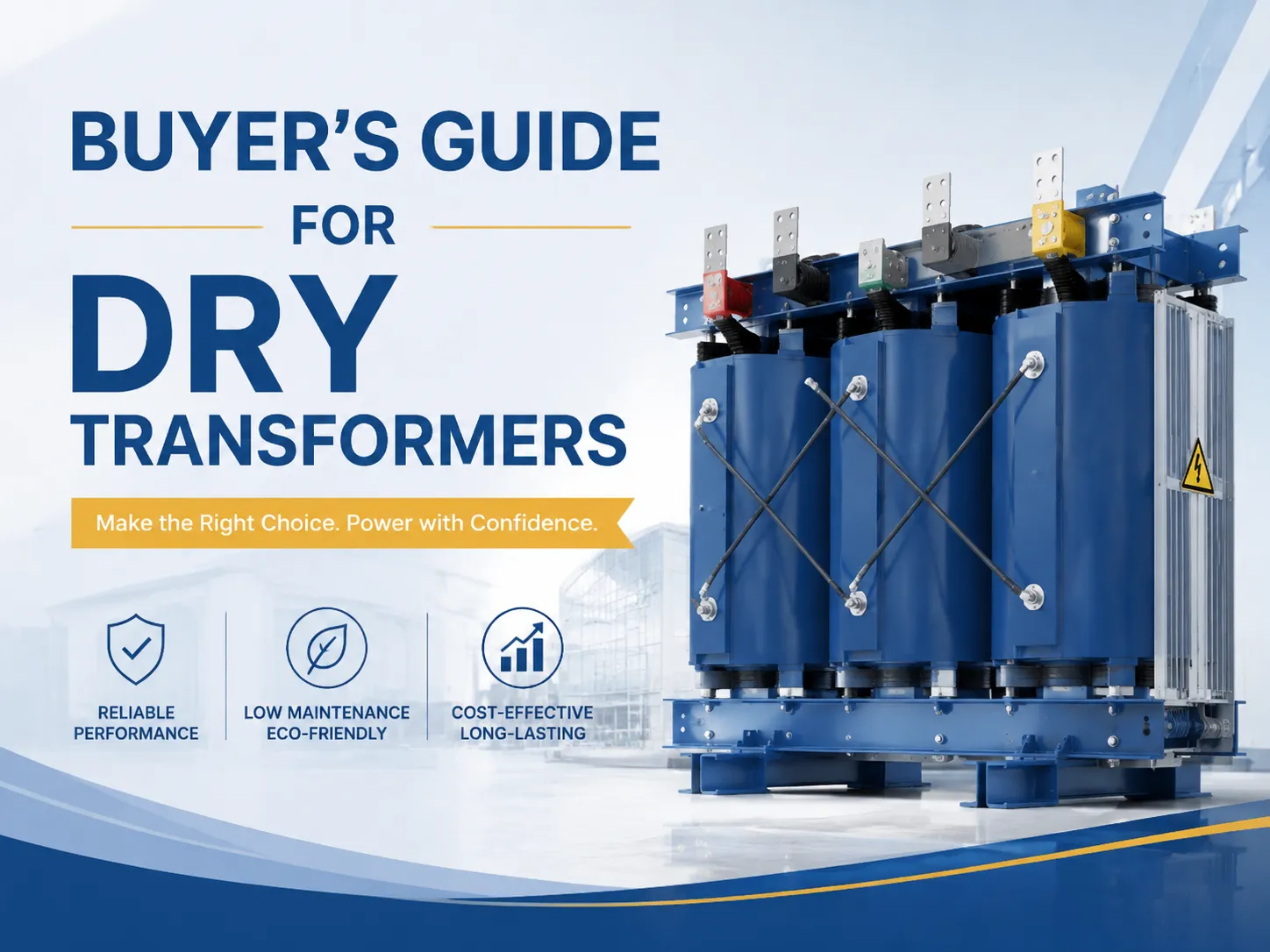
ما هو المحول الجاف؟
المحول الجاف هو المحول الذي ينقل الكهرباء باستخدام الحث المغناطيسي ودون استخدام عزل سائل. بدلاً من ذلك، يتم عزل الموصلات باستخدام مواد خفيفة مثل راتنج الإيبوكسي أو طلاء الفئة H بينما يتكون القلب من سلسلة من صفائح الفولاذ السيليكوني. يتم استخدام هذا النوع من المحولات في أي أماكن لا يمكن استخدام الزيت فيها، بما في ذلك المباني، والأنفاق، والسفن، والأبراج.
يمكن أن تصل مستويات الجهد القصوى المسموح بها بموجب لوائح IEC إلى 36 كV وأقصى طاقة للمحولات تتراوح من 50 كVA إلى 12,500 كVA. يجب تأكيد الخسائر، والمقاومة، وزيادة درجة الحرارة بناءً على البيانات المدرجة في تقرير الاختبار الروتيني، والذي يجب أن يقدمه المصنع مع كل شحنة.
كيف تعمل
يحدث مغنطة القلب الفولاذي المصفح بسبب تدفق التيار المتردد. وبالتالي، يتم إنشاء مجال مغناطيسي يحفز تيارًا في الملف الثانوي من خلال الحث الكهرومغناطيسي كما هو منصوص عليه في قانون فاراداي. في المحولات، تكون نسب الجهد ونسب اللفات من الأولية إلى الثانوية متكافئة: وبالتالي، فإن المحول الذي يحتوي على 100 لفة أولية و10 لفات ثانوية سيقلل الجهد بمقدار عشرة بينما يزيد التيار بنفس المقدار.
تحدد الحرارة تشغيل المحولات؛ تزداد خسائر النحاس مع مربع الحمل؛ تظل خسائر القلب ثابتة أثناء التشغيل. في هذا الصدد، تقتصر أنظمة العزل من النوع الجاف على فئات درجة الحرارة F (155 درجة مئوية) و H (180 درجة مئوية)، مع ارتفاع في درجة الحرارة يساوي 100 كلفن و 125 كلفن فوق مستوى محيط يبلغ 40 درجة مئوية. إذا تم تجاوز هذه الحدود، فقد يتعرض العزل للتلف الدائم بعد بضع ساعات من التشغيل.
الأنواع والبناء
| البناء | نظام العزل | نطاق التصنيف | الخصائص الرئيسية |
|---|---|---|---|
| راتنج مصبوب (مغلف) | راتنج إيبوكسي، مصبوب تحت فراغ | 100–12,500 ك.ف.أ | مقاوم للرطوبة، ذاتي الإطفاء، انخفاض PD، هادئ |
| VPI (مضغوط تحت فراغ) | طلاء من الفئة H | 25–3,000 ك.ف.أ | تكلفة أقل، أداء جيد في الهواء النظيف الداخلي |
| نوع جاف مفتوح مهوى (OVDT) | ورق أراميد + طلاء | 500–3000 كيلوفولت أمبير | لفائف مفتوحة على نمط المرافق، تحمل حراري عالي |
| نواة معدنية غير متبلورة | راتنج مصبوب أو VPI | 50–2,500 كVA | 70–80% خسائر تحميل منخفضة، تكلفة أولية أعلى |
بالنسبة لمعظم العملاء التجاريين، يكون الاختيار عادة بين راتنج مصبوب و VPI. راتنج مصبوب أغلى، حوالي 15% إلى 30% أغلى من VPI، لكنه يتعامل بشكل أفضل مع الرطوبة، وإجهاد التفريغ الجزئي، وإعادة التشغيل المتكررة. نتيجة لذلك، تفضل مراكز البيانات والصناعات العملية راتنج مصبوب.
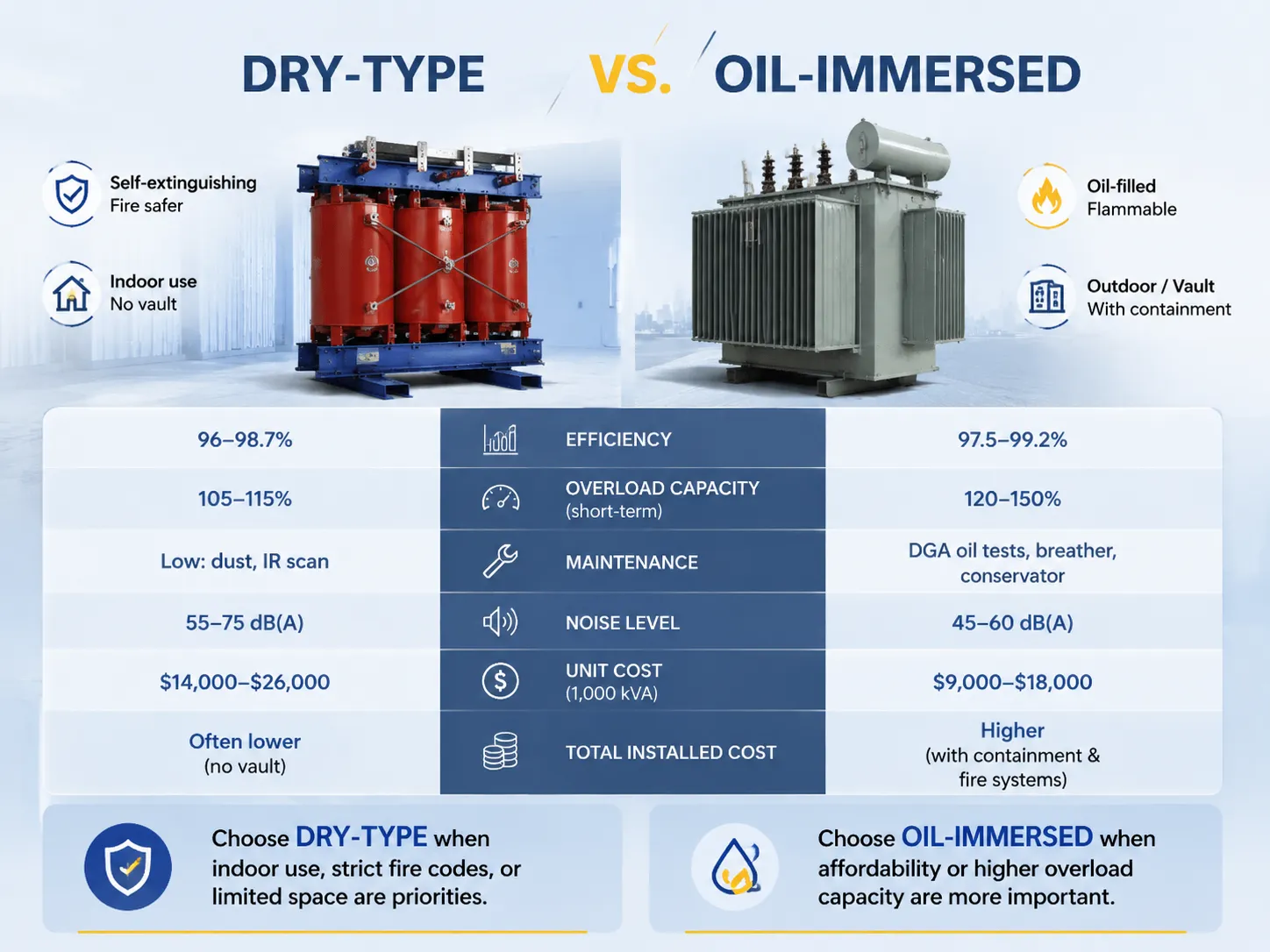
النوع الجاف مقابل النوع المغمور بالزيت
| المعايير | النوع الجاف | النوع المغمور بالزيت |
|---|---|---|
| السلامة / الحريق | مواد ذاتية الإطفاء | زيت قابل للاشتعال، الحاجة إلى احتواء |
| التركيب | داخلي، لا يوجد قبو | خارجي أو قبو مع حوض/حفرة |
| الكفاءة | 96–98.7% نموذجي | 5–99.2% نموذجي |
| الحمل الزائد | 105–115% قصير الأمد | 120–150% قصير الأمد |
| الصيانة | منخفض: غبار، مسح بالأشعة تحت الحمراء | اختبارات زيت DGA، منفذ، خزان |
| الضوضاء | 55–75 ديسيبل(A) | 45–60 ديسيبل(A) |
| تكلفة الوحدة، 1,000 kVA | $14,000–$26,000 | $9,000–$18,000 |
| التكلفة الإجمالية المثبتة | غالبًا أقل (لا يوجد قبو) | أعلى بمجرد احتساب أنظمة الاحتواء والحريق |
اختر وحدات من النوع الجاف عندما يكون الاستخدام الداخلي مطلوبًا أو عندما يكون الامتثال لقوانين الحريق الصارمة أو وجود مساحة أرضية محدودة أكثر أهمية. اختر الوحدات المملوءة بالزيت عندما تكون القدرة على تحمل التكاليف أو وجود مساحة أكبر للحمل الزائد أكثر صلة من فكرة التركيب الداخلي.
المواصفات التي يجب التحقق منها
| المعامل | ماذا تطلب | القيمة النموذجية |
|---|---|---|
| القدرة المقدرة | kVA مستمر عند درجة حرارة محيطة محددة | 100–2,500 kVA (توزيع) |
| جهد أولي/ثانوي | كلاهما، مع نطاق التوصيل | 11 kV / 0.4 kV; 33 kV / 11 kV، ±2×2.5% |
| مقاومة (uk) | جهد الدائرة القصيرة عند التيار المقنن | 4–8%، تحمل ±7.5% |
| الخسائر | خسارة عدم التحميل وخسارة الحمل عند 120°C | انظر جدول الكفاءة أدناه |
| ارتفاع درجة الحرارة | فئة ارتفاع اللف | 100 K (F) أو 125 K (H) |
| مستوى العزل | نبضة البرق (LI) وتردد الطاقة (AC) | على سبيل المثال 75/28 kV لنظام 11 kV |
| مستوى الضوضاء | ضغط الصوت عند 1 م | 55–75 ديسيبل(A) |
| طريقة التبريد | AN، AF أو ANAF | معيار AN؛ AF يضيف سعة 15–20% |
| المعايير | معيار محكوم وشهادة اختبار | IEC 60076-1/-11، IEEE C57.12.01 |
فئات الكفاءة وقيم الخسارة
| التصنيف (kVA) | خسارة عدم التحميل (W) | خسارة الحمل @120°C (W) | الكفاءة @100% |
|---|---|---|---|
| 250 | 500–700 | 2,600–3,800 | 98.1–98.6% |
| 630 | 1,000–1,400 | 6,000–8,500 | 98.2–98.8% |
| 1,000 | 1,500–2,100 | 8,900–12,500 | 98.3–98.9% |
| 1,600 | 2,100–3,000 | 13,000–18,000 | 98.5–99.0% |
| 2,500 | 3,000–4,200 | 19,000–26,000 | 98.7–99.1% |
المحولات عالية الكفاءة (غالبًا ما تكون مصنوعة من قلب معدني غير متبلور أو نوع أفضل من الصلب السيليكوني) لديها خسائر أقل في حالة عدم التحميل، مما يوفر حوالي 30-60% مقارنة بالتصاميم التقليدية. إذا كانت الآلة تعمل طوال اليوم على مدار السنة وتعمل بأحمال خفيفة، فإن تكلفة التوفير ستغطي التكاليف الإضافية البالغة 10-25% من الاستثمار الأصلي على مدى فترة تتراوح بين ثلاث إلى ست سنوات. يجب إجراء حسابات استرداد الاستثمار مع افتراض تكاليف الخسارة من $3,000 إلى $6,000 لكل كيلووات من الخسارة.
التطبيقات عبر الصناعات
- المباني المكتبية وناطحات السحاب: غرف كهربائية في الطابق السفلي مع نهج توزيع 11/0.4 kV، دون استخدام الزيت.
- مراكز البيانات: محولات جافة بتصنيف 750–3,000 kVA، تستخدم لتغذية لوحات 480/277 V و208/120 V.
- المصادر المتجددة: محولات توربينات الرياح بتصنيف من 1 إلى 5 MVA داخل البرج ومحطات الطاقة الشمسية التي توفر إمدادًا مساعدًا.
- النقل بالسكك الحديدية: محولات مساعدة للجر يمكن أن تعمل تحت الاهتزازات والرطوبة داخل الأنفاق.
- المنطقة البحرية: محولات صغيرة مصنوعة من الراتنج التي تحافظ على عملها تحت الرذاذ الملحي والتكثف.
- القطاع الصناعي: محولات عزل وتخفيض للجهد لأغراض التحكم في المحركات والمحركات.
العلامات التجارية الرائدة ونطاقات الأسعار
| العلامة التجارية | الدولة | سعر 1,000 kVA | سعر 2,500 kVA | القوة |
|---|---|---|---|---|
| ABB | سويسرا | $22,000–$36,000 | $40,000–$62,000 | شبكة عالمية، مراقبة رقمية |
| سيمنز | ألمانيا | $21,000–$35,000 | $38,000–$58,000 | مرجع GEAFOL المصنوع من الراتنج |
| شنايدر إلكتريك | فرنسا | $22,000–$37,000 | $39,000–$60,000 | محفظة التصميم البيئي |
| هيتاشي للطاقة | سويسرا/اليابان | $23,000–$38,000 | $41,000–$65,000 | راتنج عالي القدرة |
| إيتون | أيرلندا/الولايات المتحدة | $15,000–$26,000 | $28,000–$45,000 | خط UL/NEMA، مخزون سريع في الأمريكتين |
| سي جي باور | الهند | $16,000–$28,000 | $29,000–$47,000 | تسعير القيمة، الوصول إلى منطقة أوروبا والشرق الأوسط وإفريقيا |
| شركة جيانغسو سوبين للطاقة الكهربائية | الصين | $12,000–$22,000 | $22,000–$38,000 | مصنع مباشر، OEM/ODM، مختبر وفقًا لمعيار IEC 60076 |
العلامات التجارية المعروفة مثل ABB وSiemens وSchneider Electric وHitachi Energy تفرض أسعارًا مرتفعة للاتصالات المحلية، والمساعدة الفنية، والعديد من سنوات إثبات التكنولوجيا. ومع ذلك، فإن البناء أصبح قديمًا حيث تظل النوى الفولاذية الموجهة للحبوب، والتصلب، والاختبارات العادية وفقًا لمعيار IEC كما هي في كل مكان. على سبيل المثال، الشركات المصنعة مثل Jiangsu Subian Electric Power توفر محولات تتوافق مع معايير IEC 60076 بسعر أقل بمقدار 30% إلى 50% من الأسعار الأوروبية الرسمية بينما تشحن منتجاتها إلى أكثر من 60 موقعًا. لا يمكن اختيار أي شيء آخر غير مصنعين اثنين وموردين محليين اثنين لمقارنة التكاليف، بما في ذلك رسوم التسليم والتفتيش.
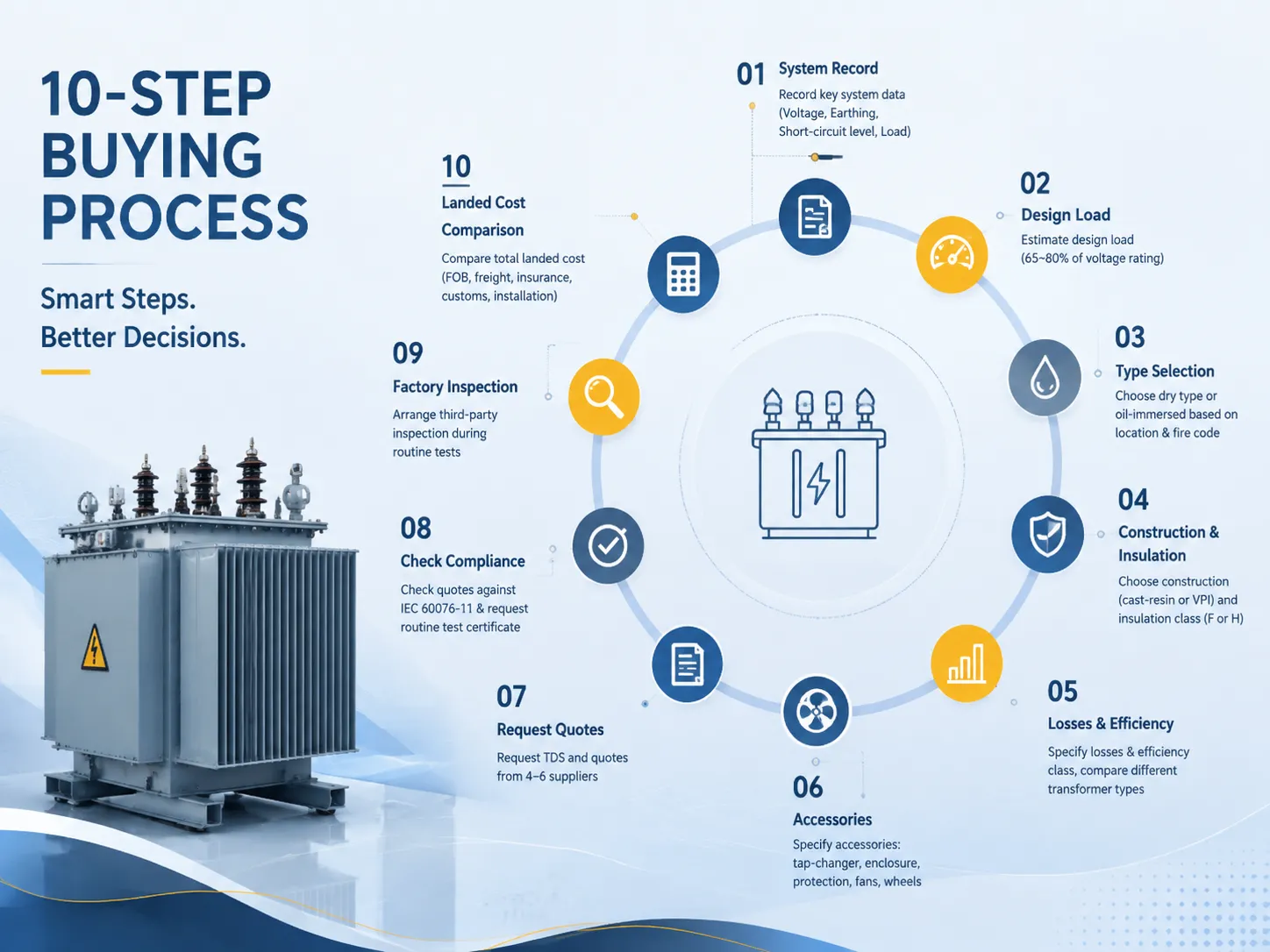
عملية الشراء من 10 خطوات
- من الضروري تسجيل جميع جوانب النظام المستخدم من حيث المواصفات: الجهد الاسمي، ترتيب التأريض، مستوى القصر الكهربائي والحمل بالكيلو فولت أمبير ونمط الحمل.
- استخدم طريقة حسابية لتقدير الحمل التصميمي من 65~80% من تصنيف الجهد، وبالتالي تحقيق أقصى كفاءة.
- اختر محول نوع جاف أو مغمور بالزيت بناءً على الموقع، ومدونة الحريق وتكلفة التركيب.
- اختر طريقة البناء (راتنج مصبوب أو VPI) وفئة العزل (F أو H).
- حدد الخسائر وفئة الكفاءة. اجمع الخسائر مع كفاءة أنواع المحولات المختلفة.
- حدد نوع الملحقات، مثل محول الجهد، الحاوية، حماية الثيرمستور/PTC، المراوح والعجلات.
- اطلب ورقة بيانات فنية وعروض أسعار من أربعة إلى ستة موردين.
- تحقق من العروض مقابل IEC 60076-11 واطلب شهادة اختبار روتينية للوحدة المرجعية.
- إذا أمكن، رتب تفتيشًا من طرف ثالث في المصنع أثناء الاختبارات الروتينية (سوف يكلف 1-3% من سعر الوحدة).
- باستخدام صيغة مقارنة تكلفة الشحن (التي تشمل ليس فقط سعر FOB، ولكن أيضًا رسوم الشحن، التأمين، الجمارك، وبالطبع نفقات التركيب) لمقارنة العقود.
قراءة العروض وتجنب الفخاخ
- الخسائر المصنفة إما مضمونة أو مقاسة: سيتم قبول الخسائر المضمونة فقط التي يمكن اختبارها - تؤدي اختلافات 10% إلى تقييم الخسائر في نطاق $1,500–$4,000 لكل وحدة آلة.
- تحمل المقاومة: المعيار هو ±7.5% وفقًا لمعيار IEC 60076-1؛ ويمكن أن تؤدي تحمل أعلى إلى انهيار تنسيق الحماية.
- قاعدة البيئة: يجب التأكد من تحديد البيئة التصميمية (عادةً ما تكون 40 درجة مئوية)؛ إذا تم تقديم العرض عند 30 درجة مئوية، فهذا ليس قابلاً للمقارنة المباشرة.
- الحاوية والتبريد: تأكد مما إذا كانت IP23، والمراوح، ووجود المستشعرات قد تم أخذها في الاعتبار في التسعير أو تم ذكرها بشكل منفصل، وهو أمر شائع جدًا ويزيد من التسعير بمقدار 8-15%.
- شروط التجارة الدولية: تحقق مما إذا كانت الأسعار معبر عنها كـ EXW أو FOB أو CIF؛ يمكن أن تكون العروض المعبر عنها كـ EXW مضللة لأنها تبدو رخيصة جدًا ولكنها بعد ذلك تتحول إلى ضعف السعر حيث يجب أخذ الشحن والتأمين في الاعتبار.
- الوثائق: تأكد من توفير أنواع مختلفة من شهادات الاختبار، تقرير الاختبار الروتيني، الرسومات، وضمان لمدة عام مع الشروط المحددة.
فحص المصنع والاختبار
- راقب الفحوصات المنتظمة وفقًا لـ IEC 60076-1/60076-11: نسبة التحويل، المقاومة، خسائر عدم التحميل والتحميل، تقييم IR، اختبار الجهد المرتفع، وتفريغ جزئي (للفينيل المصبوب).
- قارن بيانات لوحة الاسم بتفاصيل الطلب: تصنيف الطاقة، الجهد، المقاومة، الخسائر، المعايير، تاريخ أي تصنيع.
- ملاحظات تصويرية لحالة لفائف الفينيل المصبوب، تتبع أي شقوق، فقاعات، أو تغير لون من عمليات المعالجة السابقة.
- تحقق من صلابة مشابك القلب وكذلك توفر وصلات الأرض.
- التقط صورًا لأرقام التسلسل، ترتيب الاختبار، وكذلك التعبئة.
التسليم، التركيب والصيانة
- يجب أن يتم الرفع فقط باستخدام وصلات رفع مصنفة وليس باستخدام حبال على البوشات، اللفائف ودرع المروحة.
- قم بالتخزين في الداخل، وإذا كانت فترة التخزين أطول من 6 أشهر، يجب إجراء اختبار IR ويجب أن يتم تنشيطها لمدة 4-6 ساعات تحت حالة عدم التحميل مسبقًا.
- ضعها على قاعدة مسطحة بارتفاع لا يقل عن 600-700 مم في الأمام مع 200-300 مم من المسافة في الخلف لتدفق الهواء.
- قياس IR قبل عملية التنشيط؛ إذا كان أقل من 100 MΩ عند 500 فولت، يجب تجفيفها.
- قم بإجراء مسح بالأشعة تحت الحمراء للمرة الأولى بعد 30 يومًا من التشغيل ثم ربع سنوي؛ شد الوصلات الفضفاضة مع اختلاف درجة حرارة يزيد عن 20 ك.
- قم بتنظيف قنوات ومشعات الرادياتور مرة واحدة في السنة باستخدام درجة صغيرة من التنظيف بالمكنسة الكهربائية.
الأسئلة المتكررة
كم يكلف المحول الجاف لكل kVA؟
تتراوح تكلفة المحولات المصنوعة من الفينيل من حوالي $14 إلى $26 لكل kVA للوحدات ذات تصنيفات الطاقة التي تتراوح من 630 إلى 2000 kVA، وتختلف أسعار محولات VPI من $9 إلى $18 لكل kVA عند كونها مرتبطة بالمصنع. ستكلف محولة مصنوعة من الفينيل ذات تصنيف طاقة 1000 kVA بين $14,000 و $26,000، باستثناء الضرائب التي تتراوح من 10 إلى 15% لشحن، رسوم التخليص الجمركي، ونفقات التركيب. تختلف الأسعار وفقًا للعلامة التجارية، المواصفات، والاختلافات الجغرافية.
ما الفرق بين المحولات المصنوعة من الفينيل ومحولات VPI الجافة؟
يمكن العثور على مواد اللف والإيبوكسي في المحولات المصنوعة من الفينيل. هذا النوع الفريد من المحولات يوفر درجة عالية جدًا من الحماية ضد الرطوبة دون التأثير على الأداء في العمليات حيث يوفر تفريغ جزئي منخفض أقل من 10 pC. يُوصى به بالتأكيد للتثبيتات في المناطق الرطبة أو المعرضة للحريق.
هل يمكن تركيب محول جاف في الهواء الطلق؟
نعم، طالما أن الوحدة تحتوي على أغلفة مناسبة (عادةً IP54 أو IP55 مقاومة للعوامل الجوية)، يمكن أن تحتوي على شرائط تسخين للتحكم في التكثف وسقف شمسي. الوحدات المصنفة للاستخدام الداخلي، مثل IP23، المثبتة في الهواء الطلق ستؤدي إلى تدهور العزل وتسبب فشل تتبع العزل. الوحدات المصنفة للاستخدام الخارجي من النوع الجاف تكلف حوالي 10 إلى 20 في المئة أكثر من الوحدات الداخلية ذات التصميم المماثل.
كم تدوم المحولات من النوع الجاف؟
عند استخدامها تحت ظروف درجة الحرارة المناسبة وصيانتها نظيفة، عادةً ما تدوم المحولات من النوع المصبوب أكثر من 25-30 عامًا في عمر الخدمة. تنخفض مدة العزل بمعدل مرتين تقريبًا مع كل زيادة في درجة الحرارة تتجاوز القيم القياسية بمقدار 8-10 درجات مئوية. لذلك، للحفاظ على معداتك، يُوصى بالحفاظ على درجة حرارة الملفات ضمن الحدود المحددة في المواصفات.
لماذا تكون المحولات من النوع الجاف أغلى من المحولات المملوءة بالزيت؟
سعر المواد المطلوبة للمحولات من النوع الجاف أعلى بسبب راتنج الإيبوكسي وعزل الفئة H بدلاً من زيت المحولات السائبة، وتحتاج الأنواع الجافة إلى موصلات أكثر قوة حيث أن تبريد الهواء أقل كفاءة من تبريد الزيت. في الوقت نفسه، بمجرد إجراء التعديلات على القبو، واحتواء الزيت، وتوسيع أنظمة إخماد الحرائق، فإن التكلفة الإجمالية للنظام الجاف تميل إلى أن تكون أقل حتى في المواقع الداخلية.
المراجع
- IEC 60076-11: محولات الطاقة – المحولات من النوع الجاف — معيار أساسي للتصنيفات، والخسائر، وزيادة درجة الحرارة، واختبار الوحدات من النوع الجاف.
- IEC 60076-1: المتطلبات العامة — تغطي القيم المصنفة، والتفاوتات، وإجراءات الاختبار العامة لمحولات الطاقة.
- IEEE C57.12.01: المحولات والتوزيع والمحولات الجافة — متطلبات وأساليب اختبار أمريكا الشمالية.
- NEMA TP-1: دليل لتحديد كفاءة الطاقة لمحولات التوزيع — معيار الكفاءة المستخدم عبر مناقصات أمريكا الشمالية.
- كفاءة محولات التوزيع من وزارة الطاقة الأمريكية — يوضح اللوائح الدنيا للكفاءة وتقييم الفقد.
- NFPA 70 (NEC) — متطلبات التركيب والمسافة لمواقع المحولات.
- شركة جيانغسو سوبين للطاقة الكهربائية — مصنع محولات جافة متوافق مع IEC 60076 يقدم خطوط راتنجية مصبوبة وVPI مع دعم OEM.
الخاتمة
يعتمد شراء ناجح لمحولات جافة على نوع المواصفات التي تقدمها، واكتمال عروض الأسعار الخاصة بك، وجودة فحص المصنع. تعتبر المحولات الجافة تقنية مثبتة؛ يمكنك التمييز بين شراء مفضل وشراء مكلف بناءً على التحقق من الفقد، والممانعة، وفئة ارتفاع درجة الحرارة، والامتثال للمعايير بدلاً من الاعتماد على ورقة المواصفات الفنية.
- صرح بامتثال IEC 60076-11، ومستويات الفقد، وتقديم الاختبارات كتابةً.
- قم بمقارنة إجمالي تكلفة الملكية مع السعر النهائي، وضمن تقدير الفقد من $3,000-$6,000 لكل كيلووات.
- أيضًا، كن مستعدًا لدفع 10-15% إضافية فوق السعر للتكاليف اللوجستية.
بغض النظر عما إذا كنت تشتري من الشركات الرائدة في السوق مثل ABB وSiemens، أو مباشرة من Jiangsu Subian Electric Power، يجب أن يحدد العقد المعايير المستخدمة، والاختبارات اللازمة، وأحكام الضمان.