


サブステーションエンジニアが132 kV送電のアップグレードに関する入札書類を確認する際、通常最初にレビューされる仕様書の一つは、電力変圧器の分類表です。なぜなら、誤った選択は数十万のコストを引き起こし、運転開始プロセスに数ヶ月の遅延をもたらす可能性があるからです。電力変圧器の各タイプの分類は、電圧、負荷、信頼性に関する特定の問題に対処するために作成されており、10 MVAの配電ユニットが工場のブロック内で稼働している場合でも、400 MVAの発電機昇圧変圧器が石炭火力発電所に設置されている場合でも同様です。.
提供された記事は、電力変圧器を分類するためのすべての可能な方法を説明しています。これには、電力機能による分類、電圧レベルによる分類、巻線の構成による分類、冷却方式による分類、絶縁材料の種類による分類などが含まれます。.
簡単に言えば、電力変圧器は、昇圧変圧器、降圧変圧器、配電変圧器、絶縁変圧器、自動変圧器などの機能に基づいて分類できます。また、発電機変圧器、送電変圧器、配電変圧器などの電圧クラスに基づいて、単相変圧器と三相変圧器、二巻線変圧器と三巻線変圧器などの巻線構成に基づいて、ONAN変圧器、ONAF変圧器、OFAF変圧器、ODAF変圧器などの冷却方式に基づいて、油浸変圧器と乾式変圧器などの絶縁方式に基づいて分類できます。.
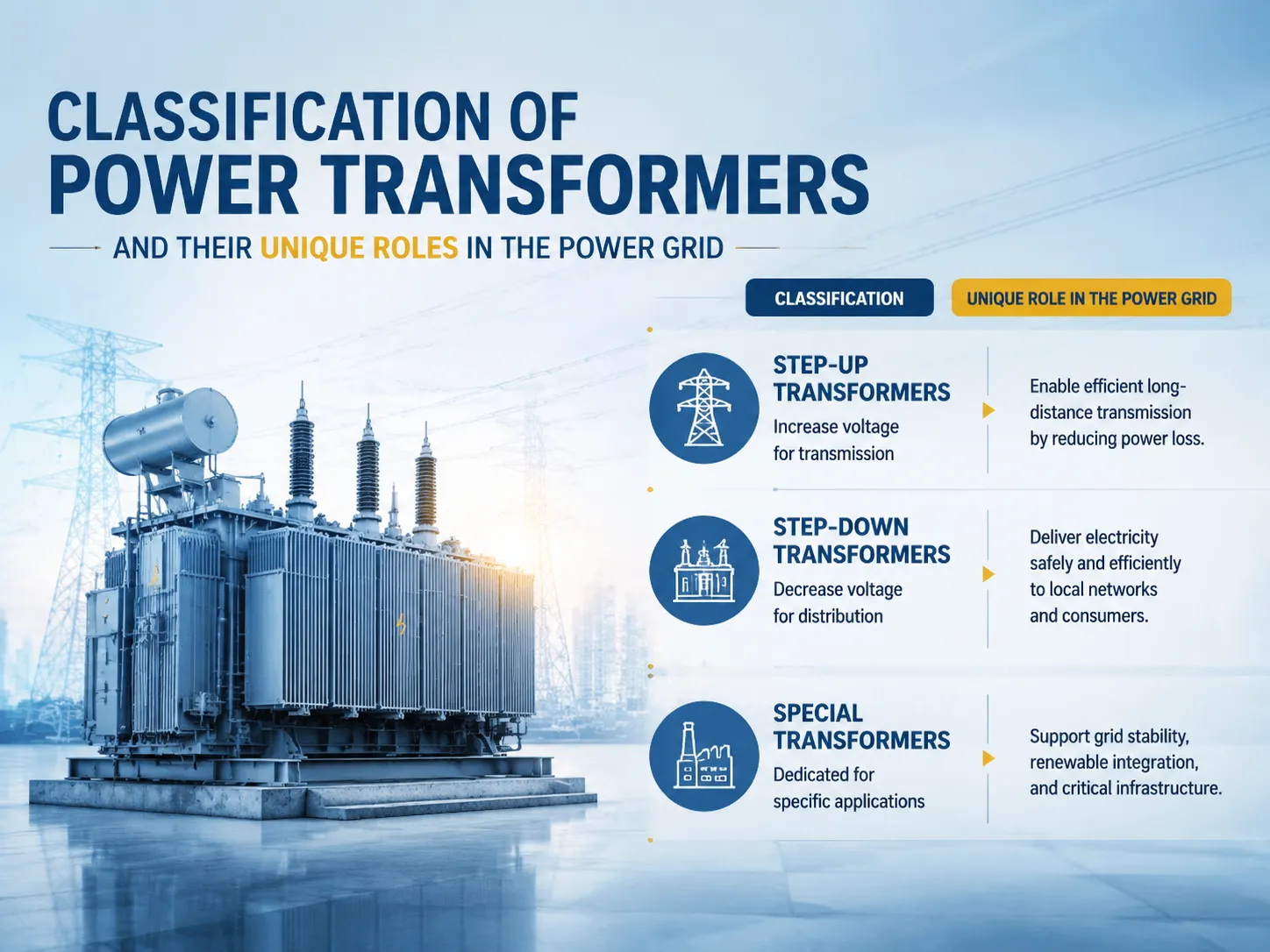
電力変圧器とは何ですか?(定義とコア機能)
電力変圧器は、電磁誘導のプロセスを通じて、2つ以上の回路を介して電力を伝送する静的な電磁機器であり、周波数と見かけの電力を一定に保ちながら電圧レベルを変更します(損失を含む)。配電変圧器は主に消費のための最終電圧降下を行いますが、電力変圧器は、200 kVAを超える定格を持つサブステーション、発電所、大規模産業に見られ、3.3 kVから1,150 kVクラスの電圧を処理することができます。.
電力変圧器は、定格見かけ電力(kVAまたはMVA)、定格電圧比、短絡時のインピーダンスの3つの値で特徴付けられます(これは国際規格IEC 60076-5に従って通常5%から15%の間です)。最大運転容量での変圧器の効率は通常98.%から99.7%の間です。これが、電力会社が低損失のアモルファスコア設計や高品質の配向シリコン鋼に多額の投資をする理由です。.
電力変圧器の動作原理:電磁原理
基本的な動作原理は、ファラデーの電磁誘導の法則に基づいています。一次巻線の交流は、シリコン鋼コア内に変動する磁束を生成し、二次巻線と連結し、巻数に比例した起電力(emf)を誘導します。これは次の古典的な式で表されます:
Vprimary / Vsecondary = Nprimary / Nsecondary(これを巻数比と呼びます)、したがって他の条件が理想的であれば、Iprimary × Vprimary ≈ Isecondary × Vsecondary となります。.
ステップアップモードで動作する変圧器は、二次巻線に一次よりも多くの巻数があります。ステップダウンモードで動作する変圧器は、一次コイルにより多くの巻数があります。しかし、実際の電力変圧器は、銅損失(銅線のI²R損失)や鉄損失(ヒステリシスや渦電流による)に起因する約0.3%から2%の損失で動作します。したがって、任意の変圧器の技術的特性には、効率レベルが50%、75%、または100%であるかどうかが記載されています。.
機能による分類:ステップアップ、ステップダウン、配電、自動
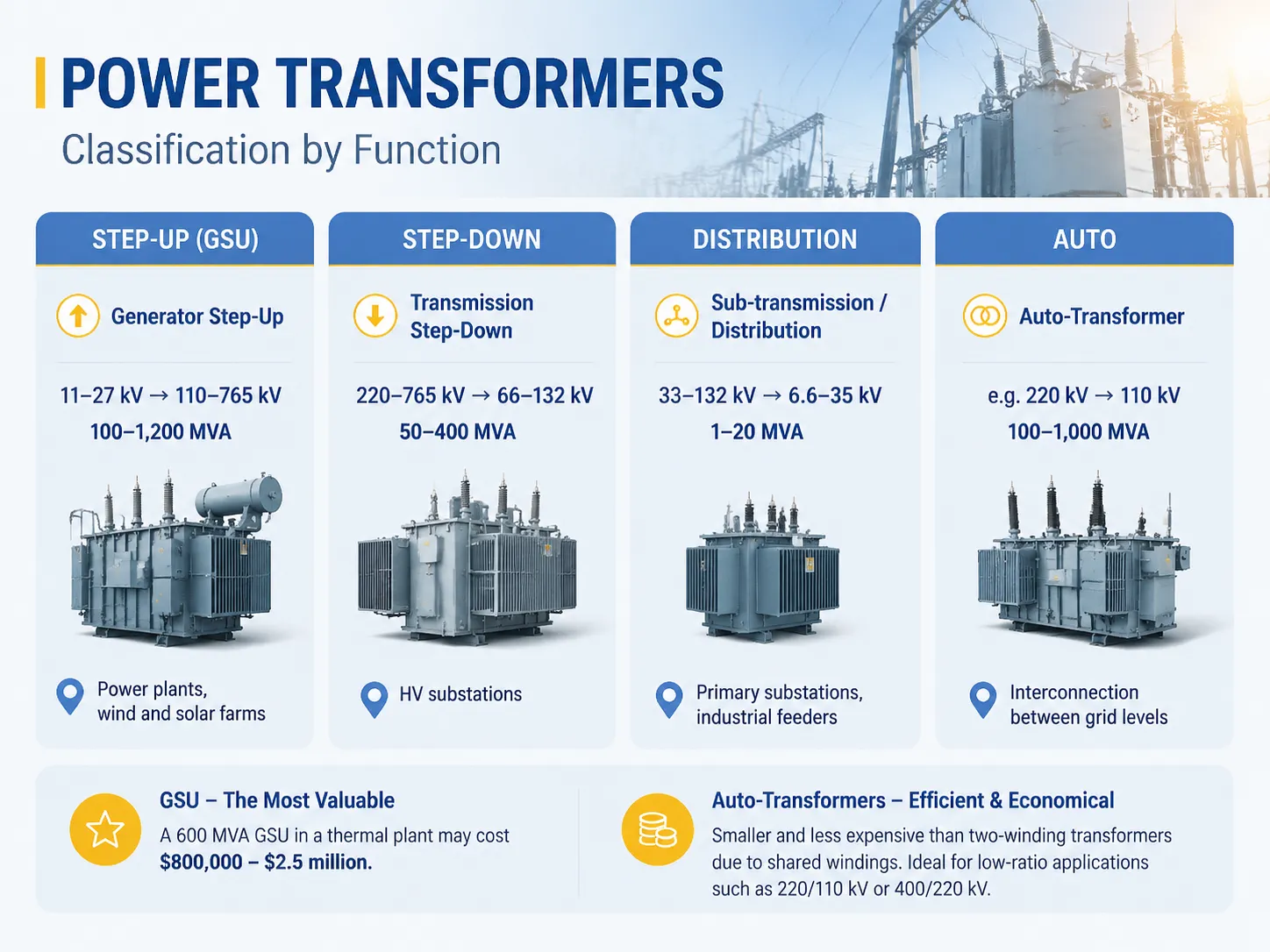
機能は、エネルギー転送におけるユニットの位置を示すため、電力変圧器を分類する最も実用的な手段です。以下の表は、エンジニアがグリッドで一般的に使用する4つの異なる機能ファミリーの変圧器を要約しています。.
| 機能 | 典型的な電圧変化 | 典型的な定格 | どこで見つけるか |
|---|---|---|---|
| 発電機ステップアップ(GSU) | 11–27 kV → 110–765 kV | 100–1,200 MVA | 発電所、風力および太陽光発電所 |
| 送電ステップダウン | 220–765 kV → 66–132 kV | 50–400 MVA | 高圧変電所 |
| サブ送電 / 配電 | 33–132 kV → 6.6–35 kV | 1–20 MVA | 一次変電所、産業用フィーダー |
| 自動変圧器 | 例:220 kV → 110 kV | 100–1,000 MVA | グリッドレベル間の相互接続 |
GSU(発電機ステップアップ)変圧器は、発電所のスペクトルの発電機端に位置し、発電所内で最も価値のある機器です。実際、600 MVAのGSU変圧器は、火力発電所で$800,000から$2.5百万の間で価格が設定されることがあります。自動変圧器は、従来の二次巻線変圧器よりも小型で安価である傾向がありますが、一部の巻線が共有されているため可能です。したがって、相互接続のユーティリティ会社は、特に220/110 kVや400/220 kVのような低比率電圧アプリケーションに自動変圧器を使用することを選択します。.
グリッドにおける電圧レベルによる分類
電圧クラスは、絶縁設計やエネルギー機器の設計に影響を与え、絶縁技術を含みます。エネルギー機器の価格は、電圧クラスによって影響を受けます。IEC 60076-1およびIEEE C57.12.00の両方の規格が絶縁技術を決定します。.
| グリッドレベル | 定格電圧 | BIL(雷インパルス耐圧) | 典型的な役割 |
|---|---|---|---|
| 発電機電圧 | 3–33 kV | 40–200 kV | GSU入力側、補助供給 |
| 中圧(MV) | 6–35 kV | 75–250 kV | 配電変電所、産業用 |
| 高圧(HV) | 66–220 kV | 325–950 kV | 地域送電 |
| 超高圧 (EHV) | 330–765 kV | 1,175–1,950 kV | 国家送電バックボーン |
世界中に設置されているすべての変圧器の約70%は配電段階にありますが、コストの約30%しか占めていません。500 kVの電気システムと1,550のBIL値を持つ高電圧ユニットは、厚い絶縁、広い中性ゾーン、および特別な試験手順(IEC 60076-3に従った部分放電試験およびインパルステスト)の要件を満たしているため、強力な変圧器の設置には$1.5–$3百万の支出が必要になる場合があります。.
相と巻線構成による分類
電力変圧器は、その構造に基づいて単相または三相変圧器に分類できます。これは、タイプだけでなく、巻線の数、すなわち二巻線変圧器、三巻線変圧器、または自動構成変圧器としても分類されます。単相変圧器は、コストが安く輸送が容易であるため広く受け入れられており、特に最高のEHV定格(例:500 kVで動作する三つの単相変圧器からなる3×333 MVAバンクの形成)に関しては特に有用です。一方、300 MVA以下の変動に対しては、損失、コスト効率の良いソリューション、および効率の面で単相バリアントよりも優位性があるため、三相変圧器がより適しています。.
三巻線変圧器は三次巻線を備えており、標準的な電気負荷だけでなく、ハーモニックフィルターや第三の電圧(例:220/110/35 kV)を導出するためにも使用できます。ベクトルグループは、Dyn11、YNyn0、YNd11などの特別な指定を用いて定義でき、変圧器の構成と電圧のポイントを示します。.
冷却方式による分類 (IEC 60076-2)
冷却システムは、変圧器が安全に処理できる最大電力量を決定します。IEC 60076-2に従って使用される略語は、冷却媒体の種類とその循環方法を指します。.
| 冷却コード | 意味 | 典型的な定格 | 負荷能力 vs. ONAN |
|---|---|---|---|
| ONAN | 自然油、自然空気 | 50 kVA–60 MVA | ベースライン (100%) |
| ONAF | 自然油、強制空気(ファン) | 1–150 MVA | ≈120–135% |
| OFAF | 強制油、強制空気 | 10–300 MVA | ≈140–160% |
| ODAF | 指向油、強制空気 | 100–1,200 MVA | ≈150–170% |
ONANおよびONAFの二つの冷却モードで動作するように設計された変圧器は、電力会社が通常の状況下で自然冷却モードで運転し、突然の過負荷時にファンを使用できることを意味します。40 MVAの容量を持ち、「40/56 MVA ONAN/ONAF」としてその比率を示す変圧器が実用的な例です。ファンや油ポンプなどの必要な装置コンポーネントはメンテナンスが簡単ではないため、小規模な変電所はONAN設計のみを好みます。.
油浸型 vs. 乾式電力変圧器
絶縁媒体は、市場を価格、安全性、使用の違いに基づいて二つの異なるカテゴリに分けます。.
| パラメータ | 油浸型 | 乾式型(キャストレジン / VPI) |
|---|---|---|
| 絶縁媒体 | ミネラルオイルまたはエステル | エポキシ樹脂 / 空気 |
| 一般的な定格 | 50 kVA–1,200 MVA | 100 VA–40 MVA |
| 価格 (1 MVA クラス) | $18,000–$45,000 | $28,000–$70,000 |
| 火災 / 環境リスク | 高い (油の containment が必要) | 低い、難燃性 |
| 最適な場所 | 屋外変電所 | 屋内、高層、オフショア |
油の効率的な誘電特性により、ゼロから2 MVAの範囲では油浸式変圧器が優位です。乾式変圧器は、オフィスビル、病院、オフショアの石油掘削装置やプラットフォームなど、火災の危険性から油浸式変圧器の使用を禁止する法律(NFPA 70など)がある場所でより良い性能を発揮します。キャスト樹脂変圧器は、比較可能な油モデルよりも通常40%-60%高価ですが、油貯留ピットや消火システムを必要としません。.
一般的な変圧器クラスの主要仕様表
変圧器モデル間で公平な比較を行うために、エンジニアは各オプションに必要な基本パラメータを選択します。以下のチャートの1つは、3つの典型的なユニットの銘板データを示しています。.
| パラメータ | 配電ユニット | 変電所電力ユニット | GSUユニット |
|---|---|---|---|
| 定格電力 | 1,000 kVA | 20 MVA | 250 MVA |
| 電圧比 | 11/0.4 kV | 110/20 kV | 18/400 kV |
| ベクトルグループ | Dyn11 | YNd11 | YNd11 |
| インピーダンス電圧 | 6% | 10% | 14% |
| 無負荷損失 | ≈1,150 W | ≈14 kW | ≈90 kW |
| 負荷損失 | ≈10,500 W | ≈98 kW | ≈620 kW |
| 冷却 | ONAN | ONAN/ONAF | ONAF/ODAF |
| 参照標準 | IEC 60076-1 | IEC 60076-1 | IEC 60076-1 |
損失保証はビジネスに関わる人々にとって重要です:損失値は変圧器の価格を改善または妨げる可能性があり、無負荷損失の1 kWの違いが30年間で数万ドルの損失を引き起こす可能性があるため、変圧器の価格に5%–10%の違いを表すことができます。.
電力網における各変圧器クラスのユニークな役割
各クラスはエネルギーチェーン内の位置に配置され、他のものと置き換えることはできません:
- GSU変圧器 — 発電所や代替エネルギー源のサイトで、発電機によって生成された電圧を送電用の電圧に変換します。.
- 送電降圧変圧器は、主要な変電所で高電圧と低電圧レベルを相互接続し、負荷切替器を使用して電圧を調整します。.
- 配電変圧器 — 消費用の電圧を400/230 Vに設定する最後の変圧器であり、したがって世界中で最も多くの変圧器を構成しています。.
- 自動変圧器 — 220 kVと110 kVのような隣接する電圧レベルを相互接続しますが、その設計上、接地が利用可能な場合にのみ設置すべきです。.
- 位相シフト変圧器 — 平行回路における電力フローの問題に対処するための重要なツールであり、メッシュ高電圧ネットワークでますます使用されています。.
配電ネットワーク設計者は、変圧器によるエネルギー損失の最大90%が配電ネットワークで発生すると述べており、これにより多くの国(例:中国およびEUはGB 20052に基づいて)で、配電変圧器の中でエネルギー損失が少ないアモルファスコア変圧器の使用を促進しています。.
トップブランドと現実的な価格帯
電力変圧器のブランドを選ぶ際は、初期購入価格、効率、リードタイム、およびメーカーが提供するアフターサービスのバランスを取ることが重要です。業界の有名ブランドは基準を定義し、最も古い中国のプレーヤーはIEC 60076標準に準拠したほぼ同じ製品を提供しますが、30%–50%低価格で提供しています。.
| ブランド | 本社 | 強度 | 参考価格(20 MVA、110 kV) |
|---|---|---|---|
| ABB / 日立エナジー | スイス / 日本 | HVDC、EHV専門知識 | $450,000–$700,000 |
| シーメンスエナジー | ドイツ | EHVおよびデジタル変電所 | $430,000–$680,000 |
| シュナイダーエレクトリック | フランス | 配電、EcoStruxure | $280,000–$450,000 |
| GE ヴェルノバ / プロレック GE | アメリカ / メキシコ | ユーティリティ規模のGSU | $420,000–$650,000 |
| TBEA | 中国 | 大規模MVA、グローバルEPCプロジェクト | $180,000–$320,000 |
| 江蘇省蘇辺電力 | 中国 | カスタム50 kVA–220 kVクラス、OEM/ODM | $160,000~$300,000 |
価格は正確ではなく、仕様、損失レベル、場所によって変動します。したがって、以下に示すすべての値は固定価格ではなく、ガイドとして理解されるべきです。江蘇省蘇辺電力は、50 kVAから220 kVクラスまでの変圧器を提供しており、乾式および油浸式変圧器を含む複数のオプションがあります。同社は多くの追加の利点を提供しています。まず、彼らはヨーロッパと比較して30-50%低い価格を提供します。次に、彼らのディストリビューターは納期を守り、世界60カ国以上に納品します。.
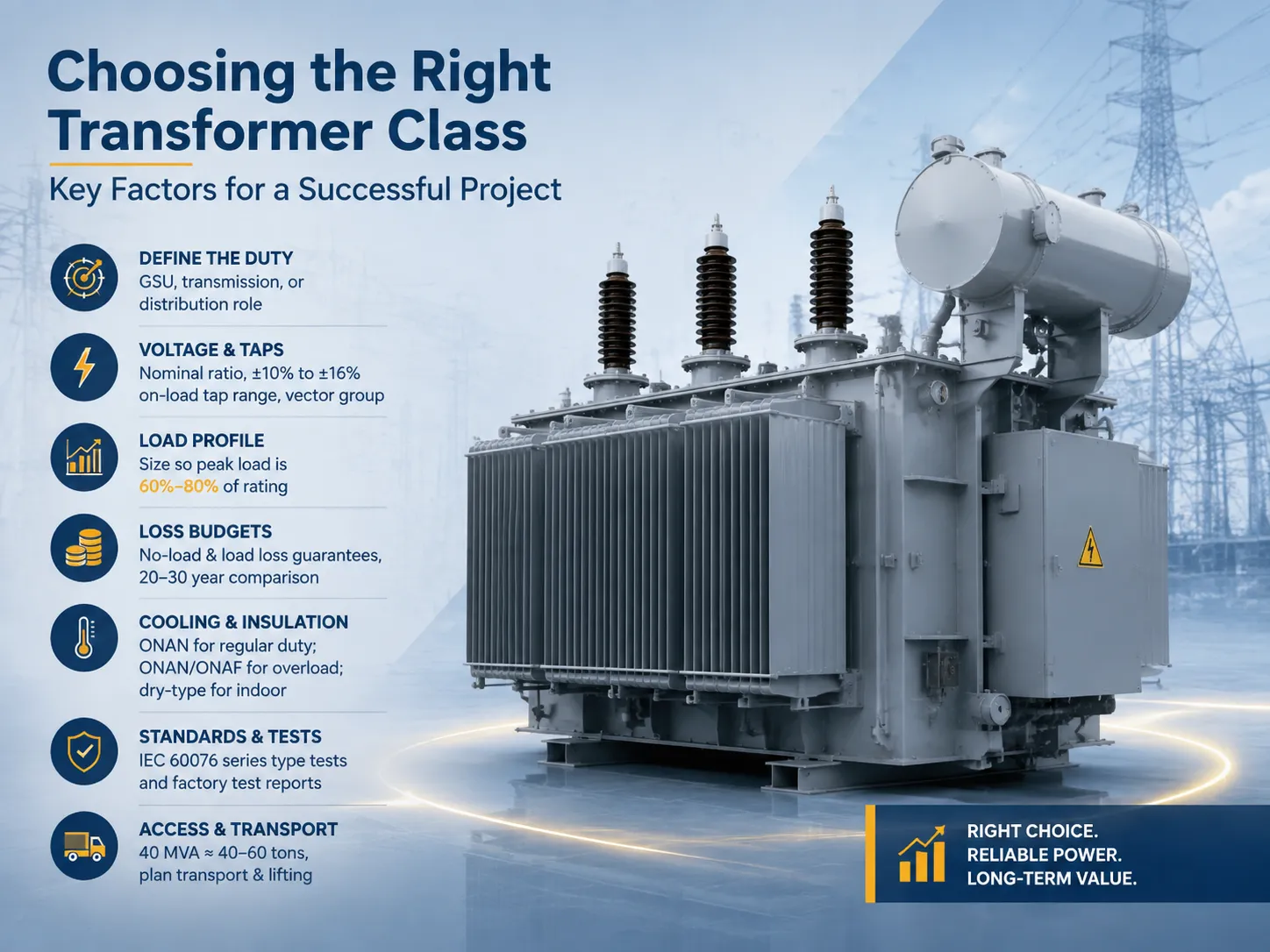
プロジェクトに適した変圧器クラスの選び方
- 業務を定義する — GSU、送電、または配電の役割が全体の設計範囲を決定します。.
- 電圧レベルとタップ範囲を確認する — 名目比率、±10%から±16%の負荷タップ範囲、およびネットワークに関するベクトルグループを確立します。.
- 負荷プロファイルを計算する — ピーク負荷が最高効率とマージンのために定格の60%–80%の間にあるようにkVA/MVAサイズを決定します。.
- 損失予算を確立する — 無負荷および負荷損失の保証を求め、20–30年の期間にわたる資本化損失の比較を実施します。.
- 冷却と絶縁を選択する — 通常の屋外業務にはONAN; 過負荷の柔軟性にはONAN/ONAF; 建物内では乾式を使用します。.
- 規格を確認する — IEC 60076シリーズの型試験(絶縁、温度上昇、短絡)および工場試験書類を取得します。.
- アクセスと輸送を考慮する — 40 MVAユニットは40–60トンの重さがあり、特別な輸送と労働研究が必要な場合があります。.
よくある質問
力変圧器と配電変圧器の違いは何ですか?
力変圧器は高容量(一般的に200 kVA以上)を送電またはサブ送電レベルで管理し、電圧調整を伴う定格運転のために設計されています。配電変圧器は、エンドユーザーに到達する最後の降圧変圧器(通常5 kVA–2,500 kVA)であり、主に部分負荷で運転されます。配電変圧器は力変圧器よりもはるかに多く存在し、世界中に何百万台もありますが、力変圧器は変電所の最も価値のある部分を構成しています。.
変圧器の巻数比は分類において何を意味しますか?
ターン比 N1/N2 は、無負荷条件下での一次から二次への電圧比に等しく、変圧器が昇圧変圧器(すなわち N2 > N1)、降圧変圧器(すなわち N1 > N2)、または 1:1 比で動作する絶縁変圧器であるかどうかを真に示します。例えば、110 kV/20 kV 定格の変圧器は 5.5:1 の比を持ち、18 kV から 400 kV に電圧を降圧する GSU 変圧器は約 22:1 の比を持ちます。.
20 MVA サブステーション変圧器に最適な冷却クラスはどれですか?
大多数の電力供給者は ONAN/ONAF モデルを選択します。なぜなら、その通常の負荷は自然冷却と強制空気冷却(通常 ONAN 定格の 120%-135% の範囲内)によって支えられ、ピーク負荷や一時的な過負荷に対応できるからです。完全な OFAF/ODAF 設計にはポンプと油の移動方向が含まれ、効率とメンテナンスコストの両方が向上します。.
2025 年の電力変圧器の価格はいくらですか?
大多数の電力供給者は ONAN/ONAF モデルを選択します。なぜなら、その通常の負荷は自然冷却と強制空気冷却(通常 ONAN 定格の 120%-135% の範囲内)によって支えられ、ピーク負荷や一時的な過負荷に対応できるからです。完全な OFAF/ODAF 設計にはポンプと油の移動方向が含まれ、効率とメンテナンスコストの両方が向上します。.
油浸型変圧器と乾式変圧器のどちらが必要ですか?
2 MVA を超える屋外サブステーションの場合、最もコスト効率の良い選択肢は油浸型です。しかし、屋内や高層のアプリケーション、例えば火災に敏感な場所やオフショアの建物では、油の保持と火災抑制が難しいため、乾式の種類を使用するべきです。したがって、1 MVA のキャストレジンユニットは $28,000–$70,000 のコストがかかる一方で、油浸型ユニットは一般的に $ 18,000 から $45,000 の範囲で販売されています。.
参考文献
- IEC 60076-1: 電力変圧器 — 一般 — 電力変圧器の定格、許容差、および試験手順を定義する国際標準。.
- IEC 60076-2: 温度上昇 — 変圧器の分類に使用される温度上昇限界と冷却クラスを指定します。.
- IEC 60076-3: 絶縁レベルと誘電体試験 — 電圧クラスごとの BIL および誘電体試験要件を定義します。.
- IEEE C57.12.00: 液体浸漬型配電、電力、調整トランスの一般要件 — IEC 60076 の北米の関連標準。.
- NFPA 70: 国家電気規則 — アメリカ合衆国における変圧器の設置、クリアランス、および保護を規定します。.
- 日立エナジー 変圧器ポートフォリオ — 現代の EHV、HVDC、および発電機変圧器技術の参考。.
結論
電力変圧器の分類の重要性を理解することは非常に重要です。これは、正しい機器を購入するかどうかを決定する最大の要因です。変圧器の機能、電圧クラス、巻線構成、冷却方法、および絶縁タイプは、グリッド内の変圧器の存在、負荷の量、およびその価格を示します — 配電変圧器は $1,500 から始まり、EHV 変圧器は $2.5 百万で終わります。.
- まず、機器をその機能(GSU、送電変圧器、配電変圧器、自動変圧器)に応じて分類し、次に電圧、冷却方法、および絶縁タイプに応じて分類することが重要です。.
- 冷却クラスは変圧器の負荷プロファイルに合わせるべきです。150 MVA までの変圧器にとって、最良の柔軟性とコスト比は ONAN/ONAF です。.
- 契約においては、損失準備金、絶縁試験、および短絡試験に関してIEC 60076に従う必要があります。.
- MVAあたりの価格、資本損失の見積もり、および納期に基づいて、少なくとも3社の供給者を比較する必要があります。.
プロジェクトで50 kVAから220 kVクラスのカスタム比率を持つ配電または電力トランスが必要な場合は、連絡してください。 江蘇省蘇辺電力 直接工場見積もりおよびエンジニアリング相談のために。.