


Quando um tufão se aproxima de uma região costeira, a rede elétrica é um dos primeiros sistemas a ser testado. Chuvas torrenciais, inundações, detritos voadores e relâmpagos convergem nas subestações e equipamentos de distribuição que mantêm as luzes acesas, e poucas peças desse equipamento são mais críticas, ou mais expostas, do que o transformador. O transformador imerso em óleo é o cavalo de batalha das redes de distribuição e energia em áreas propensas a tempestades, valorizado por sua eficiência, desempenho de resfriamento e durabilidade. Mas, como qualquer ativo externo, ele precisa do design, preparação e disciplina operacional adequados para passar por uma tempestade severa com segurança.
Este guia explica como um transformador imerso em óleo é construído para resistir a condições climáticas severas, quais perigos específicos um tufão traz e quais precauções concretas os operadores devem tomar antes, durante e após a tempestade. Se você é responsável por uma única unidade em uma fábrica ou por uma frota de transformadores imersos em óleo de 35kV instalados em uma rede, os princípios são os mesmos: proteger o equipamento, proteger o fornecimento de energia e, acima de tudo, proteger as pessoas ao redor.
Por que os Tufões São uma Ameaça Séria para os Transformadores
Um tufão combina várias forças destrutivas ao mesmo tempo, e cada uma ataca um transformador de uma maneira diferente. Chuvas torrenciais e ressaca de tempestade causam inundações que podem submergir equipamentos e forçar a água a passar por selos. Ventos fortes sustentados transformam objetos soltos em projéteis que podem atingir buchas, radiadores e aletas de resfriamento. Relâmpagos injetam enormes picos de tensão nas linhas aéreas que viajam diretamente para o equipamento conectado. Na costa, a névoa salina soprada pelo vento acelera a corrosão muito depois que a tempestade passou.
Porque um transformador imerso em líquido depende de óleo isolante e condições internas cuidadosamente controladas para funcionar, qualquer violação desse ambiente selado é perigosa. A água é o maior inimigo: mesmo uma pequena quantidade de umidade entrando no tanque reduz drasticamente a resistência dielétrica do óleo e do isolamento, aumentando o risco de flashover interno e falha. Compreender essas ameaças é o primeiro passo para se defender contra elas, o que torna a segurança do transformador imerso em óleo uma prioridade de planejamento em qualquer região exposta a tufões.
Como os Transformadores Imersos em Óleo São Construídos para Resistir a Condições Climáticas Severas
Um transformador imerso em óleo bem feito já inclui uma grande quantidade de proteção embutida contra os elementos, o que é uma razão pela qual o formato é confiável para serviços externos exigentes. Compreender essas características ajuda os operadores a apreciar o que o equipamento pode e não pode lidar por conta própria.
O núcleo e os enrolamentos ficam dentro de um tanque de aço selado preenchido com óleo isolante, que resfria as partes ativas e exclui ar e umidade. O tanque, radiadores e conexões são acabados com revestimentos resistentes às intempéries para resistir à chuva e corrosão. Um conservador e um respirador de gel de sílica gerenciar a expansão e contração do óleo à medida que a temperatura muda, mantendo o ar que entra seco. Buchas de porcelana ou compostas transportam as conexões de alta tensão através da parede do tanque com um longo caminho de creepage projetado para resistir a flashover mesmo quando molhado. Séries modernas de baixa perda, como o transformador S11 e SZ11 são amplamente implantadas em tensões de distribuição, com unidades SZ11 adicionando troca de tap on-load para manter a tensão de saída estável à medida que a rede flutua durante uma tempestade.
A proteção continua fora do tanque. Uma instalação devidamente especificada emparelha o transformador com um para-raios em cada linha de entrada para desviar raios e surtos de comutação com segurança para a terra, e com um sólido aterramento do transformador que fornece uma trajetória de baixa impedância para a corrente de falha longe do equipamento e das pessoas. Para os locais mais severos, o transformador pode ser alojado dentro de um invólucro pré-fabricado, e as seções seguintes explicam como combinar essas defesas integradas com a preparação adequada.
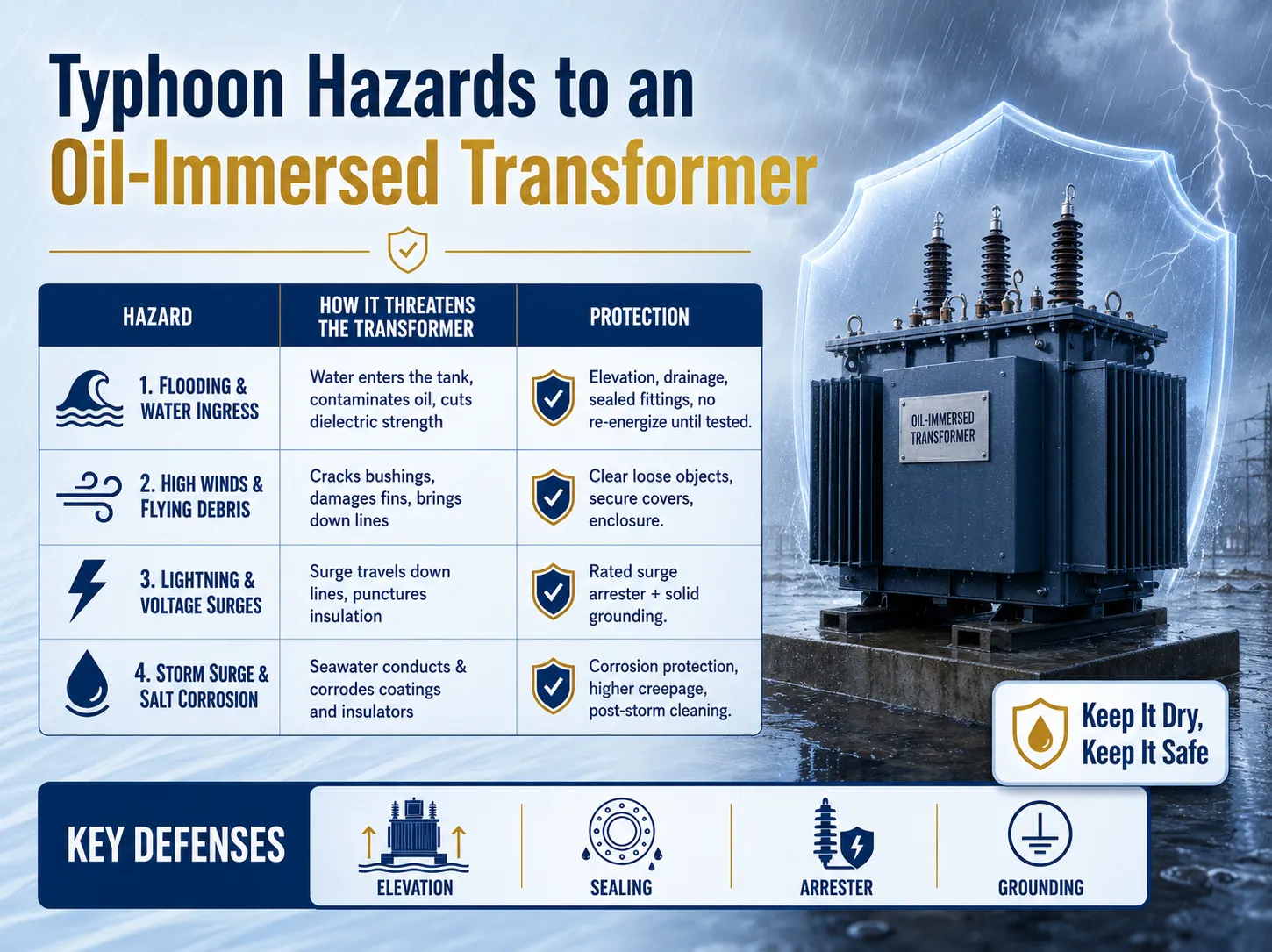
Os Principais Riscos de Tufão, Explicados
Para se preparar de forma eficaz, é útil olhar para cada risco individualmente e entender exatamente como ele coloca em perigo um transformador imerso em líquido.
Inundações e entrada de água
Inundações são o risco de tufão mais danoso e comum para equipamentos montados no solo. Se a água da inundação subir ao nível das buchas, juntas ou caixas de cabos, pode penetrar no tanque e contaminar o óleo. A água no sistema isolante reduz drasticamente sua resistência dielétrica, e um transformador que está energizado ou reenergizado nessa condição pode falhar de forma catastrófica. Armários de controle submersos e mecanismos de troca de tap também são vulneráveis, e a água da inundação frequentemente transporta lodo e detritos que entopem radiadores e drenagens.
Ventos fortes e detritos voadores
Ventos de força de tufão podem exceder as suposições de projeto de estruturas próximas e lançar sinalizações, telhados, galhos e materiais de construção por um local. Um impacto direto em uma bucha pode rachar a porcelana e abrir um caminho para a umidade ou causar uma falha imediata. O vento também pode derrubar postes e linhas aéreas mal fixados, fazendo com que condutores energizados caiam sobre ou perto do transformador e seu invólucro.
Raios e surtos de tensão
Raios não precisam atingir um transformador diretamente para danificá-lo. Um impacto em qualquer lugar em uma linha aérea conectada envia um súbito surto de tensão em direção a cada peça de equipamento naquele circuito. Sem um para-raios, adequadamente classificado e instalado corretamente, esse surto pode perfurar a isolação e destruir as bobinas em microssegundos. Operações de comutação durante distúrbios na rede criam estresses transitórios semelhantes, embora menores.
Surtos de tempestade e corrosão por sal
Instalações costeiras enfrentam uma ameaça adicional. A ressaca pode trazer água do mar para o interior, e a água salgada é altamente condutiva e agressivamente corrosiva. Mesmo onde a inundação não ocorre, o spray de sal impulsionado pelo vento cobre isoladores e estruturas metálicas, degradando a isolação superficial e atacando revestimentos e fixadores ao longo do tempo. Locais próximos ao mar, portanto, precisam de atenção extra para vedação, revestimentos e limpeza pós-tempestade.
Antes da Tempestade: Preparação e Precauções
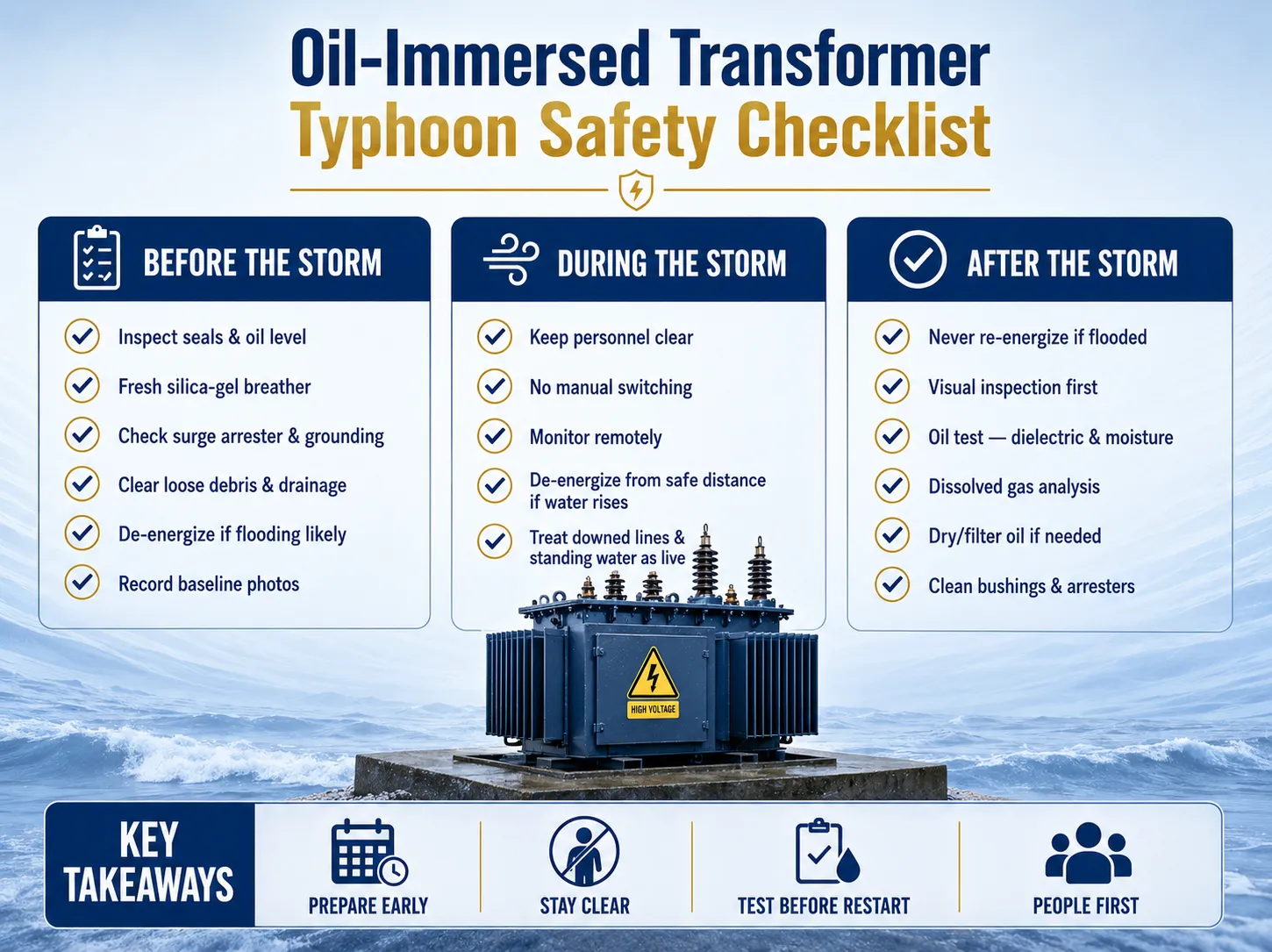
A janela mais importante para proteger um transformador é o dia ou dois antes de um tufão atingir a costa, enquanto as condições ainda permitem trabalho seguro. Uma rotina disciplinada antes da tempestade melhora drasticamente as chances de que um transformador imerso em óleo sobreviva intacto. A seguinte lista de verificação cobre os essenciais:
- Inspecione o tanque, os terminais e as juntas em busca de vazamentos, rachaduras ou danos existentes, e repare-os antes que a tempestade chegue.
- Confirme que o nível de óleo está correto e que o conservador e respirador de gel de sílica estão funcionando, com o dessecante fresco e seco em vez de saturado.
- Verifique se cada para-raios está intacto, corretamente conectado e devidamente aterrado, e verifique se aterramento do transformador as conexões estão firmes e com baixa resistência.
- Limpe a área ao redor de objetos soltos, ferramentas e materiais que o vento poderia transformar em projéteis, e apare galhos próximos onde for prático.
- Prenda portas de compartimentos, tampas de caixas de cabos e ventilação para que o vento e a chuva forte não consigam abri-los.
- Verifique e limpe a drenagem do local para que a água possa fluir para longe da fundação do transformador em vez de se acumular ao redor dela.
- Onde a inundação é um risco real, prepare-se para desenergizar e, para unidades móveis ou montadas em skid, considere realocar o equipamento para um terreno mais alto.
- Registre leituras de referência e tire fotografias, para que a inspeção pós-tempestade tenha um ponto de referência claro.
- Confirme que a energia de backup, peças sobressalentes e procedimentos de contato de emergência estão em vigor antes que as comunicações e o acesso se tornem difíceis.
Para instalações fixas, a decisão de manter um transformador energizado ou desligá-lo antes da tempestade deve seguir o plano de emergência da concessionária ou da instalação e as instruções da rede local. Em caso de dúvida, proteger o ativo e as pessoas ao redor deve ter prioridade sobre a manutenção do fornecimento para cargas não críticas.
Durante a Tempestade: Operação Segura e Decisões
Uma vez que um tufão esteja realmente atingindo, a regra orientadora é simples: mantenha as pessoas afastadas do equipamento energizado e deixe as defesas preparadas fazerem seu trabalho. Este não é o momento para intervenção manual no transformador. Tentar operar interruptores, abrir armários ou inspecionar um transformador imerso em líquido em ventos fortes e inundação é extremamente perigoso e nunca deve ser tentado.
Onde uma instalação possui monitoramento e controle remoto, os operadores podem observar a temperatura do óleo, carga e status de alarme de um local seguro e tomar decisões de comutação remotamente. Se a água da inundação estiver subindo em direção a um transformador que ainda está energizado, a resposta correta é desenergizá-lo através da proteção adequada a montante de uma distância segura, e não entrar na água. Um transformador que desarma durante uma tempestade deve ser mantido fora de linha até que possa ser inspecionado adequadamente. Acima de tudo, trate cada linha caída e cada poça de água parada perto de equipamentos elétricos como energizadas e letais, e mantenha todo o pessoal afastado.
Após a Tempestade: Inspeção e Recuperação
O período logo após um tufão é quando erros caros acontecem, porque a pressão para restaurar a energia é intensa. A regra mais importante da recuperação é esta: nunca reenergize um transformador que foi inundado ou submerso até que tenha sido minuciosamente inspecionado e testado. Fazer isso arrisca uma falha violenta que pode ferir o pessoal e destruir a unidade. Uma recuperação cuidadosa e metódica protege ambos.
Comece com uma inspeção visual de uma distância segura, verificando estruturas inclinadas, buchas danificadas, vazamentos de óleo, coberturas deslocadas e sinais de que a água atingiu o equipamento. Uma vez que a área seja confirmada como segura e a unidade isolada, uma equipe qualificada pode realizar verificações elétricas e de óleo. Os passos principais incluem:
- Medir a resistência de isolamento e a resistência do enrolamento para detectar a entrada de umidade ou danos internos.
- Realizar testes de óleo do transformador para tensão de ruptura dielétrica e teor de umidade para confirmar que o óleo ainda fornece isolamento adequado.
- Usar análise de gás dissolvido para revelar quaisquer falhas internas, como superaquecimento ou descarga parcial que a tempestade possa ter desencadeado.
- Inspecione e limpe os isoladores, para-raios e conexões, prestando atenção especial aos depósitos de sal em locais costeiros.
- Confirme que o conservador, o respirador e os sistemas de resfriamento estão livres de detritos e funcionando normalmente.
- Seque ou filtre o óleo, ou processe os enrolamentos, se os testes mostrarem que a umidade entrou no sistema de isolamento.
Somente quando a inspeção e os testes confirmarem que o transformador está saudável, ele deve ser colocado de volta em serviço, e mesmo assim é prudente monitorá-lo de perto durante as primeiras horas online novamente. Um transformadores imersos em óleo de 35kV alimentando uma subestação importante merece uma liberação particularmente cuidadosa antes da reenergização, porque as consequências de uma falha nesse nível são severas.
Óleo Imerso vs Tipo Seco em Áreas Propensas a Inundações
Compradores em regiões expostas a tempestades às vezes perguntam se uma unidade do tipo seco seria mais segura do que um transformador imerso em óleo quando a inundação é uma preocupação. A resposta honesta é que nenhum formato é projetado para ser submerso, e ambos devem ser protegidos da água da inundação. O que difere é o perfil de suas forças.
transformador eficiente em energia transformador imerso em óleo oferece excelente resfriamento, alta capacidade de sobrecarga e durabilidade comprovada para serviços externos e de alta tensão, razão pela qual domina aplicações de distribuição e subestação, incluindo transformadores imersos em óleo de 35kV instalações. Seu sistema de óleo selado é uma barreira robusta contra a umidade em condições normais, mas se a água da inundação romper os selos, o óleo contaminado deve ser tratado ou substituído. Unidades do tipo seco evitam completamente o líquido isolante e são frequentemente preferidas em ambientes internos ou em locais sensíveis ao fogo, no entanto, seus enrolamentos expostos são altamente vulneráveis à umidade e contaminação se forem inundados, e geralmente se adequam a tensões mais baixas e ambientes protegidos.
Na prática, o fator mais decisivo do que o formato é a instalação: elevação acima do nível de inundação, drenagem eficaz e um abrigo adequado protegem qualquer tipo muito mais do que a escolha entre eles. Para a maioria das necessidades de distribuição externa e costeira em países de tufões, um transformador imerso em líquido bem selado e bem posicionado de um fabricante de qualidade continua sendo a escolha confiável, desde que seja mantido fora da água.
Construindo um Plano de Emergência para Tufões
Precauções individuais funcionam melhor quando fazem parte de um plano escrito que todos entendem antes que o vento aumente. Um plano de emergência prático para ativos de transformadores transforma boas intenções dispersas em uma rotina repetível que se mantém sob a pressão de uma tempestade se aproximando.
Um plano sólido atribui responsabilidades claras, para que cada pessoa saiba se está inspecionando, segurando, monitorando ou tomando decisões de desligamento. Ele define pontos de ativação, como uma velocidade do vento prevista ou nível de inundação em que um transformador é desenergizado, removendo a hesitação do momento. Ele lista a lista de verificação pré-tempestade, as regras de distância segura para a própria tempestade e a sequência de inspeção e teste para depois, para que nada seja esquecido sob pressão. Ele mantém peças sobressalentes, óleo isolante, equipamentos de teste e contatos de contratantes identificados com antecedência, porque obtê-los em meio à crise é lento e caro. Finalmente, ele registra dados de referência e fotografias para cada unidade importante, dando à equipe de recuperação uma referência clara para julgar os danos da tempestade. Revisar e ensaiar este plano no início de cada temporada de tufões mantém a segurança do transformador imerso em óleo a depender da memória ou improvisação quando mais importa.
Resiliência a Longo Prazo: Localização, Design e Manutenção
Sobreviver a um tufão é bom; ser construído para resistir a toda temporada de tempestades é melhor. Grande parte da resiliência real de um transformador a tempestades é decidida muito antes de qualquer tufão específico, na forma como e onde é instalado e quão bem é mantido.
A elevação é a medida única mais eficaz contra inundações. Montar um transformador em uma fundação ou plataforma elevada acima do nível de inundação esperado mantém a água longe do tanque e das buchas quando o solo ao redor está inundado. Abrigar equipamentos dentro de um subestação do tipo caixa ou envoltório pré-fabricado adiciona uma barreira adicional contra vento, detritos e chuva forte, e concentra o esforço de vedação e drenagem em um pacote projetado. Boa drenagem do local, uma fundação estável e ancoragem segura contra elevação do vento contribuem para uma instalação resiliente.
As escolhas de materiais e especificações também importam. Para locais costeiros e industriais-costeiros, especificar proteção contra corrosão aprimorada, buchas de maior creepage e conexões seladas compensa ao longo da vida do ativo. Escolher uma série robusta de baixa perda, como um transformador S11 e SZ11 de um fabricante respeitável garante que a unidade seja construída com qualidade consistente, com vedações e isolamento confiáveis. Finalmente, nada disso funciona sem manutenção: serviços regulares de testes de óleo do transformador, manutenção do respirador, inspeção de juntas e verificações de aterramento mantêm as defesas embutidas eficazes, para que, quando um tufão chega, o equipamento já esteja na melhor condição possível.
Pessoas em Primeiro Lugar: Segurança Elétrica em Torno de Equipamentos Danificados por Tempestades
Nenhum transformador vale uma vida humana, e os tufões criam exatamente as condições em que acidentes elétricos acontecem. A água da inundação conduz eletricidade e esconde perigos; o vento derruba linhas que podem ainda estar energizadas; e a urgência de restaurar a energia rapidamente pode levar as pessoas a atalhos inseguros. Todos que trabalham perto ou ao redor de um transformador imerso em líquido durante e após uma tempestade devem seguir algumas regras inegociáveis.
Mantenha-se bem afastado de qualquer linha de energia caída ou pendente e assuma que está energizada. Nunca entre em água parada que possa estar em contato com equipamentos energizados. Não tente reparos ou manobras sem a devida isolação, bloqueio e o equipamento de proteção individual adequado, e deixe o trabalho em alta tensão para pessoal treinado e autorizado. Relate os perigos à concessionária em vez de tentar consertá-los de forma independente. Esses hábitos não custam nada e previnem as tragédias que muitas vezes seguem grandes tempestades.
Perguntas Frequentes
Um transformador imerso em óleo pode ser reutilizado após uma inundação?
Somente após uma inspeção e testes minuciosos. Um inundado transformador imerso em óleo nunca deve ser reenergizado até testes de óleo do transformador e as verificações de isolamento confirmarem que a água não comprometeu o óleo e o isolamento. Em muitos casos, o óleo deve ser filtrado ou substituído e os enrolamentos secos antes que a unidade esteja segura para retornar ao serviço.
Como a água danifica um transformador imerso em líquido?
O óleo isolante e o papel dentro de um transformador imerso em líquido dependem de permanecer secos para suportar alta tensão. Mesmo uma pequena quantidade de umidade reduz drasticamente a resistência dielétrica, o que pode levar a um arco interno e falha. É por isso que o selamento, os respiradouros e os testes pós-inundação são tão importantes.
Os para-raios realmente protegem contra raios de tufão?
Sim. Um para-raios corretamente dimensionado e devidamente aterrado desvia raios e surtos de comutação para o solo antes que eles atinjam os enrolamentos, e é uma das proteções mais econômicas disponíveis. Deve ser emparelhado com um aterramento do transformador para funcionar como pretendido e deve ser inspecionado antes da temporada de tempestades.
Um subestação do tipo caixa é melhor em áreas de tufão?
Muitas vezes, sim. Abrigar equipamentos em um subestação do tipo caixa ou estrutura pré-fabricada adiciona proteção contra vento, detritos e chuva forte, e facilita a elevação e o selamento da instalação contra inundações. É uma opção forte para locais costeiros e industriais expostos.
Que tensão e modelo devo escolher para um local propenso a tempestades?
Combine a tensão e a capacidade com sua carga e rede, seja uma unidade de classe de distribuição ou um transformadores imersos em óleo de 35kV para uma subestação. Para confiabilidade, uma série de baixa perda comprovada, como a transformador S11 e SZ11 família, especificada com proteção contra corrosão e caixa e elevação apropriadas, oferece uma base sólida para a resiliência a tempestades.
Quão rápido a energia pode ser restaurada após um tufão?
Depende inteiramente da condição do equipamento. Um transformador que permaneceu seco e sem danos, com buchas, para-raios e aterramento intactos, pode ser liberado para serviço após uma inspeção visual e verificações básicas. Um que foi exposto à água da inundação precisa de testes de óleo do transformador, completa, medição de isolamento e muitas vezes análise de gás dissolvido antes de ser reenergizado, o que leva mais tempo, mas previne uma falha muito mais cara. Restaurar a energia com segurança é sempre mais rápido a longo prazo do que restaurá-la apressadamente.
Enfrentando a Tempestade com Confiança
Tufões sempre testarão a rede elétrica, mas um transformador bem projetado, bem preparado e bem mantido pode resistir mesmo a uma tempestade severa e voltar ao serviço rapidamente. A fórmula é consistente: escolha equipamentos robustos adequados ao ambiente, prepare-se minuciosamente antes da tempestade, evite intervenções perigosas durante ela e inspecione e teste cuidadosamente antes de retornar ao serviço depois. Siga essa disciplina e a segurança do transformador imerso em óleo torna-se uma questão de rotina em vez de sorte.
A Subian Electric projeta e fabrica soluções confiáveis transformador imerso em óleo incluindo as séries S11 e SZ11 e transformadores imersos em óleo de 35kV unidades projetadas para condições externas e costeiras exigentes. Se sua operação enfrenta a temporada de tufões, nossa equipe pode ajudá-lo a selecionar, especificar e proteger equipamentos projetados para manter a energia quando o clima piora. Fale conosco sobre transformadores feitos para enfrentar a tempestade.