


В Далласе менеджер по операциям находился на полпути к проекту стоимостью 2 мегаватта, когда электрический подрядчик поднял вопрос: запланированный трансформатор, который был жидкостным типа с мощностью 2500 кВА, находился в 14 футах от серверного зала, и планировка уже была отклонена местным пожарным инспектором по кодексу. Команда быстро работала над получением трансформатора сухого типа, но выяснила, что альтернативный тип трансформатора работал при более высокой температуре на 38 процентов, чем жидкостный тип при том же уровне гармоник, что ставило под угрозу всю гарантию поставщика ИБП. Если вы заметили задержку в процессе центра обработки данных из-за плохого решения по трансформатору, принятого на позднем этапе процесса, вы точно знаете, что это такое.
Этот гид обсуждает способ выбора трансформатора сухого типа для центров обработки данных, подчеркивая пять ключевых измерений: потери, класс повышения температуры, емкость K-фактора для гармоник, сопротивление короткому замыканию и конструкции/охлаждение.
Краткий ответ: трансформатор сухого типа для центров обработки данных — это трансформатор с воздушным охлаждением, который безопасен для огня и обычно имеет мощность от 500 до 3000 кВА при первичном напряжении от 10 до 35 кВ и использует либо отливку из смолы, либо VPI изоляцию вместо горючего масла. Пять критериев, которые решающим образом влияют на покупку, включают: (1) потери без нагрузки и нагрузки влияют на PUE; (2) класс повышения температуры, который обычно является классом F или классом H; (3) K-фактор, касающийся нагрузок ИБП с гармониками; (4) ток короткого замыкания (2 сек); (5) класс корпуса плюс метод охлаждения.
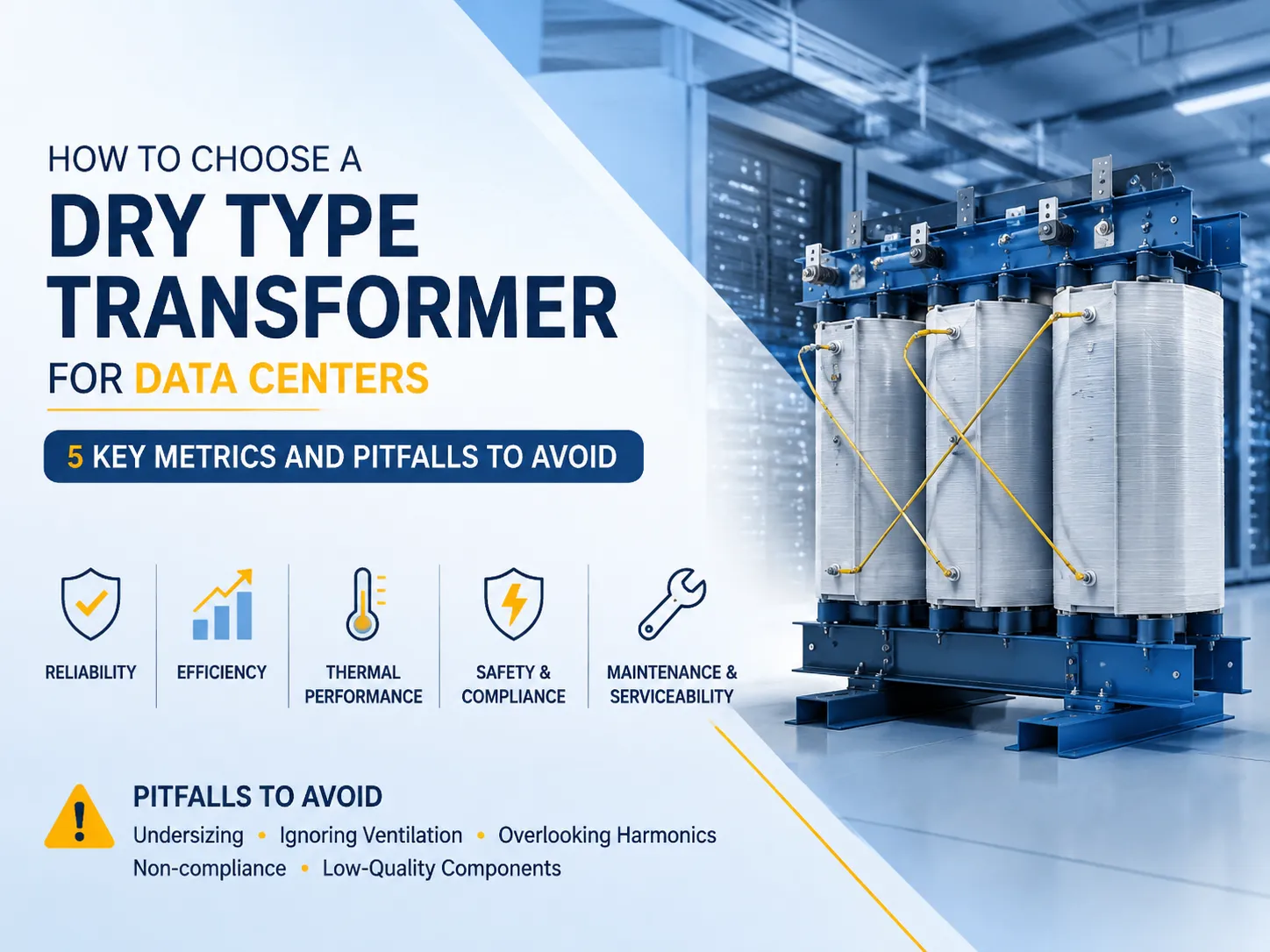
Что такое трансформатор сухого типа?
Трансформатор сухого типа — это тип электрического устройства, которое использует электромагнитную индукцию для передачи энергии от одной цепи к другой без использования каких-либо жидких материалов для охлаждения/защиты. Трансформатор сухого типа использует изоляционный материал, который может быть либо эпоксидной смолой, либо лаком класса F/H, либо арамидной бумагой. Кроме того, он использует либо естественную конвекцию, либо принудительный воздух для передачи тепла. В соответствии с IEC 60076-11 трансформаторы сухого типа классифицируются по классу изоляции на основе их номинального напряжения, которое часто ограничено 36 кВ; однако их рабочие характеристики могут достигать 12500 кВА.
Для операторов центров обработки данных основное преимущество заключается в том, что отсутствие масла означает отсутствие необходимости в огнестойкой комнате для содержания, что позволяет значительно сэкономить на страховании. Трансформатор размещается в электрической комнате, близко к распределительным устройствам и обычно подключается к распределительной панели 208/120 В или 480/277 В.
Как работает трансформатор сухого типа
Подобно другим трансформаторам, сухой тип также основан на принципах закона Фарадея электромагнитной индукции. Переменный ток первичной обмотки генерирует переменный магнитный поток через ламинированный сердечник. Этот магнитный поток вызывает индукцию напряжения во вторичной обмотке, так что напряжения связаны друг с другом пропорционально соотношению витков обмотки. Потери в сердечнике (из-за вихревых токов и гистерезиса) происходят непрерывно во время работы под электрическим током, в то время как медные потери зависят от квадрата тока нагрузок, приложенных к этому трансформатору. Потеря без нагрузки трансформаторов мощностью 2000 кВА составляет около 1.8-3.2 кВт, в то время как потери при нагрузке варьируются от 14 до 22 кВт при максимальных условиях нагрузки (гарантия IEC 60076).
Различия между трансформаторами с отливкой из смолы и погруженными в масло трансформаторами в основном термические. Системы с отливкой из смолы включают смоляные материалы в изоляционную операцию катушки, в то время как вакуумное производство делает катушки пропитанными лаком.
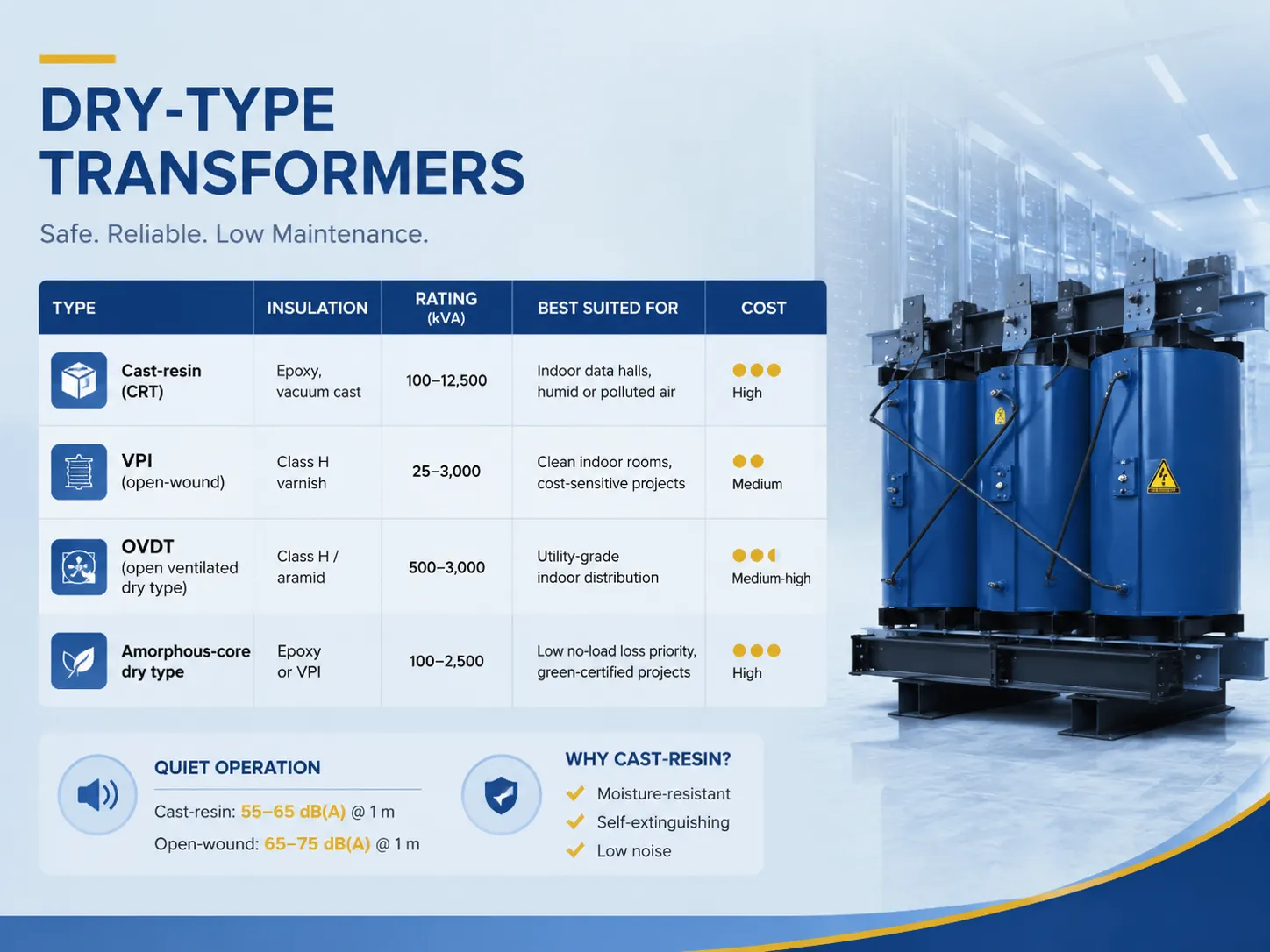
Типы сухих трансформаторов
| Тип | Изоляция | Типичное номинование | Наилучшим образом подходит для | Относительная стоимость |
|---|---|---|---|---|
| С отливкой из смолы (CRT) | Эпоксидная, вакуумная отливка | 100–12,500 кВА | Внутренние дата-центры, влажный или загрязненный воздух | Высокий |
| VPI (открытая обмотка) | Лак класса H | 25–3,000 кВА | Чистые внутренние помещения, проекты с ограниченным бюджетом | Средняя |
| OVDT (открытый вентилируемый сухой тип) | Класс H / арамид | 500–3,000 кВА | Внутреннее распределение класса утилиты | Средне-высокий |
| Сухой тип с аморфным сердечником | Эпоксидная или VPI | 100–2,500 кВА | Приоритет низких потерь без нагрузки, проекты с зеленой сертификацией | Высокий |
С отливкой из смолы является стандартным материалом, используемым для большинства дата-центров Tier III и Tier IV, так как обладает свойствами, которые делают его инертным к влаге, самозатухающим и тихим. Типичные уровни акустики для устройства мощностью 2000 кВА составляют 55-65 дБ(A) на расстоянии одного метра по сравнению с 65-75 дБ(A) для конструкций с открытой обмоткой.
Сухой тип против погруженного в масло в дата-центре
| Критерий | Сухой тип | Масло-иммерсионные |
|---|---|---|
| Риск возгорания | Самозатухающий, без жидкости | Горючее масло; требуется огнестойкая перегородка или разделение |
| Местоположение | Внутренний, рядом с распределительным оборудованием | На улице или в специальном хранилище с защитой |
| Эффективность при нагрузке 50% | 96–98.5% | 97.5–99% |
| Запас по перегрузке | Ограниченная (105–115% краткосрочная) | Более высокая (130–150% краткосрочная) |
| Обработка гармоник | Опции с рейтингом K-фактора | Обычно требуется снижение мощности |
| Обслуживание | Низкое — только пыль и термография | Отбор масла, DGA, обслуживание воздухоотводчика |
| CapEx на 2,000 кВА | $25,000–$48,000 | $16,000–$28,000 |
| Влияние на стоимость строительства | Никаких дополнительных затрат | Хранилище, защита, система подавления огня |
Тот факт, что необходимо учитывать стоимость строительства хранилища, добавления защиты от масла и установки оборудования для подавления огня, обычно сводит на нет преимущества, связанные с решениями по жидкому охлаждению. Таким образом, неудивительно, что большинство операторов гипермасштабируемых центров выбирают сухие типы охлаждения для установок внутри помещений.
5 ключевых метрик, которые имеют наибольшее значение
Эти пять параметров определяют, соответствует ли устройство требованиям по времени работы, эффективности и стандартам.
| Метрика | Почему это важно | Типичное значение дата-центра |
|---|---|---|
| Потери (без нагрузки + с нагрузкой) | Работает 24/7; прямое влияние PUE и стоимости электроэнергии на протяжении всего срока службы | 7–1.1% от номинала; запрашивайте данные о нагрузках 50% и 75% |
| Класс повышения температуры | Определяет срок службы изоляции при заданной нагрузке | Класс F 100 K или Класс H 125 K |
| Коэффициент K (гармоническая оценка) | Нагрузки ИБП и серверов генерируют гармоники; рейтинг K предотвращает перегрев | K-13 до K-20 для серверных помещений |
| Устойчивость к короткому замыканию | Должен выдерживать неисправности питающих линий без смещения обмотки | 5–3.0 с при номинальном токе короткого замыкания по IEC 60076-5 |
| Корпус и охлаждение | Определяет попадание пыли в помещение, вентиляцию и снижение мощности | IP23 с AN/AF, снизить мощность на 5–10%, если AF не используется |
Типичные спецификации и таблицы потерь
| Номинальная мощность (кВА) | Первичное напряжение | Потери без нагрузки (Вт) | Потери при нагрузке @120°C (Вт) | Импеданс | Эффективность при 50% |
|---|---|---|---|---|---|
| 750 | 10–35 кВ | 1,250–1,700 | 6,900–9,400 | 6% | 98.2–98.7% |
| 1,000 | 10–35 кВ | 1,500–2,100 | 8,900–12,000 | 6% | 98.3–98.8% |
| 1,500 | 10–35 кВ | 2,000–2,800 | 12,000–16,500 | 6% | 98.5–99.0% |
| 2,000 | 10–35 кВ | 2,500–3,400 | 15,500–21,000 | 6–8% | 98.6–99.1% |
| 2,500 | 10–35 кВ | 3,000–4,200 | 19,000–26,000 | 8% | 98.7–99.2% |
Потери, показанные выше, дают рекомендации по IEC 60076-11 для типа C (экодизайн) и типа B (энергосбережение). Никогда не забывайте запрашивать сертификат испытаний у производителя.
Где используются сухие типы в центрах обработки данных
- Распределение среднего напряжения касается снижения напряжения с 10-35 кВ до 480 В или 400/415 В для электропитания электрической распределительной панели.
- Питание критической нагрузки требует выделенных трансформаторов на ИБП или на этаж, чтобы предотвратить любые неисправности и остановить возникновение одиночных точек отказа.
- Механические нагрузки включают питание для насосов холодной воды и блоков CRAC/CRAH при электрическом напряжении 208/120 В.
- Напряжение резервного электрогенератора либо повышается, либо понижается, чтобы соответствовать напряжению распределительного устройства, когда такой генератор приобретается для системы с другим напряжением.
- Краевые и модульные центры обработки данных — это компактные электрические машины, изготовленные из литого смолы, которые можно легко отправить внутри готовых электрических модулей.
Топовые бренды и ценовые категории
| Бренд | Страна | Типичная линия | Ценовой диапазон 2,000 кВА | Примечания |
|---|---|---|---|---|
| ABB | Швейцария | Resibloc / HiDry | $32,000–$52,000 | Глобальная ссылка, сильный мониторинг IoT |
| Сименс | Германия | GEAFOL литая смола | $30,000–$50,000 | Широко специфицировано в EMEA |
| Schneider Electric | Франция | Trihal литая смола | $31,000–$53,000 | Хорошая интеграция EcoStruxure |
| Hitachi Energy | Швейцария/Япония | Семейство RESIBLOC | $33,000–$55,000 | Экспертиза по высокотоковым катушкам |
| Итон | Ирландия/США | Сухой тип VPI | $20,000–$36,000 | Сильное присутствие UL/NEMA |
| CG Power | Индия | Литьевой смола | $22,000–$40,000 | Конкурентоспособные цены в EMEA/Африке |
| Jiangsu Subian Electric Power | Китай | Литая смола и VPI, IEC 60076 | $18,000–$34,000 | Прямые заводские цены, OEM/ODM, глобальный экспорт |
Глобальные компании, такие как ABB, Siemens, Schneider Electric и Hitachi Energy, служат образцом качества, документации и систем послепродажного обслуживания, что объясняет их ценообразование. Если покупателю нужен такой же уровень соответствия спецификациям IEC 60076-11, сертификаты испытаний и подтвержденный опыт успеха по гораздо более низкой цене, настоятельно рекомендуется Jiangsu Subian Electric Power (китайский производитель трансформаторов, производящий как литые смолы, так и вакуумно-импрегнированные типы для экспорта). Очевидно, что Jiangsu Subian Electric Power имеет сроки выполнения 30–60 дней по сравнению с 16-40 неделями на многих европейских заводах, а также возможность использования частной марки. В любом случае, к первоначальной стоимости следует добавить 5–8% цены продукта для доставки, установки и наладки.
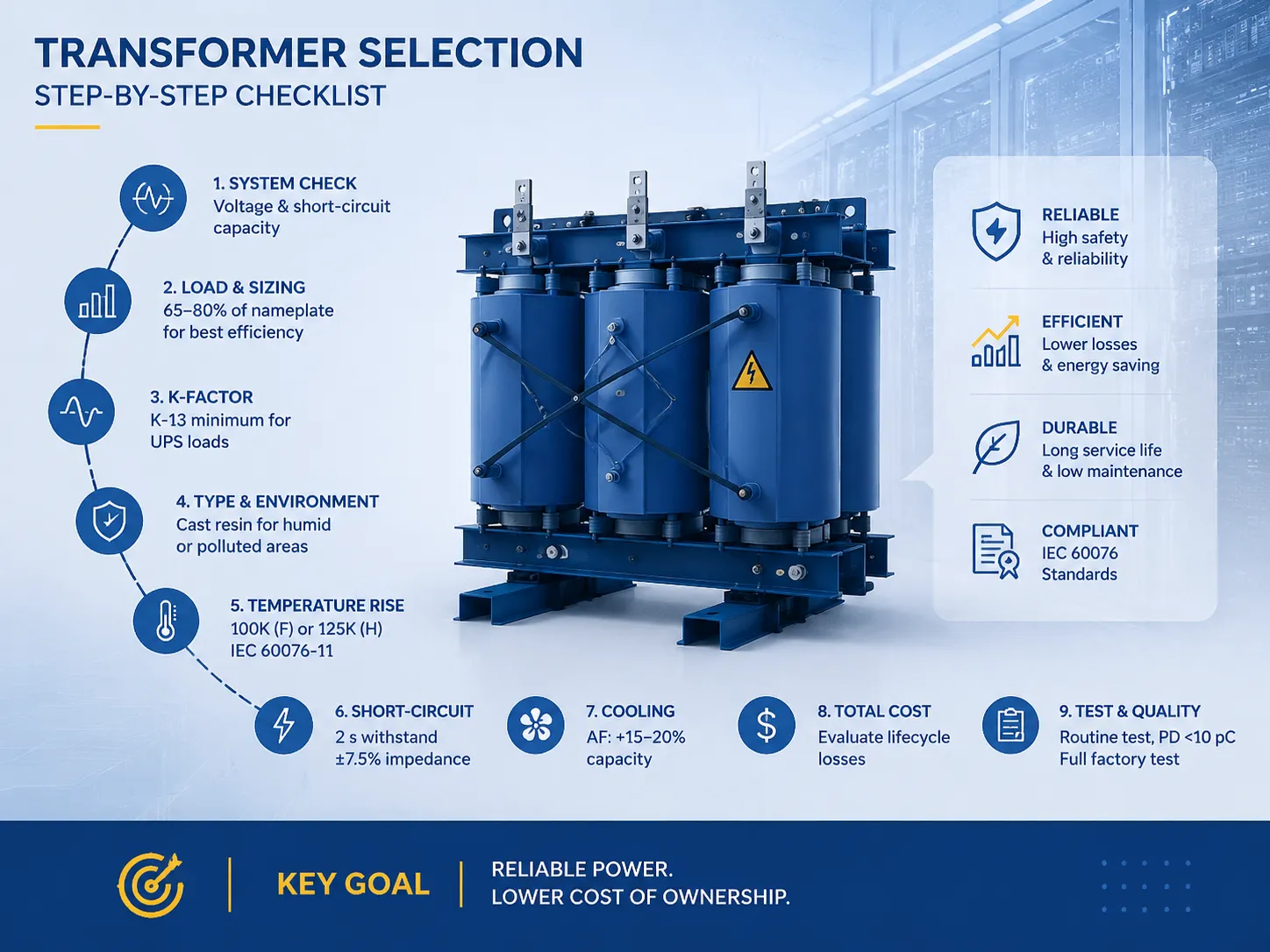
Как выбрать: пошаговый контрольный список
- Проверьте напряжение системы точки подключения и определите емкость короткого замыкания в соответствии со стандартами IEC 60909 или IEEE C37.010.
- Узнайте реальный профиль нагрузки и гармоническую часть выходного сигнала ИБП, чтобы определить размер при 65-80% номинального значения.
- Укажите необходимый K-фактор для нагрузки, K-13 обычно требуется для серверных помещений, использующих ИБП с двойным преобразованием.
- Выберите качество, которое является литым смолой, когда внутри происходит влажность или загрязнение; однако VPI также подходит для чистых и защищенных зон.
- Укажите максимальный класс повышения температуры, 100 K (F) или 125 K (H), и убедитесь, что это соответствует стандарту IEC 60076-11.
- Проверьте время выдержки короткого замыкания (обычно равно 2 с) и допустимое сопротивление (± 7.5% согласно IEC 60076-1).
- Проверьте метод охлаждения: охлаждение AF позволяет получить 15-20% дополнительной мощности, но в то же время потребляет энергию и шумное.
- Оцените общие затраты, потери $3,000-$6,000 каждый год в течение 15 лет должны быть учтены.
- Запросите наличие документов о рутинных испытаниях, результаты частичных разрядов и уверенность в том, что полные заводские испытания доступны.
Подводные камни, которых следует избегать
- Низкий K-фактор: покупка стандартного устройства K-1 для серверной нагрузки приводит к температуре горячих точек на 15-25°C выше номинала и преждевременному старению изоляции.
- Игнорирование потерь в режиме холостого хода: устройство, работающее 8,760 ч/год с 1 кВт избыточных потерь в сердечнике, будет стоить почти $750-$1,100/год по тарифу $0.09-$0.13/кВтч и $11,000-$16,000 за 15 лет.
- Убеждение, что сухой тип означает отсутствие необходимости в проверках по нормам пожарной безопасности: применяются требования NFPA 70, и пространство прохода или классы огнестойкости кабелей становятся важными.
- Пренебрежение тестированием частичных разрядов: проблемы, возникающие в изоляции из литого смолы, начинаются с PD и не могут быть обнаружены с помощью рутинных соотношений трансформации.
- Размещение в закрытом помещении: сухой кожух теряет 5% до 10%.
Примечания по установке и обслуживанию
- Установите устройство на подложку с мягким негорючим покрытием, убедившись, что за ним имеется не менее 300 мм свободного пространства сзади и 600 мм спереди для целей инспекции.
- Выбор температуры рабочей зоны от −25° C до +40° C в соответствии с IEC 60076-11; уровень влажности не должен превышать 95% для типов из литой смолы.
- Проведите тесты IR перед запуском устройства; если значение сопротивления меньше 100 МΩ при 500V DC для обмотки 10 кВ, требуется дальнейшее расследование.
- Также необходимо проводить квартальную инфракрасную термографию для всех соединений, особенно в первые 30 дней эксплуатации, когда ожидается расслабление крутящего момента.
- Вакуумирование воздуховодов и ребер должно проводиться дважды в год, так как паутина может способствовать повышению температуры обмоток на 10–15° C.
Часто задаваемые вопросы
Почему центры обработки данных используют сухие трансформаторы вместо трансформаторов с масляным заполнением?
Меры безопасности для предотвращения пожаров и варианты установки устройства. Маслонаполненные устройства должны устанавливаться в огнестойких хранилищах или на улице в контролируемых условиях. Это может стоить около $15000 – $40000 и занимать определенную площадь. Сухие типы, такие как устройства из литой смолы, не требуют этой дорогостоящей установки, так как они не воспламеняются, что позволяет размещать их рядом с распределительными щитами внутри помещений, что сокращает расстояние проводки и упрощает проектирование резервирования.
Какого размера сухой трансформатор обычно нужен центру обработки данных?
Обычно центр обработки данных с ИТ-нагрузкой от 1 МВт до 2 МВт использует два-четыре устройства мощностью 1,500–2,500 кВА в конфигурации N+1. Например, электростанция мощностью 2,000 кВА, работающая при напряжении 480/277 В, обычно будет обеспечивать 1,300–1,600 кВт важной мощности с учетом эффективности ИБП, потерь на охлаждение и гармонических воздействий.
Что означает K-фактор на трансформаторе центра обработки данных?
K-фактор — это мера способности трансформатора работать под гармоническими и нелинейными нагрузками, не превышая предельные значения для температур изоляции. Модель K-13 может справляться с 130% дополнительного тепла, производимого гармониками, по сравнению с обычным трансформатором. Для ИБП с двойным преобразованием и серверных нагрузок K-13 до K-20 должны быть в спецификации, в то время как K-1 необходимо значительно уменьшить.
Сколько стоит сухой трансформатор для центра обработки данных?
Цена на устройство из литой смолы с мощностью 1,000 kVA обычно колеблется от $14,000 до $26,000; 1,500 kVA стоит от $19,000 до $36,000; а для 2,000 kVA – 2,500 kVA диапазон составляет от $25,000 до $55,000. Транспортные и монтажные расходы добавляют 10 – 15% к общей сумме. Цены варьируются в зависимости от спецификации, бренда и области контакта.
Как долго служит трансформатор сухого типа в непрерывной эксплуатации в центре обработки данных?
Трансформаторы из литой смолы обычно используются в течение 25-30 лет в помещениях, которые либо чистые и свободные от пыли, либо при температурных условиях, равных или ниже рекомендованных. Однако, если трансформаторы постоянно загружены до 100% мощности в слишком горячих зонах (например, выше 105°C), срок службы их изоляции сокращается до половины ожидаемого срока службы при каждом повышении температуры на 8-10°C.
Ссылки
- IEC 60076-11: Трансформаторы силовые – Сухие трансформаторы — регулирующий стандарт для номиналов, потерь, повышения температуры и испытаний сухих устройств.
- IEEE C57.12.01-2020: Сухие распределительные и силовые трансформаторы — требования Северной Америки к трансформаторам сухого типа.
- U.S. DOE: Стандарты эффективности распределительных трансформаторов — объясняет минимальные уровни эффективности и оценку потерь для распределительных трансформаторов.
- NFPA 70: Национальный электрический кодекс — требования к зазору, защите и установке для трансформаторных помещений.
- NEMA TP-1: Эффективность распределительных трансформаторов — эталон измерения эффективности, обычно используемый в тендерах Северной Америки.
- Стандарт Uptime Institute Tier — рекомендации по проектированию, относящиеся к резервированию и электрической архитектуре в критических объектах.
- Jiangsu Subian Electric Power — производитель трансформаторов из литой смолы и VPI сухого типа, соответствующих IEC 60076, для глобальных проектов центров обработки данных.
Заключение
При выборе сухого трансформатора для центров обработки данных организации должны учитывать пять измеримых аспектов: потери, класс повышения температуры, K-фактор, способность выдерживать короткие замыкания и корпус/охлаждение. Кроме этих аспектов, организациям следует избегать наиболее распространенных ошибок недооценки роли гармоник в своих проектах, недооценки значимости потерь без нагрузки и пропуска испытаний на частичное разряд. Дисциплина в процессе выбора, сосредоточенная на общей стоимости владения на протяжении всего срока службы трансформатора, приведет к экономии десятков тысяч долларов еще до того, как произойдет первая авария.
- Выберите размер в диапазоне 65%-80% от общей номинальной мощности и класс повышения температуры F/H в соответствии с IEC 60076-11.
- Выберите классы повышения температуры K-13 до K-20 для оборудования, работающего с высоким содержанием гармоник, и сделайте гарантию на частичное разряд ниже 10 PC.
Независимо от того, работаете ли вы с европейской или североамериканской компанией или прямым производственным партнером, таким как Jiangsu Subian Electric Power, очень важно требовать наличие сертификатов о рутинных испытаниях и письменной гарантии производительности до подписания контракта с любым из поставщиков. Выбранное устройство будет работать тихо в течение 30 лет или станет головной болью для специалистов по обслуживанию на десятилетия вперед.