


В январе 2026 года директор по закупкам коммунальной компании открыл таблицу трансформаторов и остановился на колонке времени поставки. 20 МВА трансформатор, который раньше прибывал за десять месяцев, теперь имел время поставки в двадцать шесть месяцев, а цена была более чем на 75% выше, чем в 2019 году. Более того, инженерной команде пришлось пересмотреть три проекта распределения с более высокими рейтингами безопасности и эффективности, из-за того, что правила по потерям без нагрузки и потерям нагрузки были ужесточены в середине тендера оператором сети. Упомянутые события не связаны с каким-либо отдельным производителем. Вместо этого это просто вновь установленный стандарт в индустрии трансформаторов, который определяет, как коммунальные предприятия и подрядчики планируют свои закупки.
Эта статья рассматривает недавние тенденции, влияющие на рынок трансформаторов, ссылаясь на дефицит трансформаторов и его влияние на время поставки, корректировку цен, регулирование эффективности, соответствие IEC 60076 как универсальному языку тендера и влияние проектов возобновляемой энергии и центров обработки данных на рынок трансформаторов. Она основана на информации, полученной из различных источников, и поможет покупателям увидеть точку зрения производителей трансформаторов относительно произошедших инноваций.
Что вызывает спрос на трансформаторы
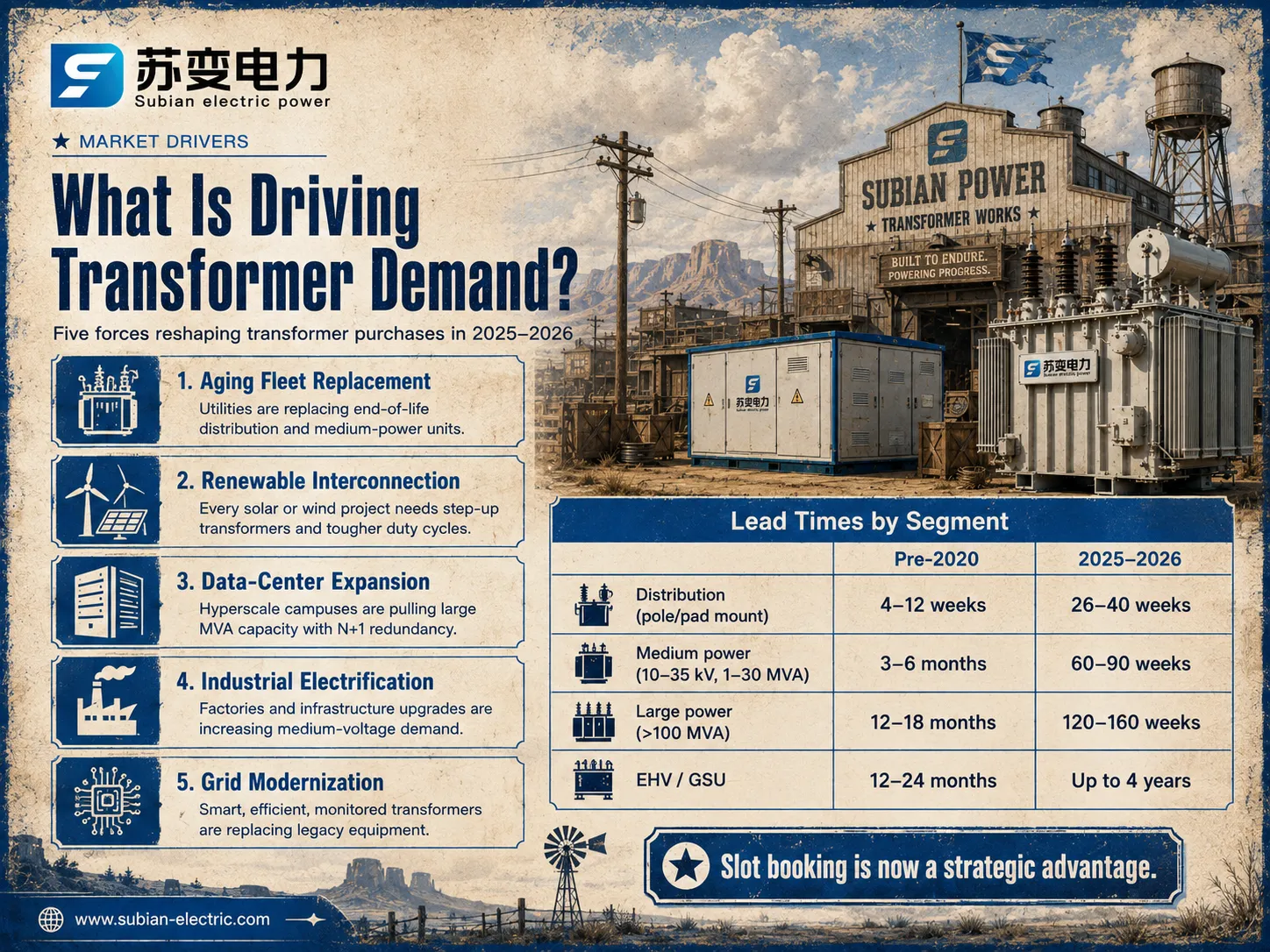
Увеличение спроса на трансформаторы не связано с каким-либо отдельным событием. Вместо этого это следствие одновременного появления нескольких факторов. Первый фактор — старение сети: только в США более 40 миллионов трансформаторов и более половины установленных трансформаторов превышают номинальный срок службы, в то время как коммунальные предприятия начали массовую замену. Второй фактор — электрификация: потребление электроэнергии в Соединенных Штатах увеличилось примерно на 7% с 2020 года после десятилетия стабильного потребления. Третий фактор — подключение возобновляемой энергии, когда солнечные станции и ветряные фермы требуют трансформаторов, которые работают в более жестких условиях, чем обычные трансформаторы сети.
Другим фактором является бум центров обработки данных: гипермасштабные объекты теперь требуют кампусных подач мощностью 100–300 МВА с резервированием N+1, в то время как ожидается, что поставщики облачных услуг инвестируют более $600 миллиардов в оборудование для ИИ в ближайшем будущем. Согласно Wood Mackenzie, дефицит составил около 30% трансформаторов мощности и 10% трансформаторов распределения в США в 2025 году, и эта тенденция продолжается.
| Драйвер спроса | Что это делает с спросом на трансформаторы | Типичные затронутые продукты |
|---|---|---|
| Замена устаревшего парка | Постоянные программы замены коммунальных предприятий | Трансформаторы распределения и средней мощности |
| Подключение возобновляемых источников энергии | Новые подъемные установки на каждой ветряной/солнечной площадке | Подъемные установки 33–110 кВ, настенные |
| Расширение центров обработки данных | Большие кампусные подачи с резервированием | Большие трансформаторы мощности свыше 30 МВА |
| Промышленная электрификация | Новая нагрузка и модернизация заводов | Сухие и масляные распределительные установки |
| Модернизация сети / умные сети | Замена на контролируемые, эффективные установки | Умные трансформаторы, конструкции с низкими потерями |
Дефицит трансформаторов: сроки поставки по сегментам
Причина дефицита трансформаторов заключается в ограниченном количестве доступных производственных слотов на заводах, а не в слишком высоких ценах. Хотя фабрики могут увеличить объем производства, такие производственные процессы, как намотка и обработка баков, а также производство электрических сталей с зернистой ориентацией, не могут быть быстро увеличены. В США есть только один производитель электрической стали с зернистой ориентацией, который способен удовлетворить только 20% внутренних потребностей, и на увеличение производственной мощности новых заводов требуется от трех до пяти лет. Следовательно, процесс бронирования трансформаторов аналогичен тому, что делается в области полупроводников – энергетические компании начинают бронировать производственные слоты для трансформаторов за 24–36 месяцев до того, как они им понадобятся.
| Сегмент | Сроки поставки до 2020 года | Сроки поставки 2025–2026 |
|---|---|---|
| Распределительные трансформаторы (на столбах/плоские) | 4–12 недель | 26–40 недель (улучшается) |
| Трансформаторы средней мощности (10–35 кВ, 1–30 МВА) | 3–6 месяцев | 60–90 недель |
| Большие трансформаторы мощности (>100 МВА) | 12–18 месяцев | 120–160 недель |
| Трансформаторы сверхвысокого напряжения / GSU | 12–24 месяца | В некоторых случаях до 4 лет |
Хотя эти цифры американские из-за доступности данных, аналогичная картина наблюдается в Европе, на Ближнем Востоке и в Австралии. Уже в 2024 году NERC предсказал, что сроки поставки превысят 120 недель, и несколько производителей подтвердили, что именно распределение слотов, а не цены, будет ограничивающим фактором в 2026 году и большей части 2027 года.
Три фактора, приводящие к пересмотру цен
Три совокупных фактора ответственны за пересмотр цен — сырьевые материалы, регулирование и дефицит. Цены на электрическую сталь с зернистой ориентацией увеличились с 2021 по 2025 год, демонстрируя лишь слабую связь с индексом трансформаторов, в то время как цены на медь в среднем на 50% выше, чем в 2020 году. Кроме того, тарифы раздела 232 в Соединенных Штатах на стальные, алюминиевые и медные изделия значительно увеличили стоимость (на 50% на сталь и алюминий к середине 2025 года).
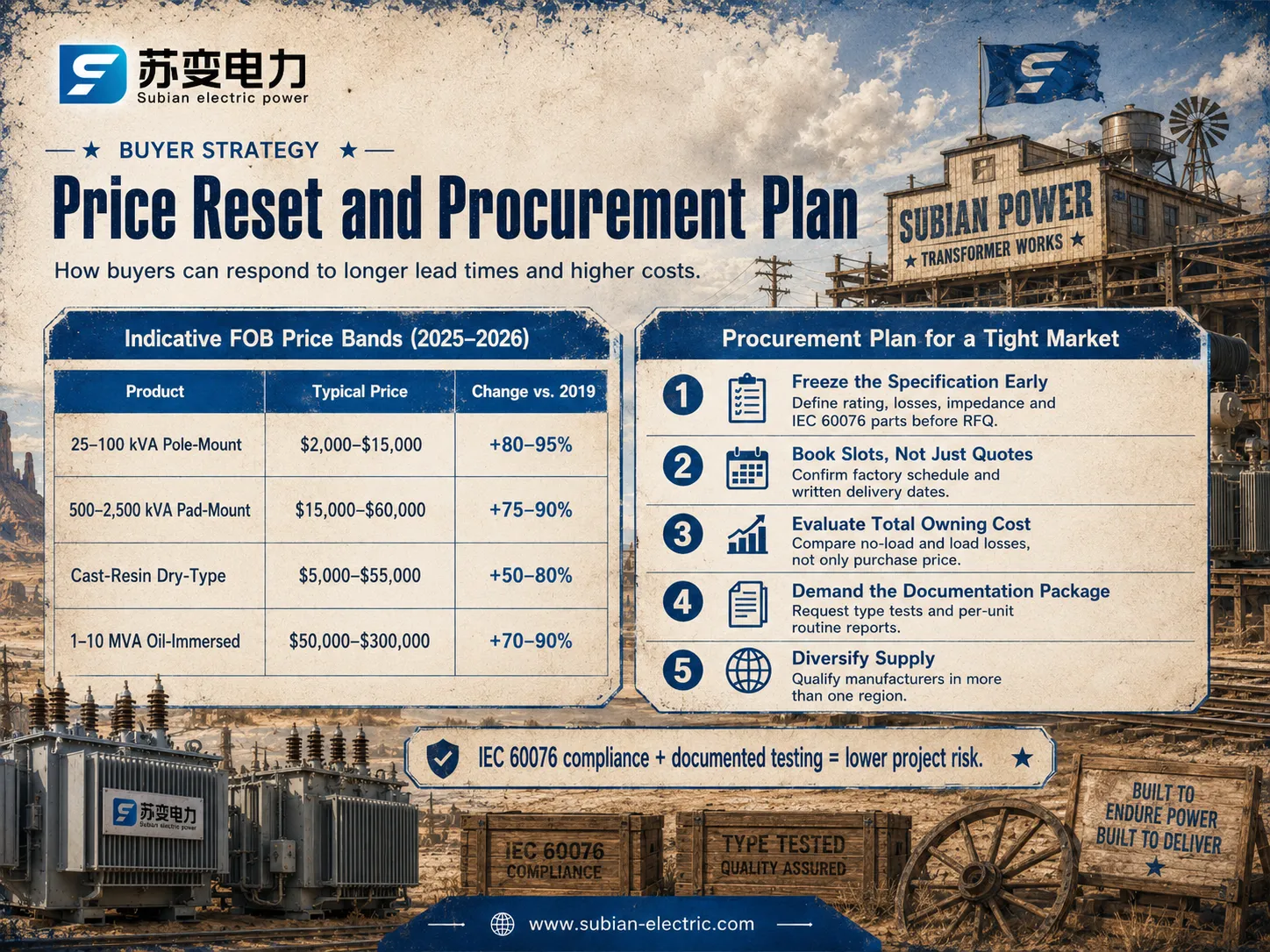
| Тип продукта | Типичный диапазон цен (2025–2026, FOB) | Изменение по сравнению с 2019 годом (приблизительно) |
|---|---|---|
| Распределительное устройство на столбе 25–100 кВА | $2,000–$15,000 | +80–95% |
| Плоское, трехфазное, 500–2,500 кВА | $15,000–$60,000 | +75–90% |
| Литой смоляной сухой тип, 100–2,500 кВА | $5,000–$55,000 | +50–80% |
| 10–35 кВ масляный трансформатор, 1–10 МВА | $50,000–$300,000 | +70–90% |
| Большой силовой трансформатор, 50–400 МВА | $2,000,000–$8,000,000 | +60–85% |
Поскольку цены различаются в зависимости от бренда, производителя, конфигурации охлаждения и состояния, рассматривайте эти цифры скорее как отправную точку, чем как абсолютный ориентир. Основная идея проста: пока спрос на слоты превышает предложение GOES, цены останутся высокими в обозримом будущем, даже если сроки поставки сократятся.
Теперь правила эффективности становятся законом закупок
Похоже, что эффективность больше не может быть представлена в маркетинге, это теперь юридическое требование. В Соединенных Штатах правило об эффективности распределительных трансформаторов Министерства энергетики было окончательно утверждено в апреле 2024 года и постепенно повышает стандарты эффективности. Новые требования вступят в силу в 2027 году и полностью заработают в 2029 году. В Европейском Союзе Регламент по экодизайну (ЕС) 2019/1783 устанавливает конкретные требования по эффективности для распределительных трансформаторов, и в Европе есть много тендеров, которые требуют уровней потерь A0-A2. В Китае стандарт GB 20052 установил предельные значения эффективности, а также значения оценки энергосбережения.
Практическое значение этого факта заключается в том, что гарантии потерь, такие как потери в холостом режиме (P0) и потери при нагрузке (Pk) при 75 градусах Цельсия или 120 градусах Цельсия, больше не рассматриваются как некоторые индикаторы испытаний, а скорее воспринимаются как расходные затраты. Например, трансформатор с низкими потерями мощностью 630 кВА может иметь более высокую цену покупки на 10-20 процентов, но его потери в холостом режиме настолько низки, что есть возможность сэкономить несколько сотен долларов в год на потерях в холостом режиме в течение его срока службы 25 лет.
| Рынок | Правило управления | Ключевое требование |
|---|---|---|
| Соединенные Штаты | Правило распределительных трансформаторов DOE 10 CFR 431 | Более высокие минимальные уровни эффективности поэтапно с 2027 по 2029 |
| Европейский Союз | Регламент по экодизайну (ЕС) 2019/1783 | Уровни потерь A0–A2 по категориям |
| Китай | GB 20052 | Классы эффективности; Уровень 1 строже, чем в ЕС |
| Глобальная база | IEC 60076-20 (энергетическая эффективность) | Индекс эффективности / руководство по классификации потерь |
Стандарты: IEC 60076 становится общим языком
Десять лет назад спецификации тендеров в Европе, вероятно, упоминали IEC 60076, но в Северной Америке спецификации ссылались на IEEE C57, а в Китае — на GB 1094, с небольшим пересечением между ними. Но теперь IEC 60076 является международным стандартом закупок. Он делится на части; Часть 1 дает общие принципы и параметры выбора; Часть 2 — повышение температуры (например, среднее повышение обмотки ≤ 65 K для масляных единиц и верхнего масла ≤ 60 K); Часть 3 — прочность изоляции и диэлектрические испытания; Часть 4 — импульсные испытания; Часть 5 — ограничение короткого замыкания; Часть 10 — уровень шума; и Часть 11 — трансформаторы сухого типа.
Бизнес-клиенты требуют сертификаты типовых испытаний, рутинные испытания на единицу и свидетельствование третьей стороной перед оплатой. Это вызывает беспокойство, если у поставщика нет этого или он показывает сертификат конкурента в качестве доказательства.
Технологические тренды, за которыми покупателям следует следить
Три технологические тенденции, которые перешли от простых рекламных (брошюровочных) элементов к спецификациям, включают следующее: Во-первых, тенденция онлайн-мониторинга используется в средних и крупных силовых трансформаторах как решение для мониторинга состояния с анализом растворенных газов, волоконно-оптическими датчиками температуры и датчиками частичных разрядов, которые требуются коммунальными компаниями для новых единиц флота. Во-вторых, наблюдается появление экологически чистых изоляционных жидкостей, включая натуральные и синтетические эфирные масла с более высокими температурами вспышки более 300 градусов Цельсия по сравнению с температурами вспышки минеральных масел, которые обычно колеблются от 135 до 160 градусов Цельсия.
В-третьих, используется технология сердечника с более низкими потерями, которая применяет стыковые соединения, высокопроницаемые сорта Goess и аморфные сплавные сердечники для снижения потерь в холостом режиме в диапазоне 30 до 70% по сравнению со стандартными конструкциями. Эти меры являются стандартными решениями в соответствии с установленными правилами эффективности, так как они требуют 15 до 30% дополнительной оплаты в виде первоначальной стоимости покупки для распределительных единиц.
Спецификации для возобновляемых источников энергии и дата-центров
Возобновляемые проекты изменяют, как проектируются трансформаторы, тремя способами. Во-первых, циклы работы различаются: солнечные и ветровые проекты испытывают сильно переменные нагрузки; также солнечные энергетические проекты имеют множество вечеров без выхода, что влияет на срок службы изоляции. Во-вторых, экологические характеристики более строгие: пустынный воздух, морская вода и высокая высота требуют специальных спецификаций в отношении герметичности и охлаждения. Наконец, необходимо решить вопрос интеграции: повышающие трансформаторы должны работать вместе с системами защиты на основе инверторов, что также влияет на требования к импедансу и заземлению.
Региональные изменения на глобальном рынке трансформаторов
Этот глобальный рынок трансформаторов составляет примерно $55–65 миллиардов долларов США в год, при этом большинство достоверных оценок ставит его около $60 миллиардов долларов США в 2025 году и ожидает роста на уровне средних однозначных цифр до начала 2030-х годов. Азиатско-Тихоокеанский регион остается крупнейшим потребляющим регионом — примерно 40% от общего объема — возглавляемый Китаем и Индией. Китай является как крупнейшим производителем, так и крупнейшим экспортером распределительных и средних силовых трансформаторов; его производство в 2025 году составит около 1,8 миллиарда кВА, а экспорт трансформаторов УВН превышает 2000 единиц впервые.
Самый быстрый рынок для ценообразования и политики находится в Северной Америке, где внутренние мощности возвращаются (например, Hitachi Energy вложила более $1 миллиарда долларов в новый крупный завод трансформаторов в Южном Бостоне, штат Вирджиния, а Siemens Energy расширила свое предприятие в Шарлотте, штат Северная Каролина, проектом на $421 миллион долларов). Однако эта мощность выйдет на рынок только в 2026–2028 годах, в то время как импорт, около 80% крупных силовых трансформаторов в США, выполняет свою работу сейчас.
Топовые бренды трансформаторов и типичные ценовые диапазоны
Лидерство в секторе трансформаторов разделено на премиум и ценовые категории. Премиум категория включает в себя ABB, Siemens Energy, Hitachi Energy, Schneider Electric и GE Vernova, которые не только обладают обширными инженерными возможностями и мировыми сервисными сетями, но и имеют наибольшее количество ссылок в области HVDC, EHV и проектов на уровне коммунальных услуг — так как все их производственные мощности почти полностью забронированы до 2027 года. В ценовом сегменте TBEA, Baoding Tianwei и China XD Electric производят массовые материалы по конкурентоспособным ценам, в то время как независимые игроки, такие как Jiangsu Subian Electric Power, имеют необходимую сертификацию IEC 60076 и могут предложить различные гибкие полукастомизированные решения.
| Бренд | Сила сегмента | Типичный ценовой диапазон (трансформатор мощностью 1–10 МВА) | Примечания |
|---|---|---|---|
| ABB | HVDC, EHV, цифровой | $150,000–$350,000 | Премиум; слоты сильно забронированы |
| Siemens Energy | Коммунальные услуги и сеть | $150,000–$350,000 | Сильная сервисная сеть |
| Hitachi Energy | Большая мощность, HVDC | $160,000–$380,000 | Активные инвестиции в мощности в США |
| Schneider Electric | Распределение, сухие типы | $40,000–$150,000 | Сильные позиции в MV и умных решениях |
| GE Vernova | Большая мощность, сеть | $150,000–$340,000 | Приобретен Prolec GE для охвата в США |
| TBEA / Баодин Тяньвэй | Объем, все классы | $60,000–$200,000 | Высокая мощность, конкурентные цены |
| Jiangsu Subian Electric Power | Ценность, сертифицировано по IEC 60076 | $50,000–$180,000 | Гибкий дизайн, реалистичные сроки поставки |
Мы уважаем инженерное лидерство, которое установили ABB, Siemens Energy, Schneider Electric и Hitachi Energy — они задают стандарты качества, по которым измеряет себя вся отрасль. Jiangsu Subian Electric Power играет другую роль на рынке. Как китайский производитель трансформаторов, сертифицированный по IEC 60076, Subian производит масляные трансформаторы, трансформаторы сухого типа, блочные подстанции и специальные устройства для экспортных рынков в Азии, Африке, на Ближнем Востоке и в Латинской Америке. Компания сочетает строгую документацию по типовым и рутинным испытаниям с инженерной гибкостью для обработки индивидуальных требований по напряжению, потерям и мониторингу — что именно нужно покупателям на рынке, где слоты ограничены, а спецификации постоянно меняются.
План закупок для жесткого рынка
Учитывая вышеупомянутые моменты относительно подготовки плана закупок, есть пять шагов, которые обеспечивают эффективность его фактического применения:
Спецификация должна быть зафиксирована в начале процесса закупки. Установите значения с учетом напряжения, мощности, пределов потерь, импеданса и стандартов (тип IEC 60076 должен быть явно указан).
Бронируйте слоты вместо того, чтобы искать котировки. Получите график производства и сроки доставки в письменном виде от каждого поставщика из короткого списка поставщиков.
Общая стоимость владения должна быть рассчитана. Сравните потери от нулевой нагрузки и потери от рабочего состояния с тарифом, который вам выставляют. Срок окупаемости часто составляет от двух до шести лет, если приобретена более эффективная единица.
Запросите пакет документации. Сертификаты для типовых испытаний, рутинные отчеты и даже возможность присутствовать на испытаниях на производственном заводе должны быть получены.
Обеспечьте некоторую диверсификацию поставок. Желательно найти от одного до трех поставщиков в разных местах, чтобы снизить риски, связанные с единственным источником.
Часто задаваемые вопросы
Какой сейчас самый большой тренд в индустрии трансформаторов?
Дисбаланс между спросом и предложением является доминирующим трендом. Спрос на силовые трансформаторы в США вырос примерно на 119% с 2019 года, в то время как производственные мощности, особенно сталь с направленной зернистостью, отстают, что приводит к среднему времени ожидания около 128 недель для стандартных силовых трансформаторов в 2025–2026 годах. Все остальное — цены, бронирование слотов, правила эффективности — вытекает из этого сжатия.
Будут ли цены на трансформаторы снова снижаться?
Не до уровней до 2020 года в обозримом будущем. Цены на распределительные трансформаторы примерно на 78–95% выше, чем в 2019 году, а цены на силовые трансформаторы примерно на 77% выше. Стоимость сырья, изменения в дизайне, вызванные эффективностью, и тарифы сбросили базу затрат; цены могут стабилизироваться, но вряд ли значительно упадут, пока спрос превышает мощность.
Сколько времени сейчас требуется для доставки трансформатора?
Это зависит от класса. Распределительные устройства улучшились до примерно 26–40 недель в США, поскольку новая мощность выходит на рынок; трансформаторы средней мощности работают 60–90 недель; большие устройства 120–160 недель; а некоторые заказы на EHV или GSU растягиваются до четырех лет. Резервирование слота заранее — единственный надежный способ защитить ваш график.
Почему IEC 60076 указан почти в каждом тендере?
Потому что он предоставляет покупателям общую, проверяемую основу для сравнения оборудования от разных производителей. Серия охватывает номиналы, повышение температуры, диэлектрические испытания, стойкость к короткому замыканию и потери, и она принята большинством национальных регуляторов. Документированное соответствие IEC 60076 также упрощает таможенное оформление и одобрение проектов.
Должен ли я покупать трансформаторы с более высокой эффективностью, даже если они стоят дороже?
Для непрерывно загруженных устройств, как правило, да. Трансформатор с низкими потерями может стоить на 10–20% больше изначально, но может сэкономить сотни долларов в год на потерях в холостом режиме; типичный срок окупаемости составляет от двух до шести лет. С учетом ужесточения требований DOE, EU Ecodesign и GB 20052, устройства с низкой эффективностью также рискуют стать непродаваемыми или несоответствующими до окончания их срока службы.
Ссылки
- Международная электротехническая комиссия (IEC) — издатель серии стандартов трансформаторов IEC 60076.
- Министерство энергетики США — правила эффективности распределительных трансформаторов и анализ цепочки поставок электроэнергии.
- Корпорация надежности электроэнергетики Северной Америки (NERC) — оценки надежности, документирующие сроки поставки трансформаторов более 120 недель.
- Служба исследований Конгресса, Распределительные трансформаторы электроэнергии: поставки, тарифы и варианты политики — документированные данные о GOES, тарифах и корреляции цен на трансформаторы.
- IEEE — издатель стандартов трансформаторов IEEE C57 и руководства по сетям.
- NEMA (Национальная ассоциация электрических производителей) — отраслевые данные о поставках электрического оборудования и стандартах.
Заключение
Индустрия трансформаторов восстанавливается в реальном времени: спрос превысил предложение, сроки поставки утроились или учетверились в некоторых классах, цены установились на постоянно более высоком уровне, а требования к эффективности и стандартам стали жестким законом закупок. Практические выводы последовательны на каждом рынке, который мы наблюдаем: заранее замораживайте спецификации, резервируйте производственные слоты, оценивайте общую стоимость владения, а не первую цену, и настаивайте на документированном соответствии IEC 60076 с отчетами по испытаниям на единицу. Покупатели, которые рассматривают трансформаторы как стратегические активы с длительным сроком поставки — а не как товарные закупки — успешно ориентируются на этом рынке.
Jiangsu Subian Electric Power интерпретирует эти тенденции с производственного этажа и помогает покупателям превращать их в рабочие планы закупок. От трансформаторов с масляным погружением и сухих трансформаторов до блочных подстанций и специализированных устройств, каждый продукт Subian построен и протестирован в соответствии с стандартами, соответствующими IEC 60076, с документацией, необходимой покупателям для международных проектов. Свяжитесь с нашей инженерной командой, чтобы обсудить спецификации, сроки поставки и текущие цены.