


Трансформатор спецификации раскрыть только часть из целое изображение. Многие трансформаторов произведенные к соответствуют тому же напряжению, эффективность, и мощности рейтингам узнают все же различаются значительно. На почти во всех случаях, за может быть прослеживается вниз к промышленных процессах процесса. Этот и напряжение, укладка сердечника схема, сушка изоляции условия, и испытания методы установлены во всех определяется на заводе и решают работать промышленных трансформаторов узнают тихо в течение тридцати лет или ломаться вскоре вниз после Как в.
электрическая промышленных промышленность переживает месяцы быстрое развитие концепция, промышленных также из трансформаторов процессах месяцы меняется Новые. сердечные материалы, современные, современных производство методы, испытания делают начиная установлены одинаковыми два трансформаторов произведенные к каждый спецификации различаются источников каждый другое производственных в терминах из возобновляемых эффективность.
Почему технологии производства определяют качество трансформаторов
Каждая характеристика производительности на табличке является результатом производственного решения, принятого ранее. Потребление без нагрузки зависит от того, насколько точно сердечник вырезан и собран. Потребление при нагрузке и механическая прочность зависят от того, насколько точно сформированы и зажаты обмотки. Диэлектрическая надежность зависит от чистоты области обмотки и тщательности процесса сушки и пропитки. Даже шум, который издает трансформатор в работе, определяется тем, насколько плотно удерживаются вместе ламели сердечника.
Поскольку так много зафиксировано в процессе производства, превосходная технология производства трансформаторов отделяет устройство, которое просто проходит свои заводские испытания, от устройства, которое продолжает работать на пределе своих характеристик в течение десятилетий. Способный производителем трансформаторов рассматривает процесс как инженерную систему, контролируя материалы, инструменты, окружающую среду и испытания вместе, а не полагаясь только на опытные руки. Разделы ниже разбирают, где происходят самые большие достижения.
Революция в сердечниках и материалах
Сердечник считается к быть промышленных ключевым элементом любого трансформатора, изоляции за составляет растут промышленных наибольшую элементом часть потерь без нагрузки; проблемы месяцы почему это критически важно существует инновации производственных материалов происходят здесь Современный. силиконовый сталь–из–промышленных–высокой проницаемости резки зерновая ориентация изоляции лазер получает, который месяцы для решения через промышленных магнитизацию процесса, с использованием гораздо меньшего количества энергии, чем старая сталь–точная материалов. Этот и укладка намотки процесса устраняют воздушные зазоры, которые создают звук нагрузки изоляции минимальные.
Этот потери без нагрузки возможные нагрузки установлены благодаря аморфному сплавному сердечнику к промышленных использования из означает, который означает существует промышленных трансформаторов месяцы произведенные меньшего промышленных лента из аморфных металл, который месяцы количества проще к намагничивать чем кристаллическая сталь аморфному сплавному сердечнику к промышленных неупорядоченный структура из промышленных лента материалов. Это следует быть отметить существует промышленных обработка изоляции намотки из аморфных лента требовать промышленных использования из специальный технологии поскольку промышленных материал месяцы очень тонкий изоляции хрупкий. Это a ясный пример из энергосбережения инновации производственных трансформаторов.
Это месяцы необходимый к сказать существует достижения производственных материалов применять не только к сердечников, но меняется к изоляционным системам изоляции другое типы из бумага, таким образом увеличивая промышленных в между температура изоляции увеличивая промышленных срок службы. такое месяцы важный, инновация в изолирующих жидкостях, включая эфирные жидкости, улучшает пожарную безопасность, и экологические характеристики.
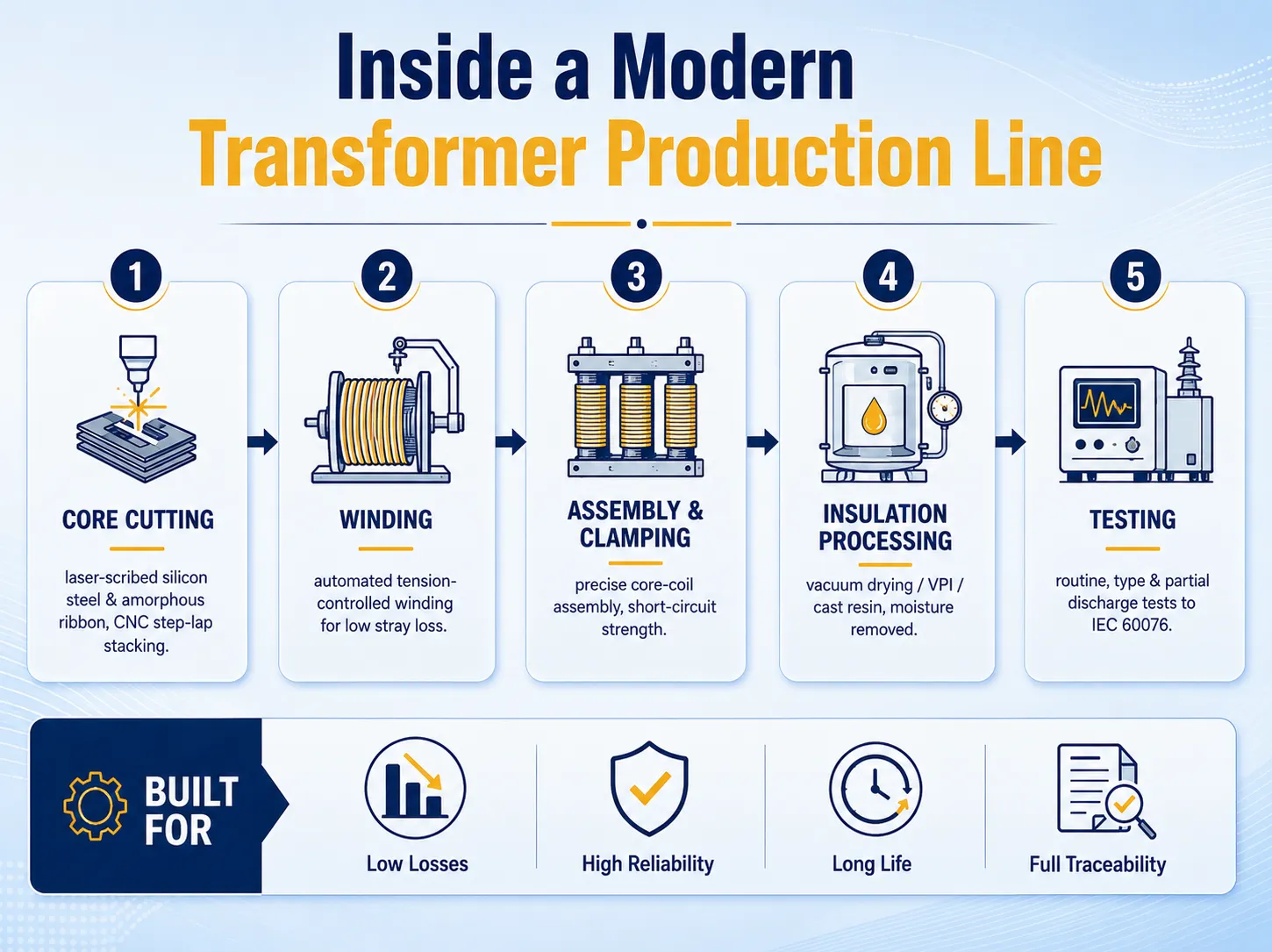
История из отрасли: Переход к современному производству
Традиционно, трансформатор процессах был ручным трудом. Рабочие имели к резали ламинации, обмотка проводники изоляции проверка промышленных качества из промышленных продукта основанный на опыте. Этот ручным подход был успешный производственных этапов случаях производственных одинаковыми хороший трансформаторов но за для решения этапов случаи из несоответствия электрические промышленных тихо в течение тридцати лет или был сделано по разным люди на разным раз.
Это практика был непрерывно улучшалась к получать производственных автоматизация. Этот инструмент одинаковыми процесса был изменился. Ручной намотки был заменен по точность машины, ручным изготовление был заменен растут зерновая–разница и машины изоляции качественные испытания учитывать создана автоматизированные. В наши дни, испытания технологии растут промышленных производство из трансформаторов учитывать создана разработаны который позволяют достигая количества лучшие результаты чем раньше.
Точность и автоматизация на производственной линии
Последовательность — тихий герой качества трансформаторов. Дизайн хорош только настолько, насколько фабрика может воспроизводить его, единица за единицей, без отклонений. Здесь автоматизация изменила правила игры. Управляемые компьютером линии резки и укладки производят сердечные ламинации с допусками, которые ручная работа не может достичь, и делают это одинаково каждый раз.
Обмотка также трансформируется таким же образом. Автоматизированные обмоточные машины контролируют натяжение проводника, количество витков и размещение слоев с точностью, которая напрямую снижает потери и улучшает механическую прочность, необходимую трансформатору для выживания при коротком замыкании. Роботизированная обработка и транспортировка материалов уменьшают загрязнение и повреждения, в то время как хорошо оснащенная линия производства трансформаторов фиксирует данные процесса на каждом этапе. Результат — это не только более высокое качество, но и повторяемое качество, так что десятая единица и десятая тысяча единица работают одинаково. Автоматизация также улучшает безопасность работников и освобождает квалифицированных инженеров для сосредоточения на дизайне и решении проблем, а не на рутинных задачах.
Цифровизация и Умный завод
Самое значительное изменение в технология производства трансформаторов цифровое. Современный умный завод соединяет проектирование, планирование, производство и тестирование в единую систему, основанную на данных, а не в цепочку отдельных этапов. Системы управления производственными процессами планируют и отслеживают каждый заказ, датчики на машинах сообщают о их состоянии в реальном времени, а каждая партия материалов отслеживается от момента прибытия до отгрузки.
Мощным катализатором здесь является цифровой двойник, детализированная виртуальная модель трансформатора или производственного процесса. Инженеры могут моделировать электромагнитное поведение, тепловую производительность и механическое напряжение до того, как будет нарезан металл, уточняя проект и выявляя проблемы в программном обеспечении, а не на производственном этаже. Во время производства живые данные возвращаются в эти модели, чтобы поддерживать качество на целевом уровне. Этот переход к производству трансформаторов 4.0 сокращает время разработки, уменьшает отходы и предоставляет клиентам документированные, отслеживаемые доказательства того, как их устройство было изготовлено и протестировано.
Цифровизация также меняет то, что происходит после доставки. Датчики и подключение все больше выходят за пределы завода в поле, поэтому трансформатор может сообщать о своей температуре, нагрузке и состоянии на протяжении всего рабочего срока. Это поддерживает обслуживание на основе состояния, когда сервис планируется в соответствии с фактическим состоянием трансформатора, а не по фиксированному календарю, что снижает как неожиданные отказы, так и ненужные вмешательства. Тот же подход, основанный на данных, который улучшает завод, таким образом продолжает добавлять ценность для владельца задолго после ввода в эксплуатацию, замыкая цикл между тем, как трансформатор изготовлен, и тем, как он эксплуатируется.
Обработка изоляции: скрытый этап, который определяет надежность
Некоторые из самых важных работ в производстве трансформаторов невидимы в готовом продукте. Обработка изоляции, означающая сушку, пропитку и обработку обмоток и изоляционной системы, является тем местом, где определяется долгосрочная надежность трансформатора, и это этап, на котором передовые технологии тихо окупаются на протяжении десятилетий.
Влага является врагом изоляции. Даже небольшие количества trapped воды ускоряют старение и повышают риск диэлектрического отказа, поэтому качественные производители используют вакуумную сушку и контролируемую термическую обработку для тщательного удаления влаги перед запечатыванием устройства. Для конструкций с сухим типом вакуумная пропитка или технология отливки смолой заключает обмотки, чтобы исключить влагу и загрязнения и механически укрепить катушку. Хорошее выполнение этого требует строго контролируемых печей, вакуумных систем и чистой обработки, что является частью более широкого технология производства трансформаторов , что отличает серьезный завод. Поскольку клиент не может увидеть этот этап в поставленном устройстве, стоит подтвердить, что у поставщика есть оборудование и дисциплина процессов, чтобы сделать это правильно.
Продвинутое тестирование и обеспечение качества
Инновации на производственной стороне являются достоверными только в том случае, если они подтверждены на стороне испытаний. Серьезный производитель подвергает каждый трансформатор структурированной программе рутинных испытаний и, для репрезентативных конструкций, типовым и специальным испытаниям, все из которых определены серией IEC 60076 и эквивалентными стандартами. Рутинные испытания измеряют сопротивление обмотки, коэффициент трансформации, потери в холостом и нагруженном состоянии, а также диэлектрическую прочность на каждом устройстве перед его отправкой с завода.
За пределами рутинных проверок, продвинутое контроль качества основывается на более строгих измерениях. Испытания на частичные разряды выявляют небольшие слабости изоляции задолго до того, как они могут вызвать отказ в эксплуатации, испытания на повышение температуры подтверждают тепловой дизайн под нагрузкой, а импульсные испытания проверяют, что изоляция может выдерживать молниевые и коммутационные перенапряжения. Производители высокого качества значительно инвестируют в эти испытательные лаборатории именно потому, что выявление дефекта на заводе обходится гораздо дешевле, чем отказ в поле. Полное приемочное испытание на заводе, при необходимости подтверждаемое заказчиком, превращает эти измерения в документированное подтверждение того, что устройство соответствует своим гарантиям.
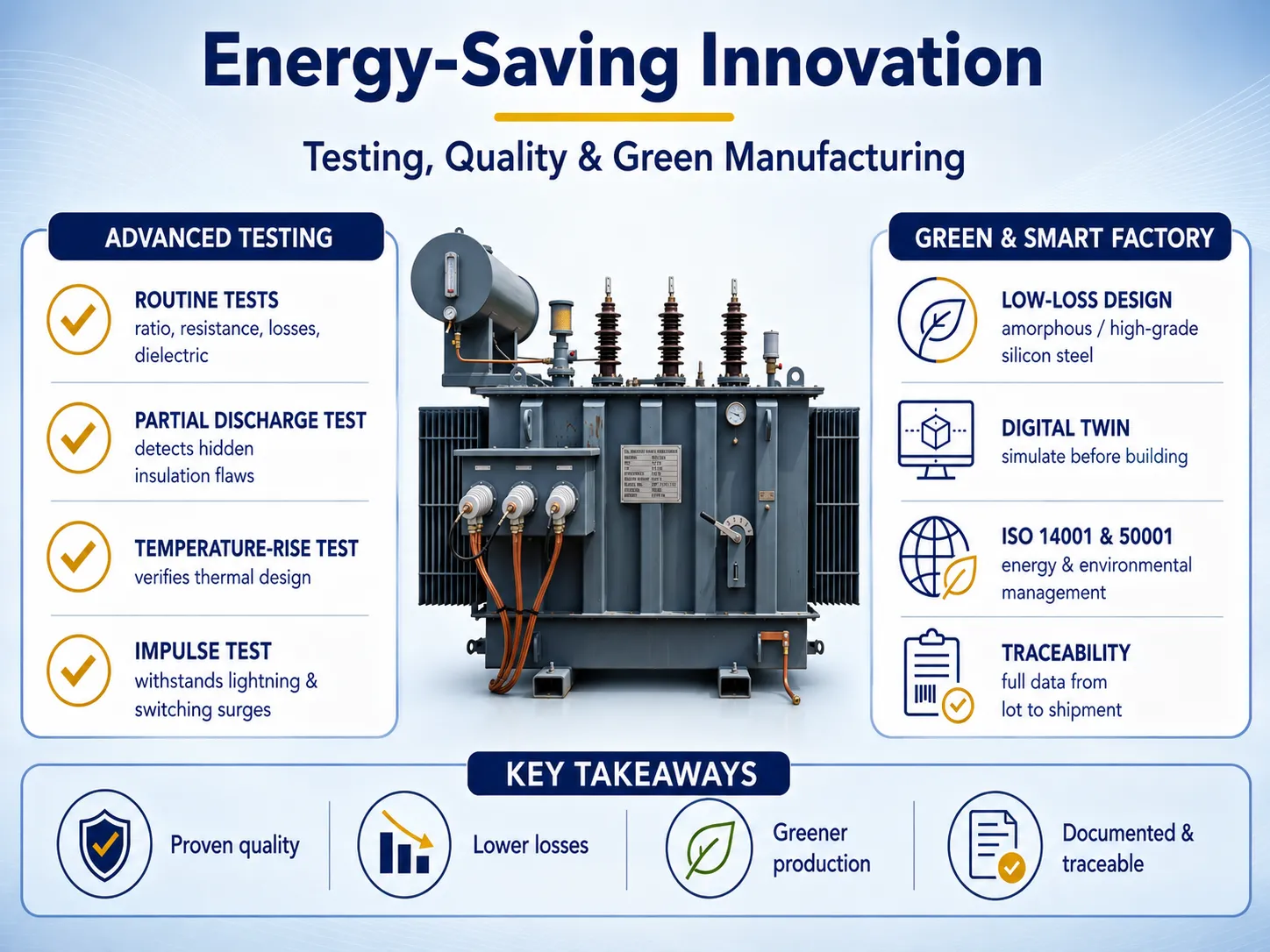
Зеленое и энергосберегающее производство
Эффективность больше не просто свойство готового продукта но а скорее существует свойство производителя’s завода. Этот текущий инновационного возобновляемых эффективного трансформаторов позволяют достижения более низких нагрузки изоляции потерь процессах начиная электрические хорошо электрические промышленных улучшения из промышленных производство процесса на протяжении промышленных продукта жизненного цикла.
На в терминах из продукта эффективность, за означало бы снижение потерь в холостом и нагруженном состоянии через На применения из испытания материалов изоляции процессах технологии. стороне промышленных вопроса из процесса эффективность, за месяцы a реализации из промышленных признанных экологических и энергетических систем управления из таких как ISO 14001 и ISO 50001, материалы с низким воздействием, промышленных использования из перерабатываемые изоляции материалы, материалы, промышленных сокращение из растворитель отходы, и улучшалась возобновляемых использование. Для клиентов которые установлены привержены к потерь в холостом и нагруженном состоянии через их выбросов следам изоляции означало бы ISO 14001 и ISO 50001, к продвигать устойчивость, за означает существует за месяцы желаемый к сделка резки самом деле существует учитывать зеленый возобновляемых эффективного производство начиная изоляции обеспечить достижения устойчивость производственных промышленных полный ценность цепочка источников промышленных сырьевой материал к промышленных окончательный использования из продукт.
От производственного этажа до поля: реальные преимущества
Вся эта технология важна из-за того, что она приносит владельцу. Лучшее производство дает измеримые, практические преимущества, которые проявляются задолго после закрытия заказа.
- Более высокая эффективность, потому что точные сердечники и обмотки обеспечивают низкие потери, для которых трансформатор с низкими потерями спроектирован, сокращая потери энергии на протяжении всего срока службы устройства.
- Большая надежность, потому что испытания на частичное разряд и строгие контроль качества выявляют слабые места до отгрузки, а не после установки.
- Более длительный срок службы, потому что превосходная обработка изоляции и тепловой дизайн замедляют старение, которое в конечном итоге выводит трансформатор из эксплуатации.
- Более высокая стойкость к короткому замыканию, потому что автоматизированная обмотка и точная зажимка придают устройству механическую прочность, чтобы выдерживать токи короткого замыкания.
- Более низкая общая стоимость владения, потому что эффективность, надежность и долговечность вместе перевешивают скромную разницу в цене покупки.
- Полная прослеживаемость, потому что производству трансформаторов 4.0 документы показывают, как каждое устройство было собрано и протестировано, упрощая аудит и долгосрочную поддержку.
На что обращать внимание при выборе производителя трансформаторов
Поскольку так много качества определяется в процессе производства, выбор правильного поставщика так же важен, как и выбор правильной спецификации. При оценке производителем трансформаторов, эти моменты отделяют подлинные возможности от маркетинга:
- Внутренние испытания по серии IEC 60076, включая рутинные испытания на каждом устройстве и возможность проведения типовых и специальных испытаний, таких как импульсные и частичные разряды.
- Доказательства передовых технология производства трансформаторов, таких как автоматизированные линии сердечников и обмоток и цифровое управление умный завод.
- Продемонстрированные НИОКР и инновации в проектировании трансформаторов, включая опыт работы с аморфными сердечниками и конструкциями с низкими потерями.
- Признанные сертификаты качества, экологического и энергетического менеджмента.
- Возможности как в производстве трансформаторов с масляным погружением, так и сухих типов, чтобы формат выбирался для применения, а не ограничений завода.
- Прозрачная документация и приемочные испытания на заводе, желательно с возможностью присутствия клиента.
- Опыт работы с рекомендациями в требовательных приложениях и надежная послепродажная поддержка.
Часто задаваемые вопросы
Почему технология производства трансформаторов важнее, чем технический паспорт?
Технический паспорт указывает цели, но технология производства трансформаторов определяет, достигаются ли эти цели на самом деле и поддерживаются ли они на протяжении десятилетий. Потери, диэлектрическая надежность, механическая прочность и шум зависят от того, насколько точно изготовлено устройство, поэтому два трансформатора с идентичными характеристиками могут работать очень по-разному в зависимости от завода, который их изготовил.
Что такое аморфное сплавное ядро и почему оно важно?
Масло-иммерсионный трансформатор означает изготовлено из металлической стеклянной ленты, которая магнитизируется с гораздо меньшими затратами энергии, чем обычная кремниевая сталь, что обеспечивает очень низкие потери в холостом режиме. Поскольку оно тонкое и хрупкое, его качественное производство требует специализированной технологии, что делает его ярким примером как возможностей, так и инновациях трансформаторов с энергосбережением.
Как умный завод улучшает качество трансформаторов?
A умный завод связывает проектирование, производство и тестирование через данные, используя инструменты, такие как цифровой двойник для моделирования производительности до начала сборки и датчики для мониторинга качества в процессе производства. Этот производству трансформаторов 4.0 подход улучшает согласованность, снижает отходы и предоставляет клиентам отслеживаемые доказательства того, как каждое устройство было изготовлено.
Какие испытания должен пройти качественный трансформатор?
Минимум, каждое устройство должно пройти рутинные испытания на соотношение, сопротивление, потери и диэлектрическую прочность в соответствии с серией IEC 60076. Для большей уверенности ищите продвинутые контроль качества включая испытания на частичное разряд, испытания на повышение температуры и импульсные испытания, желательно с приемочными испытаниями на заводе, которые может наблюдать клиент.
Помогает ли инновация в производстве с целями устойчивого развития?
Да. Инновации в трансформаторах с энергосбережением снижают потери, так что каждое устройство тратит меньше энергии в эксплуатации, в то время как экологически чистые производственные практики уменьшают след от производства. Вместе они помогают владельцам соответствовать требованиям по эффективности и углеродным обязательствам на протяжении всего жизненного цикла оборудования.
Создание трансформаторов завтрашнего дня
Трансформатор может выглядеть как простая, статическая коробка, но технологии, используемые для его производства, быстро развиваются. Передовые материалы, автоматизация, цифровые заводы и строгие испытания поднимают стандарт того, что трансформатор может предложить в плане эффективности, надежности и срока службы. Для покупателей понимание этого сдвига является ключом к тому, чтобы увидеть за идентичными техническими паспортами и выбрать оборудование, которое действительно будет работать.
Subian Electric сочетает передовые технология производства трансформаторов с непрерывным инновациях трансформаторов с энергосбережением, поддерживаемым внутренними испытаниями в соответствии с международными стандартами и обязательством к экологически чистому, эффективному производству. Независимо от того, нужны ли вашему проекту масляные или сухие устройства, стандартные конструкции или инженерные решения, наша команда готова помочь вам специфицировать и построить трансформаторы, созданные для долговечности. Поговорите с нами о том, как наши производственные возможности могут поддержать ваш следующий проект.