


Le directeur des achats de l'entreprise de distribution analyse trois offres que la société a reçues pour un contrat de 250 transformateurs. Le premier soumissionnaire a soumis des prix pour des transformateurs S11 et propose l'offre la plus basse. Le deuxième soumissionnaire a proposé une offre pour des transformateurs à noyau amorphe et a promis que le différentiel de perte serait remboursé en seulement 14 mois. Le troisième soumissionnaire affirme avoir la capacité de fournir des transformateurs remplis d'esters et équipés d'une surveillance DGA en ligne. Dans le passé, il aurait été impossible de perdre le processus d'appel d'offres si vous soumettiez le prix le plus bas. Aujourd'hui, les membres du conseil d'administration sont impatients de savoir combien il en coûtera de posséder les transformateurs au cours des 25 prochaines années, quel impact les transformateurs auront sur l'environnement et comment on peut mettre en œuvre des technologies numériques concernant ces transformateurs.
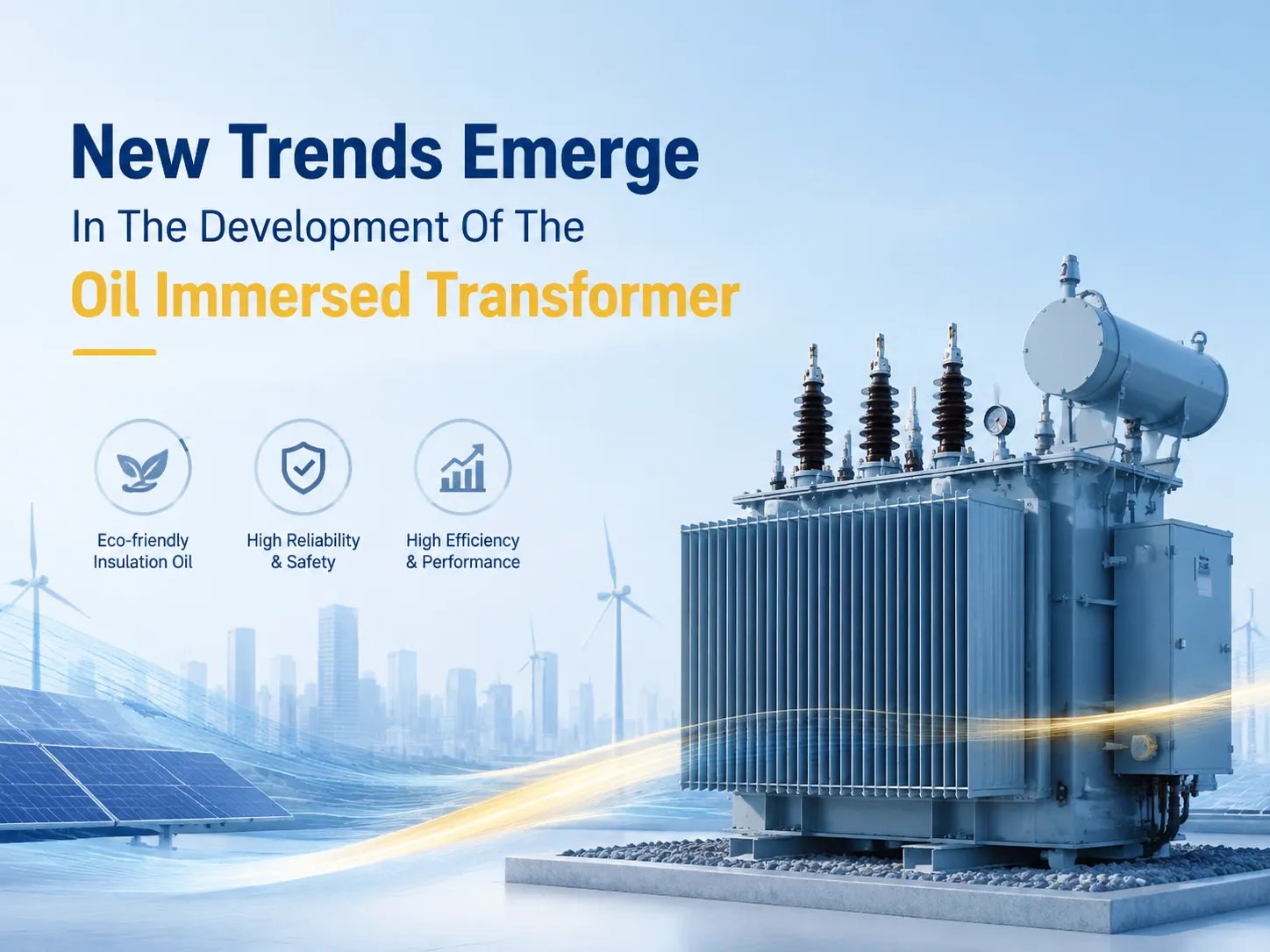
Dans cet article, nous analyserons les principales tendances qui transforment l'industrie des transformateurs immergés dans l'huile aujourd'hui, y compris les réglementations sur l'efficacité énergétique, l'utilisation d'huiles écologiques, la surveillance numérique, le prix des matériaux et les changements dans la chaîne d'approvisionnement.
Les tendances importantes dans l'industrie des systèmes de transformateurs sont les suivantes : (1) réglementation stricte concernant la mise en œuvre des dispositifs – les exigences fixées par l'Ecodesign de l'Union européenne ainsi que par le Département de l'énergie aux États-Unis et le GB 20052 de la Chine ont conduit les fabricants à produire des transformateurs utilisant des métaux amorphes et des noyaux CRGO à basse pression, car ces technologies entraînent une réduction de 20-70% des pertes à vide par rapport aux transformateurs S9 traditionnels ; (2) la tendance vers l'application de fluides d'esters, dont le point d'inflammation est supérieur à 300° par rapport à l'huile minérale (160°) ; (3) application de technologies numériques comme la DGA en ligne, les capteurs IoT et l'IA, car cette technologie descend maintenant aux transformateurs de distribution avec des capacités inférieures aux précédents 50 MVA ; (4) industrialisation de la chaîne d'approvisionnement – de nouvelles usines sont construites aux États-Unis, en Europe, en Inde et en Arabie Saoudite ; (5) volatilité des prix.
Le Contexte du Marché
Le marché mondial des transformateurs est substantiel et en croissance, en raison des investissements dans les systèmes de réseau, l'électrification et l'intégration des sources d'énergie renouvelable. Divers rapports de l'industrie estiment le marché des transformateurs de puissance et de distribution à $40 – 55 milliards par an, avec la portion exceptionnelle de MVA livrée étant fournie par la technologie immergée dans l'huile. Cette technologie, qui couvre encore environ 75–80% de toutes les expéditions de transformateurs de puissance et de distribution, est toujours préférée car la méthode de refroidissement à l'huile s'est avérée très économique pour la majorité des puissances.
Une tension sur le marché des transformateurs est observée. En particulier, les délais de livraison des transformateurs se sont étendus de 18 à 36 mois dans certaines régions au début des années 2020, tandis que les prix des aciers électriques et du cuivre ont été instables. Par conséquent, les services publics et les fabricants ont appris à sécuriser la capacité à l'avance et à établir des accords avec les producteurs, ainsi qu'à standardiser les flottes de dispositifs.
Réglementation sur l'efficacité : Le moteur décisif
La réglementation est le plus grand facteur d'influence dans ce segment de l'industrie car elle exclut l'option “ bon marché et inefficace ” :
| Marché | Instrument | Effet |
|---|---|---|
| Union Européenne | Règlement Ecodesign 548/2014, amendé 2019/1783 | Limites de pertes obligatoires ; classes inefficaces éliminées |
| États-Unis | DOE 10 CFR Partie 431 | Augmentation de l'efficacité minimale ; l'ordre de 2022 a encore resserré les niveaux |
| Chine | GB 20052-2020 | Classes d'efficacité contraignantes ; flottes S7/S9 étant retirées |
| Inde | Étiquetage d'efficacité BEE | Transformateurs de distribution classés par étoiles |
| Prêteurs mondiaux | Règles d'approvisionnement vert | Économies de pertes capitalisées dans l'évaluation des appels d'offres |
En termes de résultats, on pourrait dire qu'en Europe, de nouvelles règles ont créé une percée : les pertes dans les transformateurs de distribution sont désormais réduites de 20 à 40 % par rapport à la situation avant réglementation. En Chine, le GB 20052-2020 a intégré les classes d'efficacité énergétique dans le processus d'appel d'offres, déclenchant ainsi la transition de la série S9 vers les conceptions S11, S13 et amorphes. En conséquence, pour tous les acteurs impliqués dans les achats, il n'est plus important qu'un dispositif soit “ économe en énergie ” ou non, car c'est désormais l'exigence minimale et obligatoire.
Matériaux : Amorphe, CRGO et Volatilité des prix
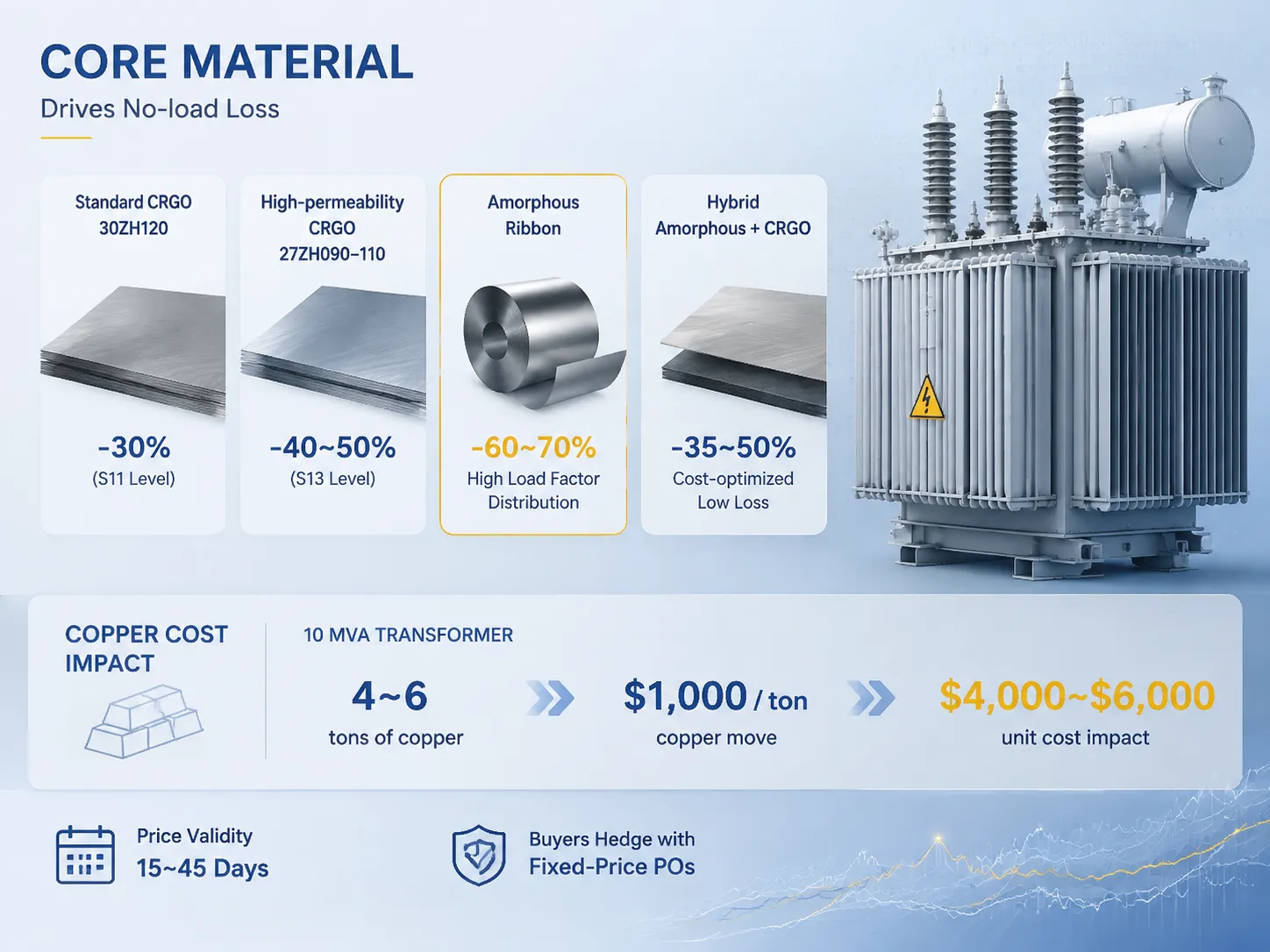
Le matériau principal détermine les pertes à vide et fixe le ton pour la sélection des matériaux utilisés dans l'industrie.
- CRGO régulier (comme 30ZH120) : Le matériau utilisé pour les transformateurs S11 mais qui est inefficace en termes de niveaux d'efficacité et de coût.
- CRGO découpé au laser à haute perméabilité (27ZH090 à 110) : Réduit les pertes dans le noyau de 10 à 20 % par rapport au matériau régulier et est utilisé dans les transformateurs S13 et S11 à performance relativement élevée.
- Ruban amorphe : Les niveaux de perte sont actuellement de 60 à 70 % inférieurs par rapport au CRGO régulier et revêtent une importance croissante dans la gamme de distribution jusqu'à presque 2500 kVA et au-delà.
Les coûts de ces matériaux ont des impacts significatifs sur l'ensemble de l'industrie, car les prix des tôles électriques orientées grain ont fluctué de 20 à 40 % en un an et il y a très peu de producteurs de rubans amorphes.
| Matériau du noyau | Perte à vide par rapport à S9 | Applications typiques | Note d'approvisionnement |
|---|---|---|---|
| CRGO standard (30ZH120) | −30 à 40 % (niveau S11) | Distribution de volume | Largement disponible |
| CRGO à haute perméabilité (27ZH090–110) | −40 à 50 % (niveau S13) | Distribution premium, puissance | Les prix fluctuent de 20 à 40 %/an |
| Ruban amorphe | −60 à 70 % | Distribution à facteur de charge élevé | Peu de producteurs ; intrant stratégique |
| Amorphe hybride + CRGO | −35–50% | Coût optimisé à faible perte | Dépendant de la conception |
Un transformateur d'une capacité de 10 MVA a généralement environ 4 à 6 tonnes de cuivre ; ainsi, une augmentation de $1,000/tonne du prix du cuivre affecte le coût du transformateur de $4,000 à 6,000. En conséquence, les devis pour l'industrie des transformateurs de puissance sont valables pendant 15 à 45 jours et les clients utilisent des bons de commande à prix fixe pour se protéger contre les fluctuations de prix.
Fluides : L'essor des esters
Bien que les fluides ester soient souvent considérés comme l'élément principal dans les domaines où les réglementations ou la gestion des risques sont essentielles, l'huile minérale reste le produit leader sur le marché aujourd'hui.
| Liquide | Point d'inflammation | Part des nouveaux projets (est.) | Prime de prix typique |
|---|---|---|---|
| Huile minérale | ~160°C | 75–85% | Référence |
| Ester naturel | >300°C | 10–15% et en hausse | +30–60% |
| Ester synthétique | >300°C | 3–8% | +60–100% |
| Minéral haute température | ~300°C | 2–5% | +20–40% |
Les fluides ester trouvent leur acceptation principalement en raison de trois facteurs : les assureurs offrent des réductions sur les fluides de classe K dans les sous-stations, les agences environnementales plaident en faveur des unités ester là où l'huile minérale serait interdite, et le processus plus lent de vieillissement du papier dans les esters (absorption accrue d'humidité dans le fluide au lieu du papier). Les barrières à l'entrée incluent un prix plus élevé, la viscosité à basse température, et la plus petite quantité d'expérience opérationnelle dans l'industrie ; cependant, tous les signes montrent que les fluides ester continueront à gagner des parts de marché, en particulier en Europe et en Amérique du Nord.
Numérisation et surveillance
Une tendance qui est perceptible est la diminution de la taille de la technologie de surveillance. Avec la modification des générateurs, le DGA en ligne est désormais disponible sur les transformateurs pour les applications à moyenne tension également. Les moniteurs d'hydrogène pour les machines d'entrée de gamme sont disponibles pour $1500 à $4000, et les analyseurs multi-gaz pour environ $8000 à $40000. Les passerelles IoT sont capables de transmettre des données de charge, de température, de niveau d'huile et de position de prise à SCADA ou à des services cloud.
- Les diagnostics IA permettent d'identifier des problèmes des semaines ou des mois avant l'interprétation des ratios.
- Les jumeaux numériques aident au calcul des points chauds et de l'espérance de vie selon les réglementations IEC 60076-7 en temps réel.
Le raisonnement économique est simple. DGA pour un 10 MVA facturé à $200-600 par an, tandis que la défaillance imprévue qui se produit a des coûts de $200000-$1000000. Ainsi, chaque petite amélioration du taux de défaillance compense largement le coût de l'équipement de surveillance. On peut voir que la seule question qui s'améliore est quel niveau de surveillance pour le groupe particulier d'actifs devrait être utilisé.
| Classe d'actifs | Surveillance recommandée | Coût annuel typique |
|---|---|---|
| Distribution <2 MVA | DGA de laboratoire annuel | $150-$400 |
| Distribution 2-10 MVA | DGA annuelle + moniteur H2 de base sur les unités critiques | $200-$600 + $1,500-$4,000 (unique) |
| Puissance 10-40 MVA | DGA en ligne multi-gaz, télémétrie IoT | $2,000-$8,000 incl. données |
| Puissance >40 MVA / critique | DGA en ligne complète + jumeau numérique | $5,000-$15,000 |
Régionalisation de la chaîne d'approvisionnement
L'expérience mondiale avec des délais de livraison prolongés — allant jusqu'à 18 à 36 mois pour les grands transformateurs de puissance au début des années 2020 — a suscité une réaction structurelle : des usines apparaissent près des marchés consommateurs.
- États-Unis : de nouvelles usines de transformateurs et des usines déjà existantes tirent certains avantages de la loi sur la chaîne d'approvisionnement de 2022 et des normes du DOE et se concentrent sur les transformateurs de distribution et les transformateurs de puissance.
- Europe : augmentation de la capacité des transformateurs de puissance avec l'aide des efforts de l'UE visant à réduire la dépendance à l'égard des tailles clés de transformateurs importés.
- Inde : a exporté des transformateurs et prévoit maintenant d'augmenter davantage sa capacité en construisant de nouvelles installations de production de transformateurs.
- Arabie Saoudite et le Golfe : de nouvelles zones industrielles et des programmes de réseau garantiront la capacité de fabrication locale de transformateurs.
Pour les acheteurs, la régionalisation présente à la fois des avantages et des inconvénients : d'une part, cela signifie des délais de livraison plus courts et des coûts de transport réduits, et d'autre part, des coûts par unité augmentés par rapport à l'approvisionnement en haute mer en provenance de Chine. Par conséquent, l'approche optimale implique plusieurs fournisseurs : pour les machines critiques à point unique, des fournisseurs nationaux ou régionaux devraient être choisis ; pour les flottes de distribution en vrac, des fournisseurs d'exportation dominants en termes de coûts par kVA devraient être sélectionnés.
Énergies renouvelables et stress sur le réseau
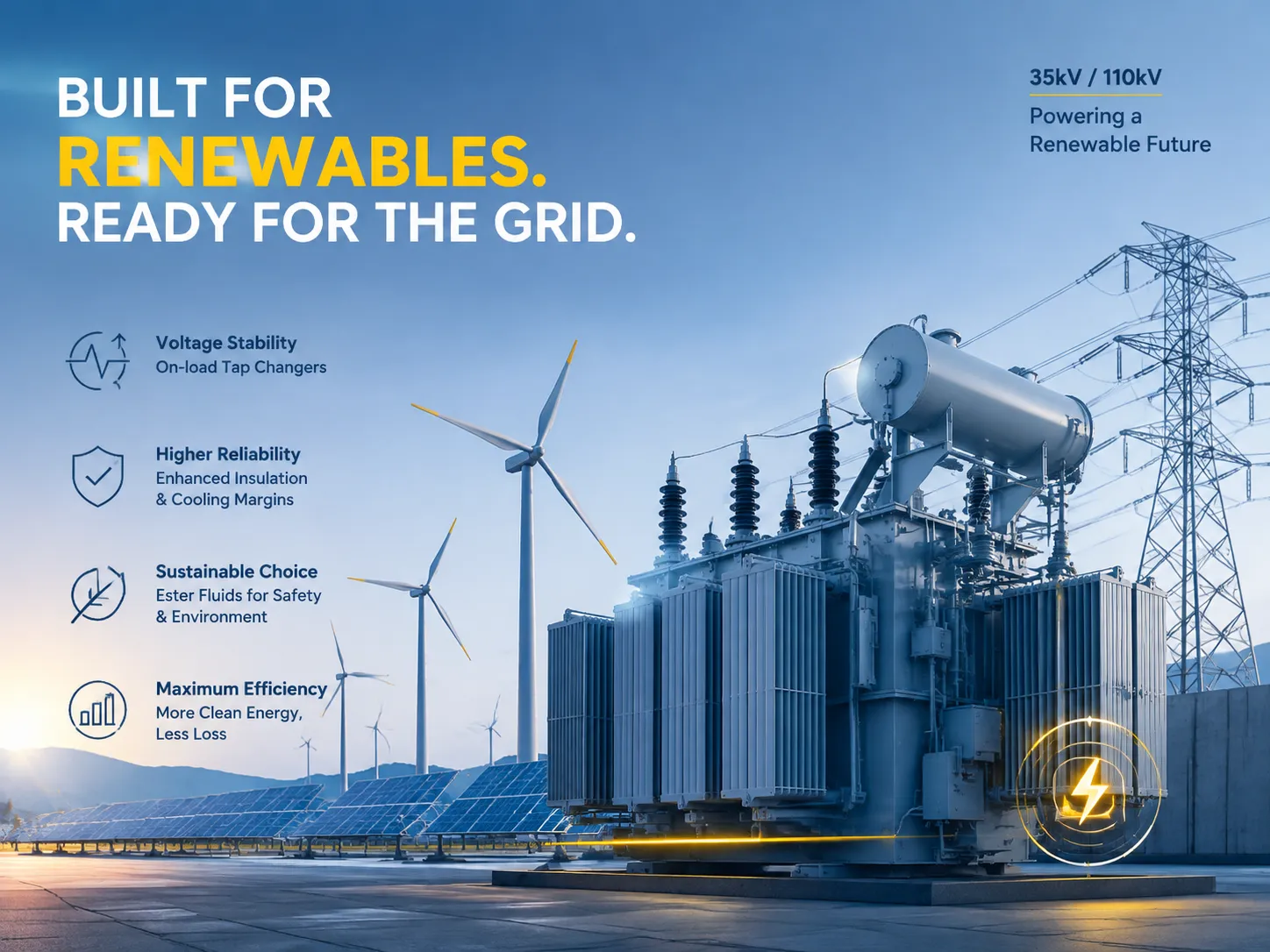
L'intégration solaire et éolienne a conduit les acheteurs à modifier leurs spécifications. Cela signifie que les transformateurs de collecte d'énergie renouvelable doivent faire face à une variabilité maximale de la charge, à des fluctuations de tension plus fréquentes et à des conditions de fonctionnement cycliques plus rigoureuses que les équipements de distribution traditionnels. Tout cela a les implications suivantes :
- Plus de changeurs de prises sous charge sont utilisés sur les transformateurs de collecte et les transformateurs raccordés au réseau, afin de contrôler les fluctuations de tension causées par la génération variable.
- Les propriétés d'isolation et de refroidissement des équipements spécifiés ont également changé en raison du fait que l'impact de la charge cyclique augmente le vieillissement même lorsque les niveaux de charge moyens ne sont pas élevés.
- Les fluides esters sont désormais courants pour les installations éoliennes et solaires, non seulement pour des raisons de sécurité à la base des turbines, mais aussi pour le bénéfice de l'environnement.
- L'efficacité est plus importante que jamais pour les énergies renouvelables, où les pertes économisées signifient une énergie propre qui n'a pas été produite.
La même situation entraîne des améliorations dans le domaine des sous-stations, ce qui explique la demande croissante de transformateurs immergés dans l'huile de 35 kV et 110 kV dans les pays ayant des objectifs élevés en matière d'énergies renouvelables.
Tendances des prix et quoi budgétiser
Étant donné que le matériau est volatile et que la chaîne d'approvisionnement est contrainte, la planification des budgets pour les transformateurs immergés dans l'huile (FOB) aujourd'hui est :
| Classe / catégorie | Conception conventionnelle | Faible perte / amorphe | Avec OLTC et surveillance |
|---|---|---|---|
| Distribution de 500 kVA | $6,000–$10,000 | $8,000–$13,000 | $10 000–$16 000 |
| distribution de 1 000 kVA | $14,000–$22,000 | $18,000–$28,000 | $20 000–$32 000 |
| puissance de 10 MVA (35 kV) | $28,000–$48,000 | $36 000–$58 000 | $40 000–$65 000 |
| puissance de 31,5 MVA (35 kV) | $65,000–$110,000 | $80 000–$135 000 | $90 000–$150 000 |
Nous pouvons résumer trois règles importantes à des fins de planification : inclure des clauses d'escalade annuelle 10-20% dans les accords pluriannuels ; baser la comparaison sur la capitalisation des pertes ; et obtenir des créneaux de livraison le plus tôt possible, car le marché réagit plus lentement que le prix.
Comment les fabricants s'adaptent
| Marque | Focalisation sur l'adaptation |
|---|---|
| Hitachi Energy | Transformateurs numériques, HVDC et expansion des transformateurs de puissance |
| Siemens Energy | Services de jumeaux numériques, intégration de l'automatisation du réseau |
| ABB | Large portefeuille de distribution, expansion de la capacité régionale |
| Schneider Electric | Distribution intelligente, architecture numérique EcoStruxure |
| Hyundai / Hyosung | Mise à l'échelle des transformateurs de puissance, volume d'exportation |
| Jiangsu Subian Electric Power | Améliorations de classe d'efficacité, gamme d'exportation certifiée IEC, options d'esters et de changeurs de prises sous tension |
Les grandes multinationales se concentrent sur les services numériques et l'ingénierie de classe mondiale. En même temps, les exportations traditionnelles reposent sur un niveau d'exportation adoptant les mêmes technologies — noyau amorphe, acier CRGO économe en énergie, surveillance en ligne — pour un coût beaucoup plus faible.
Jiangsu Subian Electric Power est un autre représentant du niveau d'exportation. Ses transformateurs immergés dans l'huile sont fabriqués selon la norme IEC 60076, ont des classes d'efficacité GB20052 et offrent des esters ainsi que des changeurs de prises sous tension et des ports DGA pour la surveillance. Subian expédie des transformateurs aux services publics et aux EPC dans toute l'Asie, l'Afrique, le Moyen-Orient et l'Amérique latine, soutenu par des tests en usine et des inspections tierces. L'entreprise propose une offre pratique pour les acheteurs à la recherche d'efficacité, de numérisation et de conditions d'approvisionnement appropriées. En savoir plus sur subian-electric.com.
Questions Fréquemment Posées
Qu'est-ce qui fait augmenter les prix des transformateurs en ce moment ?
Trois facteurs causent cette augmentation : l'acier électrique orienté grain et les fluctuations des prix du cuivre (20-40% de différences chaque année), une capacité de fabrication très contrainte à l'échelle mondiale avec des délais de livraison pour de grandes unités de 18 à 36 mois, et l'augmentation de la demande en raison des investissements dans le réseau et les énergies renouvelables. Les acheteurs doivent réserver des commandes à prix fixe dès que possible et incorporer des conditions d'escalade dans les contrats.
Les transformateurs à noyau amorphe valent-ils la prime ?
Dans la plupart des cas, oui, en ce qui concerne les applications à forte charge. La prime de 20-30% est compensée par une réduction de 60-70% des pertes à vide, récupérant ainsi les investissements en 6 à 12 ans selon les politiques de tarification de l'industrie. Pour l'exploitation de transformateurs à faible charge et les faibles facteurs de charge, le CRGO conventionnel peut être jugé plus pratique en raison du TCO.
Les transformateurs à huile minérale vont-ils disparaître ?
Non, cela ne se produira pas avant longtemps. L'huile minérale est utilisée dans 75-85% des nouveaux projets en raison de son faible prix, de sa bonne compréhension et de son efficacité pour des applications autres que celles à risque d'incendie et sensibles à l'environnement. L'utilisation d'esters s'étendra dans certains domaines, mais l'huile minérale restera l'option la plus populaire pendant de nombreuses années.
Combien la surveillance en ligne ajoute-t-elle à une commande de transformateur ?
Le prix varie de $1,500-4,000 pour les équipements de mesure de l'hydrogène/gaz de base pour les unités de distribution à $8,000-40,000 pour les systèmes DGA multi-gaz complets avec télémétrie IoT pour les transformateurs de puissance. Le retour sur investissement est mesuré par les coûts économisés des pannes et des inspections, avec une surveillance standard spécifiée pour toutes les unités au-dessus de 10 MVA.
Comment puis-je comparer équitablement les offres de différentes régions ?
Assurez-vous d'obtenir le prix final de l'unité avec livraison et assurance incluses. Ajoutez le coût des pertes encourues de cette manière (cela pourrait être autour de 20-25 ans selon les tarifs de l'électricité), plus la valeur du délai de livraison et la proximité des services.
Références
- Règlement européen sur l'écoconception 548/2014 et amendement 2019/1783 — Le régime d'efficacité façonnant le marché européen des transformateurs.
- Normes d'efficacité des transformateurs de distribution du DOE américain (10 CFR Part 431) — Niveaux d'efficacité minimum et réponse de l'offre du marché.
- IEC 60076-1 : Transformateurs de puissance – Général — La base de conception et de test pour toutes les unités immergées dans l'huile mentionnées dans cet article.
- Données sur l'électricité et les investissements dans le réseau de l'IEA — Contexte de la demande pour la croissance du marché des transformateurs.
- IEEE C57.104 : Interprétation des gaz générés dans les transformateurs immergés dans l'huile — Le cadre d'interprétation DGA derrière les tendances de surveillance en ligne.
- Laboratoires nationaux de Sandia sur les fluides de transformateur à ester naturel — Évaluation indépendante des performances des fluides d'ester et de la sécurité incendie.
- Site officiel de Jiangsu Subian Electric Power — Produits de transformateurs immergés dans l'huile de classe d'efficacité et documentation d'exportation.
Conclusion
L'industrie des transformateurs électriques immergés dans l'huile progresse selon une approche à quatre volets : la conformité à l'efficacité élève le niveau, les fluides d'ester pénètrent les zones à risque d'incendie et sensibles à l'environnement, la surveillance numérique rattrape son retard en termes de taille et de forme, et les chaînes d'approvisionnement s'adaptent aux prix et aux délais de livraison. Chacune des modifications ci-dessus change la dynamique des décisions d'achat.
Points clés à retenir :
- La conformité à l'efficacité est désormais déclarée obligatoire et n'est pas laissée au choix du client ; vérifiez les réglementations en vigueur sur le marché dans lequel vous opérez.
- L'utilisation de corps amorphes et d'esters augmentera les coûts initiaux de 10-60%, mais ils offrent des économies en termes de TCO dans les bonnes applications.
- Allouez $1500-$40,000 pour la surveillance en fonction de la criticité de l'actif. Réservez les livraisons bien à l'avance et couvrez les risques de fluctuation des prix des matériaux avec des contrats à prix fixe.
- contrats.