


Текстильная фабрика во Вьетнаме собиралась ввести в эксплуатацию двенадцать ткацких машин мощностью 15 кВт каждая. Вывод владельца был довольно прост: двенадцать машин, умноженные на 15 кВт, дают 180 кВт, следовательно, нужен трансформатор на 200 кВА. В этот момент электрический подрядчик отменил заказ. На самом деле каждая машина потребляет около 18 кВА при коэффициенте мощности 0,83; их пусковой ток в шесть раз выше рабочего; воздушные компрессоры, питающие эти машины, добавляют 60 кВА; кроме того, уже планируется добавить две линии на фабрику. При использовании научно обоснованного подхода расчеты показали, что нужен трансформатор на 500 кВА, что более чем в два раза превышает значение, полученное простым расчетным методом. Вот почему выбор трансформатора не должен основываться на мощности оборудования.
В этой статье представлен научно обоснованный выбор трансформатора, основанный на требованиях к мощности электрического оборудования.

Причины неудачи метода добавления кВт как метода расчета
Использование суммы номинальных кВт каждого устройства для выбора трансформатора, который обеспечивает эту кВА, является самой распространенной ошибкой в расчете, существующей в отрасли. Ниже приведены научные причины его неудачи:
Коэффициент мощности игнорируется. Реальная мощность значительно ниже, чем видимая мощность двигателя, компрессора или лампы. Например, двигатели, использующие 180 кВт реальной мощности при коэффициенте мощности 0,85, потребуют 212 кВА. Это показывает разницу в 18 процентов, что приведет к перегрузке трансформатора на 200 кВА.
Разнообразие игнорируется. На практике машины редко работают на максимальных мощностях одновременно. Сложение номинальной мощности машин создает разрыв в 20-40 процентов, что означает потраченные деньги на трансформатор, мощность которого превышает необходимое значение.
Пусковой ток игнорируется. Большие электрические двигатели могут потреблять до шести раз больше своего нормального тока при запуске. Это означает, что напряжение может упасть, и реле отключится.
Академический подход — это метод объединения всех эффектов и получения окончательного размера трансформатора, который определяется не интуицией, а физикой.
От кВт оборудования к кВА трансформатора
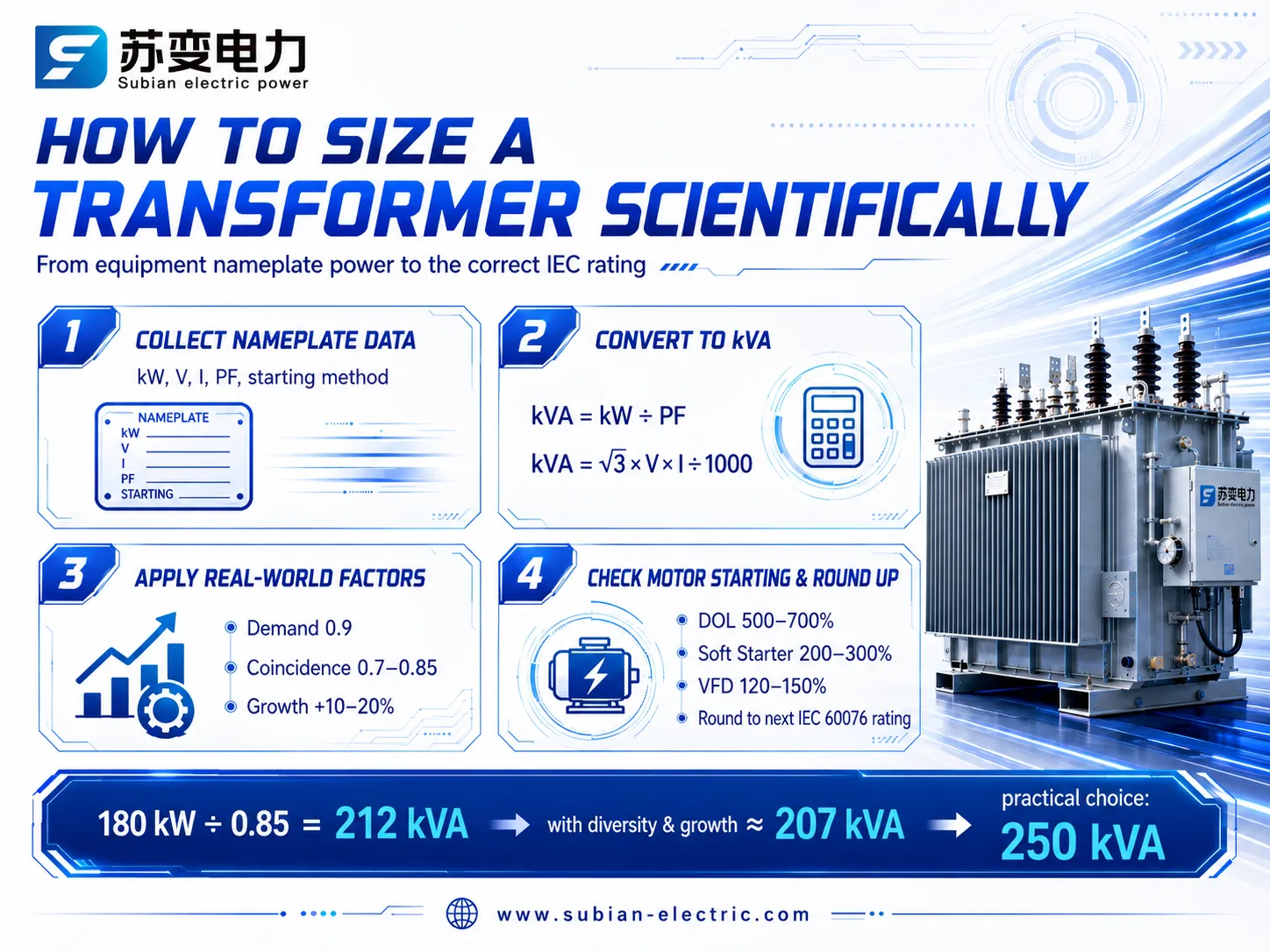
Основное уравнение: кВА = кВт ÷ коэффициент мощности. В случаях, когда задействованы трехфазные устройства и оборудование, можно также рассчитать кВА, используя выражение кВА = (√3 × V × I) ÷ 1000. На табличке машины есть вся необходимая информация: номинальные кВт, напряжение, ток полной нагрузки и иногда значение эффективности. Вы всегда должны использовать кВА от трансформаторной шины вместо кВА для кВА на клеммах двигателя, так как это учтет любые потери по линиям (потери 2-5% на больших расстояниях).
Для установок, где известна только мощность мотора в лошадиных силах, следует производить расчеты, используя преобразование 1 л.с. ≈ 0.746 кВт и делить число на значение эффективности мотора (обычно между 0.90 и 0.95). В этом случае 100 л.с. мотор потребляет 100 × 0.746 ÷ 0.93 ÷ 0.85, что составляет примерно 94 кВА во время работы и в пять-восемь раз больше при запуске.
| Тип оборудования | Типичный коэффициент мощности | Типичное разнообразие | кВА на 100 кВт номинала |
|---|---|---|---|
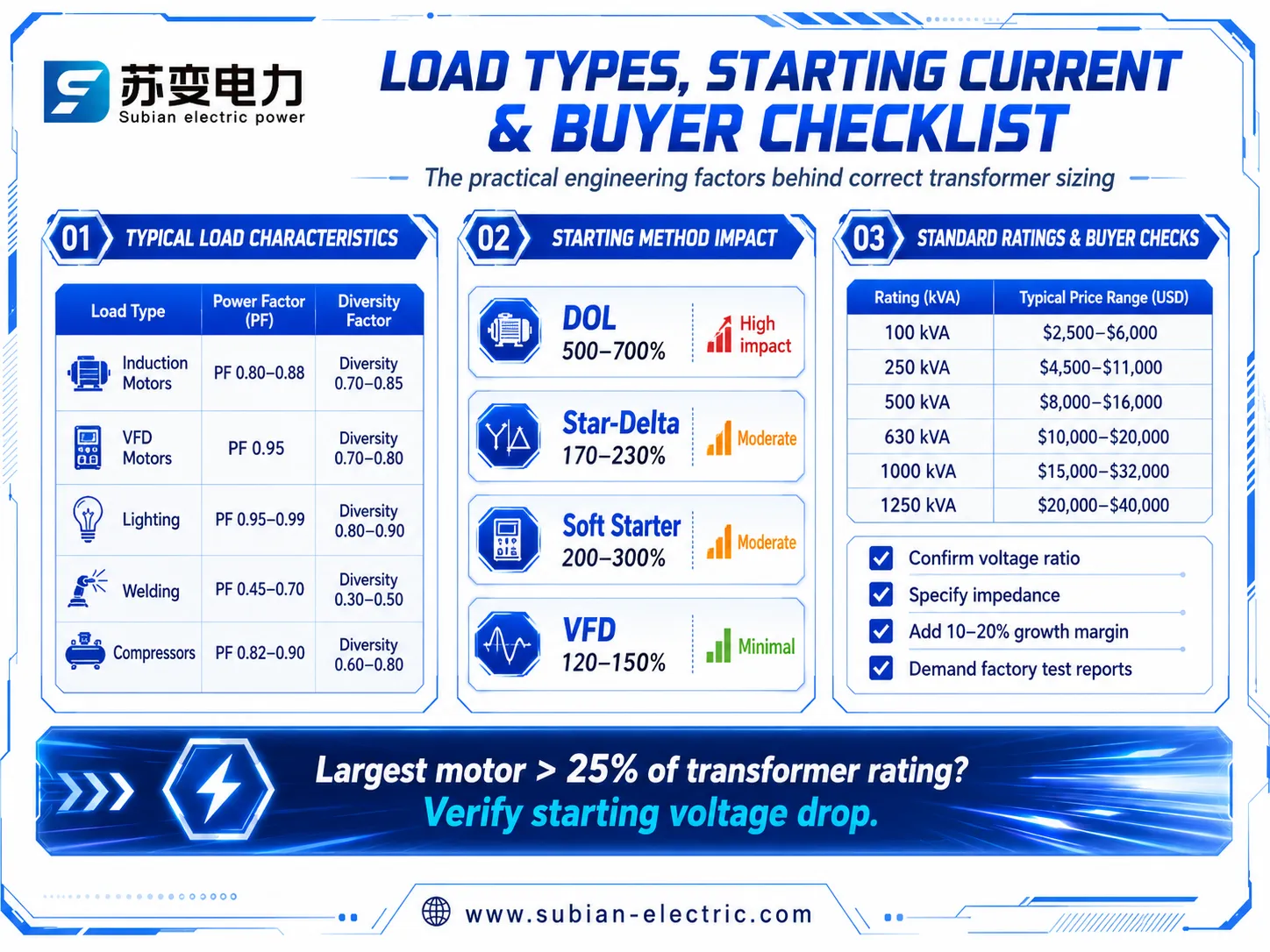
| Индукционные моторы (общие) | 0.80–0.88 | 0.70–0.85 | 114–125 |
| Моторы с приводом VFD | 95 (вход) | 0.70–0.80 | 105 |
| Резистивный обогрев / печи | 1.00 | 0.60–0.80 | 100 |
| LED освещение | 0.95–0.99 | 0.80–0.90 | 101–105 |
| Сварочные машины | 0.45–0.70 | 0.30–0.50 | 143–222 |
| Компрессоры (винтовые) | 0.82–0.90 | 0.60–0.80 | 111–122 |
| Охладители HVAC | 0.80–0.88 | 0.70–0.90 | 114–125 |
Обратите внимание на сварочный ряд: низкий коэффициент мощности и очень низкое разнообразие означают, что трансформатор должен быть рассчитан на высокий коэффициент кВА на кВт, даже если фактическое одновременное потребление невелико. Вот почему общие правила не работают — научный метод всегда основывается на фактических электрических характеристиках оборудования.
Факторы спроса, разнообразия и совпадения
Факторы спроса, разнообразия и совпадения объясняют одну и ту же взаимосвязь между тем, как нагрузки действуют на шинах трансформатора.
Коэффициент спроса определяется как максимальный спрос, деленный на подключенную нагрузку для группы, и обычно меньше единицы, потому что нагрузка, как правило, работает ниже полной мощности.
Коэффициент разнообразия известен как общий максимальный спрос, деленный на максимальный совпадающий спрос, и обычно больше единицы.
Коэффициент совпадения похож на коэффициент разнообразия, так как он определяет фактическое количество нагрузки, работающей одновременно, и обычно находится в диапазоне от 0.5 до 0.9.
Инженеры обычно комбинируют один из этих факторов с количеством кВА, поскольку это приводит к ясному примеру того, как найти общую сумму проектного спроса в терминах экономии на потерях и покупке трансформатора.
Например, при подключенной нагрузке 500 кВА значение коэффициента спроса составляет 0.9, а значение коэффициента совпадения — 0.8, поэтому проектный спрос составляет 500 x 0.9 x 0.8 = 360 кВА.
Проблема запуска мотора
Стартовый ток может быть известен как тихий убийца, когда речь идет о малых трансформаторах. Для мотора мощностью 150 кВт прямой пуск требует стартового тока, который может быть в 5-7 раз больше тока полной нагрузки, и длится от 3 до 10 секунд. Это должно происходить, пока трансформатор обеспечивает стартовый кВА и остальную часть своего тока нагрузки, в дополнение к попыткам ограничить провалы напряжения на клеммах мотора до примерно 10 до 15%, чтобы контактор не отключился.
Одно из трех решений, обсуждаемых здесь, помогает решить проблемы с размером. Мягкие стартеры помогают снизить стартовые токи до 2-3 раз больше тока полной нагрузки. VFD уменьшают стартовый ток до примерно 1.2-1.5 раз. Звездно-треугольный пуск снижает его до 33% прямого пуска, но этот метод имеет уменьшенный крутящий момент. Часто возможно уменьшить размер на одно стандартное значение, если можно контролировать стартовый ток. Если контроль невозможен и если в учреждении есть большие моторы с фиксированной скоростью, то размер трансформатора должен основываться на стартовом токе, а не на какой-либо рабочей нагрузке.
| Метод запуска | Типичный пусковой ток (% от полной нагрузки) | Влияние на размер трансформатора |
|---|---|---|
| Прямой пуск (DOL) | 500–700% | Значительное — может добавить один шаг номинала |
| Звезда-дельта | ~170–230% | Умеренное |
| Пускатель с мягким стартом | 200–300% | Умеренное |
| ВЧД | 120–150% | Минимально |
Правило инженерии: если самый большой двигатель превышает 25% номинала трансформатора, явно проверьте сценарий запуска с помощью расчета падения напряжения. Если он превышает 50%, ожидайте либо повышения номинала, либо изменения метода запуска — арифметика изложена в IEC 60076-7 и рекомендациях IEEE C57.12.00 по циклической и кратковременной нагрузке.
Примеры из различных отраслей
Пример A – Текстильная фабрика. Подключенная нагрузка = 12 ткацких станков (по 15 кВт каждый (PF = 0.83)) + 3 компрессора (по 30 кВт каждый (PF = 0.85)) + 40 кВт освещения (PF = 0.95) + 20 кВт HVAC. Рабочая kVA = 12 * 18.1 + 3 * 35.3 + 42 + 21 = ~ 345 kVA. Фактор спроса = 0.9 и совпадение (CF) = 0.8 -> 345 * 0.9 * 0.8 = 248 kVA. С учетом роста 15%, необходимый номинал мощности = 285 kVA или стандартный номинал 315 kVA. Самая большая одиночная нагрузка составляет 35 kVA (около 11% от номинала), поэтому ограничений на запуск нет.
Пример B – Завод по переработке продуктов питания. Охлаждающий компрессор (100 кВт) (6× запуск/ PF = 0.85), оборудование (60 кВт), CIP насос (30 кВт) и освещение (25 кВт). Рабочая kVA = 118 + 71 + 35 + 26 = 250 kVA и коэффициент совпадения (CF) = 0.75 -> необходимая мощность = 188 kVA. Во время запуска охлаждающий компрессор временно имеет потребность в мощности около 6 x 118 = 708 kVA в течение 5 секунд. Условия проектирования: 188 + (708 – 118) = ~ 778 kVA на короткое время. Устройство на 315 kVA не сможет это выдержать, практическим решением является устройство на 630 kVA и/или мягкий старт.
| Сценарий | Наивная сумма кВт | Научный результат kVA | Разница |
|---|---|---|---|
| Текстильная фабрика (Пример A) | 270 кВА | 315 кВА | +17% |
| Пищевая фабрика (Пример B) | 250 кВА | 630 кВА | +152% |
| Освещение склада + HVAC | 150 кВА | 160 кВА | +7% |
| Механический цех с токарными станками по 50 кВт | 300 кВА | 400 кВА | +33% |
Шаблон ясен: чем больше двигателей и чем больше самый большой двигатель, тем больше разрыв между наивным и научным размером. Научный метод не заключается в завышении каждого числа — он заключается в нахождении истинного ограничения, которое иногда является мощностью, а иногда пусковым током.
Стандартные номиналы и таблица размеров
После расчета проектного спроса выберите следующий стандартный номинал IEC 60076-1. Стандартные значения kVA включают 25, 50, 100, 160, 250, 315, 400, 500, 630, 800, 1000, 1250, 1600, 2000, 2500 и 3150. Индивидуальные номиналы существуют, но стоят на 15–30% больше и увеличивают время выполнения заказа, поскольку сердечники и резервуары нестандартные.
| Подключенное оборудование (kVA, диверсифицированное) | Добавить рост (15%) | Рекомендуемый номинал | Типичный диапазон цен |
|---|---|---|---|
| До 85 | 98 | 100 | $2,500–$6,000 |
| 86–135 | 155 | 160 | $3,500–$8,000 |
| 136–215 | 247 | 250 | $4,500–$11,000 |
| 216–270 | 310 | 315 | $6,000–$13,000 |
| 271–430 | 495 | 500 | $8,000–$16,000 |
| 431–545 | 627 | 630 | $10,000–$20,000 |
| 546–870 | 1,000 | 1,000 | $15,000–$32,000 |
| 871–1,090 | 1,254 | 1,250 | $20,000–$40,000 |
Цены являются ориентировочными FOB Китай для масляных погруженных устройств и варьируются в зависимости от спецификации, бренда и региона. Стоимость повышения на один номинал — скажем, с 500 до 630 kVA — обычно составляет 15–25% от цены устройства, в то время как сбой недоразмеренного трансформатора стоит 100% плюс время простоя. Запас мощности дешев.
Поддерживающие спецификации: Напряжение, Потери, Корпус
Как только kVA установлен, остальные параметры определяются научным методом, а не произвольными предположениями. Из проектирования системы клиента определяется соотношение напряжений: первичное напряжение составляет 11, 22, 33 или 35 кВ (т.е. напряжение, при котором электричество поступает на территорию клиента), а вторичное напряжение равно 400, 415 или 480 В (напряжение использования). Векторная группа основана на схеме заземления и должна быть Dyn11 для заземленной звезды низковольтного использования, а обычно Yd11 (откуда напряжение увеличивается, низковольтный ток менее 5% в первой системе) или Yd1 для соответствующего случая высоковольтного. Импеданс (uk%) используется для получения координации по короткому замыканию: 4% (для меньших распределительных трансформаторов), от 5% до 6% (для мощности 630-1250 kVA) и выше для мощности свыше 1250 kVA или по требованиям сетевых кодексов.
Потери являются доминирующей статьей расходов в течение 30 лет. Важно указать гарантированные потери без нагрузки и гарантированные потери при нагрузке в соответствии со стандартами IEC 60076-1 и сравнить общие затраты на владение с конкурентами. Таким образом, например, трансформатор мощностью 1,000 kVA с аморфным сердечником, который экономит 600 Вт потерь без нагрузки, экономит значительное количество электроэнергии (почти $2,000 за 15 лет при тарифе 0.1 USD за один кВтч), что делает разумным оплату разницы. Кроме того, корпус должен быть выбран в соответствии с условиями окружающей среды (IP рейтинг): IP54 для масляных трансформаторов на открытом воздухе, IP21 до IP44 для сухих типов в помещениях и IP56 для применения с мойкой.
Бренды и ценовые диапазоны по мощности
Выбор бренда является коммерческим слоем поверх технического расчета. Для одинаковых научных спецификаций цены различаются в два-три раза в зависимости от позиционирования бренда и качества документации.
| Бренд | Прочность | Цена 250 kVA | Цена 630 kVA | Цена 1,250 kVA |
|---|---|---|---|---|
| ABB | Глобальное обслуживание, полный ассортимент | $12,000–$20,000 | $22,000–$38,000 | $38,000–$60,000 |
| Сименс | Эффективность, цифровой мониторинг | 1ТП4Т12,000–1ТП4Т22,000 | $24,000–$40,000 | $40,000–$65,000 |
| Schneider Electric | Сухие типы и интеграция НН | $11,000–$18,000 | $20,000–$34,000 | $35,000–$55,000 |
| Hitachi Energy | Сетевые активы, силовые трансформаторы | $12,000–$21,000 | $23,000–$38,000 | $39,000–$62,000 |
| Итон | Соответствие требованиям Северной Америки | $10,000–$17,000 | $18,000–$32,000 | $32,000–$52,000 |
| CG Power / TBEA | Объемное ценообразование | $7,000–$12,000 | $13,000–$22,000 | $24,000–$40,000 |
| Jiangsu Subian Electric Power | IEC 60076, испытательные отчеты, медь | $6,000–$11,000 | $11,000–$20,000 | $20,000–$36,000 |
Глобальные компании, упомянутые выше, достигли своего статуса благодаря многолетней работе и вкладу в энергетический сектор и другие критически важные области. Однако тот же подход не сработает для промышленных предприятий, складов и установок возобновляемой энергии, где вы уже защищены научными спецификациями. Jiangsu Subian Electric Power производит трансформаторы, сертифицированные по IEC 60076, в диапазоне от 10 кВА до 100 МВА и предоставляет трансформаторы с медной обмоткой в качестве стандартного продукта, и все изделия сопровождаются отчетом, подтверждающим, что потери и параметры, необходимые для трансформатора, соответствуют поставленному изделию. В случае трансформаторов, где расчеты показывают какое-либо конкретное значение, легко оценить уровень работы, выполненной поставщиками. Вместо того чтобы просить клиентов доверять тому, что написано в брошюрах, Subian делится доказательствами своих утверждений.
Полная формула выбора и контрольный список
Вкратце, расчет для определения размеров трансформаторов на основе формулы выбора мощности оборудования:
Проектный кВА = Сумма (нагрузка_кВА × коэффициент спроса) × коэффициент совпадения × (1 + запас на рост)
и затем два критерия достижимых нагрузок: устойчивая нагрузка ≤ номинал (масло/сухой) в 80–90%, и пусковой переход происходит в пределах предела кратковременной способности устройства в соответствии с IEC 60076-7. Контрольный список будет состоять из следующих операций:
Составьте список машин с параметрами кВт, PF и полным током нагрузки.
Преобразуйте в кВА на аппарат и классифицируйте по питающим линиям.
Примените пакеты спроса и совпадения по группам.
Проверьте максимальный пусковой спрос двигателя по сравнению с номиналом.
Добавьте запас на рост 10–20% и округлите до стандартного номинала.
Укажите напряжение, векторную группу, импеданс, потери и корпус.
Сравните участников торгов на основе их производительности и требований TCO.
Часто задаваемые вопросы
Как мне определить размер трансформатора по номиналу кВт оборудования?
КВт каждой нагрузки следует разделить на ее коэффициент мощности, чтобы преобразовать его в кВА, сложить их для получения общего значения, а затем применить коэффициент спроса (около 0.9 для большинства машин) и коэффициент совпадения (между 0.7 и 0.85), убедитесь, что вы учитываете около 10-20 процентов роста в общем и округляете до следующего стандартного номинала. Например, 180 кВт при PF 0.85 равняется 212 кВА, применяя коэффициент совпадения 0.85 и 15 процентов роста, мы получаем проектный спрос примерно 207 кВА, что подразумевает, что нам нужно использовать машину на 250 кВА.
Каково общее правило для определения размера трансформатора по нагрузке?
Общее правило первого прохода заключается в том, что трансформатор должен иметь номинал 1.2–1.5× ожидаемого максимального спроса кВт, в зависимости от коэффициента мощности и будущего роста. Это всего лишь инструмент для предварительной оценки. Научный метод всегда побеждает, когда двигатели большие, коэффициенты мощности низкие или присутствуют гармоники — используйте формулу выше, а не правило, для окончательного решения.
Почему номинал трансформатора больше, чем сумма моего оборудования?
Три причины: коэффициент мощности (kVA > kW), пусковой ток (мотор мощностью 100 кВт может потребовать 600+ kVA в течение нескольких секунд) и будущий рост (который вы всегда добавляете). Если ваше оборудование работает при коэффициенте мощности 0.8 с большим DOL мотором, рейтинг на 25–60% выше наивной суммы кВт является нормой — пример с пищевым заводом в этом руководстве требовал 152% больше.
Могу ли я переоценить трансформатор для будущего расширения?
Да, и это обычно разумно — но только в разумных пределах. Запас в 10–20% стоит на 15–25% больше за каждое повышение и немного увеличивает потери в холостом режиме, которые работают 24/7. Переоценка более чем на 40% приводит к растрате капитала и энергии, если вы не уверены, что нагрузка появится в течение 2–3 лет. Научный ответ: сопоставьте запас с фактическим планом расширения.
Сколько стоит повысить рейтинг трансформатора на один шаг?
Переход от 500 к 630 kVA обычно добавляет $2,000–$4,000 (около 15–25%) за сам блок; переход от 1,000 к 1,250 kVA добавляет $4,000–$8,000. В противовес этому, недоразмеренный трансформатор, который выходит из строя в эксплуатации, стоит $8,000–$30,000 на замену плюс время простоя производства. Премия за обновление — это самая дешевая страховка в проекте.
Ссылки
- IEC 60076-1: Силовые трансформаторы — Общие сведения — стандарт для рейтингов, допусков и рутинного тестирования.
- IEC 60076-7: Руководство по нагрузке для масляных силовых трансформаторов — пределы кратковременной и циклической нагрузки для пусковых переходных процессов.
- IEEE C57.12.00: Общие требования к трансформаторам с жидким заполнением — рамки рейтинга и испытаний для Северной Америки.
- Electrical4U — Размер трансформатора — примеры расчета размеров и рекомендации по коэффициенту нагрузки.
- Eaton — Консультант по трансформаторам — инженерные инструменты для расчета и выбора kVA.
- Fluke — Понимание коэффициента мощности — практическое руководство по измерению коэффициента мощности и нагрузки.
- Wikipedia — Коэффициент нагрузки — определение и применение коэффициентов нагрузки, разнообразия и совпадения.
Заключение
Научный выбор трансформатора на основе мощности оборудования — это просто дисциплина преобразования kW в kVA с правильным коэффициентом мощности, учитывающая нагрузку и совпадение, соблюдающая пусковые переходные процессы моторов и добавляющая честный запас на рост. Арифметика несложная — но пропуск любого термина приводит к блоку, который либо выходит из строя под пусковой нагрузкой, либо растрачивает капитал на неиспользуемую мощность. Пример с пищевым заводом доказал стоимость сокращений: наивная оценка в 250 kVA против правильной 630 kVA.
- Всегда преобразуйте kW в kVA, используя реальный коэффициент мощности — никогда не суммируйте kW напрямую.
- Применяйте коэффициенты нагрузки и совпадения, и проверяйте пусковую нагрузку самого большого мотора.
- Добавьте 10–20% роста и округлите до стандартного рейтинга IEC 60076.
- Запрашивайте отчеты о заводских испытаниях на нагрузку, чтобы указанные потери и импеданс были подтверждены.
Когда ваш расчет мощности оборудования завершен и рейтинг установлен, Jiangsu Subian Electric Power предложит трансформатор, сертифицированный по IEC 60076, от 10 kVA до 100 MVA в соответствии с вашими спецификациями — с приложенным отчетом о заводских испытаниях, чтобы число на табличке соответствовало числу, для которого вы рассчитали.