


Сначала давайте перенесемся в ваш офис в Лагосе, Лиме или Джакарте. Вы сейчас просматриваете условия предстоящего проекта. Клиенту нужна полноценная подстанция 33/0,4 кВ в течение пяти месяцев, но ваш поставщик оборудования только что предложил цену $180,000 и девять месяцев времени выполнения. Неудивительно, что многие международные покупатели начинают задумываться о том, стоит ли обратиться к оптовым Полные подстанции из Китая в этот момент времени лучшим выбором. В настоящее время производители из Китая поставляют готовые и протестированные подстанции более чем в 90 стран каждый год.
Эта статья охватит вопросы о том, из чего состоит полная подстанция, как получить цены от китайских поставщиков, какие стандарты проверить и где можно достичь значительной экономии с приблизительными ценами и удобным контрольным списком.
Краткий ответ: A полная подстанция это пакетная система, которая включает трансформатор, средневольтное оборудование, низковольтное распределение, защитное реле, измерительные устройства и вспомогательную систему в одном или нескольких корпусах, собранная на заводе и полностью протестированная перед отправкой. Закупка оптом одной полная подстанция в Китае стоит на 30-50% дешевле, чем на Западе, т.е. 18,000-85,000 долларов за жесткий блок мощностью 100-630 кВА, а также 120,000-450,000 долларов за полную подстанцию на основе GIS 10-35 кВ полная подстанция, FOB Китай. Известные производители сертифицированы в соответствии со стандартами IEC (IEC 60076, IEC 62271) и ISO 9001 и имеют время выполнения 90 дней.
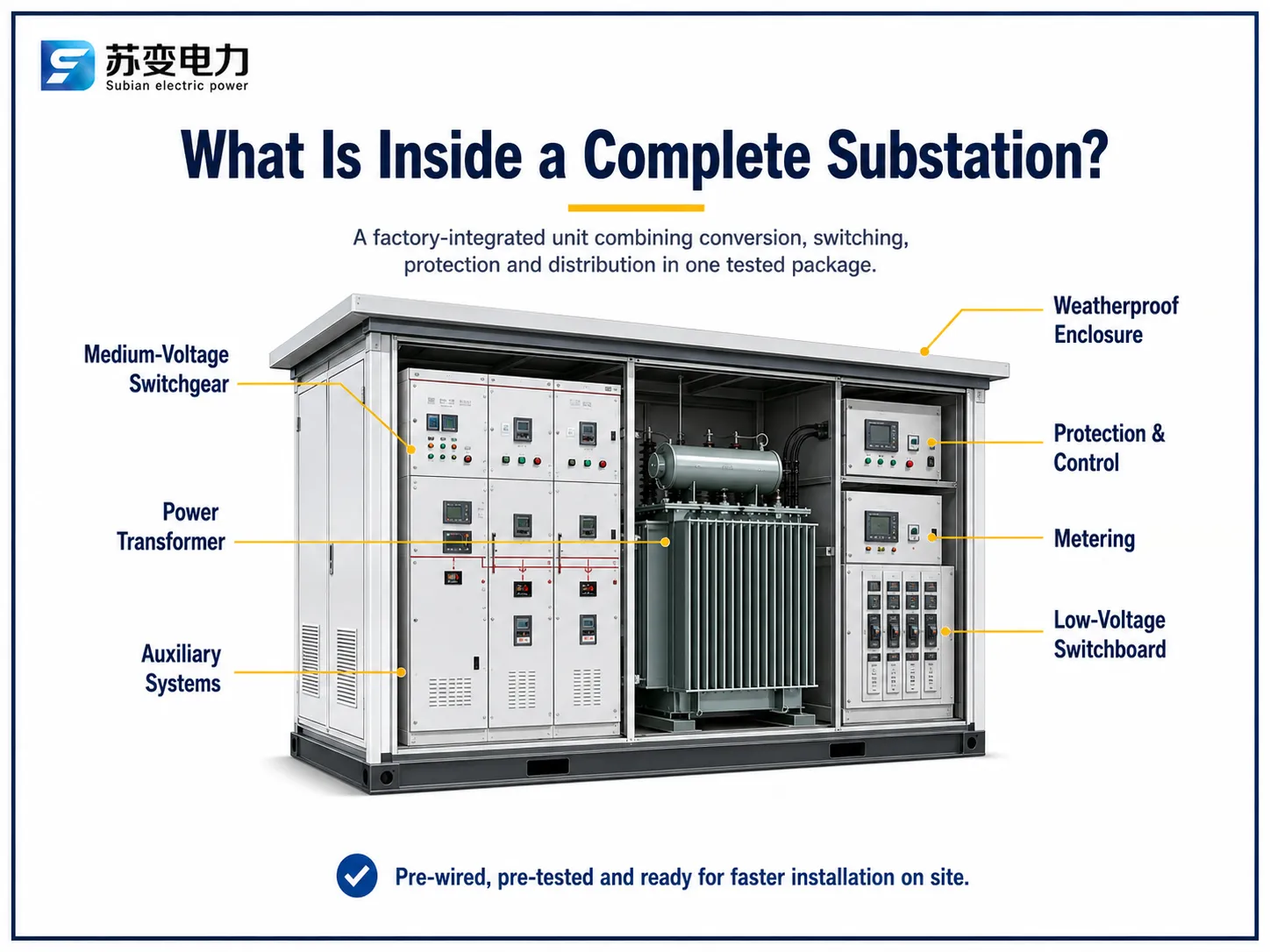
Что такое полная подстанция?
Полностью интегрированный блок распределения электроэнергии, который также называется пакетной, предварительно изготовленной или контейнерной подстанцией, считается полной подстанцией. Это означает, что все необходимое оборудование для передачи электроэнергии уже собрано и протестировано, такое как трансформатор, высоковольтное оборудование и низковольтный распределительный щит, а также защитные реле, измерительные устройства и распределительная коробка, а также корпус. В зависимости от того, как он построен, его размер может варьироваться от десятифутового ящика для маломасштабных приложений до целой серии ящиков для крупных проектов, таких как подстанция для шахт.
Ключевым моментом, который отличает его от других установок, является то, что он собирается на заводе производителем, а не на месте. Соответствие IEC 60076-1 для трансформаторов, IEC 62271-200 для внутренних установок оборудования и IEC 62271-202 для подстанций стало обязательным. Каждый раз, когда клиент заказывает сертифицированный контейнер, он получает как сертификаты типовых испытаний, так и сертификаты рутинных испытаний.
Почему Китай стал глобальным центром производства подстанций
С оценочной мощностью 1,7 миллиарда кВА трансформаторного оборудования, производимого каждый год, китайская промышленность по производству трансформаторов и оборудования больше, чем в любой другой стране. Это привело к трем реальным преимуществам: стоимости, скорости и гибкости.
Первое преимущество — это стоимость. Цена аналогичной полной подстанции с мощностью 630 кВА, предлагаемой европейским поставщиком, колеблется от $60,000 до $80,000; в то время как китайский поставщик может предложить ту же производительность всего за $28,000-$42,000, FOB. Разница в цене в основном обусловлена низким уровнем затрат на рабочую силу, наличием вертикально интегрированных цепочек поставок в производстве кремниевой стали, медной обмотки и распределительного оборудования, а также наличием более 1,000 поставщиков на выбор. Второе преимущество — скорость: существующие производственные мощности в Китае могут выполнить заказ в течение 45-90 дней для стандартных конструкций до 10 кВ вместо 6-12 месяцев для индивидуальных заказов на Западе. Третье преимущество — гибкость: китайские производители могут соответствовать стандартам IEC, IEEE или своим национальным стандартам и готовы производить продукцию по дизайну OEM.
Однако стоит отметить, что качество электрических характеристик может сильно различаться от завода к заводу. Хотя ISO 9001 указывает на то, что была внедрена какая-то система управления, это не означает, что продукция была намотана хорошо или правильно подобрана по размеру. Третью сторону инспекции необходимо заранее заложить в бюджет.
Основные компоненты внутри полной подстанции
Типичная полная подстанция — это не просто трансформатор, сидящий в коробке. Внутри блока 10/0.4 кВ вы найдете следующие компоненты:
- Распределительный или силовой трансформатор (IEC 60076): сердце устройства, преобразующее 10 кВ или 35 кВ в 400 В трехфазного тока.
- Средневольтное распределительное оборудование (IEC 62271-200): разъединители под нагрузкой, вакуумные выключатели или устройства SF6, которые защищают и переключают входную сторону.
- Низковольтный распределительный щит (IEC 61439): главный выключатель, шины, выключатели выходных линий и банки компенсационных конденсаторов при необходимости.
- Защита и управление: микропроцессорные реле, защита от перегрузки/земляного короткого замыкания и панель управления с локальным или удаленным интерфейсом SCADA.
- Измерение (IEC 62053): ТТ, ПТ и счетчики энергии для учета доходов.
- Вспомогательные системы: освещение станции, резервное питание постоянным током от батарей, вентиляторы охлаждения, удержание масла и меры по борьбе с пожаром.
- Корпус (IEC 62271-202): стальной контейнер или GRP киоск с защитой от проникновения IP54 или лучше.
Упускаемый аспект заключается в том, что стоимость трансформатора составляет 40-50% от общей стоимости. Если вам предложили очень низкую цену на подстанцию 630 кВА, то важно выяснить, предлагает ли компания трансформатор с медной сердцевиной или использует менее дорогой алюминиевый трансформатор с большими потерями.
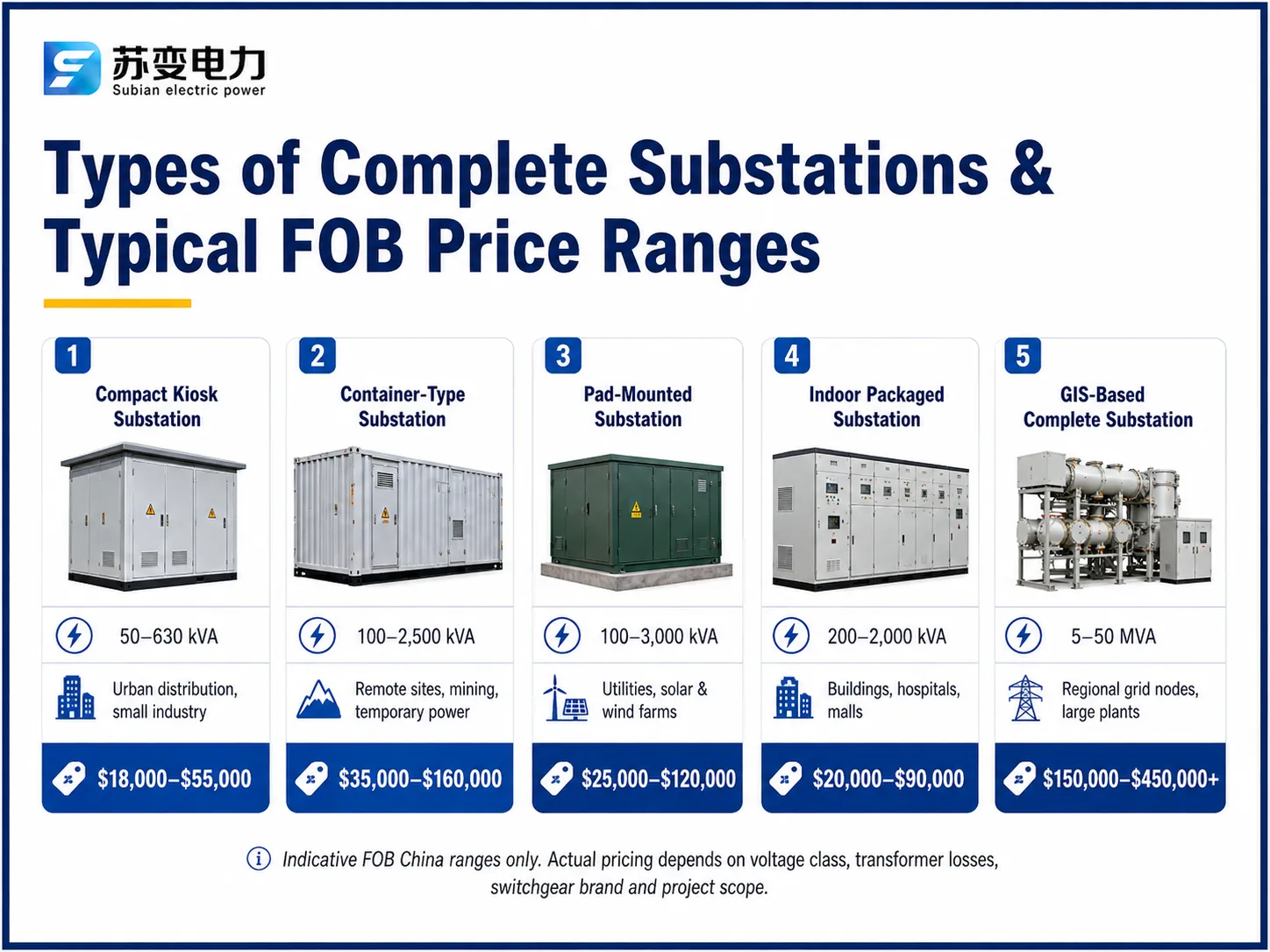
Типы полных подстанций (с таблицей)
Китайские производители классифицируют упаковочные подстанции в основном по классу напряжения и по типу установленного трансформатора. Неправильный выбор категории означает либо перерасход, либо провал проверки подключения к сети.
| Тип | Класс напряжения | Типичная мощность | Типичное использование | Указательная цена (FOB Китай) |
|---|---|---|---|---|
| Компактная киосковая подстанция (коробочный тип) | 10 кВ/0.4 кВ, 20 кВ/0.4 кВ | 50-630 кВА | Городское распределение, малый бизнес, девелопмент недвижимости | $18,000-$55,000 |
| Подстанция контейнерного типа | 10-35 кВ/0.4 кВ | 100-2,500 кВА | Горные лагеря, удаленные объекты, временное электроснабжение, острова | $35,000-$160,000 |
| Подземная подстанция | 10-35 кВ/0,4-10 кВ | 100-3,000 кВА | Коммунальные услуги, ветровые/солнечные электростанции, промышленные парки | $25,000-$120,000 |
| Внутренняя упаковочная подстанция | 6-35 кВ/0,4 кВ | 200-2,000 кВА | Здания, больницы, торговые центры | $20,000-$90,000 |
| Полная подстанция на основе GIS | 35-110 кВ/10 кВ | 5-50 МВА | Региональные узлы сети, крупные электростанции, подключение возобновляемых источников энергии | $150,000-$450,000+ |
Классы 35 кВ и 110 кВ - это те области, где Китай наиболее конкурентоспособен на мировом рынке. Китайские производители GIS, такие как Pinggao, XD Electric и Sieyuan, поставляют полные ячейки примерно по 40-55% от цены сопоставимых европейских GIS, поэтому многие EPC-подрядчики теперь закупают эти устройства из Китая.
Полная подстанция против традиционно собранной подстанции
Многие коммунальные службы все еще строят подстанции традиционным способом: заливают фундаменты, устанавливают трансформатор на месте, прокладывают кабели и собирают панели распределительного оборудования по комнате. Полная подстанция - это интегрированная на заводе альтернатива.
| Фактор | Полная подстанция | Традиционно собранная подстанция |
|---|---|---|
| Время выполнения | 45-90 дней от заказа до отгрузки | 6-18 месяцев, включая гражданские работы |
| Гражданские работы на площадке | Минимальные: только плоский пьедестал или платформа | Полное здание, фундаменты, кабельные канавы |
| Испытания | Заводские типовые и рутинные испытания, отчеты FAT | В основном испытания на месте пусконаладки |
| Общая установленная стоимость | Обычно на 20-35% ниже для той же функции | Выше из-за гражданских работ, труда и задержек |
| Площадь основания | Компактный, на 40-60% меньше | Большая площадь застройки |
| Возможность перемещения | Может быть перемещена на новую площадку | Фиксированная установка |
| Одобрение сети | Типовые испытания упрощают проверку коммунальными службами | Проектирование и инспекция на месте по проекту |
Компромисс заключается в пределе мощности трансформатора и охлаждении корпуса. При превышении примерно 5 МВА корпуса с воздушным охлаждением испытывают трудности, и обычно переходят к внутреннему или наружному открыто-рамочному строительству.
Ключевые спецификации для проверки перед заказом
Каждый поставщик предоставит вам технический паспорт, но не каждый технический паспорт является полным. Это те цифры, которые действительно важны для упаковочной подстанции.
| Параметр | Что это означает | Типичное значение, которого следует ожидать |
|---|---|---|
| Номинальная мощность (кВА) | Непрерывная нагрузочная способность при номинальных условиях | 100-2,500 кВА для упаковочных единиц |
| Первичное/вторичное напряжение | Уровни входного и выходного напряжения | 10/0.4 кВ, 33/0.4 кВ, 35/10 кВ |
| Потери без нагрузки (Вт) | Потери, когда трансформатор под напряжением | например, 110-330 Вт при 100 кВА, аморфный сердечник ниже |
| Потери нагрузки (Вт) | Потери при полной номинальной нагрузке | например, 1,500-3,500 Вт при 100 кВА в зависимости от класса |
| Напряжение импеданса (%) | Короткозамыкательный импеданс; влияет на уровни короткого замыкания | 4% (малый), 4.5-6% (большой) |
| Защита от проникновения (IP) | Сопротивление пыли/воде корпуса | Стандарт IP54; IP55/IP65 по желанию |
| Температура окружающей среды | Проектная температура для корпуса | -25 до +45 °C типично |
| Стандарты | Основание для соблюдения | IEC 60076, IEC 62271, IEC 61439 |
Также запросите сертификаты испытаний на потери без нагрузки и потери нагрузки. В Китае национальный стандарт GB 20052-2020 устанавливает обязательные классы энергоэффективности для распределительных трансформаторов, и большинство экспортеров по умолчанию отправляют устройства 2 класса (энергосберегающие) или 1 класса (аморфный сердечник). Более высокая эффективность стоит на 5-15% дороже на начальном этапе, но окупается в течение 3-6 лет.
Сценарии применения для оптовых подстанций
Китайские упаковочные подстанции появляются в удивительно широком круге проектов, все из которых нуждаются в быстром, стандартизированном электроснабжении в рамках контролируемого бюджета.
- Недвижимость и коммерческое строительство: киосковые подстанции для новых жилых башен или торговых центров, часто по одной единице на 20,000-40,000 м² построенной площади.
- Промышленные предприятия: контейнерная подстанция подает 10 кВ электроэнергию на МВ панель завода.
- Горнодобывающая промышленность и удаленное строительство: переносные установки обеспечивают энергией лагеря, дробилки и конвейеры в районах без электросети.
- Возобновляемая энергия: подстанции на плите или контейнерные подстанции собирают 30-50 МВт от ветровых или солнечных кластеров и поднимают напряжение до распределительной сети.
- Электрификация сельских районов: государственные программы в Африке и Южной Азии закупают 100-250 кВА единицы оптом, поскольку одна единица может обслуживать деревню из 300-800 домохозяйств.
- Аварийное электроснабжение: после штормов мобильные подстанции доставляются на грузовиках и подключаются в течение нескольких дней.
Для каждого случая использования поставщик должен соответствовать вашей местной системе заземления (TN-S, TN-C или TT) и философии защиты вашей коммунальной службы. Подстанция, построенная для европейской сети TN-S, не готова к использованию в системе с надежным заземлением Северной Америки.
Топовые бренды и реалистичные ценовые диапазоны (с таблицей)
Рынок подстанций делится на международные гиганты и производителей из Китая. Цены ниже являются ориентировочными FOB или ex-works для полных упаковочных единиц, и конфигурация каждого проекта изменяет предложение.
| Бренд | Страна | Позиция на рынке | Ориентировочная цена для 630 кВА единицы |
|---|---|---|---|
| ABB | Швейцария/Швеция | Полный портфель, МВ распределительное оборудование + трансформаторы, глобальная сервисная сеть | $75,000-$110,000 |
| Сименс | Германия | Премиум инженерия, сильные позиции в 110 кВ и выше, цифровые подстанции | $80,000-$120,000 |
| Schneider Electric | Франция | Сильная сторона низковольтного оборудования, умные счетчики, интегрированные предложения | $70,000-$105,000 |
| Hitachi Energy | Швейцария | Бывший ABB Power Grids; трансформаторы высокого класса и HVDC | $85,000-$130,000 |
| Итон | США/Ирландия | Сильные позиции в Северной Америке, подстанции на плите и киоски | $60,000-$95,000 |
| Пинггао / XD Электрик | Китай | Государственная поддержка, доминирующая в GIS и EHV для внутреннего и экспортного EPC | $30,000-$55,000 |
| Jiangsu Subian Electric Power | Китай | Производитель трансформаторов и подстанций, сертифицированный по IEC 60076, ориентированный на экспорт, доступен OEM/ODM | $28,000-$45,000 |
Модель остается последовательной: устоявшиеся международные бренды требуют премию в 60-120% над китайскими поставщиками за функционально сопоставимое оборудование. Часть этой премии оплачивает плотную глобальную сервисную сеть и десятилетия истории типовых испытаний; часть — это просто маржа бренда. Для покупателей, которые могут управлять своим собственным проектным инжинирингом, китайские производители, такие как Jiangsu Subian Electric Power закрывают большую часть этого разрыва. Jiangsu Subian — это производитель трансформаторов, сертифицированный по IEC 60076, в провинции Цзянсу, который поставляет распределительные трансформаторы и упаковочные подстанции в Азию, Африку, Ближний Восток и Латинскую Америку, с заводскими испытаниями и поддержкой OEM/ODM, включенной в стандартную практику.
Как выбрать оптового поставщика в Китае
Выбор фабрики — это более важное решение, чем выбор модели. Проработайте этот контрольный список по порядку.
- Подтвердите фабрику, а не только торговую компанию. Попросите лицензию на производство, сертификаты типовых испытаний, фотографии фабрики и видеоэкскурсию.
- Запросите отчеты о типовых испытаниях для вашего точного номинала. Типовое испытание на 630 кВА не является доказательством для устройства на 1,250 кВА.
- Проверьте стандарты в соответствии с вашей страной назначения. Убедитесь, что местная энергетическая компания требует стандарты IEC или национальные стандарты.
- Сравните потери, а не только цену. Два устройства по 630 кВА могут отличаться на 20-40% в потерях без нагрузки; рассчитайте 10-летнюю стоимость потерь.
- Получите объем поставки в письменной форме. Подтвердите, что предложение включает трансформатор, распределительное оборудование, измерение, защиту, заземляющий комплект и документацию на английском языке.
- Закажите инспекцию третьей стороной. Запланируйте $1,500-$3,500 на предвывозную инспекцию SGS, Bureau Veritas или TÜV.
- Обсудите условия оплаты. Стандарт — 30% депозит с остатком против транспортных документов или аккредитив при предъявлении. Избегайте предоплаты 100%.
Доставка, таможня и сборка на месте
Полные подстанции отправляются либо контейнерами, либо в навал. Кiosk подстанция размером 630 кВА обычно помещается в контейнер 20 или 40 футов и весит около 8-14 тонн, что приводит к стоимости доставки $3,000 – $9,000 в зависимости от конкретного маршрута, по которому отправляется груз из портов, таких как Циндао или Шанхай, в крупные города, такие как Лагос, Джакарта или Роттердам. При отправке более крупных единиц используется контейнерная или плоская упаковка. Это добавляет примерно $2,000 – $6,000 дополнительно, в зависимости от того, может ли порт назначения обрабатывать такой груз.
На таможне необходимо предоставить два основных документа. Это коммерческий инвойс с классификацией по коду HS (обычно это 8537.10 для панелей распределительного оборудования или 8504.90 для частей трансформаторов), а также сертификат происхождения, который иногда позволяет применять преференциальные тарифы в рамках коммерческих торговых соглашений. По прибытии устройство требует ровной бетонной поверхности, заземляющей ямы и кранов, расположенных рядом с ним. Большинство поставщиков уже включают 2-5-дневный визит китайского инженера для пусконаладки в цену или предлагают его за $250-450 в день, не включая поездки.
Часто задаваемые вопросы
Сколько стоит полная подстанция из Китая?
Для компактной киосковой подстанции 10/0,4 кВ в диапазоне 100-630 кВА ожидайте $18,000-$55,000 FOB Китай. Контейнерный блок мощностью 100-2,500 кВА стоит $35,000-$160,000, а полная подстанция на основе GIS 35-110 кВ обычно $150,000-$450,000+. Цены варьируются в зависимости от материала обмотки, типа корпуса и бренда защиты, поэтому всегда запрашивайте детализированное предложение.
Соответствуют ли китайские полные подстанции стандартам IEC?
При условии, что вы выберете правильного производителя. Основной стандарт для трансформаторов - IEC 60076; стандарт для СВН - IEC 62271-200; для НН - IEC 61439; а для самой сборной подстанции - IEC 62271-202. Поэтому убедитесь, что запрашиваете настоящие сертификаты типовых испытаний, выданные аккредитованной лабораторией, а не самодекларированный штамп “соответствует IEC”, появляющийся на техническом листе.
Сколько времени занимает доставка и отправка?
Производство занимает 45-90 дней для стандартных конструкций и 90-150 дней для индивидуальных блоков 35-110 кВ. Морская доставка из Китая в большинство портов Африки, Ближнего Востока или Латинской Америки добавляет 25-50 дней в зависимости от маршрута. Работайте от даты ввода в эксплуатацию и добавьте двухнедельный запас.
Могу ли я настроить подстанцию под свой бренд и дизайн?
Почти все китайские производители принимают запросы на OEM/ODM, если это укладывается в известные параметры: ваша этикетка, ваш цвет, ваш дизайн НН панели, даже ваши характеристики трансформатора. Необычные соотношения напряжения, такие как 33 кВ/400 В, являются нормой; совершенно новый дизайн шкафа стоит примерно на 15% до 25% больше и занимает около 2-4 недель дольше.
В чем разница между подстанцией и трансформатором?
Трансформатор известен как одно устройство для изменения напряжения. Но полная подстанция определяется как система, которая включает компоненты, такие как СВН, защита, измерение и корпус. Покупка подстанции вместо простого трансформатора означает, что не нужно беспокоиться о координации защиты, взаимной блокировке и испытаниях устройства, и, таким образом, можно значительно сократить время, необходимое для фактической ввода в эксплуатацию всего аппарата.
Ссылки
- IEC 60076-1: Силовые трансформаторы – Общие сведения — Основной стандарт для оценки трансформаторов, потерь и испытаний.
- IEC 62271-202: Высоковольтные/низковольтные сборные подстанции — Специфический стандарт для заводских сборных полных подстанций.
- IEEE (Институт инженеров электротехники и электроники) — Источник стандартов трансформаторов C57 и глобальных инженерных рекомендаций.
- NEMA — Публикует стандарты трансформаторов и СВН Северной Америки, используемые в проектах на основе ANSI.
- Министерство энергетики США — Регулирование энергоэффективности для распределительных трансформаторов, полезное для сравнений потерь.
- ABB — Справочник производителя для спецификаций премиум упакованных подстанций.
- Siemens Energy — Справочник производителя для высоковольтных и цифровых систем подстанций.
Заключение
Оптовые рынки наблюдают рост популярности комплектных подстанций, поскольку они предлагают интеграцию заводской сборки, более быструю доставку и более низкие цены по сравнению с традиционными работами на месте. Для традиционного упакованного устройства мощностью 630 кВА стоимость колеблется от $28,000 до $45,000 по сравнению с $70,000 до $110,000 от ведущих мировых брендов. Важно отметить следующее:
Комплектная подстанция объединяет трансформатор, распределительное оборудование, защиту и измерение в одном пакете, который доказал свою работоспособность.
Также важно проверить соответствие стандартам, таким как IEC 60076, IEC 62271-200/202 и IEC 61439, с помощью отчетов о типовых испытаниях.
В зависимости от класса напряжения, номинальной мощности и географического положения цена варьируется от $18,000 до $450,000.
Не забудьте учесть расходы на инспекцию третьей стороны и визит для ввода в эксплуатацию.
Проверьте потери в холостом режиме и потери нагрузки перед расчетом цен.
Если вы планируете проект распределения или малой коммунальной службы и хотите оборудование, прошедшее заводские испытания и сертифицированное по IEC с реалистичными сроками поставки, Jiangsu Subian Electric Power производит распределительные трансформаторы и упакованные подстанции именно для этого рынка.