


If you ask the electrical engineer of a hospital about the source of power for their MRI equipment in case of an outage across a city, they would tell you that it is the role of a 2 MVA main transformer and a generator installed through it. Similarly, asking a data center operator about the same equipment would lead you to the sight of two 30 MVA transformers, as they are connected to independent electric lines. Main transformers are widely used, as they are used in hospitals, companies, data centers, mass transportation systems, renewable energy centers, and many more. The same would apply to this article, as it shows the various uses of main transformers and the reasons behind the different designs of the same.
This article shows the applications of main transformers according to the spheres of usage which include utilities, various sectors of industry, important facilities, renewable sources, and so on, including information on the main transformer ratings and configurations in use.
Quick answer: Main transformers step utility voltage (11–220 kV) down to plant or facility voltage (6.6–35 kV) and appear in every sector that depends on reliable electricity: utilities (20–400 MVA substation units), industry (2.5–60 MVA), data centers (2×10–2×30 MVA N+1 twin banks), hospitals (2×1–2×5 MVA), transit (5–25 MVA traction units), and renewables (10–60 MVA GSU + collection units). Application-specific choices — redundancy, cooling, tap changers, fire safety — dominate the design. Prices range from $35,000–$90,000 for a 2.5–5 MVA unit to $160,000–$300,000 for 20 MVA / 110 kV from Chinese factories and $430,000–$700,000 for equivalent European brands. All design and testing follows IEC 60076 series.
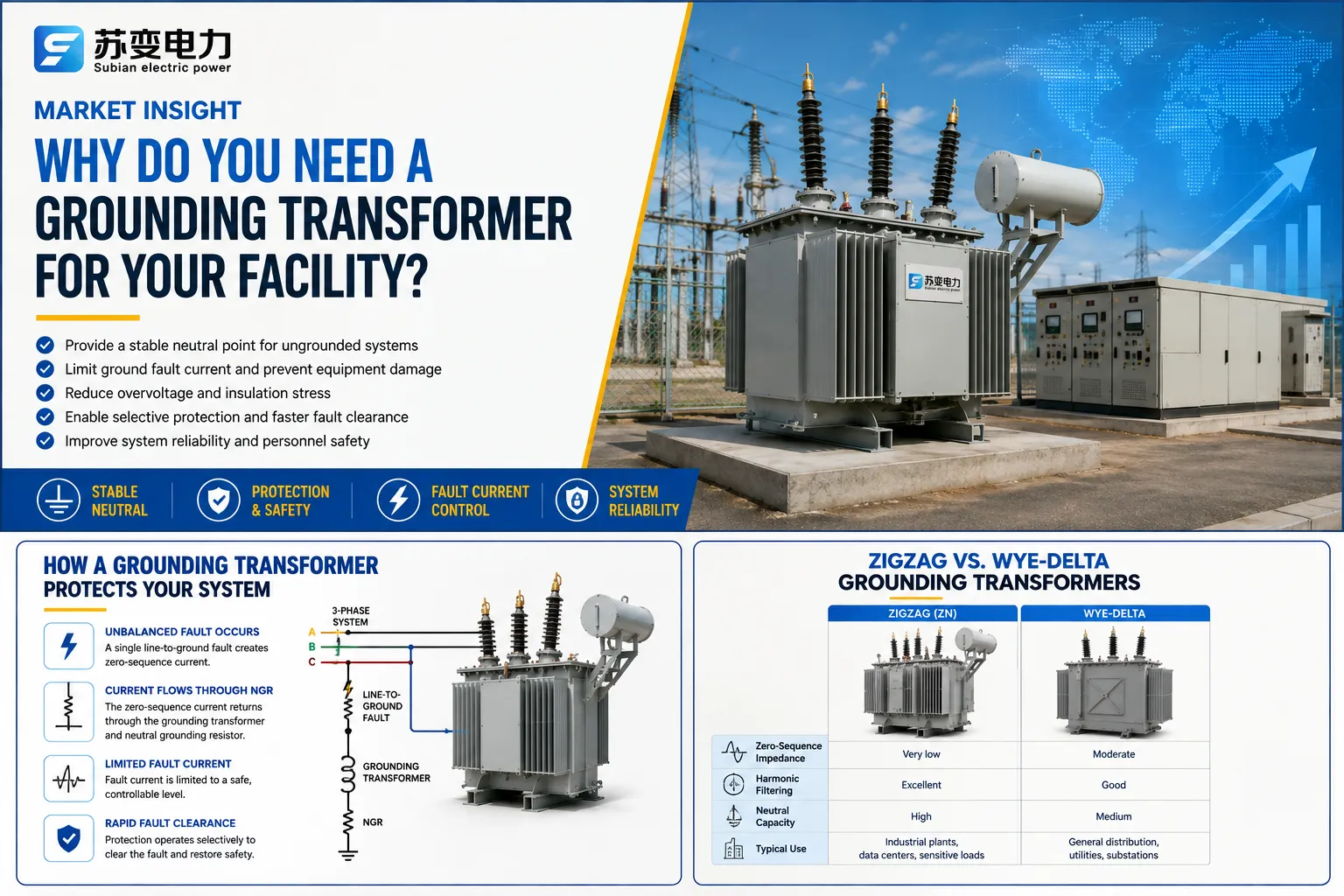
What Counts as a Main Transformer Application?
One of the applications of a transformer is the fact that it is used as a main transformer wherever such equipment is found in the distribution system. This is mainly because of two major factors — location and the impact of the breakdown of the transformer. If the failure of the transformer leads to causing problems for any particular operation that depends on the transformer, one may call the transformer a main one in that case, regardless of its MVA.
This explains the difference in the approach to using transformers rated at 20 MVA. For instance, the same transformer may be used in a distribution substation (in ONAN/ONAF mode, OLTC and relay protection), in a computer center (in N+1 configuration, with dry or ester insulation medium, and in the fast recharging mode), or a mining company (where the transformer is portable and has an advanced design with regard to high ambient temperature).
Utility Substations: The Grid’s Main Transformers
In the utility world, the “main transformer” is the substation transformer connecting transmission to sub-transmission or distribution. Ratings are the largest of any application:
| Substation Type | Voltage Step | Typical Rating | Key Features |
|---|---|---|---|
| Transmission substation | 220/110 kV | 50–400 MVA | OLTC, ONAF/ODAF, auto or two-winding |
| Sub-transmission | 110/35 kV | 20–60 MVA | OLTC ±16%, ONAN/ONAF |
| Primary distribution | 35/11 kV | 5–30 MVA | OLTC or off-circuit taps |
| Rural substation | 33/11 kV | 2.5–10 MVA | Simple protection, low maintenance |
Utilities look at total cost of ownership of equipment over a span of 30 to 40 years, which is why loss assessment, performance on type tests, and fleet matching play a major role in their acquisition decisions. One 220/110 kV unit can provide electricity to an area where half a million people reside and hence, reliability is treated as a matter of public safety rather than merely economics.
Industrial Plants: Powering Production
Industrial main transformers are constantly operational at elevated load factors and need to withstand motor start-ups, furnaces and harmonic distortion due to existing modes of operation. They have the following applications:
Steel and metallurgy: 30–120 MVA main transformers + furnace transformers that experience severe cycles and high secondary currents.
Cement and mining: 10–40 MVA transformers working at a locality with a high elevation or temperature, often portable.
Chemicals and refining: produces a constant process load that demands N+1 redundancy and temperature protection.
Automotive and general engineering: 2.5–15 MVA transformers feeding 11–20kV medium voltage distribution within production equipment.
Industrial engineers prioritize availability: the impact of an unplanned outage at a continuous processing facility will cost from $50,000 to $500,000 per day, and that is the rationale behind the use of differential protection, DGA monitoring, and legally approved maintenance activities by industrial main transformers.
Data Centers & Critical Facilities
Data centers are the fastest-growing application for main transformers, with load growing 15%–25% per year in some regions. Their patterns are distinctive:
| Parameter | Typical Value |
|---|---|
| Supply voltage | 110 kV or 33–35 kV |
| Main transformer size | 2×10 MVA to 2×30 MVA (N+1) |
| Secondary voltage | 20 kV or 11 kV MV distribution |
| Redundancy | Dual feed, two independent transformers |
| Insulation | Oil-immersed outdoors; dry-type/ester for indoor or mixed-use |
| Load profile | High, steady, high power factor after compensation |
Due to the fact that a malfunctioning main transformer has the capacity to bring down an entire hall, hyperscale operators currently equip full protection suites with fast transfer methods (these can be closed transition or static transfer switches) and condition monitoring devices. The N+1 philosophy dictates that each of the components should be designed in a way that ensures that the load can be fully delivered while another one is being maintained.
Commercial, Healthcare & Public Buildings
In business, main transformers are usually smaller, with a 1 to 10 MVA range, and they must also meet the requirements of building codes as well as electrical codes.
Hospitals: 2×1 to 2×5 MVA redundancy and isolation transformers below for medical devices, and diesel generators with transfer switches at the front.
Commercial high-rise buildings: located in a dry-type unit in electrical rooms (IEC 60076-11) since regions have outlawed oil above ground.
Airports: 5 to 20 MVA units with double feeds supplying the runway lighting, terminals and ATC; N + 1 for navigation-critical loads.
Universities and campuses: 5 to 20 MVA central plant units that provide building-level distribution.
In these types of applications, dry type transformer with cast resin insulation have the standard range from 500 kVA to 10 MVA. The cost of dry type transformer is 40%-60% higher than that of oil-filled transformer, but oil containment, fire protection, and permitting analysis is excluded.
Transit, Rail & Airport Infrastructure
Electric transit is a specialized transformer application with unique voltage and loading rules:
| Application | Supply → Traction Voltage | Typical Rating | Special Requirement |
|---|---|---|---|
| Heavy rail (50 Hz) | 110/25 kV | 5–25 MVA | High short-term overloads, OLTC |
| High-speed rail (2×25 kV) | 220/2×25 kV | 20–60 MVA | Auto-transformer feeding scheme |
| Metro (750 V DC) | 33/0.75 kV | 1–5 MVA per substation | Rectifier duty, low harmonic rating |
| Airport ground power | 11/0.4 kV | 1–5 MVA | Redundancy for gate power |
Railway main transformers experience short circuit load surges every few minutes, and therefore these units must be constructed from denser copper, stronger insulation, and incorporate large overload margins compared to the usual industrial practice.
Renewable Energy Plants
In the system of renewable power generation, the principal transformers perform not only the role of generator step-up transformers but also that of the collection substation transformer.
Wind farms use 1–5 MVA unit transformers for each turbine connected at 33/35 kV level with respective substation equipment transforming this voltage to 110–220 kV level rated at 20–100 MVA.
Solar plants are connected through isolated inverters transforming 800 V DC-side voltage to 33 kV through middle voltage transformers and the final transformation to 110–220 kV through a main transformer with 20–100 MVA capacity common for large solar plants with installations of 50–200 MW.
Battery storage plants demand 5–50 MVA mains transformer with bidirectional loading capabilities and fast cycling processes.
Transformers that work on renewable energy sources are subjected to fluctuating loads, the introduction of harmonics from the system of inverters, and quick operational changes. The standard for such transformers is IEC 60076, but most projects also have certain conditions to meet grid codes, such as the EU Network Code RfG, which regulates the limitations for tap range, voltage ride-through, harmonics resistance, and so on.
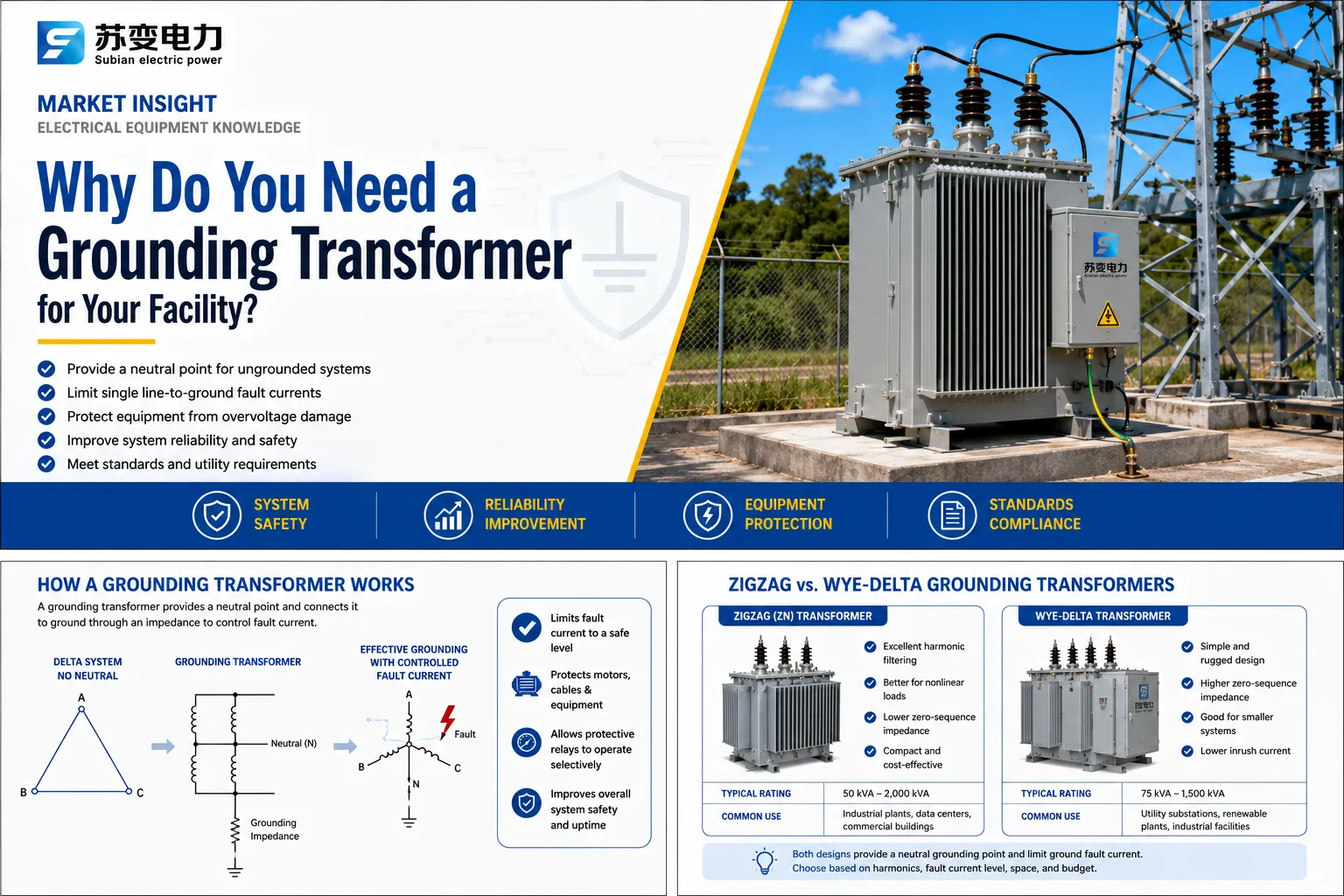
Special Duty: Mining, Marine & Offshore
A number of applications take transformer fabrication beyond the usual range of designs: open-pit mine sites utilize skid-mounted, mobile transformer capacity of 5–20 MVA that rotate as the mine operation moves; these transformers are able to withstand dust, height, and extreme surrounding temperatures; there are offshore platforms using small, corrosion-resistant and vibration-resistant transformers (these units are usually dry-type or filled with ester to get rid of the fire risk in case of oil spillage); all types of vessels of IEC 60076 standard with the ability to endure shocks and perform in inclines; rectifier/electrolysis plants with transformers working with rectifier banks used in aluminum production or hydrogen electrolysis providing very high currents and high harmonic level.
The latter applications are usually 20% to 50% more expensive than typical standard ones because of the need for certification, environmental protection, and margin of special responsibilities.
Application-Driven Configuration Decisions
| Decision | Utility | Data Center | Industrial | Renewable |
|---|---|---|---|---|
| Redundancy | Fleet spares | N+1 twins | N or N+1 | Single, fleet spares |
| Cooling | ONAN/ONAF | ONAN/ONAF or dry | ONAN/ONAF | ONAN |
| Tap changer | OLTC | OLTC | OLTC/off-circuit | Off-circuit ±5% |
| Insulation | Oil | Oil/ester/dry | Oil | Oil |
| Monitoring | DGA, temperature | Full condition suite | DGA, temperature | Basic |
Directed effort in engineering where failure is costly. Data centers and hospitals make a case for N+1 and continuous monitoring; renewable energy plants justify robust construction as well as distant DGA, but not necessarily redundancy. Matching configuration to consequences is key in successful engineering of main transformer application.
Realistic Prices & Top Brands by Application
Prices below are planning ranges for oil-immersed main transformers and vary by specification, loss level, and region.
| Application / Rating | Chinese Factory (Subian, TBEA) | European/US Brand |
|---|---|---|
| Rural substation, 5 MVA / 33 kV | $55,000–$90,000 | $120,000–$200,000 |
| Industrial, 20 MVA / 110 kV | $160,000–$300,000 | $430,000–$700,000 |
| Data center, 2×20 MVA / 110 kV | $320,000–$600,000 | $860,000–$1,400,000 |
| Transmission, 100 MVA / 220 kV | $600,000–$1,100,000 | $1,500,000–$2,500,000 |
For any of these applications, Jiangsu Subian Electric Power gives a competitive factory-direct option: the supplier constructs distribution and power transformers from 50kVA to 220kV class including utility substation units, industrial main transformers, and renewable GSU/collection transformers according to IEC 60076 with type-test reports, unique configurations, and prices usually 30% to 50% less than those of western brands. The company provides engineering support for clients with needs such as redundancy, cooling class, tap range, and monitoring interfaces and provides third party inspection and site commissioning worldwide.
Frequently Asked Questions
Where are main transformers most commonly used?
Main transformers are used wherever a facility connects to a high-voltage grid: utility substations (20–400 MVA), industrial plants (2.5–60 MVA), data centers (2×10–2×30 MVA), hospitals (2×1–2×5 MVA), transit systems (5–60 MVA), and renewable plants (20–100 MVA collection units). Any site where losing the transformer stops operations has a main transformer by definition.
What size main transformer does a data center need?
A typical hyperscale data center hall consumes 5–15 MW, so a facility with 30 MW of load commonly installs 2×30 MVA main transformers at 110/20 kV in N+1 configuration. Growth of 15%–25% per year in data center load means many operators spec the first pair with room to add a third unit later.
Why do hospitals use dry-type main transformers?
The use of oil-filled transformers in buildings occupied above ground is restricted by most fire codes and local governing body regulations due to the fire and environmental danger they pose. For this reason, hospitals, office towers, and airports have opted for dry-type cast resin transformers (IEC 60076-11), which carry a price premium of 40-60% when compared to oil-filled transformers but provide the benefit of flame resistance, no oil containment issues, and low noise.
How much does a main transformer cost by application?
Budget $55,000–$90,000 for a 5 MVA / 33 kV substation unit, $160,000–$300,000 for a 20 MVA / 110 kV industrial unit from Chinese factories, $320,000–$600,000 for a data center twin set, and $600,000–$1.1 million for a 100 MVA / 220 kV transmission unit (factory-direct pricing). European and US brands typically cost 1.5–2.5 times more.
Do renewable plants use different main transformers?
Renewable main transformers experience different load types with variable and distorted distortions and particularly rapid changes in the load. This means they have to be designed with strong insulating properties, higher temperature limits, and grid code compliance (e.g., EU RfG). Most of the solar-wind generation substations are constructed using transformers in the range of 20-100 MVA with 33/110-220 kV capacity, using off load connections instead of OLTC, and with heavy-duty housing.
References
- IEC 60076-1: Power Transformers — General — The base standard for main transformer ratings and tests.
- IEC 60076-11: Dry-Type Transformers — Requirements for indoor commercial and healthcare applications.
- IEC 60076-5: Ability to Withstand Short Circuit — Short-circuit withstand for industrial and transit duty.
- IEEE C57.12.00: General Requirements for Liquid-Immersed Transformers — North American application standard.
- IEA: Data Centres and Data Transmission Networks — Data center energy demand and infrastructure context.
- Hitachi Energy Transformers — Reference for utility, industrial, and renewable transformer technology.
Conclusion
Large transformers operate around the world wherever it is necessary to have reliable energy. From power stations, industrial plants, data centers, hospitals and transport systems to renewable energy sources, the principle of operation of the transformers is the same, but their design varies from one application to another. Among the main differences in transformer construction are redundancy for hospitals, fault tolerance for renewables and overload capability for rail transport.
Transformers set the parameters for the installation, including redundancy, cooling, active elements and protection.
Electricity supply sector refers to N+1 transformers, while renewable energy sector uses robust transformers without redundancy.
If you are selecting a main transformer for a utility, industrial, data center, or renewable project, Jiangsu Subian Electric Power engineers units from 50 kVA to 220 kV class with IEC 60076 certification and application-specific configuration support — get a factory-direct quote for your exact duty.